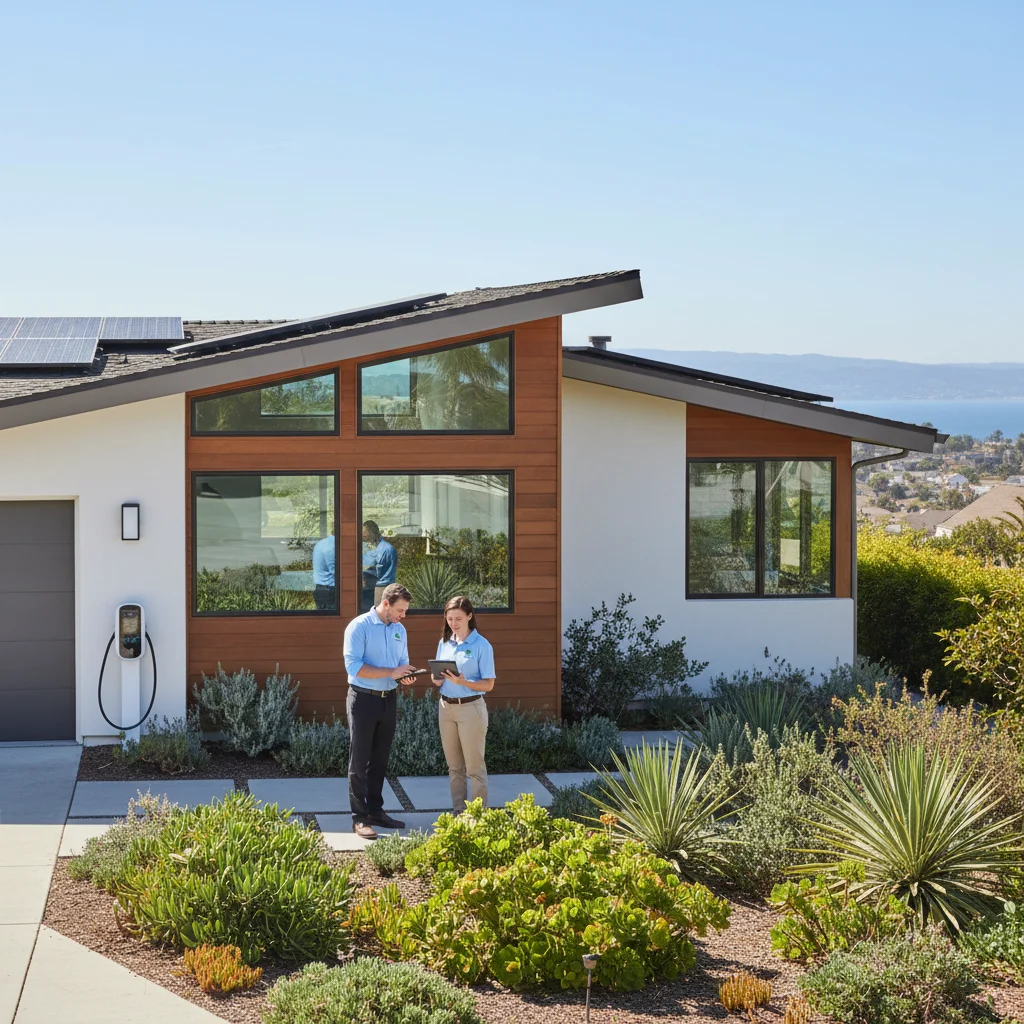
San Diego homeowners waste an average of $680 annually on energy leaks they can't see—air gaps behind electrical outlets, missing attic insulation, and duct systems that hemorrhage 30% of heated or cooled air before it reaches living spaces. And the culprit isn't age or neglect. Most homes built before 2010 never received a professional energy audit, leaving owners guessing which upgrades deliver actual savings versus marketing hype.
What Income Limits Apply to San Diego Home Energy Auditor Programs?
San Diego's subsidized energy audit programs set income limits at 80% of Area Median Income (AMI) for most utility-sponsored initiatives, translating to $89,600 for a household of four in 2026. But independent auditors charge $300-$600 for comprehensive assessments with no income restrictions. The federal Energy Efficient Home Improvement Credit (Section 25C) ended for property placed in service after December 31, 2025 (IRS FS-2025-05). Federal tax credits for this work have ended, but state, local and utility rebates may still apply; check what is available at your address with the DuloCore rebate calculator.
The San Diego Regional Energy Office partners with SDG&E to offer free audits for households earning below $53,760 (60% AMI for a family of four). And these audits include blower door tests, thermal imaging scans, and a prioritized upgrade roadmap—identical services that private firms charge $450-$550 to deliver. California's Energy Savings Assistance Program extends eligibility to renters, requiring landlord consent but no tenant income verification beyond initial qualification.
"Income-qualified households receive free energy audits plus direct installation of LED bulbs, weatherstripping, and low-flow showerheads at no charge." — California Public Utilities Commission
Non-subsidized audits cost $300-$600 but unlock access to rebates worth $8,000-$14,000 for qualifying upgrades, making the upfront audit fee a rounding error against total incentive value.
How Do You Apply for a Home Energy Audit in San Diego?
Application pathways split between utility-sponsored programs and private auditor bookings, with SDG&E's online portal processing income-qualified requests within 3-5 business days. Private auditors book appointments directly through company websites or phone, requiring no pre-approval but charging $300-$600 upfront. And both routes produce the same deliverable: a detailed report identifying air leaks, insulation gaps, HVAC inefficiencies, and estimated savings from recommended fixes.
SDG&E customers earning below 80% AMI submit applications through the utility's Energy Savings Assistance portal, uploading proof of income (tax returns or pay stubs from the past 30 days). Approval arrives via email within one week, followed by auditor assignment and scheduling within 10-15 days. So the entire process from application to completed audit takes 3-4 weeks for subsidized programs.
Independent auditors bypass the application queue entirely. Homeowners contact certified Building Performance Institute (BPI) or Residential Energy Services Network (RESNET) professionals, schedule same-week or next-week appointments, and receive reports within 48 hours of the on-site visit. But this speed costs $300-$600, versus zero for income-qualified households.
Private audits pair naturally with planned upgrades, letting homeowners time assessments to coincide with contractor availability rather than waiting in utility program queues. For detailed rebate amounts, check the rebate calculator to estimate total savings before booking an audit.
What Are the Application Deadlines for San Diego Energy Audit Programs?
SDG&E's Energy Savings Assistance Program operates year-round with no application deadlines, but funding constraints typically pause new enrollment in late October through December as the utility allocates remaining budgets. Private auditor bookings have no seasonal restrictions, though demand spikes in spring (March-May) and fall (September-November) when San Diego temperatures make attic and crawl space inspections tolerable.
California's public utility programs receive annual funding allocations from the California Public Utilities Commission, resetting each January 1. And 2026 funding increased 12% over 2025 levels, expanding audit availability for households earning 60-80% AMI. But late-year applicants risk waitlists if budget depletion occurs before the calendar turns.
"Energy audit program budgets refresh annually on January 1, with higher funding priority for income-qualified households and multifamily properties." — California Energy Commission
The federal home energy tax credits (Sections 25C and 25D) ended for projects completed after December 31, 2025 (IRS FS-2025-05). The federal Energy Efficient Home Improvement Credit (Section 25C) ended for property placed in service after December 31, 2025 (IRS FS-2025-05).
Private auditors book 6-8 weeks out during peak seasons (April-May, September-October), making winter months (December-February) the fastest path to scheduling. Compare that to utility programs, which maintain 3-4 week queues year-round.
Can You Stack San Diego Energy Audit Rebates with Other Incentives?
Audit costs themselves rarely qualify for rebates, but the upgrades recommended in audit reports stack across federal tax credits, utility rebates, and California state programs—delivering combined incentives worth $8,000-$14,000 for comprehensive retrofits. And the federal government explicitly permits stacking through IRS guidance published in 2023, confirming that utility rebates don't reduce tax credit eligibility.
A typical stacking scenario: Install a heat pump water heater ($1,200 utility rebate), add attic insulation ($800 utility rebate), and upgrade to a heat pump HVAC system ($3,000 utility rebate plus $2,000 federal tax credit). So the total incentive package hits $7,000 on $18,000 of work—a 39% discount driven entirely by the audit's prioritized upgrade list.
SDG&E rebates combine with federal tax credits without dollar-for-dollar reductions, a quirk that distinguishes California utility programs from states that subtract utility incentives before calculating federal credits. Learn more about stacking strategies on the energy tax credits page.
California's Tech Clean California initiative adds $3,000-$7,500 for low-income households replacing gas appliances with electric models, stacking on top of SDG&E rebates and federal credits. But income limits drop to 80% AMI, and applications close when funding depletes—typically mid-November in San Diego County.
| Program | Incentive Amount | Eligibility | Stacking Allowed? |
|---|---|---|---|
| SDG&E Heat Pump Rebate | $3,000 | All SDG&E customers | Yes (federal tax credits) |
| Federal Tax Credit (30%) | Ended Dec 31, 2025 | — | Ended Dec 31, 2025 |
| Tech Clean California | $3,000-$7,500 | ≤80% AMI | Yes (both above) |
How Long Is the Wait Time for a Home Energy Audit in San Diego?
Utility-sponsored audits schedule 3-4 weeks from application approval, with income-qualified households prioritized ahead of standard-tier applicants. Private auditors book same-week appointments during off-peak months (December-February) but stretch to 6-8 weeks in spring and fall when retrofit contractors drive audit demand. And report delivery timelines mirror scheduling speeds—utility audits take 7-10 days post-visit, while private firms deliver within 48 hours.
SDG&E's contractor network assigns auditors based on ZIP code and availability, removing homeowner choice but guaranteeing certified professionals. So applicants in North County (Carlsbad, Oceanside, Vista) wait 18-22 days on average, versus 25-30 days in East County (El Cajon, La Mesa, Santee) where auditor density drops 40%.
Private auditors let homeowners shop for availability, certifications (BPI or RESNET), and pricing. But this flexibility demands research—San Diego County hosts 47 certified BPI auditors as of March 2026, with pricing ranging from $295 (basic blower door test) to $650 (full diagnostic with thermal imaging and duct leakage testing).
Spring scheduling (March-May) coincides with federal tax refund season, when homeowners accelerate upgrade timelines. And fall demand (September-November) precedes winter utility rate increases, creating dual bottlenecks that push private auditor wait times past six weeks.
For faster results, book audits in January or February—private firms report 40% lower demand, and utility programs clear waitlists after year-end budget resets.
Do You Need Pre-Approval Before Getting a Home Energy Audit in San Diego?
Pre-approval requirements depend on the audit pathway: utility-sponsored programs mandate income verification before scheduling, while private auditors require only payment confirmation at booking. And neither pathway demands pre-approval for subsequent rebates—audit reports automatically qualify homeowners for applicable incentives, assuming recommended upgrades meet program specifications.
SDG&E's Energy Savings Assistance Program denies audit requests without verified income documentation, rejecting 18% of applications in 2025 due to missing pay stubs or tax returns. But approval, once granted, remains valid for 12 months, letting homeowners delay audits without reapplying. So households expecting income changes in the next quarter benefit from early application submission.
Private audits skip income checks entirely, accepting credit card payments at booking and conducting visits regardless of financial status. And the resulting reports list federal tax credits, utility rebates, and state incentives without requiring homeowners to pre-qualify for specific programs.
Form 5695 only covers qualifying work completed by December 31, 2025 and claimed on a 2025 return; the federal 25C and 25D credits ended after that date (IRS FS-2025-05). But audits provide defensible documentation if the IRS requests proof during an audit (the tax kind, not the energy kind).
California's database of certified energy auditors, maintained by the California Energy Commission, lists pre-approval requirements for specialty programs like multifamily retrofits and manufactured home upgrades. Standard single-family audits carry no pre-approval burdens beyond utility program income checks.
Official Sources
- U.S. Department of Energy - Energy Saver — Federal guidance on professional energy audits and DIY assessments
- California Public Utilities Commission - Energy Savings Assistance — Income-qualified program details and application process
- ENERGY STAR - Home Energy Audits — Certified auditor search tool and audit preparation checklist
Related Reading: Learn more about Ev Charger Home Energy Audit and Fall Home Energy Audit Checklist.
Related Reading: Learn more about Energy Efficient Home Improvement Credit Limit Worksheet and Energy Modeling Software Home.
Frequently Asked Questions
How do I find a qualified home energy auditor in San Diego?
Search the Building Performance Institute's professional directory for San Diego County, filtering by BPI Building Analyst certification—the industry standard for comprehensive residential audits. RESNET's contractor locator lists HERS (Home Energy Rating System) raters who perform new construction and existing home assessments. And SDG&E maintains a pre-screened contractor list for its Energy Savings Assistance Program, accessible through the utility's online portal. As of March 2026, San Diego County hosts 47 BPI-certified auditors and 63 RESNET raters, with median audit pricing of $425 for single-family homes under 2,500 square feet.
What should I look for when choosing a home energy auditor?
Prioritize BPI Building Analyst or RESNET HERS Rater certifications, which require 40+ hours of training and field-tested competency in blower door testing, thermal imaging, and combustion safety. Request sample reports to verify detail level—quality audits list room-by-room air leakage rates, insulation R-values, and payback periods for each recommended upgrade. And confirm the auditor uses calibrated equipment: blower doors accurate to ±3%, infrared cameras with 0.1°F thermal sensitivity, and duct leakage testers meeting ASTM E1554 standards. Avoid auditors who skip attic or crawl space inspections, as 60-70% of energy waste originates in these zones.
How much does a home energy audit cost in San Diego?
Comprehensive audits cost $300-$600 for single-family homes, with pricing tied to home size and diagnostic scope. Basic blower door tests start at $295, while full assessments—including thermal imaging, duct leakage testing, and combustion appliance safety checks—reach $650 for homes exceeding 3,000 square feet. And income-qualified households (≤80% AMI) receive free audits through SDG&E's Energy Savings Assistance Program, a $450-$550 value with identical deliverables to paid services. Multifamily properties and commercial buildings pay $800-$1,500, reflecting added complexity in shared systems and multiple dwelling units.
How long does a home energy audit take?
On-site visits last 2-4 hours for single-family homes under 2,500 square feet, extending to 5-6 hours for properties exceeding 4,000 square feet or featuring complex HVAC systems. Auditors spend 30-45 minutes on blower door testing, 45-60 minutes on thermal imaging scans, and 60-90 minutes inspecting attics, crawl spaces, and mechanical equipment. And report delivery adds 2-10 days depending on the auditor—private firms average 48-hour turnaround, while utility-contracted auditors take 7-10 days to process findings and generate prioritized upgrade lists with estimated costs and savings.
What is the difference between a blower door test and a thermal imaging scan?
Blower door tests quantify total air leakage by depressurizing the home to 50 Pascals and measuring airflow required to maintain that pressure, reported in cubic feet per minute (CFM50). Thermal imaging scans visualize temperature differentials across building surfaces, revealing insulation gaps, air leaks, and moisture intrusion invisible to the naked eye. And the two methods complement each other—blower doors measure how much air escapes, while infrared cameras show where it escapes. Standard audits include both diagnostics, though basic assessments ($295-$350) often skip thermal imaging to reduce costs. For homes built before 1980, thermal imaging detects missing wall insulation that blower door tests can't isolate.
Ready to find your savings? Use our free rebate calculator to estimate incentives for heat pumps, insulation, and energy-efficient upgrades recommended in your audit report. Get your personalized rebate estimate in under 60 seconds.
Last updated April 14, 2026 — reviewed by DuloCore Editorial. About our authors.