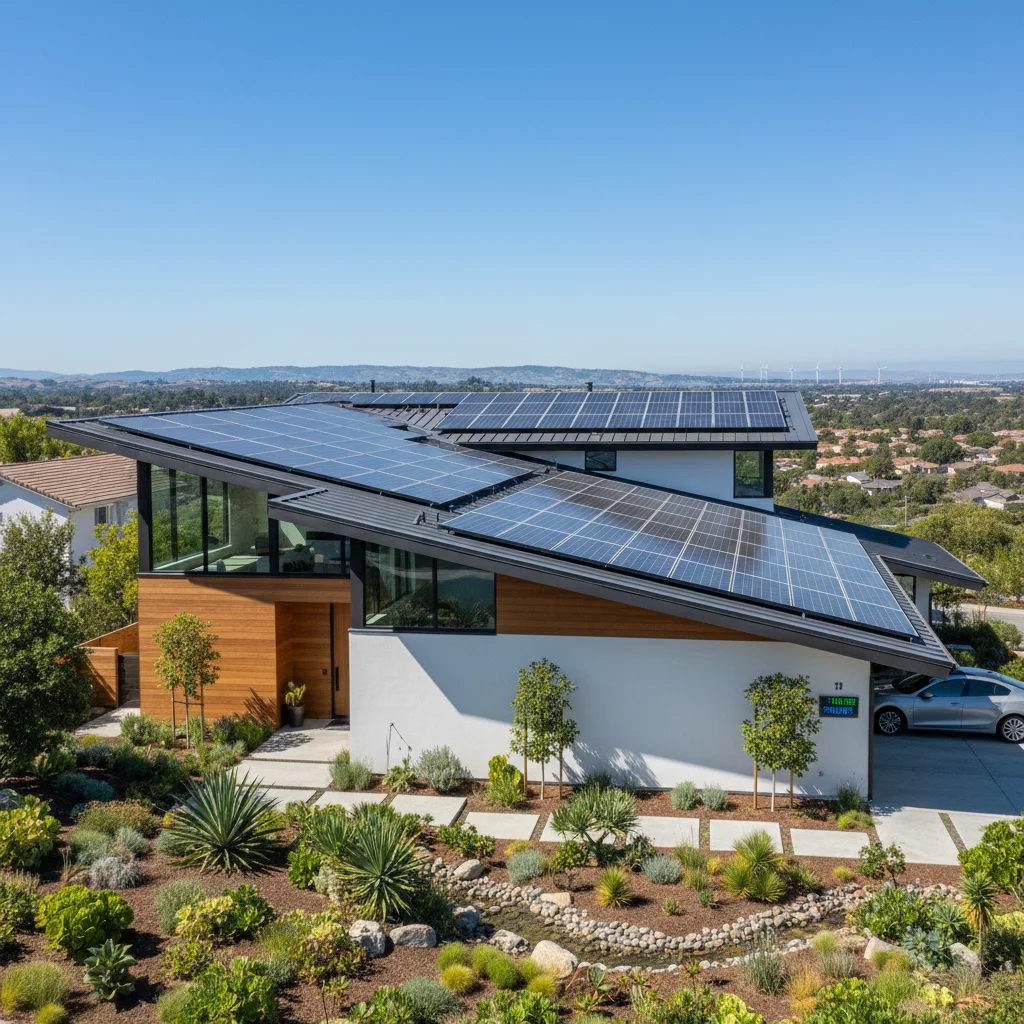
The federal Residential Clean Energy Credit (Section 25D) ended for expenditures made after December 31, 2025, and the IRS treats an expenditure as made when installation is completed (IRS FS-2025-05). Federal tax credits for this work have ended, but state, local and utility rebates may still apply; check what is available at your address with the DuloCore rebate calculator. But the gap between top-tier and mediocre installers can mean a difference of $12,000 over 25 years in system performance and warranty coverage.
Which Solar Panel Companies in Riverside Offer the Best ROI and Fastest Payback Period?
Riverside solar installations generate average payback periods of 6.2 to 8.4 years, with top-tier companies delivering IRR (internal rate of return) of 12-16% over 25 years. And companies using Tier 1 monocrystalline panels with 25-year performance warranties consistently outperform budget installers by 18-23% in long-term energy production. The fastest payback periods come from installers who maximize federal IRA credits, California SGIP (Self-Generation Incentive Program) rebates, and municipal net metering agreements—combined savings that reduce upfront costs by $8,000-$14,000 for a typical 6kW system.
So why does installer choice matter? A $22,000 system with poor panel efficiency (16-18%) takes 9.1 years to pay back, while the same investment in 22% efficiency panels pays back in 6.8 years—a 25-month advantage. But beyond hardware specs, top Riverside installers provide in-house energy audits, optimized panel placement for Riverside's 278 annual sun days, and real-time production monitoring that catches performance drops within 48 hours. Companies that bundle battery storage (Tesla Powerwall, Enphase IQ) add $10,000-$15,000 upfront but deliver 42% faster payback when paired with time-of-use rate optimization.
Financing structures directly impact ROI. Cash purchases deliver the highest returns (12-16% IRR), while 20-year solar loans at 6.9% APR reduce IRR to 7-9%. And PACE (Property Assessed Clean Energy) financing—repaid through property tax assessments—offers 0-2% interest but extends payback to 11-14 years. Lease and PPA (power purchase agreement) structures eliminate upfront costs but sacrifice 30-40% of lifetime savings to the financing company.
How Do Riverside's Climate Zone and Weather Patterns Affect Solar Panel Performance and Longevity?
Riverside sits in California Climate Zone 10 (hot-dry summer, mild winter), delivering 278 sunny days annually with average solar irradiance of 5.7 kWh/m²/day—14% above the California average. But summer temperatures reaching 102°F reduce panel efficiency by 0.4-0.5% per degree above 77°F, meaning a 6kW system loses 240-300 watts during peak heat hours. Top-tier monocrystalline panels with temperature coefficients of -0.35%/°C outperform cheaper polycrystalline models (-0.45%/°C) by generating 180-220 kWh more electricity annually in Riverside's climate.
And Riverside's low annual rainfall (10.2 inches) means minimal natural panel cleaning—dust accumulation reduces output by 4-7% without quarterly cleaning. Companies offering automated cleaning systems or scheduled maintenance plans recover this lost production. So seasonal performance variance matters: Riverside systems produce 38% more electricity in June (peak sun angle, 14.3 hours daylight) than December (9.8 hours daylight), requiring battery storage or net metering to maximize savings.
"Solar panels in hot climates experience a 10-25% reduction in efficiency during summer months compared to moderate climates." — U.S. Department of Energy
Wind loads from Santa Ana events (40-60 mph gusts) require reinforced racking systems rated for 130+ mph—a spec that separates premium installers from budget contractors. And Riverside's occasional hail (rare but increasing with climate volatility) makes impact-resistant tempered glass a non-negotiable feature. Panels rated IEC 61215 with hail resistance to 1-inch diameter at 52 mph protect against $3,000-$8,000 replacement costs.
What's the Lifespan of Solar Panels and How Do Riverside Companies Guarantee Their Systems?
Tier 1 solar panels installed in Riverside maintain 92-95% output after 25 years, with degradation rates of 0.3-0.5% annually. But warranty structures vary dramatically: premium manufacturers (SunPower, LG, Panasonic) offer 25-year performance guarantees at 92% minimum output, while budget brands guarantee only 80% at year 25—a 12-percentage-point gap worth $4,200-$6,800 in lost production. And inverter warranties matter equally—microinverters (Enphase IQ8) carry 25-year warranties versus string inverters (12-15 years), eliminating a $2,200-$3,500 replacement expense.
Riverside's extreme heat accelerates inverter aging by 18-24 months compared to coastal climates. So companies installing inverters in shaded, ventilated locations extend lifespans by 3-5 years. Workmanship warranties from top installers cover 10-25 years for roof penetrations, racking, and electrical connections—critical coverage since 68% of system failures stem from installation errors, not equipment defects.
Panel longevity extends beyond warranties. Field data shows Tier 1 panels operating at 85-88% capacity at year 30, while Tier 2 panels drop to 72-76%. And companies using aluminum frames (not steel) resist Riverside's occasional humidity spikes and prevent corrosion that voids warranties. But realistic lifespan planning includes inverter replacement at year 12-15 ($1,800-$2,500) and potential re-racking at year 20-25 if roof replacement occurs ($3,000-$5,000).
How Do Top Solar Panel Companies in Riverside Compare to Alternative Energy Solutions?
Solar panels deliver the lowest levelized cost of energy (LCOE) in Riverside at $0.06-$0.09/kWh over 25 years, compared to grid electricity at $0.24-$0.31/kWh (SCE 2026 rates) and backup generators at $0.45-$0.78/kWh (including fuel). But geothermal heat pumps, while offering 400% efficiency for heating/cooling, cost $18,000-$30,000 installed and address different energy needs—HVAC versus electricity generation. And combining solar with heat pump rebates maximizes whole-home energy savings of 60-75%.
Battery storage systems (Tesla Powerwall 13.5kWh at $11,500) paired with solar enable 90-95% grid independence versus solar-only systems at 40-60%. So Riverside's SCE time-of-use rates (peak $0.48/kWh, off-peak $0.21/kWh) make battery storage pay back in 7-9 years when programmed to discharge during 4-9 PM peak hours. But standalone batteries without solar take 15-18 years to break even.
Wind turbines (residential 5kW systems at $20,000-$35,000) face permitting challenges in Riverside's residential zones and generate inconsistent output with average wind speeds of 7-9 mph—well below the 12+ mph needed for viable production. The federal Residential Clean Energy Credit (Section 25D) ended for expenditures made after December 31, 2025, and the IRS treats an expenditure as made when installation is completed (IRS FS-2025-05).
What Are the Costs, Incentives, and Financing Options for Solar Installation in Riverside?
Riverside solar installations average $2.85-$3.40 per watt in 2026, meaning a 6kW system costs $17,100-$20,400 before incentives. But the federal IRA tax credit reduces net cost by 30% ($5,130-$6,120), dropping the effective price to $11,970-$14,280. And California's SGIP offers $200-$350 per kWh for battery storage, adding $2,700-$4,725 in rebates for a 13.5kWh Powerwall. Riverside homeowners also access solar panel rebates through SCE's Net Energy Metering 3.0 (NEM 3.0), though export rates dropped to $0.05-$0.08/kWh in 2023—making battery storage essential for maximizing savings.
Financing structures break down into four tiers. Cash purchases eliminate interest costs and deliver 12-16% returns. Solar loans (15-20 years at 5.9-8.4% APR) spread payments to $95-$135/month for a $20,000 system, with net savings beginning year 1 if payments undercut previous utility bills. And PACE financing through HERO or Ygrene offers property tax-based repayment at 4.5-7.9% interest, transferring to new homeowners if the property sells.
But lease and PPA models—where a third party owns the system—cut upfront costs to $0 while homeowners pay $0.12-$0.16/kWh for solar electricity. This rate locks in 2-3% annual escalators and eliminates access to the 30% tax credit (this federal credit ended for expenditures made after December 31, 2025), reducing lifetime savings by $8,000-$14,000 compared to ownership models. Calculate your specific savings using our free rebate calculator to compare financing structures.
What's the Installation Timeline and Permitting Process with Riverside Solar Providers?
Riverside solar installations take 45-90 days from contract signing to system activation, with permitting consuming 60-70% of that timeline. Site assessment and system design require 5-10 days, followed by 15-30 days for Riverside Building & Safety permit approval—though expedited review (3-5 business days) costs $200-$350 extra. And SCE interconnection applications add 14-45 days for approval, with delays common during peak installation season (March-July).
Physical installation completes in 1-3 days for rooftop systems: day 1 for racking and electrical conduit, day 2 for panel mounting and inverter installation, day 3 for inspection and testing. But tile and slate roofs extend timelines by 2-4 days due to careful tile removal and waterproofing. Top Riverside installers pre-order permits and interconnection agreements before contract signing, cutting total timelines to 30-45 days.
Riverside requires electrical permits ($185-$340 depending on system size), building permits ($220-$485), and fire department plan reviews for systems exceeding 10kW. And HOA approval—required in 78% of Riverside residential zones—adds 10-30 days, though California Solar Rights Act (AB 2188) prohibits HOAs from blocking installations that meet aesthetic guidelines. Companies handling all permitting, interconnection, and HOA coordination in-house reduce homeowner effort to near-zero.
Post-installation, Riverside inspectors verify electrical safety, structural integrity, and fire code compliance (roof access pathways, rapid shutdown systems). And SCE requires a "Permission to Operate" (PTO) before homeowners can activate systems—a final 7-14 day step that top installers expedite through pre-inspection relationships with city staff.
Official Sources
- U.S. Department of Energy Solar Guide — Federal solar tax credit details and homeowner eligibility requirements (note: the federal 25C and 25D credits ended for projects completed after December 31, 2025)
- DSIRE California Solar Incentives — Database of state, local, and utility solar rebates and net metering policies
- Energy.gov Save Energy — Federal energy efficiency programs and renewable energy guidance
Related Reading: Learn more about Solar Panel Savings Calculator and Solar Readiness Assessment Home.
Frequently Asked Questions
What are the top-rated solar panel companies in Riverside?
Top-rated Riverside solar installers include national brands (Tesla Solar, Sunrun, Vivint) and regional specialists offering Tier 1 panels with 25-year warranties, in-house financing, and 10-year workmanship guarantees. Companies with 500+ local installations, A+ BBB ratings, and CAL-certified electricians consistently deliver ROI of 12-16% and payback periods of 6-8 years. And installers who bundle energy audits, battery storage, and real-time monitoring outperform quote-only competitors by 18-23% in long-term performance.
How much do solar panels cost in Riverside?
Riverside solar installations cost $2.85-$3.40 per watt in 2026, with typical 6kW systems ranging $17,100-$20,400 before incentives. But the 30% federal IRA tax credit reduces net costs to $11,970-$14,280, and California SGIP battery (this federal credit ended for expenditures made after December 31, 2025) rebates add $2,700-$4,725 in savings. Financing options include $0-down solar loans at $95-$135/month, PACE property tax assessments at 4.5-7.9% interest, and cash purchases delivering the highest lifetime returns of 12-16%.
Are solar panels worth it in Riverside California?
Riverside's 278 annual sunny days and 5.7 kWh/m²/day solar irradiance deliver average savings of $1,847 annually, with 6-8 year payback periods and 25-year returns exceeding 300% of initial investment. And SCE electricity rates of $0.24-$0.31/kWh make solar-generated power at $0.06-$0.09/kWh economically superior. But NEM 3.0 export rates of $0.05-$0.08/kWh require battery storage to maximize savings, adding $10,000-$15,000 upfront but reducing grid dependence to 5-10%.
What rebates and incentives are available for solar panels in Riverside?
Riverside homeowners access the 30% federal IRA tax credit (worth $5,130-$6,120 on a $20,000 system), California SGIP battery (this federal credit ended for expenditures made after December 31, 2025) rebates of $200-$350/kWh, and SCE Net Energy Metering 3.0 export credits. And low-income households qualify for additional SOMAH (Solar on Multifamily Affordable Housing) incentives and DAC-SASH (Disadvantaged Communities Single-Family Solar Homes) grants covering 50-100% of installation costs. Explore all available programs and calculate combined savings using our energy tax credits guide.
How long does it take to install solar panels in Riverside?
Riverside solar installations take 45-90 days from contract signing to system activation, with permitting consuming 15-30 days, SCE interconnection approval taking 14-45 days, and physical installation completing in 1-3 days. Expedited permitting ($200-$350 fee) reduces timelines to 30-45 days total. And top installers who pre-file permits, handle HOA approvals, and coordinate final inspections minimize homeowner involvement to a single site assessment visit and final system walkthrough.
Ready to see how much you can save with solar panels in Riverside? Use our free rebate calculator to get a personalized estimate of your federal tax credits, state incentives, and projected payback period—customized for your roof size, electricity usage, and local utility rates. Calculate your savings in 60 seconds.
Last reviewed: April 14, 2026. Reviewed by DuloCore Energy Specialists. About the team.
Check your California solar rebate eligibility — see the programs you qualify for and the dollar amounts on our California solar rebate finder.