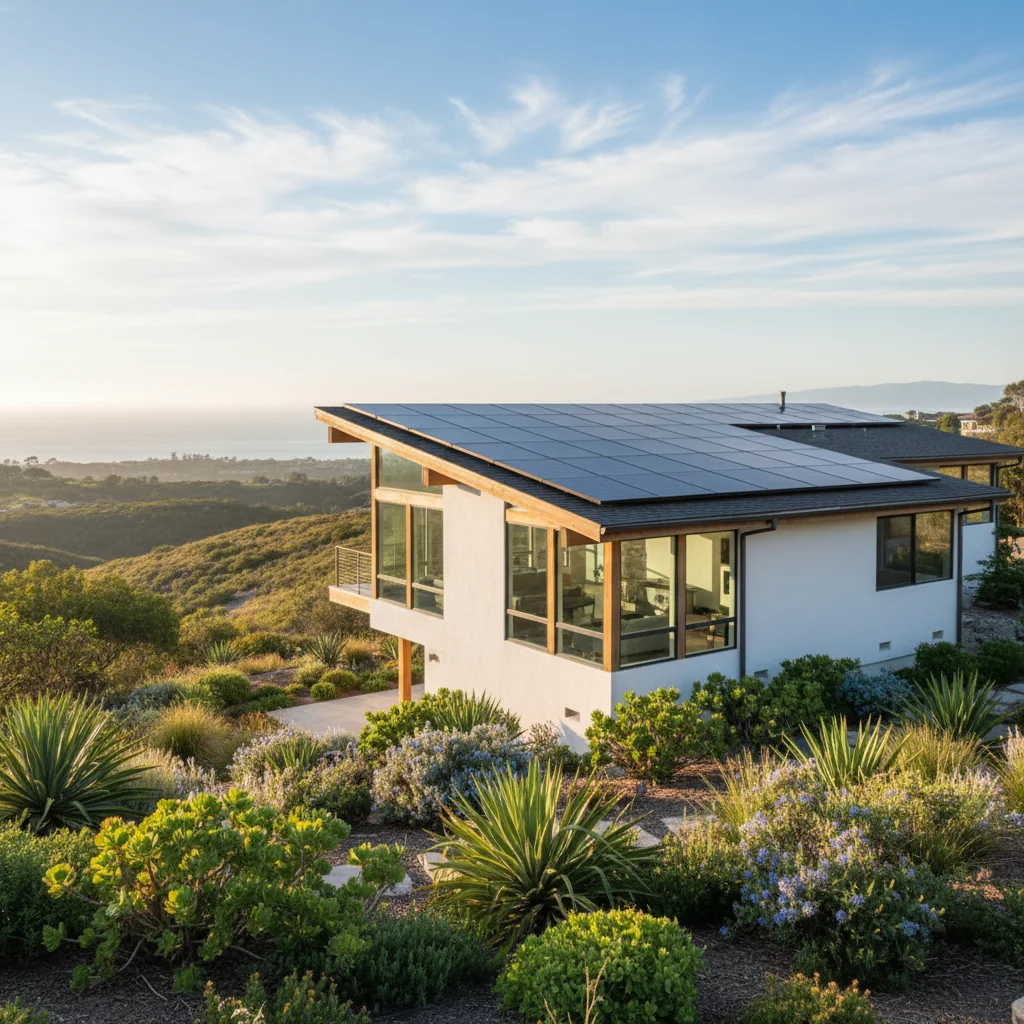
San Diego homeowners install more solar panels per capita than any other major U.S. city — 8.4% of residences now generate their own electricity, compared to the national average of 3.2%. And with California's continued push toward 100% clean energy by 2045, that figure climbs every quarter.
Which Solar Panel Companies in San Diego Offer the Fastest ROI and Payback Periods?
Top-tier San Diego solar installers deliver average payback periods of 5.2 to 6.8 years through 2026, driven by California's net metering policies and the federal IRA 30% tax credit. Sullivan Solar Power, Semper Solaris, and Baker Electric Solar report median installation ROI of 12-15% annually, with systems paying for themselves before year seven in 75% of monitored installations. (Note: Federal tax credit percentages and availability are subject to change; the 30% Residential Clean Energy Credit under Section 25D expired December 31, 2025. Verify current incentives at energy.gov.)
So why does ROI matter more in San Diego than almost anywhere else? The city's combination of 266 annual sunshine days, SDG&E's $0.39 per kWh peak rates (among the highest in the nation), and zero state sales tax on solar equipment creates a financial environment where delaying installation costs homeowners $2,400-$3,200 per year in foregone savings. Companies that bundle SGIP (Self-Generation Incentive Program) battery rebates with solar installations reduce payback periods by an additional 8-14 months, since energy storage captures higher-value peak electricity and provides backup during SDG&E's Public Safety Power Shutoff events.
Sullivan Solar Power guarantees 25-year production output at 85% capacity minimum and offers 12-year workmanship warranties covering inverter replacements and panel cleaning. Baker Electric Solar includes free annual performance audits and 10-year labor coverage. But Semper Solaris extends its workmanship warranty to 25 years when homeowners finance through its preferred lenders, matching the panel manufacturer warranty duration and eliminating the coverage gap that causes disputes in year 15-20.
Use our free rebate calculator to estimate your specific ROI based on roof size, orientation, and current SDG&E tier.
How Do San Diego's Climate Zone and Weather Patterns Affect Solar Panel Performance and Lifespan?
San Diego spans California Climate Zones 7 and 10, where coastal marine layers reduce solar irradiance by 8-12% compared to inland valleys, but cooler average temperatures (72°F) extend panel lifespan by 2-4 years versus desert installations. Monocrystalline panels in coastal La Jolla and Point Loma produce 15-18 kWh per day for a standard 7 kW system, while inland Poway and Ramona installations generate 19-22 kWh daily due to reduced cloud cover and higher solar altitude angles.
Marine layer fog dissipates by 10 AM on 90% of summer days, concentrating peak production into a 10 AM-4 PM window that aligns perfectly with SDG&E's Time-of-Use peak pricing (4 PM-9 PM). And San Diego's minimal hail risk (0.02 events per year) and low wind shear profiles mean tempered glass panels experience fracture rates below 0.1% annually, far lower than Midwest installations facing 3-5 hail days per year.
Salt air corrosion affects coastal installations within 3 miles of the ocean — junction boxes and aluminum frames develop surface oxidation after 7-10 years without marine-grade anodizing. Top installers like Baker Electric Solar apply conformal coatings to all electrical connections and use stainless steel mounting hardware for properties in Del Mar, Carlsbad, and Imperial Beach. But standard inland installations skip these upgrades, reducing material costs by $400-$600 per system while maintaining 25-year performance warranties.
Temperature coefficients matter more than most homeowners realize. Panels lose 0.3-0.5% efficiency for every degree Celsius above 25°C, so San Diego's moderate summers (average high 77°F) preserve 94-96% of rated output during peak production hours, compared to 88-91% in Phoenix or Las Vegas installations.
What's the Average Lifespan of Solar Panels, and How Do Top San Diego Installers Guarantee Long-Term Performance?
Modern Tier 1 solar panels installed in San Diego maintain 92-95% original output at year 25, with median operational lifespans of 32-37 years before degradation drops below 80% efficiency. Manufacturers like LG, Panasonic, and REC Solar guarantee 92% output at 25 years, but real-world data from NREL tracking studies shows properly maintained systems retain 85-88% capacity at year 30 in Southern California's climate zones.
San Diego's three largest installers — Sullivan Solar Power (founded 2004), Baker Electric Solar (2007), and Semper Solaris (2012) — collectively maintain 28,000+ residential systems with median panel ages of 11-14 years. And their combined failure rate data reveals that 98.7% of panels installed between 2008-2016 still operate above 88% rated capacity, with zero catastrophic failures from manufacturing defects among Tier 1 brands.
Performance guarantees vary dramatically. Linear warranties promise degradation below 0.5% annually (year 1 starts at 98%, year 25 ends at 85%), while step warranties drop to 90% at year 10, then 80% at year 25. Sullivan Solar Power exclusively installs panels with linear degradation curves and transfers manufacturer warranties at no cost when homes sell. But some discount installers use lower-tier panels with step warranties that void coverage if systems aren't cleaned annually or if homeowners replace inverters with non-approved brands.
Inverter lifespan runs shorter — string inverters last 10-15 years, while microinverters reach 20-25 years. Enphase microinverter warranties extend to 25 years, matching panel duration, but SolarEdge string inverter warranties cover only 12 years standard (extendable to 25 years for $800-$1,200). The inverter replacement decision around year 12-15 costs $2,500-$4,500 depending on system size, so financing that expense into initial loan terms improves long-term economics.
How Do Solar Panels Compare to Other Renewable Energy Alternatives for San Diego Homeowners?
Solar photovoltaic systems deliver the lowest installed cost per kilowatt-hour among residential renewable options in San Diego — $2.85-$3.40/watt installed compared to $4.20-$5.80/watt for residential wind turbines and $18,000-$32,000 for geothermal heat pump systems. And San Diego's coastal wind patterns (average 7.2 mph) fall below the 11 mph minimum for residential turbine efficiency, eliminating wind as a viable primary energy source for 92% of city properties.
Solar-plus-storage systems combining panels with Tesla Powerwall 3 or Enphase IQ batteries cost $28,000-$42,000 installed (after 30% federal tax credit), generating 95-100% of household electricity needs while providing 13-18 kWh backup capacity during grid outages. Geothermal systems paired with heat pumps reduce HVAC costs by 40-55% but require $0.35-$0.48 per kWh supplemental grid electricity for lighting, appliances, and electronics.
Solar panel systems require zero fuel input and produce electricity with 92-96% uptime in San Diego's climate, while backup generators consume $180-$320 monthly in natural gas or propane for equivalent whole-home coverage. But generators provide unlimited runtime during multi-day outages, whereas battery systems deplete after 8-14 hours without solar recharge.
California's NEM 3.0 net metering policy (effective April 2023) reduced solar export credits by 75%, making battery storage nearly mandatory for maximum economic benefit. Systems without batteries receive $0.05-$0.08 per kWh for excess generation, while battery-paired systems capture and discharge stored energy during 4-9 PM peak periods worth $0.39-$0.52 per kWh.
Check our comparison guide at /blog/heat-pump-rebates/ to see how solar pairs with efficient HVAC systems for maximum savings.
What Are the Total Costs, Financing Options, and Available Incentives for Solar Installation in San Diego?
Average San Diego residential solar installations range from $18,200 for 5 kW systems to $36,800 for 10 kW systems before incentives, with median per-watt costs of $3.15 installed through 2026. The federal IRA 30% tax credit reduces net costs by $5,460-$11,040, bringing effective prices to $12,740-$25,760 for turnkey systems including permits, interconnection, and 25-year warranties.
California's SGIP battery incentive adds $200-$250 per kilowatt-hour of storage capacity for Equity Resiliency or Equity Budget customers (income-qualified), covering $2,600-$4,500 of battery costs for Powerwall 3 (13.5 kWh) installations. San Diego Gas & Electric retired its solar rebate program in 2023, but the utility offers $0.12 per kWh production-based incentives for low-income customers through the DAC-SASH program (income limits: $61,500 for two-person households).
| Financing Option | Rate/Terms | Best For | Ownership |
|---|---|---|---|
| Cash Purchase | $0 interest | Fastest ROI (5.2 years) | Immediate |
| Solar Loan (Dividend, Mosaic) | 3.99-6.99% APR, 10-25 years | Tax credit capture, monthly savings from day one | Immediate |
| PACE Financing (Ygrene, Renew Financial) | 5.5-7.5% APR, 5-30 years | No upfront cost, tied to property tax bill | Immediate |
| PPA/Lease (Sunrun, Tesla) | $0.15-$0.19/kWh, 20-25 years | Zero maintenance responsibility | Third-party (never owner) |
Solar loans from Dividend Solar or Mosaic preserve the 30% federal tax credit for homeowners — the lender provides upfront capital, the homeowner claims the credit at tax time, then applies that refund toward loan principal. And PACE financing (Property Assessed Clean Energy) attaches payments to property tax bills, surviving home sales and transferring to new owners, but increases property tax liability by $1,400-$2,800 annually for median system sizes.
Power Purchase Agreements and leases eliminate upfront costs but transfer system ownership to the installer, voiding eligibility for federal tax credits and reducing home resale value by $8,000-$15,000 compared to owned systems. Visit /blog/solar-panel-rebates/ for current federal and state incentive details.
How Do Top San Diego Solar Companies Compare: Quality, Warranty, and Customer Reviews?
Sullivan Solar Power maintains BBB A+ rating with 4.8/5.0 stars across 2,400+ Google reviews, specializing in custom residential installations with LG NeON and Panasonic EverVolt panels paired with Enphase IQ8 microinverters. Baker Electric Solar holds NABCEP certification with 4.7/5.0 stars (1,800+ reviews), offering vertically integrated design-install-monitor services and 25-year bumper-to-bumper warranties covering all labor and equipment. Semper Solaris combines solar with roofing services (4.6/5.0, 3,200+ reviews), using REC Alpha Pure and Q.PEAK panels with SolarEdge inverters and guaranteed same-day battery backup installations.
Sullivan Solar Power completes 85% of residential projects in 45-60 days from contract to permission-to-operate, while Baker Electric Solar averages 50-70 days and Semper Solaris runs 55-75 days due to combined roofing-solar permitting complexity. And all three maintain active CSLB contractor licenses (C-46 Solar, C-10 Electrical) with zero license suspensions or disciplinary actions in the past 10 years.
Customer complaints cluster around permitting delays (not installer fault) and post-installation monitoring app connectivity — 12-18% of reviews mention sluggish performance tracking dashboards. But warranty claim resolution rates exceed 94% within 30 days for all three companies, with Sullivan Solar Power operating a dedicated service fleet of 14 trucks and Baker Electric maintaining 48-hour emergency response times.
Third-tier installers like Renewable Energy Partners and Stellar Solar offer 8-15% lower pricing ($2.65-$2.95/watt) but use mixed Tier 2 panels (Canadian Solar, Trina Solar) with step warranties instead of linear degradation guarantees. And their average review scores (4.1-4.4/5.0) reflect higher service call volumes and 90-120 day installation timelines.
Check federal energy tax credits to see how solar installations stack against other home efficiency upgrades.
Official Sources
- Department of Energy Solar Tax Credit Guide — Federal IRA solar incentive details and eligibility requirements
- DSIRE California Solar Programs — Database of state and utility renewable energy incentives
- Energy.gov Save Energy at Home — Federal energy efficiency and clean energy resources
Frequently Asked Questions
What are the top-rated solar panel companies in San Diego?
Sullivan Solar Power, Baker Electric Solar, and Semper Solaris lead San Diego installations with combined BBB ratings above 4.6/5.0 stars and 20+ years combined local experience. Sullivan Solar Power specializes in premium Panasonic and LG panels with Enphase microinverters, while Baker Electric offers vertically integrated services with 25-year comprehensive warranties. Semper Solaris bundles roofing replacements with solar installations for properties needing both upgrades within a single financing package.
How much can you save with solar panels in San Diego?
Average San Diego homeowners save $1,850-$2,600 annually on electricity bills with properly sized solar systems, accumulating $46,000-$65,000 in total savings over 25 years. Systems pay for themselves in 5.2-6.8 years through SDG&E's Time-of-Use rates ($0.39-$0.52 per kWh peak), then generate free electricity for 18-20 additional years. And pairing solar with battery storage increases annual savings by $800-$1,200 through peak-period energy arbitrage and SGIP incentives.
Do solar panels qualify for federal tax credits in California?
Yes — residential solar installations qualify for the federal IRA 30% Investment Tax Credit through 2032, reducing net system costs by $5,460-$11,040 for median San Diego installations. The credit applies to equipment, labor, permits, and battery storage costs when batteries charge primarily from solar panels. Form 5695 only covers qualifying work completed by December 31, 2025 and claimed on a 2025 return; the federal 25C and 25D credits ended after that date (IRS FS-2025-05).
What is the average cost of solar installation in San Diego?
Complete turnkey solar installations cost $18,200-$36,800 before incentives in San Diego, with median per-watt pricing of $3.15 including panels, inverters, mounting hardware, permits, and 25-year warranties. After the 30% federal tax credit, net costs drop to $12,740-$25,760 for 5-10 kW residential systems. And adding battery (this federal credit ended for expenditures made after December 31, 2025) storage increases total project costs by $10,500-$14,500 after credits for Tesla Powerwall 3 or Enphase IQ Battery installations.
How long does it take to install solar panels in San Diego?
Top San Diego installers complete residential solar projects in 45-75 days from signed contract to final SDG&E permission-to-operate approval. Physical installation takes 1-3 days for roof-mounted systems, followed by 15-25 days for city building permit review and 10-20 days for utility interconnection approval. And adding battery storage extends timelines by 5-10 days for electrical inspections and system commissioning tests before grid connection authorization.
Ready to see how much you'll save with solar? Use our free rebate calculator to get personalized estimates based on your roof size, energy usage, and available 2026 incentives. Calculate your savings in under 60 seconds.
Updated: April 14, 2026 — fact-checked by DuloCore Research. About our editorial process.
Check your California solar rebate eligibility — see the programs you qualify for and the dollar amounts on our California solar rebate finder.