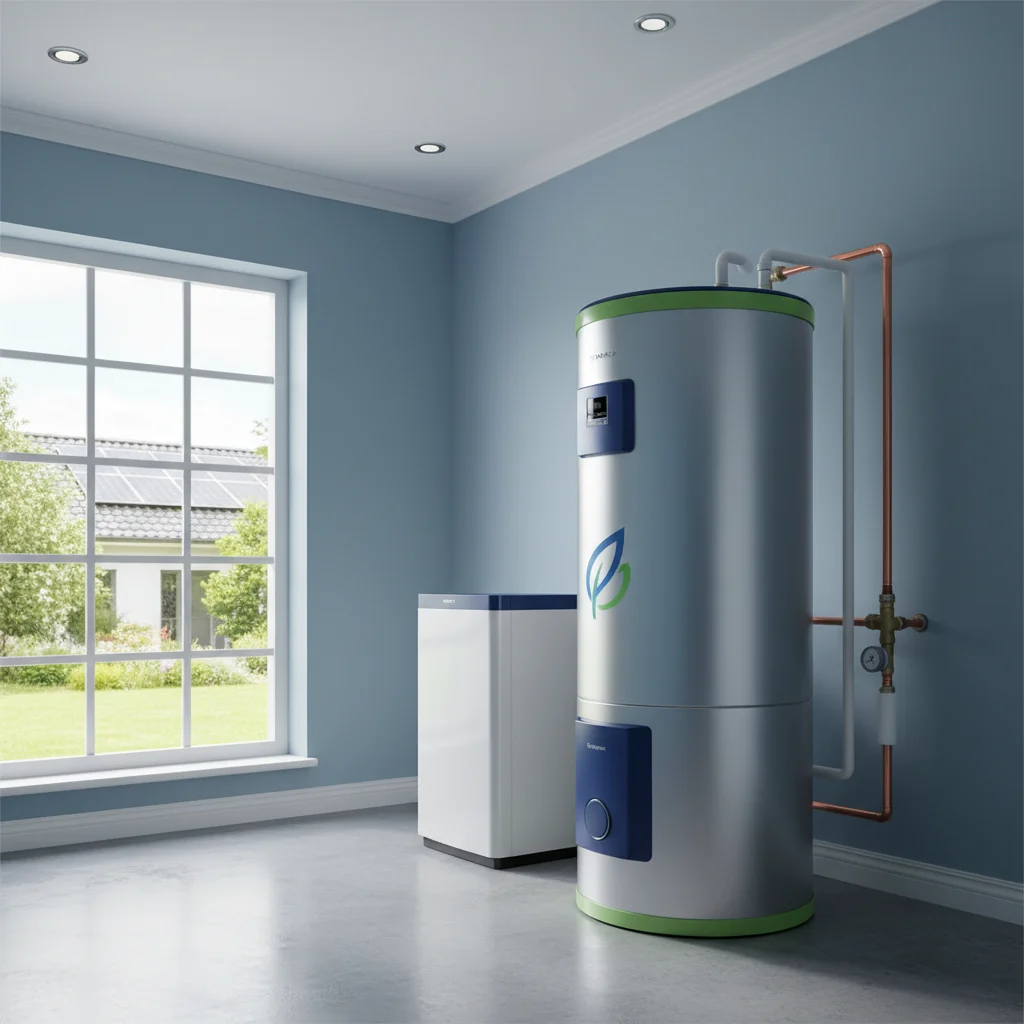
Water heating costs California homeowners an average of $470 annually—second only to HVAC systems in residential energy consumption. And in 2026, state and federal programs offer combined rebates reaching $8,000 for qualifying electric water heater installations, making this year the most financially advantageous time to upgrade since the Inflation Reduction Act passed in 2022.
What Electric Water Heater Rebates Are Available Right Now?
California homeowners installing electric water heaters in 2026 qualify for federal IRA tax credits up to $2,000 and state TECH Clean California rebates reaching $6,000 for heat pump water heaters, depending on household income and utility provider participation, with combined incentives totaling $8,000 for income-qualified households through December 31, 2026.
The federal Energy Efficient Home Improvement Credit (Section 25C) ended for property placed in service after December 31, 2025 (IRS FS-2025-05). Federal tax credits for this work have ended, but state, local and utility rebates may still apply; check what is available at your address with the DuloCore rebate calculator. But the real savings come from California's TECH Clean California initiative, which offers point-of-sale rebates between $1,500 and $6,000 based on income level and equipment type.
So income-qualified households earning below 80% of area median income receive the maximum $6,000 state rebate plus the $2,000 federal credit. Moderate-income households between 80-150% AMI qualify for $3,000 state rebates. And even households above 150% AMI receive $1,500 through participating utilities like PG&E, Southern California Edison, and San Diego Gas & Electric.
Check your eligibility and calculate combined savings using the rebate calculator to see exact amounts for your zip code and income level.
Am I Eligible for an Electric Water Heater Rebate?
California homeowners qualify for electric water heater rebates in 2026 if their primary residence has an existing water heater requiring replacement, household income falls within program thresholds (verified through tax returns or state assistance enrollment), and installed equipment meets Energy Star certification requirements with minimum 3.5 Uniform Energy Factor rating for heat pump models.
Income documentation requires either 2024 or 2025 federal tax returns showing adjusted gross income, or proof of enrollment in state assistance programs like CalFresh, Medi-Cal, or California Alternate Rates for Energy (CARE). And contractors must hold active C-36 or C-61 licenses in California and complete program-specific training through TECH Clean California.
Property requirements exclude new construction—only retrofit installations replacing existing gas or electric water heaters qualify. So vacation homes, rental properties owned by landlords with more than 4 units, and commercial buildings don't meet residential program criteria.
Equipment specifications mandate heat pump water heaters with minimum 80-gallon storage capacity for federal credits, though 50-gallon models qualify for state rebates. Or standard electric resistance water heaters receive smaller rebates of $300-$500 through utility programs but don't qualify for the $2,000 federal credit.
Review complete eligibility requirements and income limits in our water heater rebates guide.
How Much Money Can I Save with an Electric Water Heater Rebate?
Electric water heater rebates in 2026 reduce upfront installation costs by $1,500 to $8,000 depending on income level and equipment type, while annual energy savings average $330 compared to conventional gas water heaters based on DOE efficiency data, creating combined first-year savings between $1,830 and $8,330 before factoring in reduced maintenance costs.
A typical 80-gallon heat pump water heater costs $3,500-$5,500 installed in California. But income-qualified households receive $6,000 state rebates plus $2,000 federal credits, effectively making the upgrade free or generating net positive cash at installation for households with existing water heater replacement needs.
| Program | Income Threshold | Rebate Amount | Equipment Requirement |
|---|---|---|---|
| TECH Clean CA (Low) | <80% AMI | $6,000 | Heat pump, 50+ gal |
| TECH Clean CA (Moderate) | 80-150% AMI | $3,000 | Heat pump, 50+ gal |
| TECH Clean CA (Standard) | >150% AMI | $1,500 | Heat pump, 50+ gal |
| Federal IRA Credit | — | Ended Dec 31, 2025 | — |
| Utility Programs | Varies | $300-$800 | Electric resistance OK |
And operational savings compound annually. Heat pump water heaters achieve 3.5-4.0 Uniform Energy Factor ratings compared to 0.90-0.95 for standard electric models, reducing electricity consumption by 63-73%. So a household using 4,500 kWh annually for water heating at $0.28/kWh average California rates saves $330 per year, recovering any remaining out-of-pocket costs within 2-4 years.
Maintenance costs drop too—heat pump systems eliminate combustion components requiring annual inspection, saving $120-$180 in yearly service calls compared to gas water heaters.
What's the Application Process for Electric Water Heater Rebates?
California electric water heater rebate applications in 2026 require homeowners to pre-qualify through the TECH Clean California portal before equipment purchase, submit contractor quotes and household income documentation within 14 days, receive reservation confirmation via email, complete installation within 180 days, and upload final invoices with photos for payment processing taking 30-45 business days.
Pre-approval is mandatory for state rebates—installations completed before reservation confirmation don't qualify for TECH Clean California incentives. Form 5695 only covers qualifying work completed by December 31, 2025 and claimed on a 2025 return; the federal 25C and 25D credits ended after that date (IRS FS-2025-05).
The application workflow follows these steps:
- Create account at TECH Clean California and verify household income
- Request quotes from program-registered contractors (minimum 2 quotes recommended)
- Submit reservation application with chosen contractor details and equipment specifications
- Receive reservation number within 5-7 business days
- Complete installation within 180-day reservation window
- Upload final invoice, permit documents, and installation photos
- Receive rebate payment via direct deposit or check in 30-45 days
So the entire process from application to payment takes 60-90 days for most households. And utility programs like PG&E's Energy Upgrade California offer instant point-of-sale rebates applied directly by contractors, eliminating the reimbursement wait.
Federal tax credits get claimed when filing 2026 returns in early 2027—no separate application required beyond retaining receipts and manufacturer certification statements.
What Documentation Do I Need to Apply for a Rebate?
Electric water heater rebate applications in 2026 require final contractor invoices showing equipment model numbers and installation costs, manufacturer specification sheets proving Energy Star certification and Uniform Energy Factor ratings, building permit copies with inspection approvals, proof of household income through tax returns or state benefit enrollment letters, and installation photos showing equipment serial number plates and electrical connections.
Income verification accepts 2024 or 2025 federal Form 1040 showing adjusted gross income, or enrollment letters from CalFresh, Medi-Cal, CARE, or FERA programs dated within the past 12 months. And contractors must provide California C-36 or C-61 license numbers on all invoices.
Equipment documentation requires manufacturer spec sheets explicitly listing: - Energy Star certification number - Uniform Energy Factor (UEF) rating of 3.5 or higher for heat pump models - First-hour rating (FHR) meeting household size requirements - Storage tank capacity in gallons
Building permits prove code compliance—most California jurisdictions require electrical and plumbing permits for water heater installations exceeding simple replacement. So inspections must show final approval stamps before rebate payment processing begins.
Installation photos should clearly show equipment serial number plates, electrical panel connections, temperature/pressure relief valve installations, and condensate drain lines for heat pump models. Or applications get flagged for field verification, delaying payment by 30-60 days.
Store all documentation for 7 years—IRS audits may request receipts and certification statements when claiming federal energy tax credits on future returns.
Do I Need Pre-Approval Before Buying My Electric Water Heater?
California TECH Clean California rebates require mandatory pre-approval reservations submitted before equipment purchase or installation begins, with applications denied retroactively for completed projects.
The state pre-approval requirement protects against double-dipping and budget depletion—TECH Clean California operates on first-come, first-served basis with annual funding limits. So reservations guarantee rebate availability for the 180-day installation window.
But the pre-approval process creates timing challenges. Emergency water heater failures requiring immediate replacement often can't wait 5-7 days for reservation confirmation. And homeowners facing same-day installations miss state rebates entirely unless contractors offer temporary financing to delay final purchase until reservation approval.
Utility programs vary—PG&E's Energy Upgrade California offers instant point-of-sale rebates applied directly by participating contractors without pre-approval. So Southern California Edison requires online reservations similar to TECH Clean California. Or San Diego Gas & Electric processes rebates within 6-8 weeks post-installation without pre-qualification.
Federal credits never require pre-approval. Install anytime during 2026, retain receipts and Energy Star certificates, and claim the $2,000 credit when filing taxes in early 2027.
Plan ahead when possible—submit pre-approval applications 2-3 weeks before anticipated installation to avoid emergency replacement scenarios that disqualify state rebates.
Can I Stack Multiple Electric Water Heater Rebates?
California homeowners in 2026 can stack federal IRA tax credits up to $2,000 with state TECH Clean California rebates reaching $6,000 and utility-specific programs offering $300-$800 additional incentives, creating combined savings up to $8,800 per installation with no coordination required between programs beyond ensuring equipment meets each program's distinct Energy Star and efficiency rating requirements.
Federal and state programs explicitly allow stacking—TECH Clean California regulations don't count federal tax credits as conflicting incentives. And utility rebates through PG&E, SCE, or SDGE complement rather than replace state programs, provided equipment meets both efficiency thresholds.
But homeowners can't stack multiple state programs for the same installation. So TECH Clean California and California Solar Initiative Thermal exclude each other—choose one per project. Or claiming both constitutes fraud triggering repayment demands plus penalties.
Typical stacking scenarios:
- Low-income household: $6,000 TECH + $2,000 federal + $500 utility = $8,500 total
- Moderate-income household: $3,000 TECH + $2,000 federal + $500 utility = $5,500 total
- High-income household: $1,500 TECH + $2,000 federal + $300 utility = $3,800 total
And local municipality programs occasionally add another layer. Bay Area Air Quality Management District offers $3,000 incentives for gas-to-electric conversions in certain zip codes, stacking with all state and federal programs for total incentives exceeding $11,000.
Calculate your exact stacking potential using the rebate calculator by entering your zip code, income level, and equipment specifications.
Similar stacking opportunities exist for other home upgrades—review heat pump rebates to maximize savings across multiple projects in the same tax year.
What Are the Deadlines for Electric Water Heater Rebate Programs?
The federal Energy Efficient Home Improvement Credit (Section 25C) ended for property placed in service after December 31, 2025 (IRS FS-2025-05). California TECH Clean California operates on annual funding cycles with 2026 appropriations accepting applications until December 15, 2026, or when allocated budgets deplete earlier, requiring reservations within 180-day installation completion deadlines.
TECH Clean California funding typically exhausts 3-5 months before calendar year-end in high-demand regions. Los Angeles and San Francisco Bay Area programs depleted 2025 budgets by September, leaving late-year applicants waitlisted for 2026 funding. So submitting applications in Q1 or Q2 maximizes approval likelihood.
The 180-day reservation window creates real urgency—approved applications expiring due to installation delays forfeit rebates entirely. And extensions require documented contractor delays or permit issues, not homeowner scheduling preferences.
Utility program deadlines vary by provider:
- PG&E: Rolling applications, no annual deadline, subject to availability
- Southern California Edison: December 20, 2026, for 2026 budget year
- San Diego Gas & Electric: December 31, 2026, funds permitting
- Sacramento Municipal Utility District: September 30, 2026 (fiscal year basis)
Federal tax credits have no annual limits—the $2,000 maximum applies per household per year, but unused credit doesn't carry forward. So homeowners installing in December can't split the credit across two tax years.
Plan installations before November to ensure adequate processing time for state rebates and December 31 completion for federal credit claims on 2026 returns.
Official Sources
- U.S. Department of Energy - Save Energy, Save Money — Federal energy efficiency guidance and IRA rebate information
- DSIRE USA — Comprehensive database of state and utility rebate programs
- ENERGY STAR Water Heaters — Certified product directory and efficiency specifications
Related Reading: Learn more about Energy Audit Reduce Electric Bill and Tankless Water Heater Rebate.
Frequently Asked Questions
Who qualifies for electric water heater rebates?
California homeowners qualify for electric water heater rebates in 2026 if their primary residence has an existing water heater requiring replacement, household income falls within program thresholds verified through tax returns or state assistance enrollment, and installed equipment meets Energy Star certification with minimum 3.5 Uniform Energy Factor rating. Rental properties with 1-4 units qualify if owner-occupied, while vacation homes and commercial buildings don't meet residential program criteria. And contractors must hold active C-36 or C-61 California licenses and complete program-specific training.
How much can you save with an electric water heater rebate?
Electric water heater rebates in 2026 reduce upfront costs by $1,500 to $8,000 depending on income level, with income-qualified households below 80% area median income receiving $6,000 state rebates plus $2,000 federal credits totaling $8,000 combined incentives. Annual operational savings average $330 compared to gas water heaters based on California's $0.28/kWh average electricity rates and 4,500 kWh typical usage. So combined first-year savings reach $8,330 for low-income households, with payback periods of 2-4 years for moderate and higher-income applicants.
What is the process to apply for an electric water heater rebate?
California electric water heater rebate applications require homeowners to pre-qualify through TECH Clean California's online portal before purchase, submit contractor quotes and income documentation within 14 days, receive reservation confirmation via email in 5-7 business days, complete installation within 180 days, and upload final invoices with photos for payment processing taking 30-45 business days. Form 5695 only covers qualifying work completed by December 31, 2025 and claimed on a 2025 return; the federal 25C and 25D credits ended after that date (IRS FS-2025-05).
When do electric water heater rebates expire?
The federal Energy Efficient Home Improvement Credit (Section 25C) ended for property placed in service after December 31, 2025 (IRS FS-2025-05). California TECH Clean California accepts 2026 applications until December 15, 2026, or when annual budgets deplete earlier, typically by September in high-demand regions like Los Angeles and San Francisco. Approved reservations expire 180 days after confirmation without extensions unless contractors document permit delays or supply chain issues. And utility programs vary—PG&E operates on rolling basis while Southern California Edison closes December 20, 2026.
What's the difference between federal and state electric water heater rebates?
The federal Energy Efficient Home Improvement Credit (Section 25C) ended for property placed in service after December 31, 2025 (IRS FS-2025-05). California TECH Clean California offers point-of-sale rebates between $1,500 and $6,000 based on household income levels requiring mandatory pre-approval reservations before purchase. State rebates get paid within 30-45 days post-installation via direct deposit. And both programs stack without coordination—homeowners claim both simultaneously for the same installation.
Ready to find your exact rebate amount? Use our free rebate calculator to see how much you can save based on your zip code, income level, and equipment choice. Get your personalized savings estimate in under 60 seconds.
Last updated April 14, 2026 — reviewed by DuloCore Editorial. About our authors.
Check your California water heater rebate eligibility — see the programs you qualify for and the dollar amounts on our California water heater rebate finder.