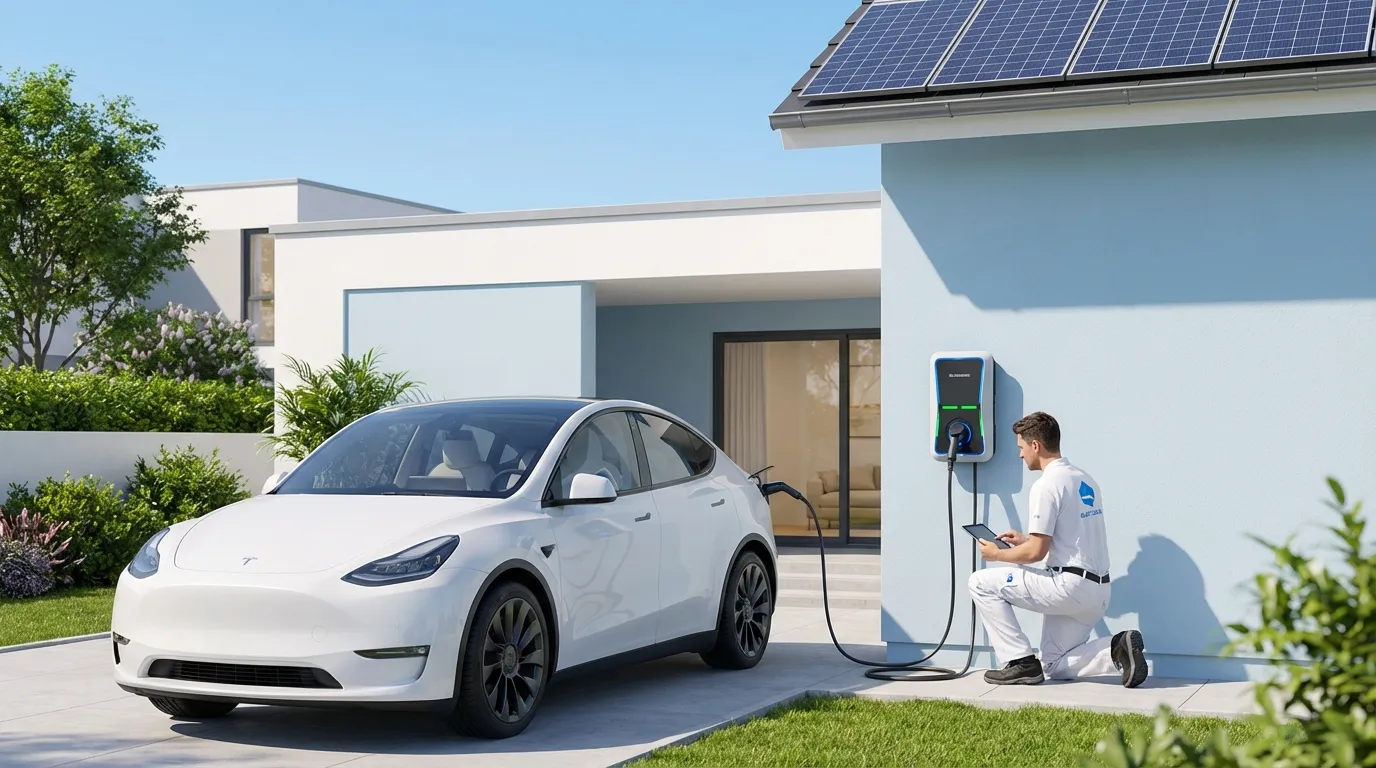
Over 1.4 million electric vehicles were sold in the U.S. last year, a 50% increase from the year prior, putting immense pressure on home charging infrastructure. Homeowners are now racing to install Level 2 chargers, but the installation costs, which range from $1,200 to $2,500, create a financial barrier. So understanding the full landscape of rebates is no longer a nice-to-have; it's a financial necessity for making the switch to electric.
The core issue is that the total cost of installing a home EV charger is often a surprise expense for new electric vehicle owners. Without leveraging available incentives, a homeowner pays up to $2,500 out-of-pocket for a necessary piece of equipment. But stacking a federal tax credit with state and utility rebates reduces that final cost by 50-75%, turning an expensive project into a manageable home upgrade.
How Much Do EV Charger Rebates Save You, and What Equipment Qualifies?
EV charger rebates and tax credits reduce the total installation cost by combining federal, state, and utility incentives, which often cover 50% or more of the project expense. Eligible equipment typically includes new Level 2 (240-volt) chargers, especially ENERGY STAR certified models, and associated installation costs.
The federal 30C charger credit ended for chargers placed in service after June 30, 2026 (IRS FS-2025-05). Federal tax credits for this work have ended, but state, local and utility rebates may still apply; check what is available at your address with the DuloCore rebate calculator. And this credit applies to both the charger itself and the installation labor costs. But state and local utility programs offer direct cash rebates that further lower the price. For example, hundreds of local utilities offer rebates between $250 and $750 for installing a qualified Level 2 charger. So combining these incentives is the most effective strategy. You can explore a full list of available EV charger rebates to see what applies in your area.
Am I Eligible for EV Charger Rebates: Understanding Income Limits, State, and Utility Programs?
Eligibility for EV charger rebates primarily depends on your geographic location, your electricity provider, and whether the property is your primary residence. While the main federal tax credit has no income cap, many state-level programs do have income restrictions to target low-to-moderate income households.
Your eligibility is hyperlocal. So you must verify requirements with your specific state energy office and local utility. The federal 30C charger credit ended for chargers placed in service after June 30, 2026 (IRS FS-2025-05). But the 400+ utility and state programs have unique rules. For instance, some programs require you to enroll in a time-of-use electricity plan to qualify for the rebate. So checking program-specific rules on a database is the first step.
"Many states and utilities offer additional incentives for purchasing and installing an EV charger. This can include rebates, tax credits, and other perks." — U.S. Department of Energy
What's the Application Process, Deadlines, and Contractor Requirements for EV Charger Rebates?
The application process for EV charger rebates typically requires submitting an online form with proof of purchase, installation invoices, and photos of the final setup. Most programs mandate that a licensed electrician perform the installation, and deadlines are often the end of the calendar year or when program funds are exhausted.
The process is straightforward but requires careful documentation. First, confirm your eligibility and check for any pre-approval requirements before purchase. And after a licensed electrician completes the installation, you submit the final application with itemized receipts. But these programs operate on a first-come, first-served basis. So applying immediately after installation is critical before the annual funding pool of $5 million to $10 million for a given state program runs out. Many homeowners use a rebate calculator to track deadlines and requirements.
Can I Stack Rebates, and How Do I Check Funding Status for EV Charger Installation?
Yes, homeowners can stack multiple incentives, combining the 30% federal tax credit with state rebates and local utility cash-back offers to maximize savings. Funding status for these programs is typically displayed directly on the state energy office or utility company’s website under a "program updates" section.
Stacking is the key to reducing your out-of-pocket cost to just a few hundred dollars. For example, on a $2,000 installation, you can claim a $600 federal tax credit (30% of $2,000) and also receive a $500 rebate from your utility company. So your total savings become $1,100. But before applying, always check the program’s funding page. These pages will state if funds are still available or if the program is closed to new applicants. This simple check prevents you from wasting time on an expired offer, a common issue with popular programs like heat pump rebates.
What is the Real Cost of EV Charger Installation After All Rebates?
The real cost of a Level 2 EV charger installation after applying all available rebates is typically between $300 and $900, a reduction of over 75% from the initial quote. This final price accounts for a national average installation cost of $2,000 minus stacked federal, state, and utility incentives.
Let's break down a real-world example. Assume the total cost for a Level 2 charger and installation is $2,200. The federal 30C charger credit ended for chargers placed in service after June 30, 2026 (IRS FS-2025-05). And your local utility offers a $500 rebate for installing an ENERGY STAR certified model. So you subtract both amounts from the initial cost ($2,200 - $660 - $500). Your final, out-of-pocket expense is just $1,040.
"DSIRE is the most comprehensive source of information on incentives and policies that support renewables and energy efficiency in the United States." — DSIRE
EV Charger Rebate Program Comparison
| Program Name | Rebate Amount/Credit | Key Eligibility Requirement | Typical Deadline |
|---|---|---|---|
| Federal Tax Credit (26 USC § 30C) | Ended June 30, 2026 | Ended June 30, 2026 | Ended June 30, 2026 |
| State Rebate (e.g., CA) | $250 - $1,000 | Income limits often apply; must be a state resident | When funds are depleted |
| Utility Rebate (e.g., Con Edison) | $300 - $750 | Must be a customer of the specific utility; Wi-Fi enabled charger often required | First-come, first-served |
Related Reading: Learn more about Level 1 Vs Level 2 Ev Charger Cost.
Frequently Asked Questions
Who is eligible for EV charger installation rebates?
Eligibility generally requires you to be a homeowner installing a new, qualified Level 2 charger at your primary residence. And for many state and utility programs, you must reside within a specific service territory and sometimes meet income requirements. The federal tax credit is more broadly available without an income cap.
What is the average rebate amount for EV charger installation?
The average rebate amount varies widely by location. The federal 30C charger credit ended for chargers placed in service after June 30, 2026 (IRS FS-2025-05). And state and utility rebates typically range from $250 to $750. So when stacked, total savings often reach $750 to $1,500.
How do I apply for EV charger installation rebates?
You apply by submitting an online application through your utility or state energy office's website. This process requires digital copies of your purchase receipt, the electrician's itemized invoice, and sometimes photos of the installed charger.
When do EV charger installation rebate programs typically expire?
Most rebate programs expire at the end of the calendar year or whenever their allocated funding is depleted. Because funding is limited, it's critical to apply as soon as your installation is complete. Always check the program's website for its current status.
Can I combine multiple rebates for EV charger installation to save more?
Yes, you can and should combine multiple rebates. Stacking the 30% federal tax credit with a state rebate and a local utility rebate is the most effective way to reduce your total installation cost by 75% or more.
Last updated: April 14, 2026. Reviewed by the DuloCore Editorial Team. About our authors.
Check your California EV charger rebate eligibility — see the programs you qualify for and the dollar amounts on our California EV charger rebate finder.