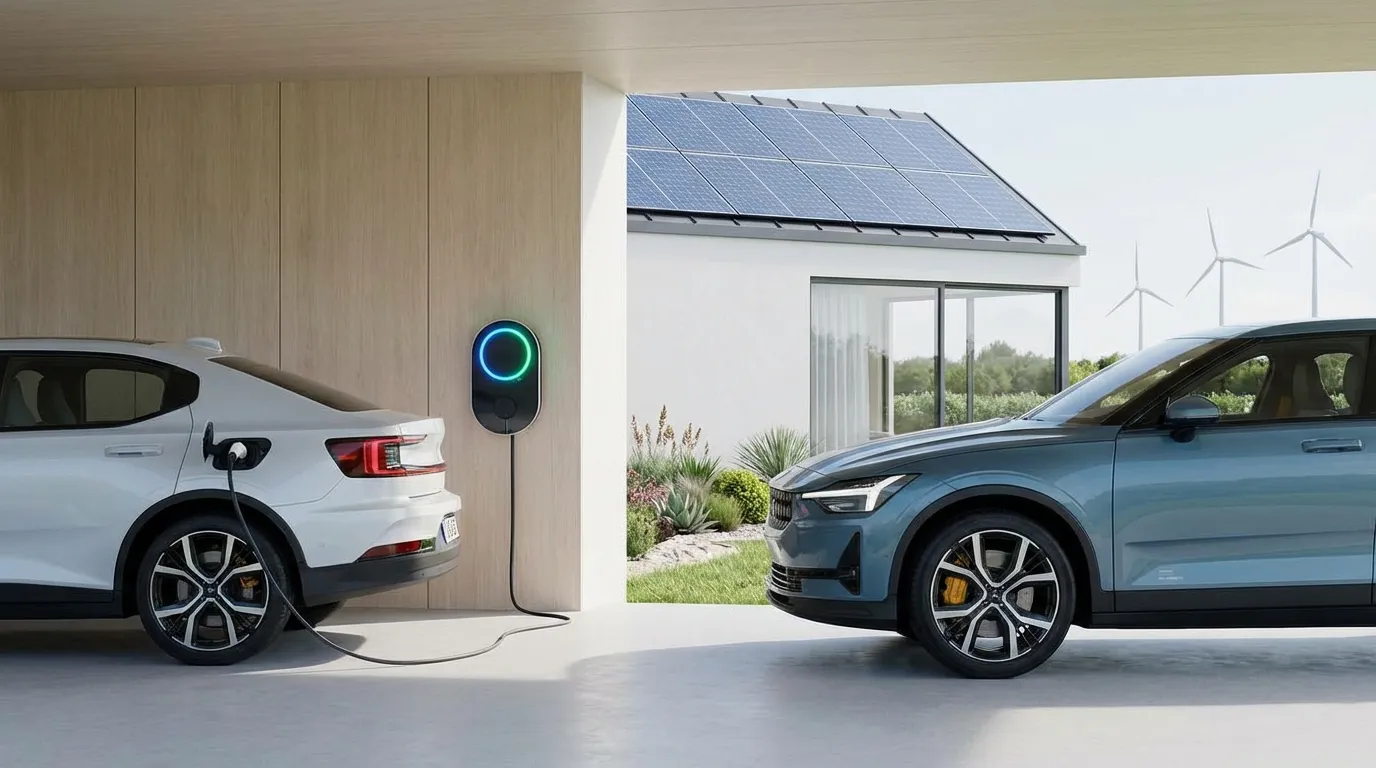
Update (2026): The federal Residential Clean Energy Credit (Section 25D) expired December 31, 2025, following the passage of the One Big Beautiful Bill Act (OBBBA). The information below reflects historical credit availability. Check state and local programs for current incentives.
More than 80% of all electric vehicle charging happens right at home, transforming garages into personal fueling stations. This shift makes the financial incentives for installing home charging equipment more critical than ever. So understanding the future availability and rules of federal tax credits isn't just about planning; it's about unlocking thousands of dollars in savings on an essential home upgrade.
What is the Current Status of the Federal EV Charger Tax Credit for 2026?
The federal 30C charger credit ended for chargers placed in service after June 30, 2026 (IRS FS-2025-05). Federal tax credits for this work have ended, but state, local and utility rebates may still apply; check what is available at your address with the DuloCore rebate calculator. And its status for 2026 is active. The program was extended by the Inflation Reduction Act of 2022 to run through December 31, 2025.
The credit's availability for 2026 is confirmed. So homeowners planning an installation can confidently factor this incentive into their budget. But the rules have changed from previous years. The most impactful change is the new location requirement, which restricts eligibility to properties located in specific census tracts. And this means not every homeowner qualifies, even with the right equipment. The U.S. Department of Energy provides a mapping tool to help homeowners determine if their property falls within an eligible low-income or non-urban census tract. This geographic restriction is the single most important factor determining eligibility for the tax credit in 2026. You can find other available EV charger rebates if your location doesn't qualify.
How Much is the EV Charger Tax Credit for 2026, and What Are Its Financial Limits?
The federal 30C charger credit ended for chargers placed in service after June 30, 2026 (IRS FS-2025-05). But its value is capped at a maximum of $1,000 for residential installations. So for a $2,000 charger and installation, a homeowner receives a $600 credit, not the full $1,000.
This $1,000 cap applies to the total cost of the project, which includes both the charger hardware and any associated installation expenses. And these expenses include electrician labor, wiring, and conduit needed to make the charger operational. It's a non-refundable credit, meaning it can reduce a homeowner's tax liability to zero, but they won't receive any portion of the credit back as a refund beyond that. So if a taxpayer's liability is only $700, they will only receive a $700 credit, even if their qualified expenses would have generated the full $1,000 credit. This structure rewards those with a higher tax bill.
What EV Charging Equipment and Homeowners Qualify for the 2026 Tax Credit?
Qualifying equipment for the 2026 EV charger credit includes hardware for Level 2 (240-volt) charging or DC fast charging. And this now explicitly includes bidirectional (two-way) chargers that can power a home. But the property must be located in an eligible census tract, defined as either a low-income community or a non-urban area.
To be eligible, the charger must be new equipment placed in service during the tax year. So used or refurbished chargers don't qualify. And the primary use of the equipment must be at the taxpayer's main home. The most critical qualification, however, is geographic. The federal 30C charger credit ended for chargers placed in service after June 30, 2026 (IRS FS-2025-05). A tract is eligible if it's a designated low-income community or if it's not an urban area as defined by the Census Bureau. This rule change from 2023 onwards disqualifies millions of suburban homeowners who were previously eligible. Homeowners can use government-provided mapping tools to verify their address's eligibility before purchase.
How Do I Claim the 2026 EV Charger Tax Credit, and What Forms Are Required?
The federal 30C charger credit ended for chargers placed in service after June 30, 2026 (IRS FS-2025-05). So they must keep all receipts for the equipment and installation costs as documentation for the filing.
The process is straightforward. First, you must purchase and install qualifying equipment at your primary residence within an eligible census tract during the 2026 calendar year. And you need to save all related invoices and receipts, which should clearly itemize the cost of the charger and the labor for installation. The federal 30C charger credit ended for chargers placed in service after June 30, 2026 (IRS FS-2025-05). This form calculates the credit amount based on your total costs. This entire process is part of your standard tax filing.
Can the 2026 EV Charger Tax Credit Be Combined With Other Incentives?
The 2026 federal EV charger tax credit can be combined with state, local, and utility incentives. But the cost basis for calculating the 30% federal credit (this federal credit ended for chargers placed in service after June 30, 2026) is reduced by the amount of any non-taxable utility rebate received. So this directly lowers the federal credit amount.
For example, a homeowner spends $2,500 on a charger installation. They receive a $500 rebate from their electric utility, which is generally not considered taxable income. When calculating the federal tax credit, the homeowner must first subtract the utility rebate from their total cost. So their new cost basis is $2,000 ($2,500 - $500). The federal 30C charger credit ended for chargers placed in service after June 30, 2026 (IRS FS-2025-05). Without the utility rebate, the credit would have been $750 (30% of $2,500). And state tax credits, which are different from rebates, typically don't reduce the federal credit's cost basis. This makes stacking state credits with federal energy tax credits a powerful savings strategy.
How Does the 2026 EV Charger Tax Credit Compare to Previous Years and Future Projections?
The 2026 EV charger tax credit differs from pre-2023 versions primarily because of its new location requirement. So while the 30% rate and $1,000 cap for residential installations are similar, eligibility is now restricted to installations in designated low-income or non-urban census tracts.
The federal 30C charger credit ended for chargers placed in service after June 30, 2026 (IRS FS-2025-05). But for equipment placed in service starting January 1, 2023, the census tract rule was added, dramatically narrowing the pool of eligible applicants. Another key improvement is the explicit inclusion of bidirectional charging equipment, which was not specified in earlier versions of the law. Looking forward, the credit is legislated to remain in its current form through December 31, 2025. So homeowners who qualify under the current rules can expect the same terms to apply for the next several years, providing stability for long-term planning, unlike incentives for heat pump rebates which can change more frequently.
EV Charger Incentive Comparison
| Incentive Program | Type | Maximum Amount | Key Eligibility Requirement |
|---|---|---|---|
| Federal 30C Tax Credit | Ended June 30, 2026 | Ended June 30, 2026 | — |
| California State Rebate | Point-of-Sale | $750 (Varies) | Income-dependent; must be a CA resident. |
| Utility Program (e.g., ConEd) | Rebate | $300-$500 | Must be a customer of the specific utility. |
Frequently Asked Questions About the 2026 EV Charger Tax Credit
Is the federal EV charger tax credit still available in 2026?
The federal 30C charger credit ended for chargers placed in service after June 30, 2026 (IRS FS-2025-05). The Inflation Reduction Act extended the program through December 31, 2025.
What are the eligibility requirements for the EV charger tax credit in 2026?
The main requirements are: the equipment must be new, it must be for your primary residence, and your home must be located in an eligible low-
Updated on April 14, 2026. Fact-checked by DuloCore Editors. About our research team.
Check your California EV charger rebate eligibility — see the programs you qualify for and the dollar amounts on our California EV charger rebate finder.