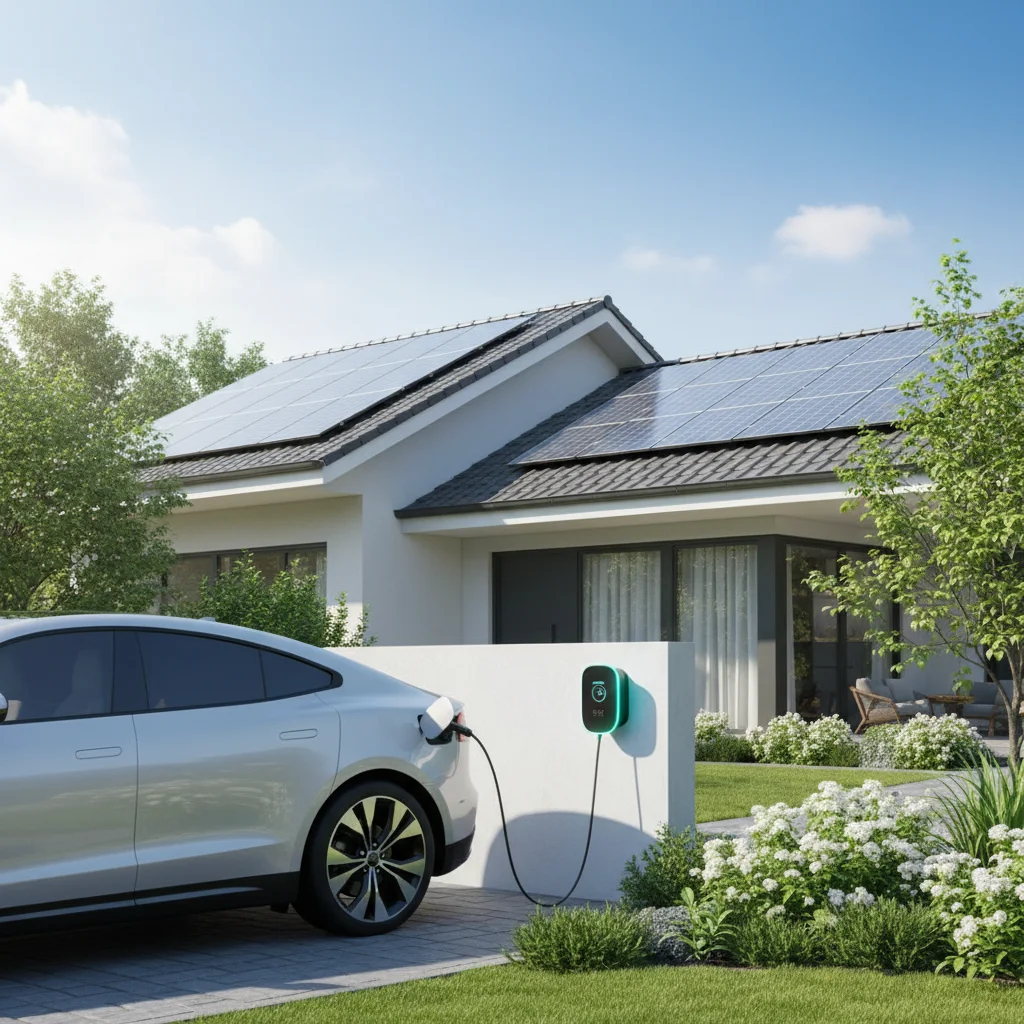
Federal EV Charger Rebate
Federal Ev Charger Rebate: everything you need to know about eligibility, amounts, and the application process.
The federal government discontinued direct rebates for residential EV charger installations in 2026. And homeowners who installed Level 2 charging equipment in 2025 under the Alternative Fuel Vehicle Refueling Property Credit can still claim up to $1,000 on their 2025 tax returns filed in 2026. But the old 30% credit structure expired January 1, 2026, leaving only state and utility programs to fill the gap.
How Much Can You Get Back? Federal EV Charger Rebate Amounts Explained
The federal Alternative Fuel Vehicle Refueling Property Credit covered 30% of hardware and installation costs up to $1,000 for residential installations through December 31, 2025. Commercial properties qualified for $100,000 per location. The credit applied to Level 2 chargers (240-volt) and DC fast chargers installed at primary or secondary residences.
So homeowners who spent $3,300 on a charger and installation in 2025 claim the maximum $1,000 credit on their 2026 tax filing. The credit reduced tax liability dollar-for-dollar but wasn't refundable—taxpayers with zero liability received nothing. And the program operated as a tax credit, not a direct rebate, meaning homeowners paid full price upfront and recovered costs months later during tax season.
"The credit applies to qualified alternative fuel vehicle refueling property placed in service during the tax year." — IRS Alternative Fuel Infrastructure Tax Credit
Who Qualifies? Income Limits and Equipment Requirements for the Federal EV Charger Rebate
The expired federal credit imposed zero income restrictions for residential installations. Any taxpayer who purchased and installed qualifying equipment before January 1, 2026 claims the credit regardless of adjusted gross income. Commercial properties faced no income caps but required chargers to be accessible to the public or fleet vehicles.
Equipment requirements specified UL-listed Level 2 charging stations (240-volt, 40-80 amp) or DC fast chargers. The IRS excluded standard 120-volt Level 1 chargers that plug into household outlets. And installations required hardwired connections or NEMA 14-50 outlets installed by licensed electricians to meet National Electric Code standards.
But the credit covered both hardware costs (charger unit, mounting hardware, electrical panel upgrades) and labor (electrician fees, permit costs, trenching for conduit). So a $2,500 project in 2025 generated a $750 credit if the taxpayer documented all qualified expenses on Form 8911.
What Equipment Does the Rebate Cover?
Qualified equipment included Level 2 EV charging stations with SAE J1772 connectors, bidirectional chargers, and DC fast charging equipment. The credit excluded Tesla Wall Connectors unless used with J1772 adapters. And smart chargers with Wi-Fi connectivity, load management, and time-of-use scheduling all qualified if UL-certified.
Panel upgrades from 100-amp to 200-amp service counted as qualified expenses when necessary to support the charger. Dedicated 240-volt circuits, GFCI breakers, and conduit installations all qualified. But cosmetic improvements like landscaping around ground-mounted chargers didn't.
The IRS required itemized receipts showing hardware model numbers, installation dates, and contractor license numbers. So homeowners needed invoices separating equipment costs from labor to claim the credit accurately. Check your energy tax credits eligibility before filing.
Step-by-Step: How to Apply for the Federal EV Charger Rebate
Taxpayers claim the expired credit by filing Form 8911 (Alternative Fuel Vehicle Refueling Property Credit) with their annual tax return. Line 15 of Form 8911 calculates the residential credit amount. The form requires total qualified costs, installation date, and property address.
- Gather itemized invoices showing equipment and installation costs separately
- Verify UL listing and installation date before January 1, 2026
- Complete Form 8911 and attach to Form 1040
- Carry forward unused credits to future tax years if tax liability is too low
So a taxpayer with $800 in tax liability and a $1,000 credit applies $800 in the current year and carries the remaining $200 forward to the next tax year. And the credit offsets Alternative Minimum Tax (AMT) liability, unlike some other residential energy credits.
"Taxpayers must file Form 8911 to claim the Alternative Fuel Vehicle Refueling Property Credit for qualified charging equipment placed in service during the tax year." — IRS Form 8911 Instructions
When's the Deadline? Current Funding Status and Application Windows
The federal residential EV charger credit expired December 31, 2025 with no extension approved as of March 2026. Homeowners who installed equipment in 2025 have until April 15, 2026 (or October 15, 2026 with an extension) to file their 2025 tax returns and claim the credit.
But commercial property owners still qualify for the $100,000-per-location credit through December 31, 2032 under Section 30C. The commercial credit requires public accessibility—chargers can't be reserved exclusively for employees or residents. And the location must be in a low-income or rural census tract to qualify under the Inflation Reduction Act framework.
State and utility programs continue in 2026 with their own deadlines. California's Clean Vehicle Rebate Project allocates $5,000 for Level 2 charger installations for low-income households. Colorado offers $5,500 through the Charge Ahead program. Use our rebate calculator to find current state and utility incentives in your area.
Can You Stack This Rebate With Other Incentives? State and Utility Program Rules
The expired federal credit stacked with state rebates, utility incentives, and local programs without reduction. And taxpayers combined the $1,000 federal credit with California's $5,000 rebate and PG&E's $500 utility incentive to cover most installation costs.
But some state programs reduced rebate amounts when combined with federal credits. Massachusetts reduced its MOR-EV rebate by $1,000 if taxpayers claimed the federal credit. And New York's Charge Ready NY program excluded projects receiving other state or federal funding.
So homeowners needed to read program-specific stacking rules before applying. The Database of State Incentives for Renewables & Efficiency (DSIRE) tracks stacking policies by state. And most utilities allowed combining their rebates with any tax credits without penalty. Learn more about combining incentives with heat pump rebates strategies.
| Program | Amount | Stacking Allowed | Deadline |
|---|---|---|---|
| Federal 30C (expired residential) | $1,000 | Yes | Dec 31, 2025 |
| California CVRP | $5,000 | Yes | Ongoing 2026 |
| Colorado Charge Ahead | $5,500 | Yes | June 30, 2026 |
| Massachusetts MOR-EV | $2,000 | Reduced by federal | Dec 31, 2026 |
Do You Need a Licensed Contractor? Installation Requirements and Contractor Certifications
The IRS required licensed electricians to install qualified equipment to meet National Electric Code (NEC) Article 625 standards. DIY installations didn't qualify even if inspected and approved by local authorities. And contractors needed active electrical licenses in the installation state.
Level 2 charger installations require 240-volt circuits with dedicated 40-60 amp breakers. Electricians run 6-gauge or 8-gauge wire from the main panel to the charging location. And installations in garages require GFCI protection, while outdoor installations need weatherproof enclosures rated NEMA 3R or higher.
Permit costs averaged $150-$400 depending on jurisdiction. Inspection fees added $100-$200. So total installation costs ranged from $1,200-$3,500 for typical residential projects, with the charger hardware adding $400-$1,200. Homeowners needed contractor invoices with license numbers to claim the credit. Find qualified installers through EV charger rebates programs in your state.
Official Sources
- IRS Alternative Fuel Vehicle Refueling Property Credit — Official tax credit guidance and Form 8911 instructions
- Department of Energy Alternative Fuels Data Center — Federal and state incentive database for EV charging infrastructure
- DSIRE Database of State Incentives — Comprehensive state and utility rebate tracker with stacking rules
Frequently Asked Questions
What is the federal EV charger rebate and how much can you get?
The federal Alternative Fuel Vehicle Refueling Property Credit provided 30% of installation costs up to $1,000 for residential chargers through December 31, 2025. The program operated as a tax credit, not a direct rebate, reducing tax liability on the year the equipment was installed. Commercial installations still qualify for up to $100,000 per location through 2032 if the charger is publicly accessible and located in low-income or rural census tracts.
Who is eligible for the federal EV charger installation rebate?
Any taxpayer who installed a qualified Level 2 or DC fast charger before January 1, 2026 at their primary or secondary residence qualifies for the expired credit. The program imposed no income limits for residential installations. And taxpayers needed sufficient tax liability to use the credit, though unused amounts carried forward to future tax years. Commercial property owners qualify through 2032 if their chargers meet public accessibility requirements.
How do you apply for the federal EV charger tax credit?
Taxpayers file Form 8911 with their annual tax return to claim the credit. The form requires total qualified costs, installation date, property address, and itemized receipts. And the credit appears on Form 1040, reducing total tax liability dollar-for-dollar. Homeowners who installed equipment in 2025 file their 2025 tax returns by April 15, 2026 to claim the maximum $1,000 credit.
What is the difference between the EV charger tax credit and the installation rebate?
Tax credits reduce tax liability when filing annual returns, while rebates provide upfront discounts or direct payments after installation. The federal program operated as a tax credit, requiring homeowners to pay full installation costs and recover money months later. But state and utility rebates like California's CVRP provide direct payments within 4-8 weeks of application approval, reducing out-of-pocket costs immediately.
When does the federal EV charger rebate expire?
The residential EV charger tax credit expired December 31, 2025 with no extension approved. Taxpayers who installed equipment before the deadline have until April 15, 2026 to file their 2025 returns and claim the credit. Commercial installations qualify through December 31, 2032 under Section 30C if they meet public accessibility and location requirements. And state programs continue in 2026 with varying deadlines by state and utility.
Ready to find out what incentives you qualify for in 2026? Use our free rebate calculator to discover state and utility programs offering up to $5,000 for EV charger installations. Get your personalized rebate estimate in under 2 minutes.
Last reviewed: April 14, 2026. Reviewed by DuloCore Energy Specialists. About the team.
Find Your Rebates
Use our calculator to see how much you can save on your home improvement project.
Calculate My Savings