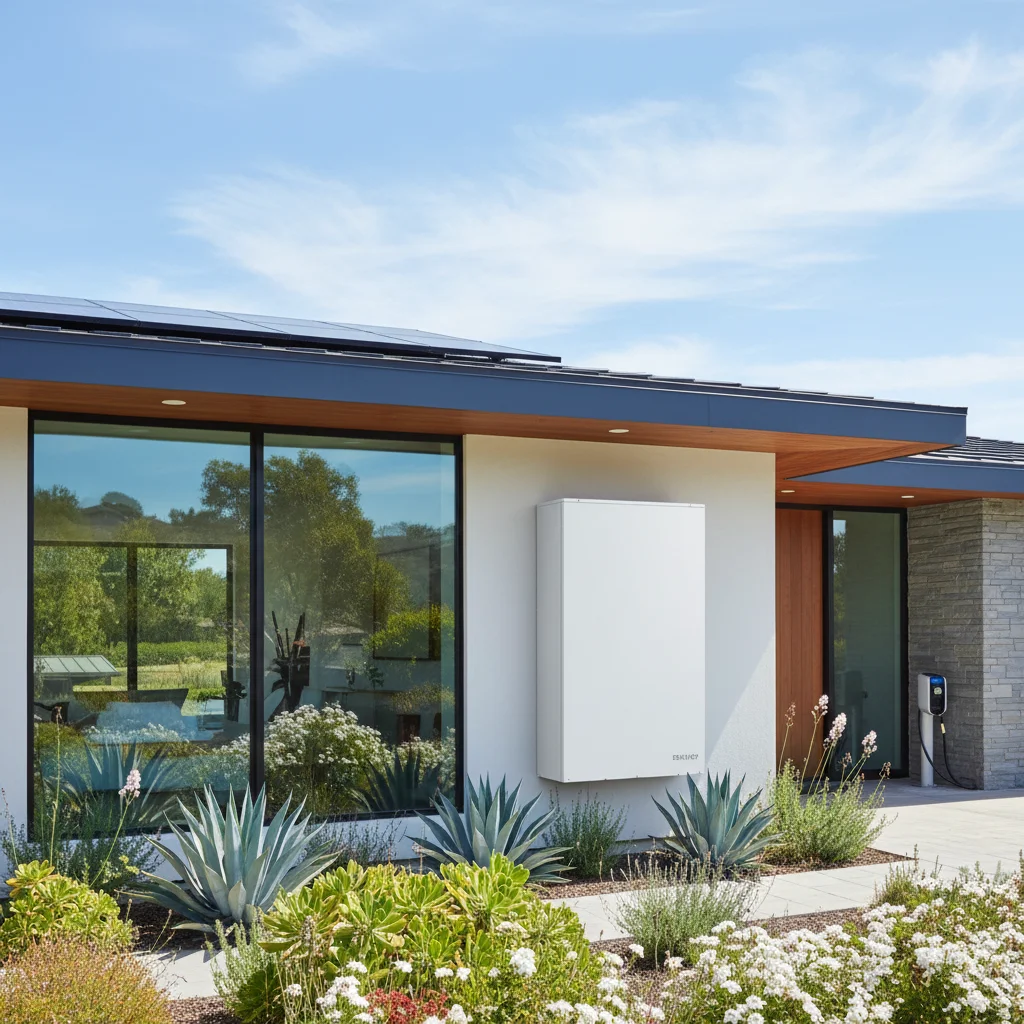
California homeowners now face equipment costs between $3,500 and $22,000 for heat pump installations in 2026, but combined federal and state incentives reduce final out-of-pocket expenses by 40-60% for qualifying systems. The price gap between a basic single-zone ductless unit and a whole-home ducted system spans $18,500, yet payback periods compress to 5-8 years when California's climate advantages and energy savings combine with current rebate programs.
Heat pump installation costs in California range from $3,500 for single-zone ductless mini-splits to $22,000 for 5-ton ducted central systems in 2026. The federal Energy Efficient Home Improvement Credit (Section 25C) ended for property placed in service after December 31, 2025 (IRS FS-2025-05). California's TECH Clean program provides $3,000-$7,000 in point-of-sale rebates for qualifying air-source and heat pump water heaters through participating contractors.
How Much Does a Heat Pump Cost in California?
Ducted central heat pumps cost $12,000-$18,000 installed statewide, with 3-ton units averaging $11,000-$15,500 for 1,800-2,000 square foot homes and 5-ton systems reaching $15,000-$22,000 for larger properties. Equipment represents 60-65% of total project cost, with labor accounting for the remaining 35-40%.
Ductless mini-split systems start at $3,500-$8,000 for single-zone installations and scale to $8,500-$14,000 for multi-zone configurations. Each additional indoor head adds $3,500-$5,800 to project totals. And geothermal heat pumps range $25,000-$40,000 depending on loop field requirements and soil conditions.
Three factors drive California's premium pricing compared to national averages: seismic retrofit requirements add $800-$2,200 to installations in older homes, Title 24 compliance inspections cost $250-$600, and coastal permit fees contribute $150-$400 in select jurisdictions. But higher installation costs pair with lower operating expenses—California's mild climate reduces annual heating and cooling demands by 30-40% versus Midwest and Northeast markets.
| System Type | Equipment Cost | Labor Cost | Total Installed |
|---|---|---|---|
| Single-zone ductless | $2,100-$5,200 | $1,400-$2,800 | $3,500-$8,000 |
| Multi-zone ductless (3 heads) | $5,500-$9,100 | $3,000-$4,900 | $8,500-$14,000 |
| 3-ton ducted central | $6,600-$10,100 | $4,400-$5,400 | $11,000-$15,500 |
| 5-ton ducted central | $9,000-$14,300 | $6,000-$7,700 | $15,000-$22,000 |
What California Rebates and Tax Credits Can Help You Pay for a Heat Pump?
The federal Energy Efficient Home Improvement Credit (Section 25C) ended for property placed in service after December 31, 2025 (IRS FS-2025-05). Federal tax credits for this work have ended, but state, local and utility rebates may still apply; check what is available at your address with the DuloCore rebate calculator. California's TECH Clean California program delivers $3,000-$7,000 in instant point-of-sale rebates through participating contractors for qualifying ducted and ductless heat pumps. (Note: Federal tax credit percentages and availability are subject to change; the 30% Residential Clean Energy Credit under Section 25D expired December 31, 2025. Verify current incentives at energy.gov.)
The federal Energy Efficient Home Improvement Credit (Section 25C) ended for property placed in service after December 31, 2025 (IRS FS-2025-05). Income limits reach $150,000 for joint filers and $112,500 for heads of household based on 2024 or 2025 tax returns.
So combining maximum federal and state incentives reduces a $15,000 ducted heat pump installation to $6,000 out-of-pocket for standard-income homeowners ($2,000 IRA credit + $7,000 TECH rebate). Low-income qualifying households see costs drop to $3,000 after incentives ($8,000 IRA credit + $4,000 panel upgrade credit). And utility-specific programs from PG&E, SCE, SoCalGas, and SDG&E add $500-$2,500 in regional rebates that stack with federal and state incentives.
Check our rebate calculator to combine all available programs for your specific installation.
"The TECH Clean California program has delivered over $140 million in heat pump rebates since 2022, with average incentive values of $4,800 per installation." — California Energy Commission
Which Heat Pump Brands Qualify for California Rebates and Incentives?
Mitsubishi, Daikin, Carrier, Lennox, Trane, and Rheem dominate California's rebate-eligible heat pump market with models meeting ENERGY STAR Most Efficient 2026 thresholds: 18+ SEER2 and 9+ HSPF2 for ducted systems, 20+ SEER2 and 10+ HSPF2 for ductless units. TECH Clean California maintains a searchable product database at techcleanca.com showing 240+ qualifying models across 18 manufacturers.
Mitsubishi's Hyper-Heating (H2i) series operates down to -13°F outdoor temperatures while maintaining full capacity, addressing California mountain community needs in climate zones 14-16. Daikin's Quaternity integrated systems combine heating, cooling, hot water, and air filtration in single-package installations qualifying for stacked rebates across multiple IRA categories.
But not all ENERGY STAR certified heat pumps qualify for California's enhanced rebates. TECH Clean requirements exceed baseline ENERGY STAR thresholds by 10-15% to ensure grid-beneficial performance during peak demand periods. The federal Residential Clean Energy Credit (Section 25D) ended for expenditures made after December 31, 2025, and the IRS treats an expenditure as made when installation is completed (IRS FS-2025-05).
Contractor selection matters as much as equipment choice. TECH Clean rebates require installation by participating contractors who complete program-specific training and submit documentation within 60 days of project completion. Find certified installers through the program's contractor locator at techcleanca.com/find-a-contractor.
What's the Installation Cost for a Heat Pump in California?
Labor costs range $4,400-$7,700 for ducted central heat pump installations depending on home configuration, existing ductwork condition, and electrical service upgrades. Ductless mini-split installations require $1,400-$2,800 per indoor head for refrigerant line installation, wall penetrations, and condensate drainage.
Four variables drive California labor premiums above national averages. Electrical panel upgrades cost $2,000-$4,500 when replacing 100-amp service with 200-amp capacity for heat pump loads. Ductwork modification adds $1,800-$4,200 when converting forced-air furnace systems to heat pump compatibility with larger return plenums and variable-speed airflow. Seismic anchoring requirements contribute $600-$1,400 in coastal zones 3-4. And permit fees range $150-$850 depending on jurisdiction.
So a straightforward 3-ton heat pump replacement in a home with adequate electrical service and recent ductwork costs $11,000-$13,500 installed. The same installation requiring panel upgrade and duct modification reaches $16,000-$20,000 before incentives. Compare these ranges using our heat pump rebates guide covering 58 California counties.
Coastal installations face salt air corrosion challenges requiring specialized coatings and annual maintenance. Installers charge $200-$450 premiums for corrosion-resistant treatment on outdoor units within 5 miles of Pacific coastline. And high-desert climate zones 14-16 require cold-climate heat pump models with enhanced defrost cycles, adding $1,200-$2,400 to equipment costs versus standard-efficiency units.
How Long Does It Take to Recoup Your Heat Pump Investment in California?
California homeowners recover heat pump installation costs in 5-8 years through combined energy savings and incentive value, with payback periods compressing to 3-5 years for households replacing electric resistance heating or propane systems. Annual operating cost savings range $800-$1,800 depending on replaced equipment type and local utility rates.
Replacing a 15-year-old natural gas furnace and AC combination saves $720-$1,100 annually in PG&E territory where residential gas rates average $2.87/therm and electricity costs $0.38/kWh. Replacing electric resistance baseboard heating generates $1,400-$2,200 yearly savings in SCE service areas. And propane heating replacement delivers the fastest payback at $1,800-$2,600 annual savings with 2026 propane prices averaging $3.80/gallon.
But payback calculations must include avoided maintenance costs. Gas furnaces require annual inspections costing $180-$320, with heat exchanger replacements reaching $1,800-$2,400 every 12-15 years. Heat pumps eliminate combustion safety inspections while requiring only annual filter changes ($40-$80) and coil cleaning every 3 years ($200-$350).
So a $15,000 heat pump installation with $9,000 in combined federal and state incentives costs $6,000 out-of-pocket. At $900 annual savings, payback occurs in 6.7 years. The same system replacing electric resistance heating recoups costs in 3.5 years at $1,700 annual savings. Calculate your specific payback timeline with our rebate calculator accounting for local utility rates and available incentives.
"Heat pumps reduce home heating energy use by approximately 50% compared to electric resistance heating such as furnaces and baseboard heaters." — U.S. Department of Energy
Will a Heat Pump Work Well in Your California Climate Zone?
Modern cold-climate heat pumps maintain full heating capacity down to 5°F outdoor temperature, covering 99% of California's winter design conditions across all 16 climate zones. Coastal zones 3-7 rarely experience temperatures below 35°F, where standard-efficiency heat pumps operate at 300-400% efficiency. And mountain communities in zones 14-16 benefit from cold-climate models maintaining 200%+ efficiency at 15°F.
California's cooling-dominated climate zones 2-10 favor heat pump economics over traditional furnace and AC combinations. Sacramento's climate zone 12 averages 2,800 cooling degree days versus 2,600 heating degree days annually, allowing heat pumps to replace two separate systems with single integrated equipment. Los Angeles climate zone 6 requires minimal heating—1,200 degree days—where heat pump efficiency advantages compound through year-round operation.
But three California regions present heat pump challenges. Desert climate zones 14-15 experience 4,000-5,400 cooling degree days with summer temperatures reaching 115°F, requiring oversized systems that maintain capacity at extreme highs. Mountain zones 16 need cold-climate specifications with enhanced vapor injection maintaining 70%+ capacity at 0°F. And marine layer climate zone 1 rarely needs cooling, reducing payback potential versus gas furnace alternatives.
Humidity control separates ductless mini-splits from ducted systems in California's coastal regions. Variable-speed ducted heat pumps maintain 40-50% relative humidity through lower airflow rates, preventing mold growth in climate zones 1-6. Fixed-speed ductless units deliver less dehumidification, requiring separate solutions in homes prone to condensation issues.
Heat Pump vs. Traditional AC and Furnace: What's the Real Cost Difference?
A 16 SEER AC and 95% AFUE gas furnace combination costs $9,500-$13,500 installed compared to $12,000-$18,000 for equivalent-capacity heat pumps, creating a $2,500-$4,500 initial premium for integrated heat pump systems. But 15-year lifecycle costs favor heat pumps by $8,000-$14,000 when accounting for energy savings, avoided dual-system maintenance, and refrigerant phase-out expenses.
Natural gas furnaces and AC combinations require two separate maintenance contracts costing $360-$640 annually versus $180-$320 for single heat pump systems. Furnace heat exchangers fail at 12-18 years requiring $1,800-$2,800 replacements, while AC condensers reach end-of-life at 15-20 years necessitating $4,500-$7,200 replacements. Heat pumps consolidate both functions into single equipment with 15-20 year lifespans and $5,500-$9,000 replacement costs.
So a $15,000 heat pump installation with $9,000 in incentives costs $6,000 out-of-pocket. A $11,500 furnace-AC combination with $500 utility rebate costs $11,000 upfront. And the heat pump generates $900 annual savings, recovering its premium in 5.5 years while avoiding $12,000-$18,000 in dual-system replacement costs over 15 years.
California's gas infrastructure uncertainty compounds traditional HVAC risks. Berkeley, San Jose, and 40+ municipalities prohibit gas connections in new construction, with retrofit restrictions under consideration. Homes with gas furnaces face potential stranded asset costs if fuel-switching mandates expand, while heat pump installations future-proof properties against regulatory changes.
| 15-Year Lifecycle Cost | Heat Pump | Furnace + AC |
|---|---|---|
| Initial installation | $15,000 | $11,500 |
| Federal/state incentives | -$9,000 | -$500 |
| Net upfront cost | $6,000 | $11,000 |
| Annual operating cost | $720 | $1,620 |
| 15-year energy cost | $10,800 | $24,300 |
| Maintenance (15 years) | $4,200 | $8,400 |
| Total 15-year cost | $21,000 | $43,700 |
Official Sources
- U.S. Department of Energy: Heat Pump Systems — Federal guidance on heat pump technology, efficiency ratings, and performance in different climates
- ENERGY STAR Heat Pumps — Certification requirements and qualified product database for rebate-eligible models
- DSIRE: Database of State Incentives for Renewables & Efficiency — Comprehensive catalog of federal, state, and utility heat pump incentive programs
Related Reading: Learn more about Mini Split Heat Pump Cost and Wall Insulation Cost.
Frequently Asked Questions
What is the cost of installing a heat pump in California?
Heat pump installation costs range $3,500-$22,000 in California depending on system type and home configuration. Single-zone ductless mini-splits cost $3,500-$8,000, while ducted central systems range $12,000-$18,000 for typical residential installations. Federal IRA tax credits provide 30% back up to $2,000, and California's TECH Clean program offers $3,000-$7,000 in instant rebates through participating contractors, reducing net costs by 40-60%.
How much does California pay for heat pump rebates?
TECH Clean California provides $3,000-$7,000 in point-of-sale rebates for qualifying air-source heat pumps installed by participating contractors in 2026. Rebate amounts vary by system type—ducted central heat pumps receive up to $7,000, while ductless mini-splits qualify for $3,000-$5,000 depending on zone count. Regional utility programs from PG&E, SCE, SoCalGas, and SDG&E add $500-$2,500 that stack with state incentives.
Are heat pumps worth the cost in California?
California heat pumps deliver 5-8 year payback periods through $800-$1,800 annual energy savings and 40-60% installation cost reductions from combined federal and state incentives. Homes replacing electric resistance heating or propane systems see 3-5 year payback with $1,400-$2,600 yearly savings. And 15-year lifecycle costs favor heat pumps by $8,000-$14,000 versus traditional furnace-AC combinations when accounting for avoided dual-system maintenance and replacement expenses.
What is the timeline for heat pump installation in California?
Heat pump installations require 1-3 days for standard retrofits in homes with adequate electrical service and recent ductwork. Projects requiring electrical panel upgrades extend 3-5 days to accommodate utility inspection and reconnection schedules. And installations combining ductwork modification, panel upgrades, and seismic anchoring span 5-8 days from permit submission to final inspection. TECH Clean California rebate processing adds 6-10 weeks after contractor documentation submission.
Do I qualify for heat pump incentives in California?
The federal Energy Efficient Home Improvement Credit (Section 25C) ended for property placed in service after December 31, 2025 (IRS FS-2025-05). TECH Clean California rebates require installation by participating contractors using pre-qualified equipment meeting program efficiency thresholds—18+ SEER2 and 9+ HSPF2 for ducted systems. Low-to-moderate income households earning under $150,000 joint/$112,500 head-of-household access enhanced $8,000 federal tax credits with no percentage cap, plus $4,000 for electrical panel upgrades when combined with heat pump installation.
Ready to calculate your heat pump savings? Use our free rebate calculator to combine federal IRA tax credits, TECH Clean California rebates, and utility-specific incentives for your exact installation. Get instant estimates showing out-of-pocket costs, annual savings, and payback timeline based on your home size, current heating system, and local energy rates.
Last updated April 14, 2026 — reviewed by DuloCore Editorial. About our authors.
Check your California heat pump rebate eligibility — see the programs you qualify for and the dollar amounts on our California heat pump rebate finder.