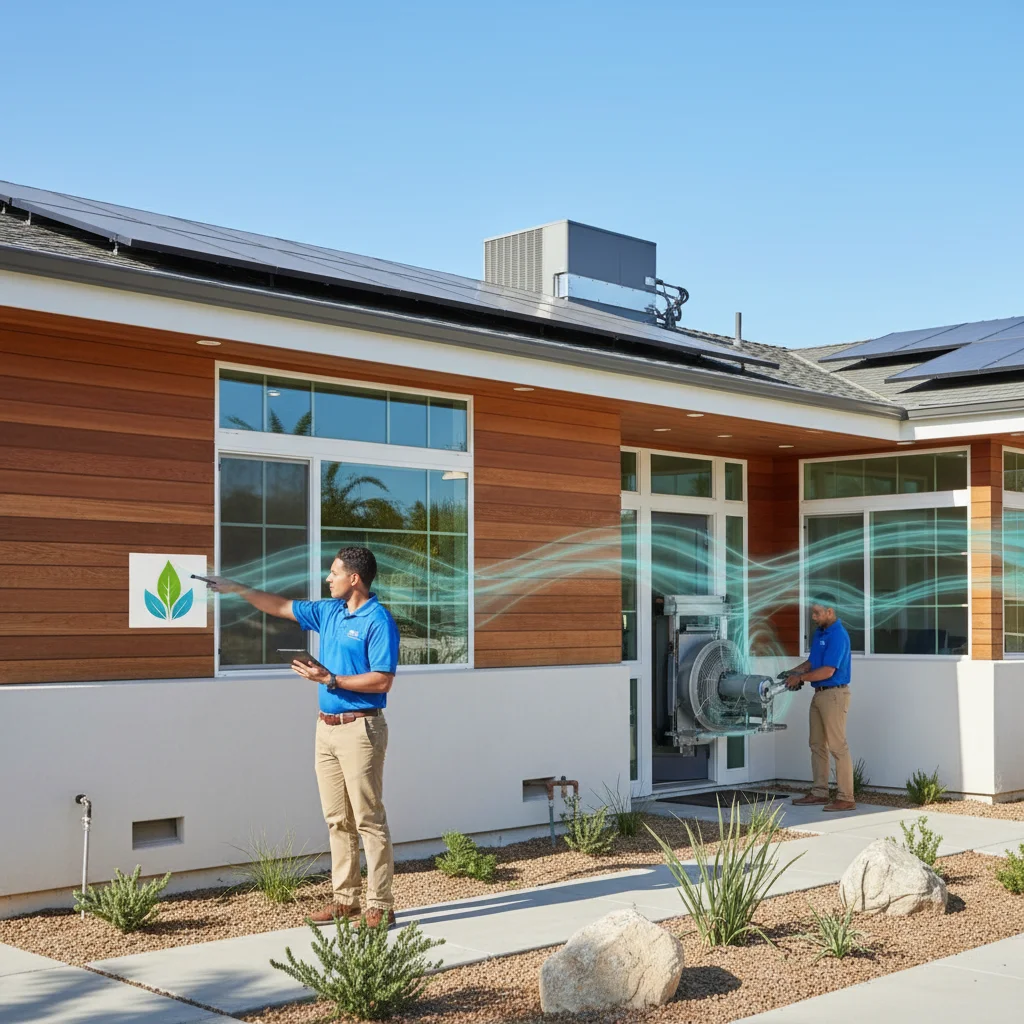
California homeowners waste an average of $400 annually on inefficient HVAC systems, according to the California Energy Commission. And that's before factoring in the 15% spike in electricity rates since 2024. HVAC systems account for nearly half of a typical home's energy consumption, making them the single largest driver of utility bills. But most homeowners don't know their system is underperforming until a professional audit reveals the gaps.
What's the Typical ROI and Payback Period for an HVAC Energy Audit in California?
HVAC energy audits in California deliver a 200-400% return on investment through reduced energy costs and rebate eligibility, with most homeowners recovering the audit cost within 6-12 months. And the payback period shortens to 3-6 months when audits unlock access to utility rebates worth $500-$2,000 for equipment upgrades.
The core tension here: California's 2026 Title 24 building codes require higher efficiency standards for HVAC replacements, and an energy audit determines whether a system needs repair, optimization, or full replacement. Homeowners who skip the audit often spend $8,000-$12,000 on premature replacements when a $300-$800 repair would have sufficed.
Audits identify specific issues—duct leaks that waste 20-30% of conditioned air, undersized or oversized equipment, and refrigerant charge errors. So a typical audit saves $250-$600 annually through improved efficiency. But the real value comes from qualifying for rebates. California utilities like PG&E, SCE, and SDG&E offer $500-$2,000 for HVAC upgrades, and most require a pre-installation audit to verify baseline performance.
ROI calculations depend on current system age and condition. Systems over 15 years old typically justify replacement, delivering 30-40% efficiency gains. And newer systems (under 10 years) benefit more from maintenance and optimization, which cost $300-$800 versus $6,000-$15,000 for replacement. The audit itself costs $200-$500 for a basic assessment or $500-$1,200 for a comprehensive whole-home evaluation.
"Energy audits help homeowners identify the most cost-effective efficiency improvements and access available incentive programs." — U.S. Department of Energy
How Does an HVAC Energy Audit Compare to Other Energy Efficiency Alternatives?
HVAC energy audits deliver faster payback periods (6-12 months) compared to solar panel installations (8-12 years) or whole-home insulation upgrades (5-8 years), making them the most cost-effective first step for California homeowners targeting energy savings.
The comparison breaks down like this: solar panels cost $15,000-$30,000 after incentives and save $1,200-$2,400 annually, resulting in an 8-12 year payback. Attic insulation costs $1,500-$3,500 and saves $200-$400 annually (5-8 years). But an HVAC audit costs $200-$500 and unlocks $250-$600 in annual savings plus rebate eligibility, recovering costs within 6-12 months.
And the audit serves as a diagnostic tool that identifies which upgrades deliver maximum ROI. So homeowners avoid wasting money on ineffective improvements. A 2025 study by the California Energy Commission found that 40% of HVAC systems operate at 60-70% of rated efficiency due to installation errors—issues an audit catches before recommending equipment replacement.
Audits also stack with other efficiency measures. Homeowners who combine HVAC optimization with air sealing and insulation see 25-35% total energy reductions versus 10-15% from HVAC alone. But the audit must come first to establish baseline performance and prioritize investments.
Alternative approaches like DIY thermostat programming or filter changes save $50-$150 annually—useful but insufficient for homeowners facing $300-$500 monthly cooling bills. Or hiring an unlicensed contractor to "tune up" a system without diagnostic testing, which often misses critical issues like duct leaks or refrigerant undercharge.
How Long Do HVAC Systems Last After an Energy Audit?
California HVAC systems audited and optimized last 18-25 years compared to 12-15 years for unmaintained systems, according to Energy Star guidelines. And audits extend lifespan by identifying minor issues—refrigerant leaks, dirty coils, electrical faults—before they cause compressor or motor failures.
The lifespan extension comes from three audit outcomes: maintenance recommendations, repair prioritization, and replacement timing. So a system with a $200 refrigerant leak caught early avoids a $2,500 compressor replacement later. And systems that receive post-audit tune-ups (coil cleaning, duct sealing, airflow balancing) operate at lower stress levels, reducing wear on mechanical components.
California's climate zones affect longevity. Coastal systems (Climate Zone 3) face less stress from extreme temperatures and last 20-25 years with proper maintenance. But inland systems (Climate Zones 12-15) endure 100°F+ summers and require more frequent service, lasting 15-20 years even with audits. And systems in high-wildfire-smoke areas accumulate filter debris faster, requiring quarterly filter changes versus annual.
Energy audits also reveal when replacement makes more financial sense than repair. Systems over 15 years old with multiple failures (compressor, evaporator coil, air handler) typically cost more to repair than replace. And California's Title 24 requires new systems to meet SEER 15+ efficiency standards (versus SEER 10-12 for pre-2010 units), delivering 30-40% energy savings that justify upfront costs.
"Regular maintenance and timely repairs identified through energy assessments can extend HVAC system life by 5-10 years." — ENERGY STAR
What Does an HVAC Energy Audit Cost in California?
HVAC energy audits in California cost $200-$500 for basic assessments focused solely on heating and cooling systems, or $500-$1,200 for comprehensive whole-home energy audits that include insulation, air leakage, and appliance efficiency testing. And many utility companies offer subsidized audits for $50-$150.
The price variation depends on scope and certification level. Basic audits ($200-$500) include visual inspection, thermostat analysis, filter checks, and system runtime measurements. But comprehensive audits ($500-$1,200) add blower door tests, infrared imaging, duct pressure testing, and detailed efficiency modeling using software like REM/Rate or EnergyPlus.
California utilities subsidize audits to reduce peak demand. PG&E offers Home Energy Checkups for $75-$150 (retail cost $400-$600). And SCE provides free virtual audits plus $250 rebates for in-person assessments. SDG&E charges $99 for whole-home audits (retail cost $500-$800). So homeowners save $300-$700 by using utility programs instead of private contractors.
But utility audits often come with strings—rebate pre-qualification requirements, contractor referral networks, or mandatory follow-up appointments. Or they exclude certain home types (mobile homes, properties over 5,000 sq ft, homes built after 2010). Private auditors charge more but offer flexibility in scheduling and reporting.
Certification affects cost and quality. BPI (Building Performance Institute) Certified Professionals charge $400-$800 for audits but deliver diagnostic-grade reports that satisfy rebate program requirements. And HERS (Home Energy Rating System) raters charge $500-$1,200 but provide Title 24 compliance documentation needed for permits and financing.
Use our free rebate calculator to estimate your total savings from an HVAC audit and eligible upgrades.
What's the Process for Getting an HVAC Energy Audit in California?
California HVAC energy audits follow a standardized 4-step process: pre-audit scheduling and data collection (1-2 days), on-site inspection and testing (2-4 hours), post-audit report generation (3-7 days), and implementation of recommended upgrades (varies by scope). And most auditors complete the entire cycle within 2 weeks.
The process starts with scheduling through a utility program (PG&E, SCE, SDG&E) or private BPI-certified auditor. Homeowners provide utility bills from the past 12 months, square footage, and system age. And auditors use this data to establish baseline energy consumption before the on-site visit.
On-site inspections include visual assessment (thermostat settings, filter condition, outdoor unit clearance), operational testing (airflow, temperature differentials, refrigerant charge), and diagnostic tools (infrared cameras for duct leaks, combustion analyzers for furnace efficiency). So auditors spend 2-4 hours collecting data on system performance and building envelope.
Post-audit reports detail findings in three tiers: immediate fixes (replace filters, adjust thermostat), cost-effective upgrades (seal ducts, add insulation), and long-term replacements (install heat pump, upgrade to variable-speed system). And reports include projected savings, upfront costs, and payback periods for each recommendation.
Implementation timelines depend on complexity. Filter replacements and thermostat adjustments happen same-day. But duct sealing takes 1-2 days, and full system replacements require 2-4 weeks for permitting, equipment delivery, and installation. And California Title 24 compliance adds 1-2 weeks for HERS verification and inspection.
Are You Eligible for California Rebates and Tax Credits on HVAC Audits?
California homeowners qualify for $50-$150 utility rebates on energy audits through programs like PG&E Home Energy Checkup, SCE Energy Advisor, and SDG&E Home Energy Efficiency Survey. And audit costs become eligible expenses under the federal IRA Home Efficiency Rebate program launching in 2026, covering up to 50% of audit fees for households earning under 80% area median income.
Utility rebates vary by provider. PG&E subsidizes audits to $75 (from $400 retail). SCE offers free virtual audits plus $250 rebates for in-person assessments. And SDG&E charges $99 for whole-home audits (retail $500-$800). So homeowners save $300-$700 by using utility programs versus private contractors.
But the real value comes from post-audit upgrade rebates. California utilities offer $500-$2,000 for HVAC equipment replacements identified during audits. And most programs require the audit as proof of baseline performance to qualify for rebates. So skipping the audit disqualifies homeowners from equipment incentives worth 10-20% of project costs.
Federal tax credits also apply. The federal home energy tax credits (Sections 25C and 25D) ended for projects completed after December 31, 2025 (IRS FS-2025-05). Federal tax credits for this work have ended, but state, local and utility rebates may still apply; check what is available at your address with the DuloCore rebate calculator. And audits establish documentation for tax credit claims by verifying pre-installation efficiency levels.
Income-qualified homeowners access additional savings. California's SOMAH (Solar on Multifamily Affordable Housing) and SASH (Single-family Affordable Solar Homes) programs cover 100% of audit costs for households under 80% AMI. And the forthcoming IRA Home Efficiency Rebate covers up to $8,000 in HVAC upgrades for low-income households (under 80% AMI) or $4,000 for moderate-income households (80-150% AMI).
For detailed information on current rebates and tax credits, visit the energy tax credits page or check heat pump rebates for system-specific incentives.
Official Sources
- U.S. Department of Energy - Energy Saver — Federal energy efficiency guidance and rebate information
- DSIRE USA — Comprehensive database of state and utility energy efficiency incentives
- ENERGY STAR — EPA program for energy-efficient products and home improvement guidance
Related Reading: Learn more about Ashrae Energy Audit Levels Explained and Average Energy Savings After Audit.
Related Reading: Learn more about Basement Insulation Energy Audit and Boiler Energy Audit Inspection.
Related Reading: Learn more about Hvac Maintenance Energy Savings.
Frequently Asked Questions
What is an HVAC energy audit and why do I need one in California?
An HVAC energy audit is a professional assessment that measures heating and cooling system performance, identifies efficiency losses, and recommends cost-effective improvements. California homeowners need audits to qualify for utility rebates worth $500-$2,000 and to comply with Title 24 building codes when replacing equipment. And audits reveal whether a system needs repair ($300-$800) versus replacement ($6,000-$15,000), preventing costly premature installations.
How much does an HVAC energy audit cost in California?
HVAC energy audits cost $200-$500 for basic system assessments or $500-$1,200 for comprehensive whole-home evaluations. But California utilities subsidize audits to $50-$150 through programs like PG&E Home Energy Checkup ($75), SCE Energy Advisor ($250 rebate), and SDG&E Home Energy Survey ($99). So homeowners save $300-$700 by using utility programs versus private contractors.
Am I eligible for a rebate on an HVAC energy audit in California?
California homeowners qualify for $50-$150 utility rebates on energy audits through PG&E, SCE, and SDG&E programs. And the federal IRA Home Efficiency Rebate (launching in 2026) covers up to 50% of audit costs for households earning under 80% area median income. Income-qualified households access 100% free audits through SOMAH and SASH programs.
How long does an HVAC energy audit take?
HVAC energy audits take 2-4 hours for on-site inspection and testing, followed by 3-7 days for report generation. And the full process from scheduling to receiving recommendations typically completes within 2 weeks. Basic audits (visual inspection only) finish in 1-2 hours, while comprehensive audits (blower door tests, infrared imaging, duct pressure testing) require 3-4 hours on-site.
What's the difference between an HVAC energy audit and a home energy audit in California?
HVAC energy audits focus exclusively on heating and cooling systems ($200-$500), measuring airflow, refrigerant charge, duct leakage, and equipment efficiency. Home energy audits ($500-$1,200) examine the entire building envelope—insulation, windows, air sealing, appliances—plus HVAC. So homeowners targeting HVAC rebates or replacements need system-specific audits, while those pursuing whole-home efficiency improvements benefit from comprehensive assessments.
Ready to find your HVAC savings? Use our free rebate calculator to estimate your audit savings, equipment rebates, and total ROI based on your home's location and current system. Get personalized recommendations in under 2 minutes.
Updated: April 14, 2026 — fact-checked by DuloCore Research. About our editorial process.
Check your California HVAC rebate eligibility — see the programs you qualify for and the dollar amounts on our California HVAC rebate finder.