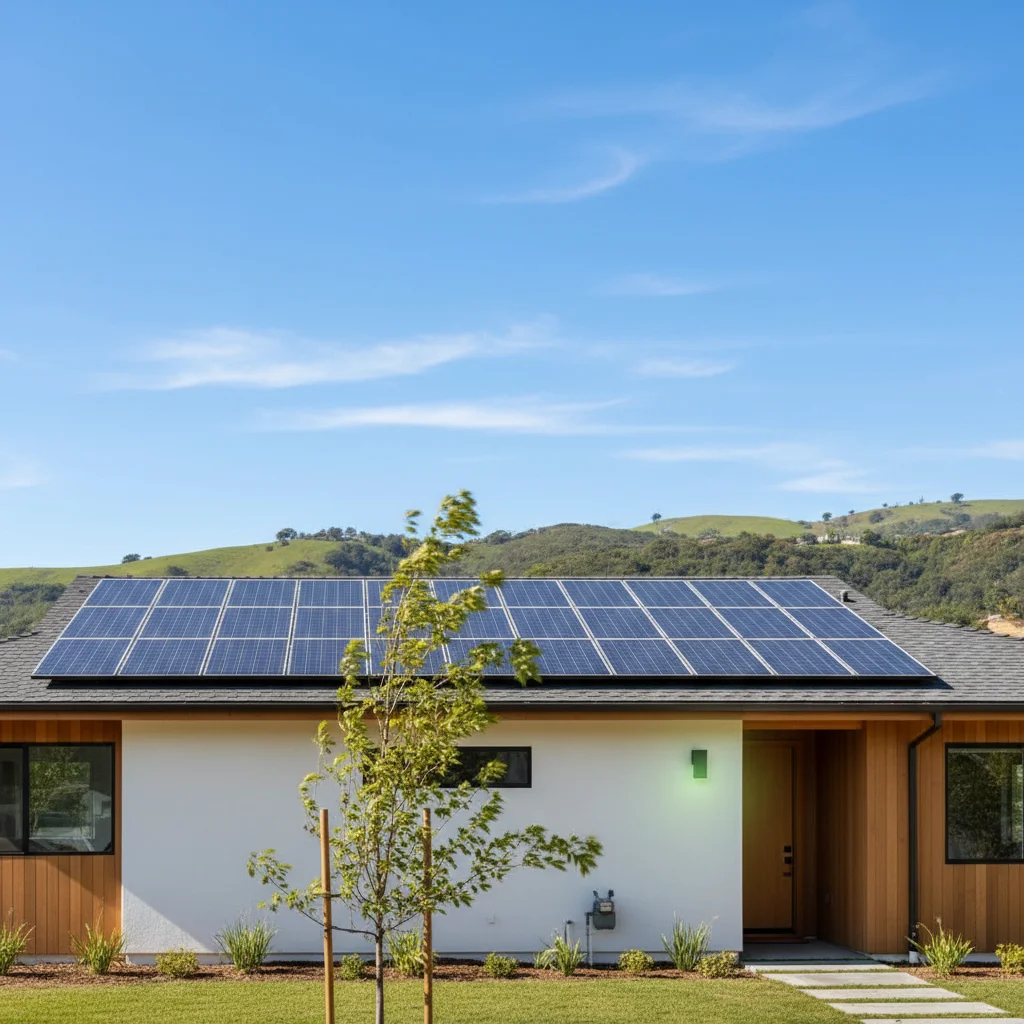
California homeowners installed 1.7 gigawatts of residential solar capacity in 2025—enough to power 340,000 homes—and claimed over $2.1 billion in combined federal and state incentives. The California Solar Initiative officially closed its net metering program in April 2023, replacing it with Net Billing (NEM 3.0), which reduced credit rates by 75% but opened new rebate pathways through SGIP battery storage and utility-specific programs. In 2026, the rebate landscape has shifted from upfront installation credits to performance-based incentives tied to battery storage, time-of-use optimization, and low-income housing solar access programs.
What solar panel rebates are available in California right now?
California solar panel rebates in 2026 consist of the Self-Generation Incentive Program (SGIP) for battery storage paired with solar systems, offering $150-$1,000 per kilowatt-hour depending on income level and wildfire risk zone. Utility-specific rebates include Pacific Gas & Electric's Solar Equity Resilience program ($300-$500 per installation) and Southern California Edison's Energy Savings Assistance program (free solar for income-qualified households). Municipal programs in San Francisco, Sacramento, and Los Angeles provide $1,000-$3,000 local rebates for solar-plus-storage installations completed before December 31, 2026.
The federal Residential Clean Energy Credit (Section 25D) ended for expenditures made after December 31, 2025, and the IRS treats an expenditure as made when installation is completed (IRS FS-2025-05). Federal tax credits for this work have ended, but state, local and utility rebates may still apply; check what is available at your address with the DuloCore rebate calculator. The credit drops to 26% in 2033 and 22% in 2034 before expiring entirely. But California property tax exclusions remain permanent—installed solar systems don't increase property tax assessments under Proposition 13 protections, saving homeowners an average $420 annually in avoided tax increases over 25 years.
So homeowners combining SGIP battery incentives ($5,000-$15,000 for a 10-15 kWh system), federal tax credits ($7,500-$12,000 for a typical 7 kW installation), and utility rebates ($300-$3,000) can offset 50-70% of total system costs. The median 6 kW residential solar installation costs $18,000 before incentives in 2026, dropping to $6,300-$9,000 after all available rebates and credits.
SGIP priority incentive levels target low-income households and fire-prone communities at $850-$1,000 per kWh for battery storage, compared to $150-$200 per kWh for general market applicants. And single-family homeowners in Tier 2 or 3 fire threat zones automatically qualify for enhanced SGIP rates without additional documentation beyond proof of residence.
How much money can you actually save with California solar rebates?
California solar rebates combined with federal tax credits deliver $12,000-$25,000 in total incentives for average residential installations in 2026, depending on system size and household income. A 7 kW solar array with 10 kWh battery storage costs approximately $32,000 before incentives—after applying the 30% federal credit (this federal credit ended for expenditures made after December 31, 2025) ($9,600), SGIP battery rebate ($1,500-$10,000), and local utility programs ($500-$2,000), net costs range from $10,400 to $20,400. Payback periods average 6-9 years with net metering credits, or 5-7 years in high-electricity-cost regions like San Francisco (average $0.34/kWh) and Los Angeles ($0.29/kWh).
But the savings extend beyond installation rebates. California's Net Billing tariff (NEM 3.0) credits solar exports at $0.05-$0.08 per kWh compared to retail rates of $0.28-$0.36, reducing credit value by 78% versus the old NEM 2.0 program. So pairing solar with battery storage becomes critical—storing daytime solar generation for evening use avoids buying grid power at peak rates ($0.42-$0.51 per kWh from 4-9 PM). A 10 kWh battery storing and discharging 8 kWh daily saves $1,095-$1,489 annually in avoided peak electricity purchases.
And low-income households qualifying for SGIP Equity Resiliency incentives receive $850-$1,000 per kWh for battery storage—a 15 kWh system receives $12,750-$15,000, often covering 80-100% of battery costs. Over 25 years, a solar-plus-storage system in California saves $45,000-$78,000 in avoided utility bills, factoring in 3% annual electricity rate increases and system degradation of 0.5% per year.
The Disadvantaged Communities Single-Family Solar Homes (DAC-SASH) program provides free solar installations for income-qualified homeowners, delivering $1,200-$1,800 annual savings without upfront costs. And California's property tax exemption saves an additional $8,400-$10,500 over 25 years compared to states where solar increases assessed home value.
What documentation do you need to qualify for solar rebates in California?
California solar rebate applications require proof of residence (utility bill or property deed), contractor license verification (CSLB C-46 Solar or C-10 Electrical classification), and interconnection approval from your utility provider issued within 12 months of installation. SGIP battery storage rebates demand additional documentation: manufacturer specification sheets showing nameplate capacity in kilowatt-hours, warranty certificates covering minimum 10-year performance guarantees, and UL 9540 safety certifications for all battery systems. Income-qualified programs require tax returns or proof of enrollment in CARE/FERA utility discount programs, while fire zone applicants submit CALFIRE Tier 2/3 zone verification available through county assessor maps.
And building permits must show final inspection approval before rebate payments process—SGIP and utility programs reject applications with pending permits or code violations. Solar installations require Title 24 compliance documentation proving systems meet California's 2022 Energy Code standards, including minimum efficiency ratings (250 watts per panel, 17% conversion efficiency) and proper electrical disconnect placement. But contractors typically handle Title 24 documentation as part of standard permitting.
Form 5695 only covers qualifying work completed by December 31, 2025 and claimed on a 2025 return; the federal 25C and 25D credits ended after that date (IRS FS-2025-05). California doesn't require separate state tax forms for the property tax exemption—it applies automatically when county assessors receive building permit records. So homeowners verify exemption by checking property tax bills 6-12 months post-installation, ensuring assessed value didn't increase.
"Solar energy systems installed on or after January 1, 1999, are exempt from property tax assessment for the life of the system. The exemption applies to both the solar panels and any energy storage devices." — California State Board of Equalization
Utility interconnection applications require single-line electrical diagrams, AC/DC disconnect specifications, and signed agreements acknowledging NEM 3.0 tariff terms. And SGIP requires smart inverter certifications showing IEEE 2547 compliance for grid stability—systems without certified inverters face automatic application rejection.
Do you need pre-approval before installing solar panels to get rebates?
California solar panel rebates split into two categories: federal tax credits requiring no pre-approval and state/utility programs mandating application submission before installation begins. The 30% federal Residential Clean Energy Credit allows homeowners to install solar (this federal credit ended for expenditures made after December 31, 2025) systems anytime and claim credits when filing annual tax returns—no advance IRS approval needed. But SGIP battery storage incentives require online applications submitted and approved before equipment purchases or installation work starts, with reservation numbers issued within 5-10 business days and held for 18 months. (Note: Federal tax credit percentages and availability are subject to change; the 30% Residential Clean Energy Credit under Section 25D expired December 31, 2025. Verify current incentives at energy.gov.)
And utility-specific programs like PG&E Solar Equity Resilience and SCE Energy Savings Assistance demand pre-qualification—households submit income documentation and property details for eligibility review 30-60 days before installation. Municipal rebate programs vary: San Francisco's GoSolarSF requires pre-approval applications, while Sacramento's SMUD SolarShares processes rebates post-installation within 45 days of interconnection approval. So homeowners risk losing $5,000-$15,000 in SGIP incentives by installing batteries without prior application approval.
California doesn't require pre-approval for the property tax exemption—it applies automatically when building permits and final inspections complete. But Net Billing (NEM 3.0) interconnection agreements must be submitted and approved before system activation, typically processing in 15-30 business days. Contractors usually handle interconnection applications as part of installation contracts.
DAC-SASH and SOMAH (Solar on Multifamily Affordable Housing) programs require extensive pre-approval: income verification, property ownership documentation, and program capacity checks, often taking 90-120 days from application to approval. And SGIP equity budget categories deplete throughout the year—waiting until after installation means losing priority access to higher incentive tiers.
Starting installation without SGIP pre-approval forfeits eligibility entirely—the program explicitly prohibits retroactive applications for equipment purchased or installed before reservation confirmation. So submit battery storage applications minimum 30 days before planned installation dates to secure incentive reservations.
What are the deadlines for California solar rebate programs in 2026?
California solar rebate deadlines in 2026 vary by program: SGIP battery storage incentives operate on a first-come, first-served basis with budget exhaustion expected in Q3 2026 based on current claim rates of $18-$22 million monthly, meaning applications submitted after August likely face waitlists or reduced incentive levels. Municipal programs impose firm December 31, 2026 installation completion deadlines—San Francisco GoSolarSF and Los Angeles Solar Rooftops both require final interconnection approval and rebate claims filed by year-end. The federal Residential Clean Energy Credit (Section 25D) ended for expenditures made after December 31, 2025, and the IRS treats an expenditure as made when installation is completed (IRS FS-2025-05).
But SGIP priority deadlines matter more than calendar year-end. Equity Resiliency incentives ($850-$1,000 per kWh) allocated $140 million in 2026, depleting at current rates by late September. General Market incentives ($150-$200 per kWh) received $45 million, likely exhausting by November. And applicants with approved reservations get 18 months to complete installations, but missing that window forfeits reserved incentive amounts entirely—reservations issued in March 2026 must finish by September 2027 or lose $10,000-$15,000 in battery credits.
Utility programs reset annually. PG&E Solar Equity Resilience allocated $8 million for 2026, serving approximately 20,000 households on a rolling basis until funds deplete, typically by October. SCE Energy Savings Assistance has no hard deadline but prioritizes applications received before June 30 to complete installations during peak solar production months. And CARE/FERA enrollment deadlines for income-qualified programs require households to apply minimum 45 days before planned solar installation to verify discount eligibility.
"SGIP incentive levels decrease by 10% each step-down trigger when 75%, 85%, and 95% of budget allocations are reserved. Homeowners applying late in the budget cycle receive significantly lower incentive rates." — California Public Utilities Commission SGIP Handbook
So optimal application timing runs February through May—budget availability peaks, contractor schedules remain flexible, and installations complete before summer rate increases take effect. Waiting until Q4 risks missing SGIP equity budgets entirely and facing 8-12 week contractor backlogs.
How do California solar rebates compare to federal tax credits?
California solar rebates and federal tax credits differ fundamentally in structure and value: the federal Residential Clean Energy Credit provides a 30% tax credit (this federal credit ended for expenditures made after December 31, 2025) on total solar installation costs with no dollar cap, while California programs offer fixed-dollar rebates ranging from $1,500 to $15,000 based on battery capacity and household income. A $25,000 solar-plus-storage system qualifies for a $7,500 federal credit plus $5,000-$12,000 in California SGIP battery rebates, delivering $12,500-$19,500 in combined incentives—federal credits cover broader system costs (panels, inverters, labor) while state rebates target only battery storage components.
And federal credits reduce tax liability dollar-for-dollar with unlimited carryforward—homeowners owing $4,000 in federal taxes but claiming a $9,000 credit carry the remaining $5,000 to subsequent tax years. California rebates arrive as upfront checks or bill credits within 60-90 days of installation, providing immediate cost reduction versus waiting until tax filing season. But federal credits require sufficient tax liability to capture full value, while California rebates function as direct payments regardless of tax situation.
California's property tax exemption saves $8,400-$10,500 over 25 years compared to states taxing solar as home improvements—this benefit compounds annually as property values rise. Federal credits drop to 26% in 2033 and 22% in 2034 before expiring, while California SGIP continues through at least 2030 with current $1.4 billion budget allocations. So installing in 2026-2027 maximizes combined incentives before federal step-downs reduce available credits by 13-27%.
State rebates stack with federal credits—homeowners claim both without penalty. A $30,000 installation receives $9,000 federal credit (30% of total) plus $8,000 SGIP battery rebate (based on 10 kWh at $800/kWh equity rate), reducing net cost to $13,000. And California's Net Billing credits add ongoing savings of $1,200-$2,400 annually through exported solar generation, while federal programs provide no operational incentives beyond installation credits.
Low-income households benefit more from California programs—SGIP equity incentives cover 80-100% of battery costs ($12,000-$15,000). DAC-SASH provides free solar installations for qualifying households, delivering value unavailable through federal programs. Check energy tax credits for federal program details.
Official Sources
- U.S. Department of Energy Solar Tax Credits — Federal residential clean energy credit guidance and eligibility requirements
- California Public Utilities Commission SGIP — Self-Generation Incentive Program rules, budgets, and application procedures
- DSIRE California Solar Incentives — Comprehensive database of state, local, and utility solar rebate programs
Related Reading: Learn more about California Solar Rebates 2026 and Commercial Solar Rebates 2026.
Related Reading: Learn more about California Solar Rebates 2026 and Solar Battery Storage Rebates.
Frequently Asked Questions
What are the current solar panel rebates available in California?
California solar rebates in 2026 include SGIP battery storage incentives at $150-$1,000 per kilowatt-hour depending on income and fire zone status, utility programs like PG&E Solar Equity Resilience ($300-$500), and municipal rebates in San Francisco ($1,000-$3,000) and Sacramento ($500-$1,500). The federal Residential Clean Energy Credit (Section 25D) ended for expenditures made after December 31, 2025, and the IRS treats an expenditure as made when installation is completed (IRS FS-2025-05). And low-income households qualify for DAC-SASH free solar installations or SOMAH multifamily programs. Use our free rebate calculator to determine exact incentive amounts for your property and income level.
How much money can I get back from California solar rebates?
California homeowners receive $12,000-$25,000 in combined rebates and tax credits for typical residential solar installations in 2026. A 7 kW system with 10 kWh battery storage costing $32,000 qualifies for $9,600 federal tax credit (30%), $1,500-$10,000 SGIP battery rebate, and $500-$2,000 utility incentives, reducing net costs to $10,400-$20,400. And equity program participants receive up to $15,000 for battery storage alone, covering 80-100% of battery costs. Low-income households access DAC-SASH free installations delivering $25,000-$35,000 in total system value.
Am I eligible for California solar panel rebates?
California solar rebate eligibility requires property ownership or landlord approval, utility service from participating providers (PG&E, SCE, SDG&E, SMUD), and installation by CSLB-licensed contractors with C-46 Solar or C-10 Electrical classifications. SGIP requires new battery systems paired with solar arrays, with enhanced rates for households under 80% area median income or properties in CALFIRE Tier 2/3 zones. The federal Residential Clean Energy Credit (Section 25D) ended for expenditures made after December 31, 2025, and the IRS treats an expenditure as made when installation is completed (IRS FS-2025-05).
What is the process for applying for solar rebates in California?
California solar rebate applications start with SGIP online submissions at selfgencal.com 30-60 days before installation, requiring property details, contractor information, and equipment specifications. Approval issues reservation numbers within 5-10 business days, held for 18 months. After installation, submit final documentation including interconnection approval, building permits, manufacturer certifications, and proof of payment. SGIP processes payments within 60-90 days of complete submissions. Form 5695 only covers qualifying work completed by December 31, 2025 and claimed on a 2025 return; the federal 25C and 25D credits ended after that date (IRS FS-2025-05). And utility programs like PG&E Solar Equity need pre-qualification applications submitted 45-60 days before installation begins.
What is the deadline for California solar panel rebate applications?
California SGIP battery rebates operate first-come, first-served with Equity Resiliency budgets depleting by August-September 2026 at current claim rates—applications submitted after Q3 likely face waitlists or reduced incentives. Municipal programs require December 31, 2026 installation completion deadlines for San Francisco GoSolarSF and Los Angeles Solar Rooftops. Federal tax credits have no annual deadline, allowing claims on any tax return filed before April 15, 2027 for 2026 installations. And approved SGIP reservations grant 18-month installation windows—March 2026 reservations must complete by September 2027 or forfeit $10,000-$15,000 in battery incentives.
Ready to calculate your exact solar rebate savings? Use our rebate calculator to get personalized estimates based on your location, system size, and household income. Enter your zip code and electricity usage to see available federal, state, and utility incentives—plus estimated payback periods and 25-year savings projections. Get your custom rebate report in under 2 minutes.
Updated: April 14, 2026 — fact-checked by DuloCore Research. About our editorial process.
Check your California solar rebate eligibility — see the programs you qualify for and the dollar amounts on our California solar rebate finder.