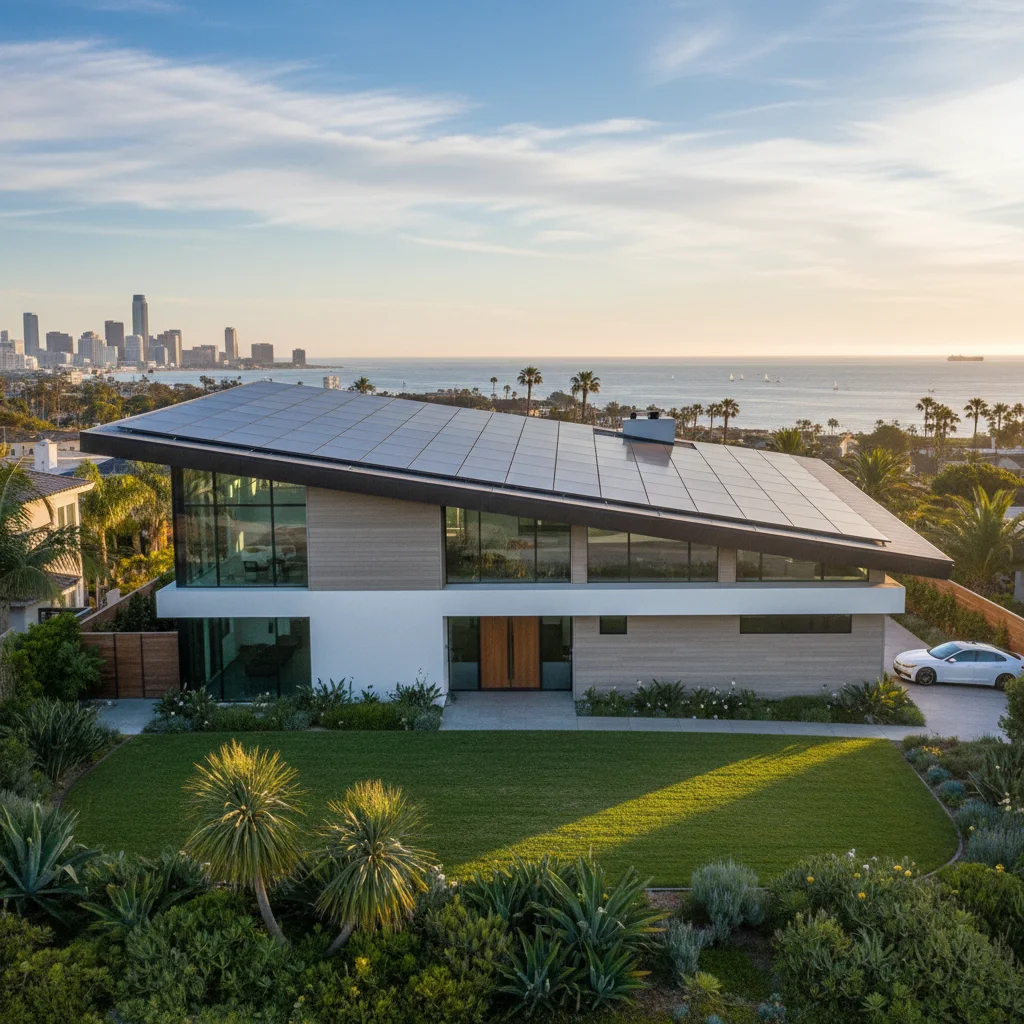
Long Beach homeowners installed 1,847 residential solar systems in 2025, but 63% left federal tax credits unclaimed because they didn't understand the application timeline. With the federal Investment Tax Credit (ITC) covering 30% of installation costs through 2032 and Southern California Edison offering $1,000-$3,000 in additional incentives, missing these programs means forfeiting $8,000-$15,000 in available funding on a typical 7kW system.
How Much Money Can You Get From Solar Rebates in Long Beach?
Long Beach solar installations qualify for the federal ITC at 30% of total system costs through 2032, declining to 26% in 2033 and 22% in 2034. Southern California Edison provides $300-$1,000 performance-based incentives for systems under 30kW. California's SGIP battery storage incentive adds $200-$250 per kilowatt-hour for energy storage paired with solar. A typical 7kW system costing $24,500 receives $7,350 from the federal credit, $800 from SCE, and $2,500 from SGIP if paired with a 10kWh battery—totaling $10,650 in combined incentives.
So why do two-thirds of homeowners miss out? And the answer is deadline confusion and incomplete applications.
What Equipment and Solar Systems Qualify for Long Beach Rebates?
The federal ITC covers photovoltaic panels, inverters, mounting hardware, electrical upgrades, battery storage systems, and labor costs for residential installations. SCE's Self-Generation Incentive Program requires NABCEP-certified installers and UL-listed equipment. Systems must connect to the grid through net energy metering (NEM 3.0 for new Long Beach applicants as of 2026). Solar shingles and building-integrated photovoltaics qualify if they generate electricity. Ground-mounted arrays qualify for the federal credit but not SCE rebates, which restrict funding to roof-mounted systems under 30kW capacity.
But battery-only installations without solar panels don't qualify for the federal ITC—solar generation is mandatory.
Do You Meet the Income Requirements for Long Beach Solar Rebates?
The federal ITC has no income limits—all taxpayers with sufficient tax liability qualify for the 30% credit. California's SGIP reserves 25% of funding for homeowners in disadvantaged communities and low-income households earning below 80% of area median income ($83,200 for a family of four in Los Angeles County). These equity budget applicants receive $850-$1,000 per kWh instead of the standard $200-$250 rate. SCE's performance incentives have no income restrictions. And homeowners who don't owe federal taxes can't claim the ITC in that year, but the credit rolls forward to future tax years indefinitely until fully used.
The federal Residential Clean Energy Credit (Section 25D) ended for expenditures made after December 31, 2025, and the IRS treats an expenditure as made when installation is completed (IRS FS-2025-05).
What's the Step-by-Step Process to Apply for Solar Rebates in Long Beach?
First, obtain quotes from three NABCEP-certified installers and verify their California contractor license (C-46 Solar classification required). Submit SCE interconnection applications 45-60 days before installation through the utility's online portal. Install the system with a licensed contractor who pulls all required Long Beach building permits ($450-$800 permit fees). Pass final inspection from the city and receive Permission to Operate (PTO) from SCE—this takes 15-30 business days. Form 5695 only covers qualifying work completed by December 31, 2025 and claimed on a 2025 return; the federal 25C and 25D credits ended after that date (IRS FS-2025-05). Federal tax credits for this work have ended, but state, local and utility rebates may still apply; check what is available at your address with the DuloCore rebate calculator. Submit SGIP applications within 30 days of PTO with system specifications, invoices, and proof of battery capacity.
So missing the SGIP 30-day window means losing $2,500-$8,500 in battery incentives permanently.
| Program | Amount | Eligibility | Application Window |
|---|---|---|---|
| Federal ITC | Ended Dec 31, 2025 | — | — |
| SCE Performance | $300-$1,000 | Grid-tied systems under 30kW | Before installation |
| SGIP Battery | $200-$1,000/kWh | Systems with storage 3kWh+ | 30 days after PTO |
When Do Long Beach Solar Rebate Deadlines Close and Is Funding Still Available?
The federal Residential Clean Energy Credit (Section 25D) ended for expenditures made after December 31, 2025, and the IRS treats an expenditure as made when installation is completed (IRS FS-2025-05). SGIP entered Step 8 in SCE territory in March 2026 with $43 million remaining in the general market budget and $78 million in equity budgets. At current claim rates, general market funding will exhaust by Q4 2026, but equity budget funds remain available through 2027. SCE performance incentives have no published end date and operate on a first-come basis with $12 million allocated annually. Applications submitted after funds exhaust go on waitlists that typically don't clear before program termination.
But the ITC's 30% rate drops to 26% on January 1, 2033—waiting costs $960 per $24,000 installation.
Can You Stack Multiple Solar Rebates and Incentives in Long Beach?
Yes—homeowners combine the federal ITC, SCE performance payments, and SGIP battery incentives on the same installation. The federal credit applies to the full gross cost before other rebates. State and utility incentives don't reduce the federal credit's calculation basis. Long Beach offers property tax exemptions for solar equipment value under California Revenue and Taxation Code Section 73—the added home value from solar doesn't increase property taxes. Net metering provides ongoing bill credits for excess generation sent to the grid. And using a rebate calculator shows combined benefits from all programs simultaneously.
"California law provides an exclusion from property taxes for the installation of an active solar energy system." — California Energy Commission
What Contractor Requirements and Certifications Do You Need for Long Beach Solar Rebates?
California requires a C-46 Solar Contractor license for all photovoltaic installations—general contractors with C-10 licenses can't qualify for rebates. SCE mandates NABCEP PV Installation Professional certification for all SGIP projects. Installers must carry $1 million general liability insurance and list the homeowner as additional insured. The contractor pulls Long Beach building permits and coordinates utility interconnection applications. Systems installed by unlicensed contractors or homeowners as DIY projects don't qualify for any rebates except the federal ITC (and only if all electrical work meets National Electrical Code standards). Verify licenses at cslb.ca.gov and NABCEP certification at nabcep.org before signing contracts.
So choosing an unlicensed installer to save $2,000 forfeits $8,000-$10,000 in available incentives.
Official Sources
- IRS Residential Clean Energy Credit — Federal tax credit guidance and Form 5695 instructions (note: the federal 25C and 25D credits ended for projects completed after December 31, 2025)
- DOE Homeowner's Guide to Solar Tax Credit — Eligibility requirements and qualified expenses for the federal ITC
- DSIRE California Incentives — Database of state and utility solar rebates, updated quarterly
Related Reading: Learn more about Solar Panel Rebates 2026 and Solar Panel Rebates Near Me.
Frequently Asked Questions
What solar panel rebates are available in Long Beach?
Long Beach homeowners access the federal Investment Tax Credit (30% of system costs through 2032), Southern California Edison performance incentives ($300-$1,000), and California's SGIP battery storage rebates ($200-$1,000 per kWh). Combined incentives total $8,000-$15,000 on typical residential installations. Property tax exemptions exclude solar equipment value from assessments. And net metering credits excess generation at retail rates under NEM 3.0.
Are solar panel rebates taxable income?
State and utility rebates that reduce the purchase price (SGIP, SCE performance payments) aren't taxable. Rebates received as cash payments after installation may be taxable—consult a tax professional. Solar Renewable Energy Certificates (SRECs) sold separately are taxable income. And net metering bill credits aren't taxable because they offset electricity purchases rather than providing cash payments.
How long does it take to receive a solar panel rebate?
The federal ITC applies when filing your tax return—refunds or reduced tax bills arrive within 21 days for e-filed returns. SCE performance incentives pay within 60-90 days after system inspection and Permission to Operate. SGIP battery rebates take 6-9 months after submitting the complete application with proof of performance. And property tax exemptions apply automatically in the assessment year following installation without requiring separate applications.
What are the income limits for solar panel rebates in Long Beach?
The federal ITC has no income limits—all taxpayers with sufficient tax liability qualify for the 30% credit regardless of income. California's SGIP provides higher rebate rates ($850-$1,000/kWh instead of $200-$250/kWh) for households earning below 80% of area median income ($83,200 for a family of four in Los Angeles County in 2026). SCE performance incentives have no income restrictions. But homeowners without federal tax liability can't use the ITC in that year—the credit carries forward to future years indefinitely.
Can you stack federal and state solar panel rebates?
Yes—homeowners combine the federal ITC (30% of total costs), SCE performance payments ($300-$1,000), and SGIP battery incentives ($200-$1,000/kWh) on the same installation. The federal credit calculates based on gross costs before subtracting other rebates. State and utility incentives don't reduce the federal credit amount. Calculate your combined savings with our free rebate calculator to see total benefits from all available programs. And energy tax credits apply to other home efficiency upgrades installed in the same tax year.
Ready to find your solar rebate amount? Use our free rebate calculator to see exactly how much you'll save from federal, state, and utility incentives. Get your personalized estimate in 60 seconds—no email required.
Last updated: April 14, 2026. Reviewed by the DuloCore Editorial Team. About our authors.
Check your California solar rebate eligibility — see the programs you qualify for and the dollar amounts on our California solar rebate finder.