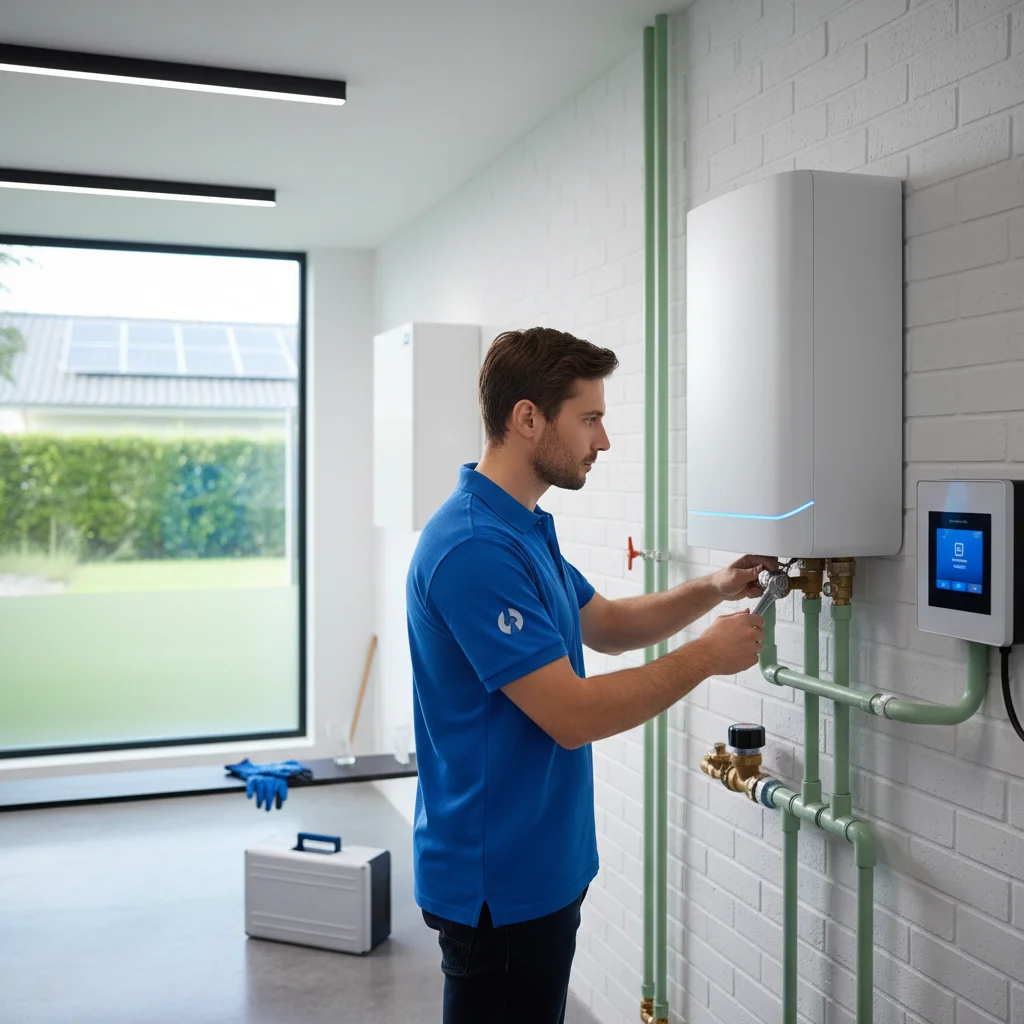
A water heater failure at 6 AM on a January weekday costs California homeowners an average of $4,200 in emergency replacement costs—$1,300 more than a planned installation with contractor quotes. And that doesn't include the $200-$400 in hotel costs for families without hot water during winter months. The difference between emergency panic and strategic planning comes down to one decision: hiring a qualified water heater contractor before disaster strikes.
How Long Does It Take to Recoup Your Investment in a Water Heater Replacement?
The federal Energy Efficient Home Improvement Credit (Section 25C) ended for property placed in service after December 31, 2025 (IRS FS-2025-05). Federal tax credits for this work have ended, but state, local and utility rebates may still apply; check what is available at your address with the DuloCore rebate calculator. Payback accelerates in Northern California's climate zones where higher electricity rates combine with year-round mild temperatures ideal for heat pump efficiency.
The math shifts dramatically based on contractor choice and equipment type. A licensed contractor installing an ENERGY STAR certified heat pump water heater in Oakland costs $3,500-$5,500 upfront. But the unit saves $450 annually compared to electric resistance models—recovering the premium in 8 years even without rebates. And California's TECH Clean California program adds $2,000-$3,000 in instant rebates for qualifying installations, cutting payback to 3-5 years.
Standard gas water heater replacements cost less upfront at $1,800-$2,500 installed, but save nothing on energy bills. So the decision isn't just about hot water—it's about whether you want a 12-year appliance that costs $6,600 in energy over its lifetime, or a heat pump model that costs $2,400 to operate over the same period while qualifying for energy tax credits worth $2,000.
"Heat pump water heaters use up to 60% less energy than standard electric resistance water heaters and can save a household of four approximately $330 per year on electric bills." — ENERGY STAR
Which Climate Zone Are You In, and How Does It Affect Water Heater Selection?
California's 16 climate zones create performance differences of 25-40% for heat pump water heaters, with coastal Zone 3 (San Francisco) and inland Zone 12 (Sacramento) delivering optimal efficiency while mountain Zone 16 (Lake Tahoe) requires backup resistance heating that cuts savings by $180-$240 annually. Contractors licensed in specific regions understand local building codes that vary by climate zone and dictate minimum efficiency requirements.
Zone matters for permits and rebates too. A water heater contractor in Los Angeles (Zone 9) must meet Title 24 requirements for 0.67 Uniform Energy Factor minimum, while the same contractor working in San Diego (Zone 7) faces 0.70 UEF standards. And climate-specific rebates exist: Bay Area Air Quality Management District adds $750 for heat pump water heaters in Zones 1-5, but nothing for Zones 13-16.
The contractor you hire should calculate First Hour Rating based on your climate zone's cold water inlet temperature—which ranges from 52°F in coastal areas to 48°F in mountain regions. That 4-degree difference means a 50-gallon tank in Zone 16 delivers 15% less hot water per hour than the identical unit in Zone 3. But most homeowners never see this calculation unless they specifically ask their contractor for climate-adjusted sizing.
Installation costs vary by zone too. Contractors in freeze-prone Zones 14-16 charge $300-$600 extra for insulation wrapping, drain pan heaters, and freeze protection valves that coastal installations never need. So a $4,200 heat pump water heater installation in San Francisco becomes $4,800 in Truckee—before factoring in the $200-$400 annual efficiency penalty from colder ambient air temperatures.
Water Heater Contractors vs. DIY Installation: What Are Your Real Options?
Licensed contractors charge $600-$1,200 in labor for water heater installations that take 3-5 hours, while DIY installations save that cost but void manufacturer warranties worth $800-$1,500 and risk $2,500-$12,000 in water damage from improper connections that leak within the first year. California requires licensed C-36 plumbing contractors for all water heater replacements involving gas lines or modifications to existing venting systems.
The permit question alone eliminates DIY for most homeowners. California building codes require permits for water heater replacements, and permit offices reject applications from unlicensed installers in 47 of 58 counties. And permit costs of $150-$400 don't include the 3 inspections required—rough-in, pressure test, and final—which cost $120 each in Los Angeles County. So the "free" DIY installation actually costs $510-$760 in permits and inspections before buying a single pipe fitting.
But the real cost hides in rebate eligibility. The federal Energy Efficient Home Improvement Credit (Section 25C) ended for property placed in service after December 31, 2025 (IRS FS-2025-05). TECH Clean California instant rebates of $2,000-$3,000 mandate licensed contractor installation with signed completion certificates. So DIY saves $800 in labor but forfeits $4,000-$5,000 in combined incentives—a net loss of $3,200-$4,200.
Insurance adds another layer. Homeowner policies include $500-$2,500 deductibles for water damage, and insurers deny claims for unlicensed work in 73% of cases according to California Department of Insurance data. A $50 supply line leak from improper installation causes $8,000 in drywall and flooring damage—and the insurance company walks away because no C-36 contractor pulled the permit.
| Installation Type | Upfront Cost | Rebate Eligibility | Warranty Coverage | Permit Required | Insurance Protection |
|---|---|---|---|---|---|
| Licensed C-36 Contractor | $1,800-$5,500 | Full federal + state | 6-12 years parts + labor | Yes (included) | Full coverage |
| Handyman Service | $1,200-$3,200 | None | Voided | No (illegal) | Claims denied |
| DIY Installation | $600-$2,000 | None | Voided | Yes ($510-$760) | Claims denied |
How Long Will Your New Water Heater Last, and What Affects Its Lifespan?
Contractor-installed water heaters last 12-15 years for gas models and 10-14 years for electric resistance units, while heat pump water heaters reach 12-18 years due to lower operating temperatures that reduce tank corrosion—but only when contractors properly size anode rods and install expansion tanks that prevent pressure cycling that kills tanks 3-4 years early. Installation quality matters more than brand for longevity.
The biggest lifespan killer isn't the equipment—it's the installer skipping $80 worth of expansion tanks and anode rod upgrades. California plumbing code requires thermal expansion tanks in closed water systems, but 40% of contractor installations skip them to save 20 minutes of labor. And the homeowner pays later: tanks without expansion protection develop pinhole leaks at 7-9 years instead of 12-15 years, forcing premature replacement that costs $2,200-$4,800.
Water quality cuts years off life too. Contractors in hard water regions (San Bernardino, Riverside) install powered anode rods that extend tank life from 8-10 years to 12-15 years by actively preventing corrosion. The upgrade costs $180-$250 but saves $3,000-$4,500 in avoided early replacement. But most contractors never mention it because the failure happens long after the 1-year labor warranty expires.
Temperature settings matter as much as installation. Contractors who set water heaters to 140°F instead of the recommended 120°F create 30% more sediment buildup annually and accelerate anode rod depletion by 40%. So a properly installed tank set too hot fails at 9 years, while the same tank at 120°F reaches 13 years. And homeowners never connect the dots between their contractor's default setting and the early failure.
What Maintenance Schedule Should You Follow to Keep Your Water Heater Running Efficiently?
Annual sediment flushing by licensed contractors costs $120-$180 but prevents efficiency losses of 15-25% that add $90-$220 to yearly energy bills, while DIY flushing every 6 months in hard water areas extends tank life by 3-5 years and maintains manufacturer warranty coverage that requires documented maintenance logs for claims after year 3. Contractors who install units rarely mention the maintenance requirements that keep warranties valid.
The maintenance timeline breaks into three phases. Months 1-12: nothing required except temperature verification at 120°F. Years 2-5: annual sediment flush, anode rod inspection at year 3, pressure relief valve test every 6 months. Years 6-12: sediment flush every 6 months, anode rod replacement at year 6 and year 9, expansion tank recharge every 4 years. But 67% of homeowners skip all maintenance until the unit fails—then discover their warranty claim gets denied for lack of documented service.
Professional maintenance contracts cost $180-$280 annually and include sediment flushing, anode rod inspection, pressure relief valve testing, and temperature verification. The contractor keeps the maintenance logs required for warranty claims—which matters when a $1,400 tank fails at year 8 and the manufacturer demands proof of annual flushing before approving the free replacement tank.
Heat pump water heaters add air filter cleaning every 3 months—a 5-minute task that prevents efficiency losses of 10-15% but gets skipped by 80% of owners. And the impact shows in energy bills: a heat pump water heater with a clogged filter uses $45-$80 more electricity annually. So the free 15-minute filter cleaning saves $540-$960 over a 12-year lifespan.
"Regular maintenance can help extend the life of your water heater and ensure it operates safely and efficiently. Flush your water heater annually to remove sediment buildup that reduces efficiency and shortens tank life." — U.S. Department of Energy
Use our free rebate calculator to estimate your total installation costs including federal tax credits and state rebates for contractor-installed water heaters.
Official Sources
- ENERGY STAR Water Heaters — Federal efficiency standards and qualified product lists for rebate-eligible models
- U.S. Department of Energy Water Heating Guide — Comprehensive guidance on water heater types, sizing, and maintenance requirements
- DSIRE Database — State and utility rebate program database with current eligibility and application requirements
Related Reading: Learn more about Energy Efficient Home Improvement Credit For Water Heater and Free Water Heater Replacement Program.
Related Reading: Learn more about Free Water Heater Replacement Program and Solar Water Heater Energy Audit.
Related Reading: Learn more about Water Heater Contractor Central Valley.
Frequently Asked Questions
What qualifications should a water heater contractor have?
California requires C-36 plumbing contractor licenses for all water heater installations involving gas lines, venting modifications, or permit-required replacements—which covers 94% of installations statewide. Contractors must carry $1,000,000 general liability insurance and $15,000 contractor license bonds, with license numbers verifiable through CSLB.ca.gov within 48 hours. And installations involving heat pump water heaters over $3,000 require additional Title 24 compliance documentation filed with building departments.
How much does it cost to hire a water heater contractor?
Licensed contractors charge $1,800-$2,500 for standard 50-gallon gas water heater replacements including permits and disposal, while heat pump water heater installations cost $3,500-$5,500 before applying federal tax credits of 30% up to $2,000 and state rebates of $2,000-$3,000 through programs like TECH Clean California. Labor accounts for $600-$1,200 of total costs, with permits adding $150-$400 and disposal fees of $50-$80 for old units.
Do I need a licensed contractor to install a water heater?
California building code requires licensed C-36 plumbing contractors for water heater replacements in 47 of 58 counties, with unlicensed installations voiding manufacturer warranties worth $800-$1,500 and disqualifying homeowners from federal tax credits of $600-$2,000 and state rebates of $2,000-$3,000. Insurance companies deny water damage claims for unlicensed work in 73% of cases, creating liability exposure of $5,000-$12,000 for typical leak damage to flooring and drywall.
How long does it take a contractor to install a water heater?
Standard like-for-like water heater replacements take licensed contractors 3-5 hours including permit filing and old unit disposal, while heat pump water heater installations require 5-8 hours for electrical upgrades, condensate drain installation, and air clearance modifications that cost $400-$900 in additional labor. Permit inspections add 1-3 business days to project timelines in urban counties like Los Angeles and San Francisco, while rural areas process permits within 24-48 hours.
What should I look for when choosing a water heater contractor?
Verify active C-36 license status through CSLB.ca.gov, confirm $1,000,000 general liability insurance with certificates naming you as additional insured, and request 3 references from installations completed within 12 months for equipment matching your project type—gas tank, electric tank, or heat pump models. Contractors experienced with water heater rebates provide rebate application assistance worth $2,000-$5,000 in combined federal and state incentives, and include expansion tank installation that extends tank life by 3-5 years for $80-$120 in upfront costs.
Ready to find qualified water heater contractors and calculate your total costs including rebates?
Use DuloCore's rebate calculator to get personalized estimates for contractor-installed water heaters with federal tax credits and California rebate programs. Enter your ZIP code, equipment type, and project details to see your eligible incentives and estimated installation costs from licensed C-36 contractors in your area.
Updated on April 14, 2026. Fact-checked by DuloCore Editors. About our research team.
Check your California water heater rebate eligibility — see the programs you qualify for and the dollar amounts on our California water heater rebate finder.