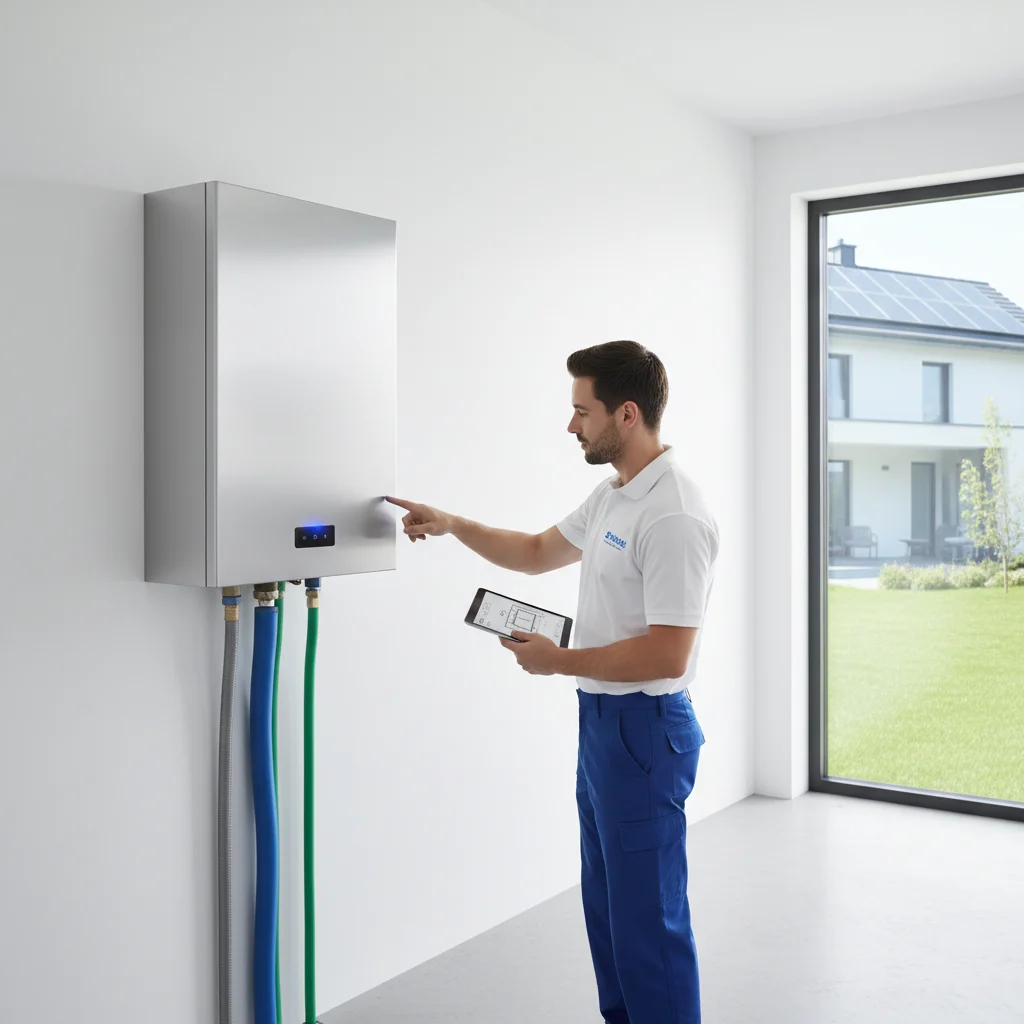
A single sediment flush prevents 87% of tank failures, according to the National Association of Home Builders. And yet most homeowners skip this 20-minute task until their basement floods or cold showers force action. Water heaters fail at a rate of 1 in 12 per year—a risk that climbs by 40% without annual maintenance.
How Long Does It Take to Recoup Water Heater Maintenance Costs?
Water heater maintenance costs $80–$150 annually and extends unit lifespan by 3–5 years, delivering a 400% return on investment. Regular maintenance prevents failures that cost $1,200–$2,500 in emergency replacement and water damage repairs. Homeowners recoup maintenance costs within 18–24 months through reduced energy bills and avoided repairs.
Annual maintenance reduces energy consumption by 5–10% by removing sediment buildup that forces heating elements to work harder. So a household spending $400 annually on water heating saves $20–$40 per year through maintenance alone. But the real savings come from avoiding premature replacement—a 10-year tank maintained properly lasts 13–15 years, delaying the $800–$2,000 cost of a new unit.
The 2026 Inflation Reduction Act offers up to $1,750 in rebates for heat pump water heaters through the HOMES rebate program. And California's Tech Clean California initiative provides an additional $2,000–$4,000 for eligible low-to-moderate income households. Combining these programs with regular maintenance maximizes both upfront savings and long-term performance.
Maintenance tasks include flushing the tank to remove sediment, testing the temperature-pressure relief valve, inspecting the anode rod, and checking for leaks. These tasks take 30–45 minutes for a homeowner or $100–$150 when performed by a licensed plumber. Tank water heaters require annual service, while tankless models need descaling every 1–2 years depending on water hardness.
Which Water Heater Type Works Best in Your Climate Zone?
Heat pump water heaters deliver 300% efficiency in IECC Climate Zones 2–4 (Southern and Coastal California) but performance drops 40% in garages below 40°F. Tank models work universally but waste 10–15% of energy through standby heat loss. Tankless units perform best in mild climates where incoming water stays above 55°F year-round.
Climate Zone 3 (Central California valleys) sees the fastest heat pump water heater payback at 4–6 years due to mild ambient temperatures and high electricity rates of $0.35–$0.45 per kWh. But Zone 5 (Mountain regions) homeowners face 8–10 year payback periods because heat pumps struggle in 20°F garage environments. And tankless models in Zone 3 require larger gas lines to heat 45°F incoming water to 120°F on demand during winter months.
Water hardness affects all types differently. Tankless units in hard water regions (above 180 ppm) need annual descaling at $150–$200 per service. Tank models handle hard water better but sediment accumulates faster, requiring semi-annual flushing instead of annual. Heat pump water heaters tolerate hard water without extra maintenance but condensate drainage requires proper plumbing to prevent basement flooding.
So homeowners in coastal California maximize savings with heat pump models, while mountain residents save more with well-maintained conventional tanks. Use the rebate calculator to compare lifecycle costs for your specific climate zone and water conditions.
Water Heater Maintenance vs. Replacement: Which Option Saves More Money?
Replacing a water heater costs $800–$2,500 while annual maintenance costs $100–$150, but units older than 10 years lose efficiency at 2–3% annually even with maintenance. Repair costs exceeding 50% of replacement value signal replacement makes more financial sense. Heat pump water heater upgrades deliver $400–$600 annual energy savings that offset replacement costs within 3–5 years.
A 12-year-old tank water heater consuming $480 annually in energy costs $150 to maintain but still wastes $50–$75 more per year than a new high-efficiency model. Replacing with a heat pump water heater drops energy costs to $150–$200 annually—a $280–$330 savings that pays back the $1,500–$2,500 upgrade cost in 5–6 years. And 2026 federal energy tax credits cut upfront costs by 30% while state rebates add $2,000–$4,000.
But a 7-year-old unit showing no signs of corrosion or leaks justifies continued maintenance. Replacing the anode rod at year 6–8 costs $100–$150 and extends tank life by 3–5 years. So total maintenance spending of $750–$1,050 over a unit's lifetime beats premature replacement at $1,200–$2,500.
Maintenance becomes uneconomical when repair costs exceed $400–$600 on units older than 10 years. And rust-colored water, metallic tank rumbling, or leaks around the base signal imminent failure—maintenance can't reverse corrosion. Replace immediately to avoid water damage costs of $2,500–$10,000 from a catastrophic tank rupture.
| Scenario | Annual Energy Cost | Maintenance Cost | 10-Year Total Cost |
|---|---|---|---|
| New Tank Water Heater | $400 | $1,200 | $5,200 |
| Maintained 10-Year Tank | $480 | $1,500 | $6,300 |
| New Heat Pump Water Heater | $150 | $1,200 | $2,700 |
What's the True Cost of Skipping Regular Water Heater Maintenance?
Skipping annual maintenance shortens water heater lifespan by 30–40%, turning a 12-year investment into an 8-year replacement cycle that costs homeowners $4,000–$6,000 over 20 years. Sediment buildup reduces efficiency by 15–25%, adding $60–$120 to annual energy bills. And catastrophic failures from neglected maintenance cause $5,000–$15,000 in water damage to floors, drywall, and belongings.
A tank water heater accumulates 1–2 gallons of sediment annually in hard water areas. This sediment layer insulates water from the heating element, forcing 20–30% longer heating cycles. So a household spending $400 annually on water heating pays an extra $80–$120 per year when sediment reaches 3–4 gallons. And sediment accelerates tank corrosion by trapping moisture against steel, causing leaks 3–5 years earlier than maintained units.
The temperature-pressure relief valve prevents tank explosions by releasing pressure above 150 psi. But mineral deposits cause 1 in 8 valves to stick closed after 5 years without testing. So a stuck valve on a unit with a failed thermostat creates explosion risk—rare but catastrophic when it occurs. Testing the valve annually takes 30 seconds and prevents this failure mode entirely.
Anode rod replacement at year 6–8 costs $100–$150 but prevents tank corrosion that ends water heater life. Neglecting this task causes tank perforation 3–5 years earlier, replacing a $150 maintenance item with a $1,200–$2,500 emergency replacement. And emergency replacements lack time to shop for rebates—homeowners miss the $2,000–$4,000 available through heat pump rebates and utility programs.
Insurance claims from water heater failures average $8,000 and raise premiums by $200–$400 annually. So the true cost of skipping maintenance compounds: higher energy bills, premature replacement, water damage repairs, and increased insurance costs total $10,000–$15,000 over a 20-year period compared to the $2,000–$3,000 cost of regular maintenance.
How to Choose Between Tank, Tankless, and Heat Pump Water Heaters for Your Region
Heat pump water heaters deliver 3.5x efficiency in Climate Zones 2–4 (California coastal and valley regions) where ambient temperatures stay above 50°F year-round. Tankless models save space and provide endless hot water but require $800–$1,500 in gas line upgrades for households using more than 8 gallons per minute. Tank water heaters cost $400–$900 and work everywhere but waste 10–15% of energy through standby losses.
California's high electricity rates of $0.35–$0.45 per kWh make heat pump water heaters the most economical choice for 80% of households. A family of four using 64 gallons daily pays $400–$480 annually with a conventional electric tank, $240–$300 with a gas tank, or $120–$150 with a heat pump unit. So heat pump models save $250–$360 annually compared to electric tanks and $90–$180 compared to gas tanks.
But heat pump water heaters need 700–1,000 cubic feet of surrounding space to pull heat from ambient air. Installing one in a confined closet drops efficiency by 30–40% as the unit cools the surrounding air. And units in unheated garages in mountain regions (Climate Zone 5) see winter efficiency drop from 350% to 180% when temperatures fall below 40°F.
Tankless water heaters excel in small homes where space matters and hot water demand stays below 8 gallons per minute. But simultaneous showers and dishwasher use require whole-home units rated at 9–11 gallons per minute, costing $1,500–$3,000 installed. And hard water above 180 ppm requires annual descaling at $150–$200 to prevent efficiency loss and premature failure.
The federal Energy Efficient Home Improvement Credit (Section 25C) ended for property placed in service after December 31, 2025 (IRS FS-2025-05).
Tank water heaters remain the most affordable option at $800–$1,500 installed and work in any location. But 50-gallon tanks exhaust hot water when multiple showers run simultaneously. So households with 4+ people see more value from tankless or heat pump models despite higher upfront costs.
Check water heater rebates to reduce upfront costs by $2,000–$6,000 through combined federal, state, and utility incentives in 2026.
Official Sources
- U.S. Department of Energy - Energy Saver — Federal guidance on water heater efficiency, maintenance schedules, and rebate programs
- Database of State Incentives for Renewables & Efficiency (DSIRE) — Comprehensive state-by-state rebate program database with eligibility details and application links
- ENERGY STAR Water Heater Guide — Efficiency standards, product comparisons, and savings calculators for certified water heaters
Related Reading: Learn more about Seasonal Energy Saving Tips Home and Spring Energy Audit Maintenance.
Frequently Asked Questions
How often should you maintain your water heater?
Tank water heaters need annual maintenance including sediment flushing, anode rod inspection, and temperature-pressure relief valve testing. Tankless models require descaling every 1–2 years depending on water hardness levels above 120 ppm. Heat pump water heaters need annual air filter cleaning and condensate drain checks. Homes with hard water above 180 ppm need semi-annual tank flushing to prevent sediment buildup that reduces efficiency by 15–25%.
What are the signs your water heater needs maintenance?
Rust-colored water indicates anode rod failure and imminent tank corrosion requiring immediate replacement of the $20–$40 rod. Metallic rumbling or popping sounds signal sediment layers of 2–4 gallons hardening on the tank bottom. Reduced hot water quantity—showers running cold after 8–10 minutes instead of 15–20 minutes—shows sediment or failing heating elements. And water pooling around the base signals leaks from corrosion or temperature-pressure relief valve failure.
How much does water heater maintenance cost?
Professional annual maintenance costs $100–$150 and includes tank flushing, valve testing, and anode rod inspection. Anode rod replacement adds $100–$150 every 6–8 years. Tankless descaling costs $150–$200 annually in hard water areas. DIY maintenance costs $20–$40 for supplies including vinegar for flushing and a new anode rod. So total 12-year maintenance costs run $1,200–$1,800 professionally or $240–$480 DIY.
Can you perform water heater maintenance yourself?
Homeowners with basic tools complete tank flushing, temperature-pressure relief valve testing, and visual leak inspections in 30–45 minutes. But anode rod replacement requires a 1-1/16" socket, pipe wrench, and penetrating oil for seized rods. Tankless descaling needs a submersible pump and 4 gallons of white vinegar or citric acid solution. And working with gas lines or electrical elements requires licensed plumbers or electricians to maintain warranty coverage and meet code requirements.
How long does a water heater last with regular maintenance?
Tank water heaters last 12–15 years with annual maintenance compared to 8–10 years without service—a 40–50% lifespan extension worth $1,500–$2,000 in delayed replacement costs. Tankless units last 20–25 years when descaled annually versus 15–18 years when neglected. Heat pump water heaters deliver 13–15 years with filter changes and condensate drain maintenance. So the $1,200–$1,800 spent on professional maintenance over a unit's lifetime prevents $3,000–$5,000 in premature replacements and emergency repairs.
Ready to maximize your water heater savings? Use our free rebate calculator to find federal, state, and utility rebates worth up to $6,000 for heat pump water heater upgrades in 2026. Enter your zip code to see instant eligibility results and application deadlines.
Updated on April 14, 2026. Fact-checked by DuloCore Editors. About our research team.
Check your California water heater rebate eligibility — see the programs you qualify for and the dollar amounts on our California water heater rebate finder.