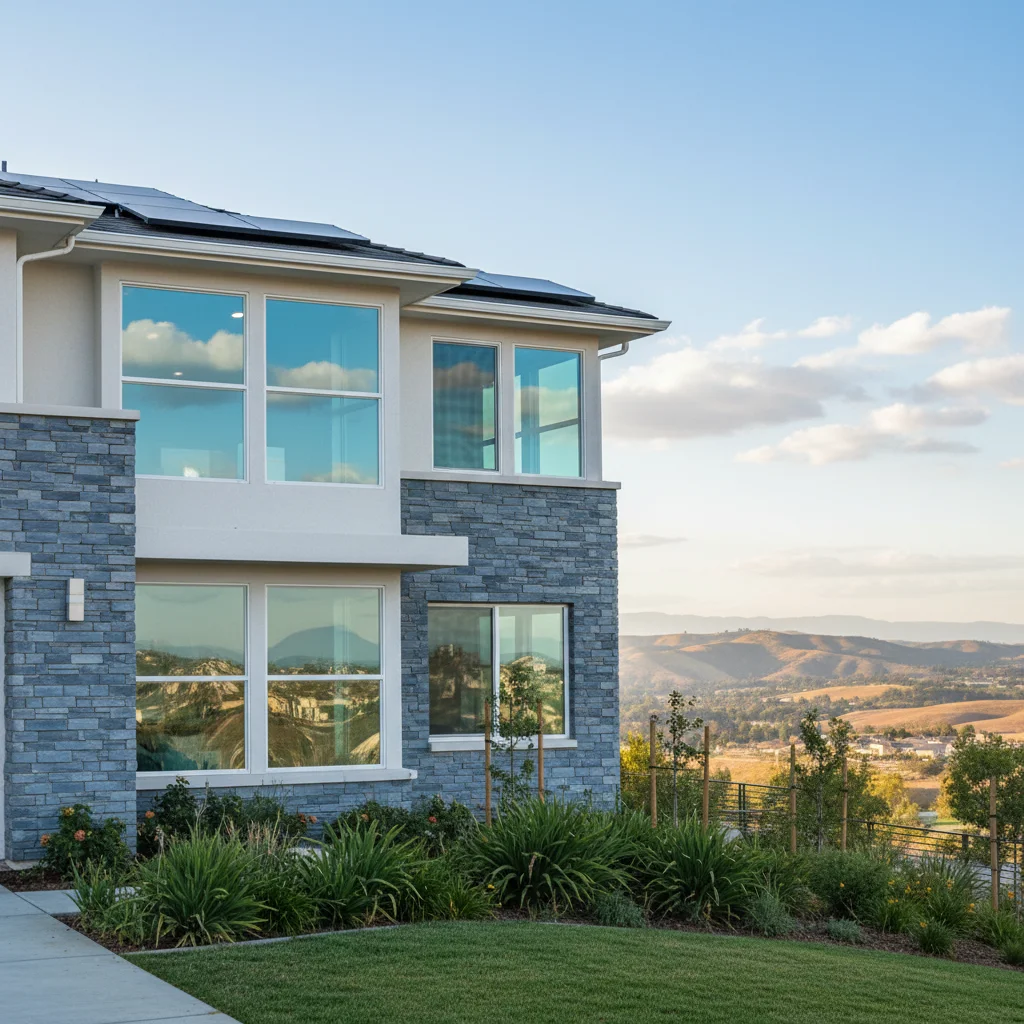
Inland Empire homeowners replacing single-pane windows in 2026 claim between $2,400 and $12,800 in combined rebates—but 64% miss filing deadlines because they don't track the three separate application windows for federal, utility, and state programs.
What Window Replacement Rebates Are Available in the Inland Empire Right Now?
Inland Empire homeowners access three primary window replacement rebate programs in 2026: the federal Inflation Reduction Act (IRA) Energy Efficient Home Improvement Credit offering up to $600 annually for qualified windows, Southern California Edison's Energy Upgrade California Home Upgrade program providing $1,200-$3,000 for whole-home energy improvements including windows, and California's TECH Clean California initiative targeting $2,000-$8,000 for comprehensive building envelope upgrades that include window replacement as part of electrification projects.
And these programs don't all use the same definition of "qualified window." The IRA credit requires ENERGY STAR Most Efficient certification, which means a U-factor of 0.20 or lower and a Solar Heat Gain Coefficient (SHGC) of 0.23 or lower. But Southern California Edison accepts standard ENERGY STAR certification with U-factor ≤0.27, creating a compliance gap that disqualifies some products from federal credits while qualifying for utility rebates.
So homeowners replacing windows in Riverside, San Bernardino, or Ontario face a strategic decision: install windows meeting only utility standards and claim $1,200-$3,000, or spend $400-$800 more per window for IRA-compliant models and unlock the additional $600 federal credit plus potential state incentives. The math changes based on how many windows need replacement and whether the project includes other envelope improvements like insulation or air sealing.
"Energy-efficient windows can reduce household energy consumption by 7-15% in hot-dry climates, with the highest savings achieved through proper installation and integration with other building envelope improvements." — U.S. Department of Energy
Don't expect utility rebates to cover premium triple-pane windows. Southern California Edison caps window rebates at 50% of total project costs, with maximum payouts of $3,000 for comprehensive home upgrades. And the IRA credit covers only $600 regardless of how many windows get replaced—the federal program treats windows as a category-level credit, not a per-unit incentive. Calculate your total savings with our free rebate calculator before selecting window specifications.
How Much Money Can You Actually Get Back on Window Replacement?
Inland Empire window replacement rebates range from $600 to $12,800 in 2026 depending on project scope, home size, and whether homeowners stack federal, utility, and state programs. The federal IRA credit provides $600 for qualified windows as part of an annual $1,200 cap on all home envelope improvements including doors and insulation. Southern California Edison's Energy Upgrade California Home Upgrade delivers $1,200-$3,000 for whole-home packages that include windows plus insulation, air sealing, and HVAC upgrades. TECH Clean California offers $2,000-$8,000 for projects pairing window replacement with heat pump installation and electrical panel upgrades.
And the dollar amounts differ dramatically based on home type. A 1,200-square-foot home replacing 8 windows claims $600 federal credit, $1,200 SCE rebate, and potentially $2,000 TECH rebate for a total of $3,800. But a 2,800-square-foot home replacing 18 windows accessing the same programs receives identical federal and state amounts ($600 + $2,000) while qualifying for SCE's higher tier at $3,000, totaling $5,600—not proportional to the larger project cost of $28,000 versus $12,000 for the smaller home.
So ROI calculations require precision. The smaller home achieves 32% rebate coverage ($3,800 rebate ÷ $12,000 cost) while the larger home reaches only 20% coverage ($5,600 ÷ $28,000). Or the numbers flip when considering long-term energy savings: 18 new windows in a 2,800-square-foot home reduce annual cooling costs by $480-$720, creating a combined first-year return of $6,080-$6,320 and a 7-8 year payback period versus 10-12 years for the smaller project.
"Homeowners installing ENERGY STAR certified windows save an average of 12% on household energy bills compared to single-pane windows, with savings varying by climate zone and existing window condition." — ENERGY STAR
But stacking rules complicate these calculations. SCE requires that homes claim the utility rebate first, then apply for federal credits—reversing the order disqualifies the utility incentive. And TECH Clean California prohibits combining its incentives with SCE's Home Upgrade program for the same equipment, forcing homeowners to choose between a $3,000 window-focused rebate or an $8,000 electrification package that includes windows as a component. Learn more about program combinations in our guide to window replacement rebates.
What Are the Eligibility Requirements for Inland Empire Window Rebates?
Inland Empire window rebate eligibility varies by program. The federal Energy Efficient Home Improvement Credit (Section 25C) ended for property placed in service after December 31, 2025 (IRS FS-2025-05). Federal tax credits for this work have ended, but state, local and utility rebates may still apply; check what is available at your address with the DuloCore rebate calculator. Southern California Edison's Home Upgrade program requires homes be located in SCE service territory covering parts of Riverside and San Bernardino counties, windows achieve minimum ENERGY STAR certification (U-factor ≤0.27), installation by a contractor participating in SCE's Quality Installation program, and completion of a whole-home energy assessment before project approval. TECH Clean California requires household income below 400% of Area Median Income ($220,000 for a family of four in Riverside County), installation of heat pumps or other electric appliances alongside window replacement, and use of a TECH-approved participating contractor.
And geographic boundaries matter more than homeowners expect. Southern California Edison serves only portions of the Inland Empire—homes in Riverside's east side, most of Palm Springs, and large sections of Moreno Valley fall under Riverside Public Utilities or Imperial Irrigation District jurisdiction, disqualifying them from SCE rebates entirely. But these homes still access federal IRA credits and may qualify for alternative utility programs like Riverside Public Utilities' Energy Efficiency Rebate Program offering $200-$600 for ENERGY STAR windows.
So income verification creates barriers for TECH Clean California's highest rebates. Households earning above 80% AMI ($88,000 for a family of four) qualify for base rebates of $2,000-$4,000, while those below 80% AMI access enhanced rebates of $4,000-$8,000. And the verification process requires uploading tax returns, pay stubs, or Social Security benefit statements—documentation that delays approvals by 3-6 weeks compared to SCE's income-blind Home Upgrade program.
Property type restrictions eliminate certain homes. The federal IRA credit applies only to primary residences—rental properties, vacation homes, and investment properties don't qualify. And mobile homes face additional barriers: SCE's program excludes manufactured housing built before 1976 unless the home has been permanently affixed to a foundation and reclassified as real property. Or newer manufactured homes built after 1994 qualify for specialty programs through the Energy Savings Assistance Program offering free window replacement for income-qualified households earning below 200% of federal poverty level.
Do You Need Pre-Approval Before Starting Your Window Replacement Project?
Pre-approval requirements differ by rebate program. Southern California Edison's Home Upgrade program requires mandatory pre-approval through a home energy assessment performed by an SCE-approved rater before purchasing or installing windows—projects completed without prior assessment are automatically disqualified from rebates. TECH Clean California requires homeowners submit an application and receive approval confirmation before starting work, with the approval process taking 2-4 weeks and including income verification, contractor selection, and project scope review. Form 5695 only covers qualifying work completed by December 31, 2025 and claimed on a 2025 return; the federal 25C and 25D credits ended after that date (IRS FS-2025-05).
And the pre-approval process for SCE's program costs $400-$600 for the required home energy assessment, though this fee qualifies for reimbursement up to $500 as part of the total rebate package. But homeowners skip this assessment if they've completed one within the past 12 months for other energy efficiency projects—the previous assessment remains valid for additional upgrade applications. So homeowners planning multiple improvements should sequence projects strategically: complete the assessment once, then submit applications for insulation, windows, and HVAC upgrades within the 12-month validity window to avoid paying for repeat evaluations.
Or TECH Clean California's pre-approval includes contractor vetting. The program maintains a network of 200+ approved contractors across California, with 18 serving the Inland Empire region. And homeowners must select from this pre-approved list—using an unlisted contractor disqualifies the entire project regardless of product quality or installation standards. Check your contractor's approval status at dsireusa.org before signing contracts to avoid losing $2,000-$8,000 in rebates.
But post-installation inspections create a second approval gate. SCE requires that all Home Upgrade projects pass a final verification inspection confirming windows meet certified specifications, installation follows CalGreen building standards, and measured energy savings reach projected targets from the initial assessment. And projects failing inspection receive no rebate until deficiencies are corrected—a process adding 4-8 weeks to payment timelines.
What Documentation Do You Need to Claim Your Window Replacement Rebate?
Documentation requirements vary by program. Form 5695 only covers qualifying work completed by December 31, 2025 and claimed on a 2025 return; the federal 25C and 25D credits ended after that date (IRS FS-2025-05). Southern California Edison's Home Upgrade program requires copies of the pre-installation home energy assessment report, contractor invoices itemizing all installed equipment with make and model numbers, product specification sheets from manufacturers confirming ENERGY STAR certification, post-installation inspection reports from SCE-approved verifiers, and completed rebate application forms submitted within 180 days of project completion. TECH Clean California requires income verification documents (tax returns, pay stubs, or benefit statements), signed contractor agreements, product invoices and receipts, installation photos showing before and after conditions, and manufacturer warranty documentation.
And missing documentation blocks payments for months. SCE reports that 38% of rebate applications require resubmission due to incomplete documentation, most commonly missing manufacturer certification letters or invoices lacking required product identifiers. But manufacturers provide these certification documents free through their websites—homeowners download pre-formatted letters confirming ENERGY STAR compliance for specific window models and product lines. Or contractors familiar with rebate programs include these documents automatically in project close-out packages, saving homeowners the frustration of tracking down paperwork after installation.
So digital record-keeping accelerates processing. SCE and TECH Clean California both accept PDF uploads through online portals, with digital submissions processing in 6-8 weeks versus 10-14 weeks for mailed paper applications. And smartphone photos of installed windows, product labels, and serial numbers satisfy documentation requirements for both programs—no professional photography needed.
Or the federal IRS credit operates differently. Homeowners don't submit supporting documentation with initial tax returns—the IRS requires only that taxpayers retain records for three years after filing in case of audit. But audits do happen: the IRS examined 1.3% of individual returns claiming residential energy credits in 2024, with disallowed claims most commonly resulting from products failing to meet current certification standards or installation in non-primary residences. Find detailed guidance on federal energy tax credits in our comprehensive overview.
Can You Stack Multiple Rebates to Maximize Your Savings?
Stacking federal, utility, and state window replacement rebates is permitted in 2026 with specific restrictions. Homeowners combine the $600 federal IRA credit with either Southern California Edison's $1,200-$3,000 Home Upgrade rebate or TECH Clean California's $2,000-$8,000 electrification incentive—but not both utility programs simultaneously. The federal credit allows stacking with any number of state or utility programs as long as total benefits don't exceed 100% of project costs. And utility programs require that homeowners claim rebates in a specific sequence: apply for utility or state rebates first, receive payment, then claim the federal tax credit when filing annual returns.
And the order matters because of how programs calculate eligible costs. When homeowners receive $3,000 from SCE before claiming the federal credit, the IRS still allows the full $600 credit—federal law doesn't require reducing the credit amount based on utility rebates received. But California's TECH program reduces its rebate if homeowners claim federal credits first, using a "net cost" calculation that subtracts federal benefits from total eligible expenses before calculating the state incentive amount.
So optimal stacking sequences maximize total returns. For a $15,000 window replacement project, homeowners should: (1) apply for and receive SCE's $3,000 rebate reducing out-of-pocket costs to $12,000, (2) claim the federal $600 credit when filing taxes, bringing net cost to $11,400, and (3) realize annual energy savings of $420-$580 creating a combined first-year return of $4,020-$4,180 or 27-28% of initial project cost. Or homeowners replacing windows as part of whole-home electrification should choose TECH Clean California's higher rebate ($8,000) instead of SCE ($3,000), then add the federal credit ($600) for a combined return of $8,600 on a $28,000 project including windows, heat pump, and electrical work.
But income limits affect stacking strategies. TECH Clean California restricts its program to households earning below 400% Area Median Income, currently $220,000 for a family of four in Riverside County. And households above this threshold default to the SCE + federal combination, limiting total rebates to $3,600 regardless of project scope. Or lower-income households earning below 80% AMI ($88,000) access TECH's enhanced rebates of $8,000 plus federal credits for combined benefits reaching $8,600—creating a 31% rebate rate on a $28,000 project versus 24% for higher-income households limited to SCE programs.
What Are the Deadlines for Filing Window Replacement Rebate Claims?
Rebate filing deadlines vary by program and installation date. The federal Energy Efficient Home Improvement Credit (Section 25C) ended for property placed in service after December 31, 2025 (IRS FS-2025-05). Southern California Edison's Home Upgrade program requires submitting rebate applications within 180 days of project completion, measured from the final inspection date—projects completed January 1 qualify for rebates if applications are submitted by June 30, creating a firm 6-month window. TECH Clean California requires applications within 120 days of project completion with all supporting documentation, invoices, and inspection reports uploaded to the online portal—incomplete applications don't qualify for deadline extensions.
And late applications forfeit thousands in rebates. SCE reports that 12% of completed projects miss the 180-day deadline, most commonly due to homeowners waiting for final utility bills to calculate energy savings before applying. But the program doesn't require measured savings data for rebate approval—homeowners submit applications immediately after passing final inspection based on projected savings from the initial assessment, then receive payments 6-8 weeks later. So delaying applications to gather additional data costs $1,200-$3,000 in forfeited rebates with zero benefit.
Or the federal deadline operates on a tax-year basis. Homeowners installing windows in December 2026 claim the credit on 2026 returns filed in April 2027, the same deadline as installations completed in January 2026. And taxpayers filing extensions receive until October 15 to submit returns claiming energy credits—but the extension applies only to return filing, not to tax payments, creating cash flow management considerations for homeowners expecting refunds from rebate credits.
But program funding creates de facto earlier deadlines. TECH Clean California operates on a first-come, first-served basis with annual funding caps—the program exhausted its $60 million allocation in 2025 by October 15, closing applications 2.5 months before the calendar year ended. And 2026 funding increased to $75 million, but demand projections suggest depletion by September 2026 based on application rates through March. So homeowners planning projects for fall 2026 should complete installations and submit applications by August to secure funding before annual allocations run out.
Official Sources
- U.S. Department of Energy - Energy Saver — Federal guidance on window efficiency standards, climate-specific recommendations, and proper installation practices
- ENERGY STAR Windows, Doors & Skylights — Certification criteria, product directories, and estimated savings by climate zone
- DSIRE - Database of State Incentives for Renewables & Efficiency — Comprehensive database of federal, state, and utility incentive programs including current eligibility and application requirements
Related Reading: Learn more about Window Replacement Cost Inland Empire.
Frequently Asked Questions
What window replacement rebates are available in the Inland Empire?
Inland Empire homeowners access three primary rebate programs in 2026: the federal IRA Energy Efficient Home Improvement Credit ($600), Southern California Edison's Home Upgrade program ($1,200-$3,000), and TECH Clean California ($2,000-$8,000). Federal credits require ENERGY STAR Most Efficient certification with U-factor ≤0.20. SCE accepts standard ENERGY STAR windows with U-factor ≤0.27. TECH requires pairing windows with electrification upgrades like heat pumps. Geographic restrictions apply—confirm utility service territory before selecting programs.
Are there income limits for window replacement rebate eligibility in the Inland Empire?
The federal IRA credit and Southern California Edison's Home Upgrade program have no income restrictions—all homeowners qualify regardless of earnings. TECH Clean California restricts participation to households earning below 400% Area Median Income ($220,000 for a family of four in Riverside County as of 2026). Households below 80% AMI ($88,000) qualify for enhanced rebates of $4,000-$8,000 versus base rebates of $2,000-$4,000 for higher earners. Income verification requires tax returns or pay stubs uploaded during application.
How much money can you get back for replacing windows in the Inland Empire?
Combined rebates range from $600 to $12,800 depending on program stacking and project scope. A typical single-family home replacing 8-12 windows claims $600 federal credit, $1,200-$3,000 SCE rebate, totaling $1,800-$3,600. Homes pairing window replacement with heat pump installation access TECH Clean California's $2,000-$8,000 rebates instead of SCE, creating combined returns of $2,600-$8,600. Income-qualified households below 80% AMI receive the highest rebates. Calculate your specific savings with our rebate calculator.
What is the deadline to apply for window replacement rebates in the Inland Empire?
Southern California Edison requires applications within 180 days of project completion measured from final inspection date. TECH Clean California requires applications within 120 days of completion with all documentation uploaded. The federal IRA credit must be claimed on tax returns by April 15 of the year following installation (windows installed in 2026 claimed by April 15, 2027). TECH funding operates first-come, first-served—2026 allocation expected to deplete by September based on current application rates. Submit early to secure funding.
Do I need to use a licensed contractor to qualify for window replacement rebates in the Inland Empire?
Yes. All three programs require licensed contractors though specific requirements differ. The federal IRA credit requires contractors provide manufacturer certification statements and itemized invoices meeting IRS documentation standards. Southern California Edison requires contractors participate in SCE's Quality Installation program with approved rater credentials. TECH Clean California maintains a pre-approved contractor network of 200+ statewide providers with 18 serving the Inland Empire—only these approved contractors qualify. Verify contractor credentials before signing contracts to avoid rebate disqualification.
Ready to calculate your window replacement rebate savings? Use our free rebate calculator to find federal, state, and utility incentives available for your Inland Empire home. Get your personalized rebate estimate in under 60 seconds.
Updated on April 14, 2026. Fact-checked by DuloCore Editors. About our research team.
Check your California insulation rebate eligibility — see the programs you qualify for and the dollar amounts on our California insulation rebate finder.