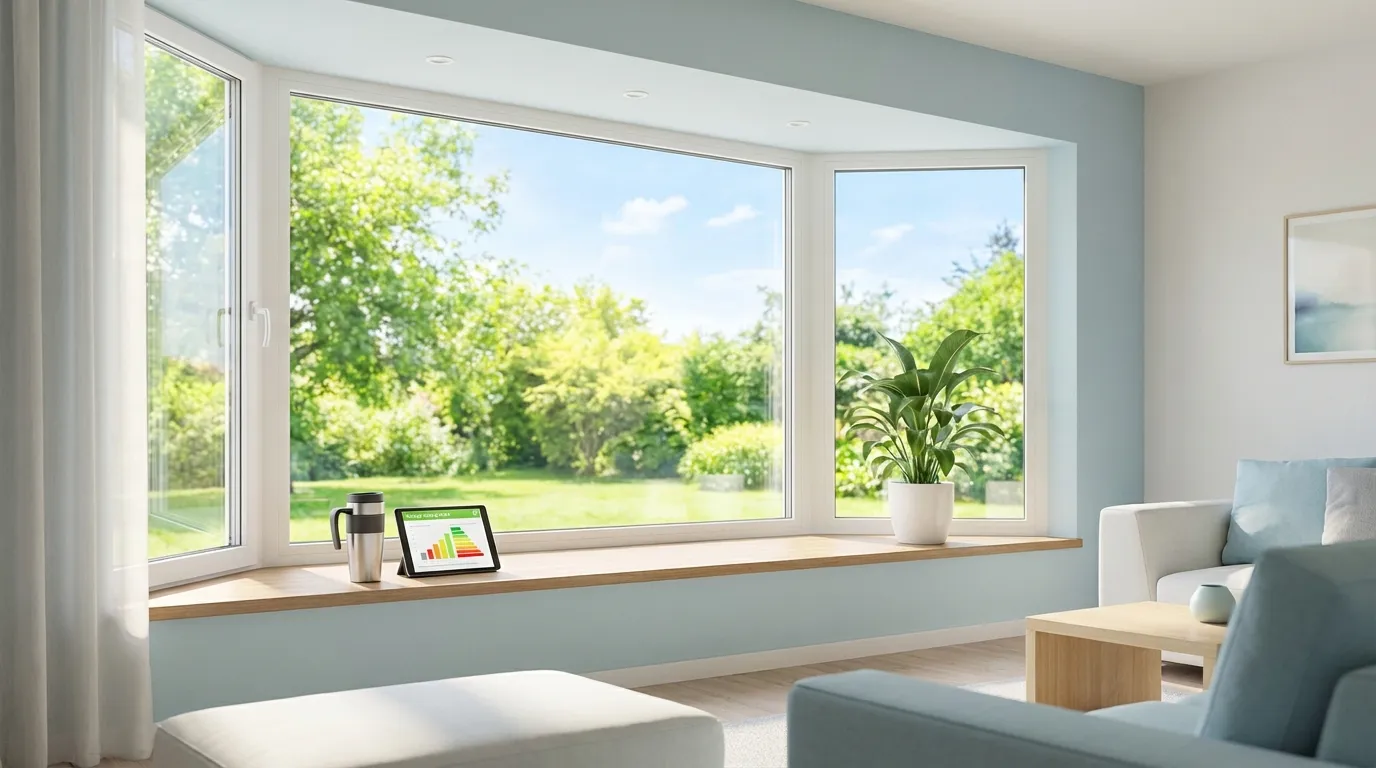
Up to 30% of a home's heating and cooling energy loss occurs through its windows and doors. This constant thermal drain forces HVAC systems to work overtime, inflating utility bills month after month. So replacing old, inefficient single-pane or builder-grade windows isn't just a cosmetic upgrade; it's a direct investment in lowering your home's operational costs and improving its overall energy performance.
What is the Typical Cost of Window Replacement and Installation?
Window replacement costs are an investment with a typical price range of $450 to $2,100 per window, including installation. The final expense depends on window material (vinyl, wood, fiberglass), type (double-hung, casement), and local labor rates, which average between $40 and $65 per hour.
The total project cost for replacing windows in a home runs from $3,000 to over $22,000. But material choice dictates a large portion of this budget. Vinyl windows are the most affordable, costing between $200 and $900 per unit before installation. So fiberglass windows offer a mid-range option at $600 to $1,500. And wood windows represent the premium tier, often exceeding $1,300 per window. Installation adds another $150 to $800 per window to the final invoice. This upfront expenditure is precisely what homeowners must weigh against long-term energy savings and available window replacement rebates. So understanding these figures is the first step in calculating the project's return on investment.
How Do Energy Efficiency Ratings and Climate Zones Impact Your Window ROI and Payback Period?
A window's ROI is directly tied to its ENERGY STAR certification and performance ratings, like U-factor and SHGC, which must align with your specific climate zone. Choosing windows with metrics optimized for your region, such as a low U-factor below 0.27 for cold climates, accelerates the payback period.
The Department of Energy sets specific performance criteria for windows to earn the ENERGY STAR label, which varies by region. So homeowners in northern climates benefit from windows with a low U-factor (measuring heat loss) to keep warmth inside. But those in southern climates need a low Solar Heat Gain Coefficient (SHGC) to block the sun's heat and reduce cooling costs. Mismatching a window's specifications to your climate zone diminishes potential energy savings by up to 15%. And this directly extends the time it takes to recoup your initial investment. The payback period for correctly specified windows is often between 8 and 12 years, a timeline that stretches considerably with the wrong product choice.
"ENERGY STAR certified windows can lower electric bills by an average of 12 percent nationwide." — ENERGY STAR
Which Window Specifications and Brands Qualify for Rebates, Tax Credits, and Other Incentives?
The federal Energy Efficient Home Improvement Credit (Section 25C) ended for property placed in service after December 31, 2025 (IRS FS-2025-05). Federal tax credits for this work have ended, but state, local and utility rebates may still apply; check what is available at your address with the DuloCore rebate calculator. Brands like Pella, Andersen, and Jeld-Wen manufacture windows that meet the required U-factor and SHGC ratings for specific climate zones.
To claim the federal credit, windows must be installed in your primary residence and meet the stringent efficiency standards. And these standards are not one-size-fits-all; they are tailored to four distinct climate zones in the United States. For example, in the Northern climate zone, windows must have a U-factor of 0.28 or less. So checking the National Fenestration Rating Council (NFRC) label on any potential window is critical to confirm its eligibility. Many state and utility programs also offer rebates, but they reference these same ENERGY STAR and NFRC ratings. You can find detailed local incentive information through DSIRE, a comprehensive database of U.S. renewable energy and efficiency incentives.
"DSIRE is the most comprehensive source of information on incentives and policies that support renewables and energy efficiency in the United States." — DSIRE
| Home Upgrade | Average Cost | Average ROI | Typical Lifespan |
|---|---|---|---|
| New Windows (Vinyl) | $20,100 | 67.5% | 20-40 years |
| Attic Insulation | $1,950 | 107.7% | 80-100 years |
| Heat Pump Installation | $8,500 | 80-90% | 15-20 years |
How Do New Windows Compare to Alternative Home Upgrades in Terms of Lifespan, Maintenance, and Overall ROI?
New windows provide a 67.5% return on investment, which is lower than attic insulation's 107.7% ROI but offers a longer lifespan of 20-40 years with minimal maintenance. This durability contrasts with HVAC systems, which have a 15-20 year lifespan and require annual servicing.
While projects like adding attic insulation or installing a new garage door offer a faster payback, window replacement provides a unique combination of benefits. So beyond the 67.5% resale value ROI, new windows deliver immediate monthly energy savings of $125 to $550 per year. And they improve home comfort by reducing drafts and outside noise. But other upgrades have different profiles. For instance, high-efficiency heat pump rebates can offset a system that has a slightly shorter lifespan than windows but delivers more direct heating and cooling savings. So the best choice depends on the homeowner's primary goal: maximizing resale value, minimizing monthly utility bills, or improving long-term durability with low maintenance.
Related Reading: Learn more about Cool Roof Energy Savings and Door Weatherstripping Energy Savings.
Related Reading: Learn more about Door Weatherstripping Energy Savings and Energy Audit Priority Recommendations.
Frequently Asked Questions
How much can I expect to save on my energy bills with new windows?
Replacing single-pane windows with ENERGY STAR certified models saves homeowners an average of $101–$583 annually, depending on the region. Homes in colder climates like the Northeast see savings on the higher end of that range.
What is the average return on investment for replacing old windows?
The national average return on investment for vinyl window replacement is 67.5%, according to the Remodeling 2023 Cost vs. Value Report. This means you recoup about $67.50 in increased home value for every $100 you spend.
Are there federal or local rebates available for energy-efficient window upgrades?
Yes, the federal government offers energy tax credits covering 30% of the cost, up to a $600 annual limit, for qualifying window installations. And many state and local utility companies provide additional rebates, which can be found on DSIRE or your utility provider's website.
How long does it typically take to recoup the cost of new windows through energy savings?
The payback period for new windows through energy savings alone typically ranges from 8 to 12 years. This timeline shortens if you also factor in available rebates, tax credits, and the increase in your home's resale value.
Do triple-pane windows offer a significantly better ROI compared to double-pane?
Triple-pane windows offer superior insulation and noise reduction, but their ROI is not always better. They cost 10-15% more than double-pane windows, and the incremental energy savings are most impactful in extremely cold climates. For most U.S. climates, high-performance double-pane windows provide the optimal balance of cost and efficiency.
Last updated April 14, 2026 — reviewed by DuloCore Editorial. About our authors.
Check your California insulation rebate eligibility — see the programs you qualify for and the dollar amounts on our California insulation rebate finder.