Home Energy Audits

Air Sealing Cost and Savings

person Ivo Dachev
calendar_today
Updated Apr 16, 2026

Air Sealing Cost And Savings

Quick Answer: Air Sealing Cost And Savings
Air Sealing Cost And Savings

The average American home has enough air leaks to equal leaving a window wide open 24 hours a day, 365 days a year. So every month, conditioned air—and the money spent to heat or cool it—is escaping through dozens of hidden gaps in attics, basements, and walls. And these drafts aren't just a comfort issue; they represent a direct, continuous drain on your finances, inflating utility bills by up to 20% annually.

How Much Does Air Sealing Cost and What Are the Potential Savings?

Professional air sealing services in 2026 cost between $350 and $1,500 for a typical single-family home. So the final price depends on the home's size, age, and the extent of air leakage identified during a blower door test. But homeowners often save 10% to 20% on heating and cooling costs.

The core tension for any homeowner is whether the upfront expense justifies the long-term benefit. So with the U.S. Department of Energy reporting that air sealing combined with adding insulation can save an average of 15% on energy bills, the financial case is compelling. For a home with an annual heating and cooling bill of $2,000, that's a direct savings of $300 per year. And this payback period is often shortened to 2-4 years when homeowners utilize available rebates and tax credits, turning a simple home improvement project into a high-return investment. The first step is often a home energy audit to pinpoint the most critical leaks.

What State and Utility Rebates Are Available for Air Sealing?

State and utility air sealing rebates in 2026 offer between $100 and $750 to homeowners. And these incentives are designed to offset professional installation costs, often requiring a pre- and post-installation energy audit to qualify for the full program amount, which varies by region.

In 2026, dozens of state energy offices and local utility companies provide direct rebates for air sealing projects. For example, programs like Mass Save in Massachusetts offer rebates up to $500, while California's PG&E provides incentives based on measured improvements in home tightness. And these programs are funded to help states meet energy efficiency goals. But eligibility often requires using a program-approved contractor and achieving a specific air leakage reduction, typically measured in Cubic Feet per Minute (CFM). So homeowners must check with their local utility provider or a resource like the DSIRE database to find active programs. Many of these incentives are designed to complement federal energy tax credits.

"By air sealing your home, you can save on energy costs and increase comfort. Check with your state energy office or local utility to see if they offer financial incentives for home energy audits or for making energy efficiency upgrades." — U.S. Department of Energy

Am I Eligible for Air Sealing Incentives, and What Equipment Qualifies?

Eligibility for 2026 air sealing incentives typically requires the property to be a primary residence and meet specific air leakage reduction targets. And qualifying materials include caulk, weatherstripping, and spray foam insulation, with some programs setting income limits for enhanced rebates of up to $1,000.

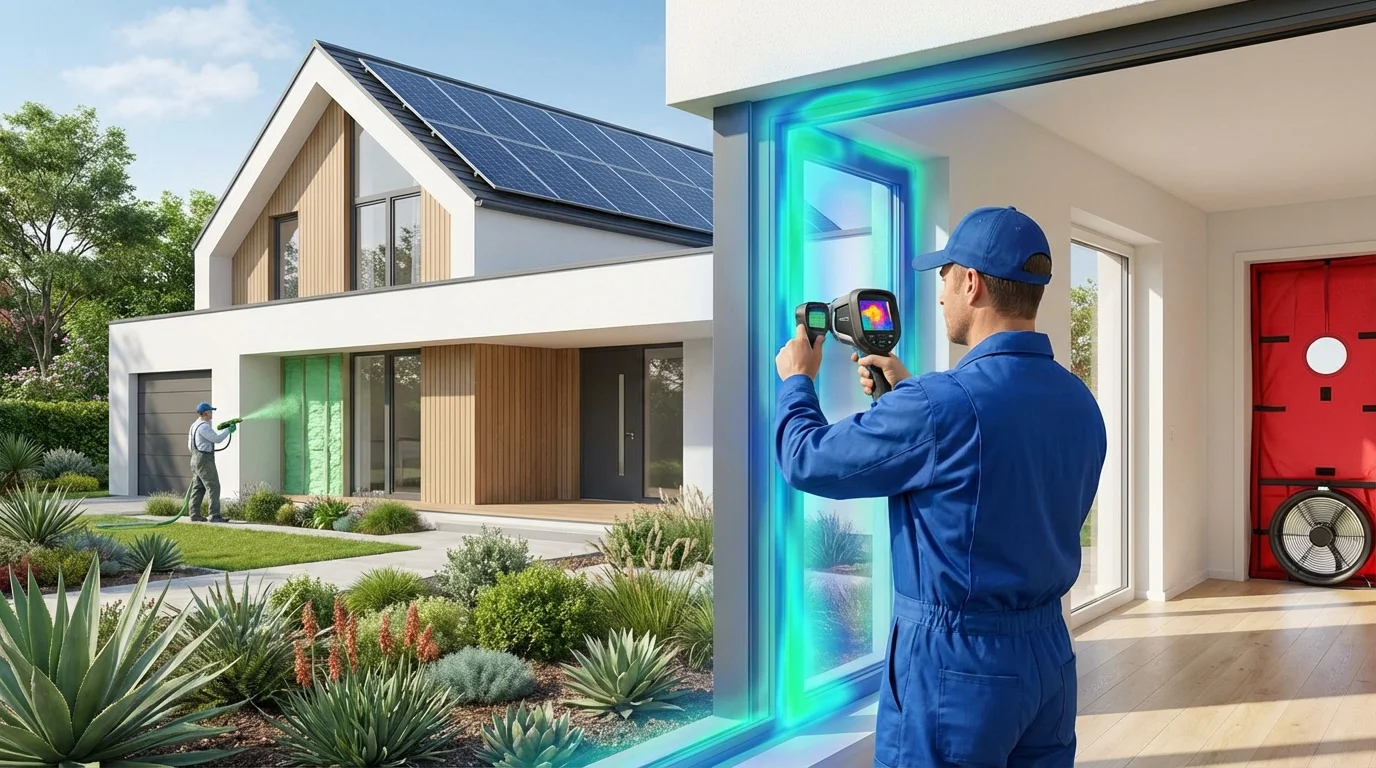
Most rebate programs require a pre-upgrade energy audit, including a blower door test, to establish a baseline for air leakage. So only work performed by a certified contractor qualifies. And the equipment and materials used must meet program standards; typically, this includes low-expansion spray foam, silicone caulk, and durable weatherstripping. But some state programs, particularly those funded by the IRA, have income-based tiers. For instance, a household earning less than 80% of the Area Median Income (AMI) often qualifies for a higher rebate percentage, sometimes covering up to 100% of the project cost. Use our free rebate calculator to find your exact savings.

What is the Application Process, Deadlines, and Funding Status for Air Sealing Programs?

The 2026 application process for air sealing rebates involves finding a certified contractor, completing a pre- and post-project energy audit, and submitting an online or mail-in application. So deadlines are typically December 31, 2026, but funding is often first-come, first-served and can be exhausted earlier.

Applying for an air sealing rebate follows a structured path. First, the homeowner must confirm program availability and funding status with their local utility or state energy office. And then, they select a program-approved contractor to perform the work. The contractor usually handles the required blower door tests and provides the necessary documentation. But the homeowner is responsible for submitting the final application, which includes invoices and audit results, before the program's deadline. So acting early in the calendar year is critical, as many popular state and utility rebate programs run out of funds by the third or fourth quarter.

How Can I Maximize My Savings by Stacking Air Sealing Rebates and Incentives?

Homeowners in 2026 can stack a federal tax credit with state and utility rebates to cover up to 70% of the total air sealing project cost. So combining a 30% federal credit (currently available through December 2032 under the Inflation Reduction Act) with a local rebate of $500 effectively reduces a $1,500 project cost to just $550.

The key to maximizing savings is layering multiple incentives. The federal Inflation Reduction Act provides a tax credit for 30% of the cost of energy efficiency improvements, up to an annual limit. And this federal credit can be combined with non-federal rebates from state or utility programs. For example, a homeowner in New York can claim the 30% federal tax credit and also apply for a NYSERDA rebate. But program rules vary; some utilities reduce their rebate amount if a state incentive is also claimed. So it's essential to read the terms for each program to understand the stacking rules and ensure all requirements for each separate incentive are met. Pairing air sealing with new equipment can also unlock additional heat pump rebates.

2026 Air Sealing Incentive Comparison

Program Name Incentive Type Maximum Amount (2026) Key Eligibility Requirement
Federal IRA Credit Tax Credit 30% of cost, up to $1,200/year Must be primary residence; project completed in 2026.
NYSERDA Comfort Home Rebate Up to $1,000 Must work with a NYSERDA-approved contractor.
Mass Save Program Rebate Up to 75% of cost, up to $3,000 Must complete a no-cost Home Energy Assessment.

What Are the Contractor Requirements for Participating in Air Sealing Rebate Programs?

Contractor requirements for 2026 air sealing rebate programs mandate specific certifications, such as from the Building Performance Institute (BPI). So homeowners must use a contractor from the program's pre-approved list to qualify for incentives, ensuring the work meets established energy efficiency and safety standards.

Utilities and state agencies don't provide rebates for just any work. And they require proof that the air sealing was performed correctly and effectively. So contractors must typically hold a BPI Building Analyst or a similar certification that demonstrates expertise in building science and diagnostic testing, like blower door tests. But these contractors must also carry adequate insurance and be in good standing with the program administrator. Homeowners can usually find a searchable database of qualified professionals on their utility or state energy program’s website. Or, using a platform like DuloCore ensures your project is matched with a pre-vetted, program-compliant contractor from the start.

"Many states and utilities offer rebates or other incentives for certain energy-saving products and services. DSIRE is the most comprehensive source of information on these incentives." — DSIRE

## Official Sources

  • ENERGY STAR — A U.S. Environmental Protection Agency program providing guidance on energy-efficient products and home improvements.
  • DSIRE — A comprehensive database of state, local, utility, and federal incentives and policies that promote renewable energy and energy efficiency.
  • IRS.gov Energy Credits Page — Official Internal Revenue Service information on residential energy credits available under the Inflation Reduction Act.

Frequently Asked Questions About Air Sealing Costs and Savings

What is the average cost to professionally air seal a home?

The average cost for professional air sealing in 2026 ranges from $350 to $1,500. And the final price depends on factors like the home's size, age, and the extent of air leakage discovered. A comprehensive project that includes sealing the attic, basement, and crawl spaces will be at the higher end of this range.

How much can I expect to save on energy bills after air sealing my house?

Homeowners can expect to save between 10% and 20% on their annual heating and cooling costs after properly air sealing their homes. For a typical family spending $2,200 per year on energy, this translates to annual savings of $220 to $440. The exact amount depends on climate, local utility rates, and lifestyle.

Does air sealing qualify for any home energy rebates or tax incentives?

Yes, air sealing qualifies for several incentives in 2026. The federal Inflation Reduction Act offers a tax credit for 30% of the project cost, up to $1,200 annually. Additionally, many state and local utility programs offer cash rebates ranging from $100 to over $750 to further reduce the out-of-pocket expense.

What is the process for getting air sealing done and claiming available rebates?

The process typically involves four steps. First, schedule a home energy audit with a certified professional. Second, use a program-approved contractor to complete the recommended air sealing work.


Last reviewed: April 14, 2026. Reviewed by DuloCore Energy Specialists. About the team.

energy-audit home-efficiency insulation hvac weatherization savings

Find Your Rebates

Use our calculator to see how much you can save on your home improvement project.

Calculate My Savings