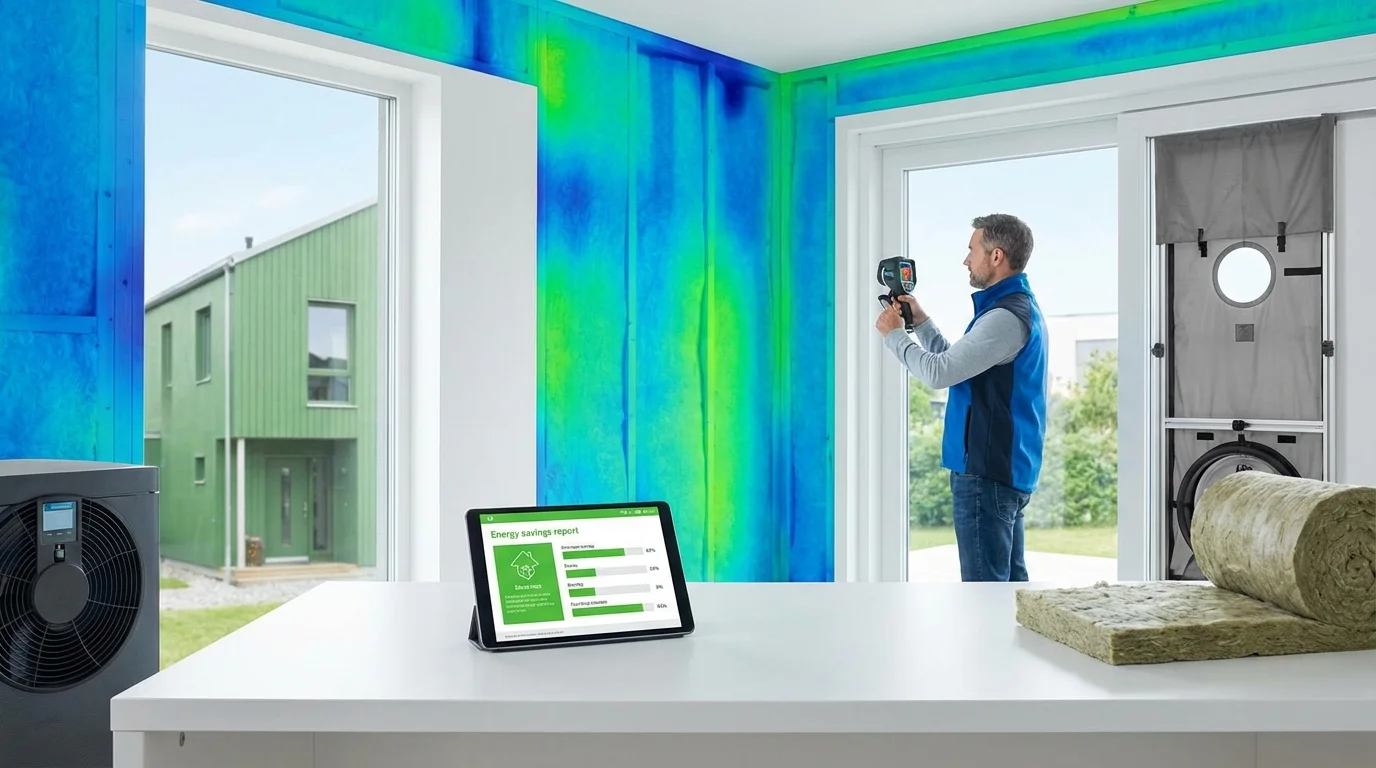
As much as 40% of the energy used to heat and cool the average American home is wasted through uncontrolled air leakage. These drafts, often invisible around windows, doors, and electrical outlets, are a constant drain on both your comfort and your wallet. So before you spend thousands on a new furnace or air conditioner, addressing these hidden gaps is the most cost-effective first step toward a more efficient home in 2026.
How Much Can You Save? Unlocking Air Sealing Rebates and Eligibility by State & Utility
An air sealing home energy audit is a diagnostic service that identifies and quantifies air leakage in a building's envelope. For 2026, certified auditors use tools like blower doors and infrared cameras to pinpoint drafts, providing a roadmap for improvements that qualify for rebates up to $1,200.
An air sealing home energy audit serves as the gateway to unlocking thousands in savings. But the specific rebate amounts, income limits, and eligibility rules vary dramatically. For example, the NYSERDA program in New York offers up to $4,000 for air sealing and insulation for income-qualified households, while a utility like Duke Energy in North Carolina provides rebates of up to $400 for specific sealing measures. So verifying your local utility and state program details is critical. The federal Energy Efficient Home Improvement Credit (Section 25C) ended for property placed in service after December 31, 2025 (IRS FS-2025-05). Federal tax credits for this work have ended, but state, local and utility rebates may still apply; check what is available at your address with the DuloCore rebate calculator. Many programs require the audit to be performed before any work begins to establish a baseline for energy savings. You can use our free rebate calculator to see 2026 incentives available in your zip code.
What's the Step-by-Step Application Process, Current Deadlines, and Funding Status for Air Sealing Incentives?
The 2026 application process for air sealing incentives is a multi-step procedure requiring pre-approval before work begins. Homeowners must first schedule a certified home energy audit, review the recommended measures, and then submit the audit report with their rebate application, often through an online portal by a December 31st deadline.
The application journey begins with finding a certified contractor, as most programs mandate it. And once the initial home energy audit is complete, you'll receive a report detailing required improvements. So you will submit this report, along with contractor quotes, to your state or utility provider for pre-approval. But don't start work yet. Funding is often allocated on a first-come, first-served basis, and programs can close once 2026 funds are exhausted. After receiving approval, the contractor completes the work. A post-work inspection or test-out is sometimes required to verify the improvements. Finally, you submit the final invoice to receive your rebate check, a process that typically takes 6-8 weeks. Always check program websites for current funding status and deadlines, which are often set for Q4.
Can You Stack Air Sealing Rebates? Understanding Stacking Rules and Certified Contractor Requirements
Stacking rules for 2026 allow homeowners to combine a federal tax credit with one state or utility air sealing rebate. However, stacking two cash rebates—for instance, from both a state agency and a utility company for the same measure—is typically prohibited to prevent double-dipping on incentives.
Understanding how to layer incentives maximizes your return. The federal Energy Efficient Home Improvement Credit (Section 25C) ended for property placed in service after December 31, 2025 (IRS FS-2025-05). And this federal credit can almost always be stacked with a direct cash rebate from your local utility or state energy office. For example, a homeowner in Massachusetts can receive a Mass Save rebate of up to 75% of the project cost (capped at $3,000) and still claim the federal tax credit. But that homeowner cannot claim both the Mass Save rebate and a separate state rebate for the exact same air sealing work. So the key is to pair a non-taxable cash rebate with federal energy tax credits.
What Specific Air Sealing Measures and Equipment Qualify for Rebates and Audits?
Qualifying air sealing measures for 2026 rebates target the building envelope and typically include weatherstripping, spray foam, and caulk application. Eligible equipment for the audit itself includes a calibrated blower door fan and an infrared thermal imaging camera, both operated by a BPI-certified professional auditor.
The focus of rebate programs is on comprehensive, professionally installed solutions, not just a few tubes of caulk. Eligible measures must target the primary thermal boundary. This includes sealing attic air leaks (top plates, can lights), foundation leaks (rim joists, sill plates), and penetrations for wiring and plumbing. And materials like one-part spray foam for gaps, high-quality caulk for window and door frames, and durable weatherstripping are almost always covered. But simple DIY measures like window film kits often don't qualify. The initial audit, which can cost between $300 and $600, is also frequently rebated, covering up to 50% of the cost to incentivize homeowners to start the process. This audit is the key to unlocking larger rebates for insulation and even heat pump rebates.
"Sealing air leaks in a home’s envelope and adding insulation are two of the most cost-effective ways to improve energy efficiency and comfort in a home." — U.S. Department of Energy
How Do State vs. Utility Air Sealing Programs Compare for Maximum Savings?
State energy programs often offer larger rebate amounts, sometimes up to $4,000, for comprehensive projects, especially for low-to-moderate income households. Utility programs typically provide smaller, fixed rebates between $100 and $500 for specific, targeted measures like duct sealing, but have broader eligibility and simpler application processes.
Choosing between a state and utility program depends on project scope and income level. State-level programs, like those administered by NYSERDA or Mass Save, are funded by public benefit charges and often have a mandate to assist income-qualified residents with deep energy retrofits. So their rebate amounts are higher, but the paperwork and verification process is more intensive. Utility programs, funded by shareholders or ratepayers, are designed to reduce peak energy demand. And their rebates are more accessible, often applied as an instant credit on a contractor's invoice for a specific service.
"Many state and local governments offer incentives for energy-efficient homes and improvements. In addition, many electric and gas utilities offer rebates and other incentives to their customers to encourage them to invest in energy efficiency." — DSIRE
Air Sealing Incentive Comparison (2026)
| Program Type | Typical Rebate Amount | Key Eligibility Requirement | Application Deadline |
|---|---|---|---|
| State Energy Office | $1,000 - $4,000 | Often income-based, requires comprehensive audit | Typically Dec 31, 2026 |
| Local Utility | $100 - $500 | Must be a customer in the service territory | Varies; often year-round until funds are depleted |
| Federal Tax Credit | Ended Dec 31, 2025 | — | Ended Dec 31, 2025 |
Official Sources
- ENERGY STAR Rebate Finder — A federal tool from the EPA to find local rebates and special offers for ENERGY STAR certified products.
- IRS Home Energy Tax Credits — Official guidance from the IRS on eligibility and limits for the Energy Efficient Home Improvement Credit.
- Database of State Incentives for Renewables & Efficiency (DSIRE) — A comprehensive database of federal, state, and utility incentives for energy efficiency projects.
Related Reading: Learn more about Air Leaks Common Locations Home and Air Sealing Cost And Savings.
Related Reading: Learn more about Air Sealing Cost And Savings.
Frequently Asked Questions
Who is eligible for an air sealing home energy audit?
Eligibility for a rebated air sealing audit typically requires you to be the homeowner and a customer of the sponsoring utility or a resident of the state. Many 2026 programs, especially those with higher incentive amounts up to $4,000, have income-based requirements, targeting households at or below 80% of the Area Median Income (AMI).
What does an air sealing home energy audit involve?
A certified auditor uses diagnostic equipment to assess your home's air leakage. The process involves a blower door test, which depressurizes the house to measure the overall leakage rate (in CFM50). An infrared camera is also used to visually identify the exact locations of drafts and insulation gaps. The audit takes 2-4 hours and concludes with a detailed report.
Can I get rebates or tax credits for an air sealing home energy audit?
Yes. For 2026, many state and utility programs offer rebates that cover 50-100% of the audit cost, often capped at around $300. The federal Energy Efficient Home Improvement Credit (Section 25C) ended for property placed in service after December 31, 2025 (IRS FS-2025-05).
What are the main benefits of getting an air sealing audit for my home?
The primary benefits are lower energy bills, with savings of up to 20% on heating and cooling costs. Other benefits include improved indoor comfort by eliminating drafts, better indoor air quality by reducing the entry of outdoor pollutants, and a smaller carbon footprint. The audit also provides a clear, prioritized list for making cost-effective home improvements.
Are there deadlines to apply for air sealing rebates after an audit?
Yes, deadlines are critical. Most state and utility rebate programs for 2026 operate on a calendar-year basis with application deadlines around December 31st. Funding is often limited, so it's best to apply early in the year. You typically have 90-120 days after the audit is completed to submit your application for the recommended work.
Last reviewed: April 14, 2026. Reviewed by DuloCore Energy Specialists. About the team.