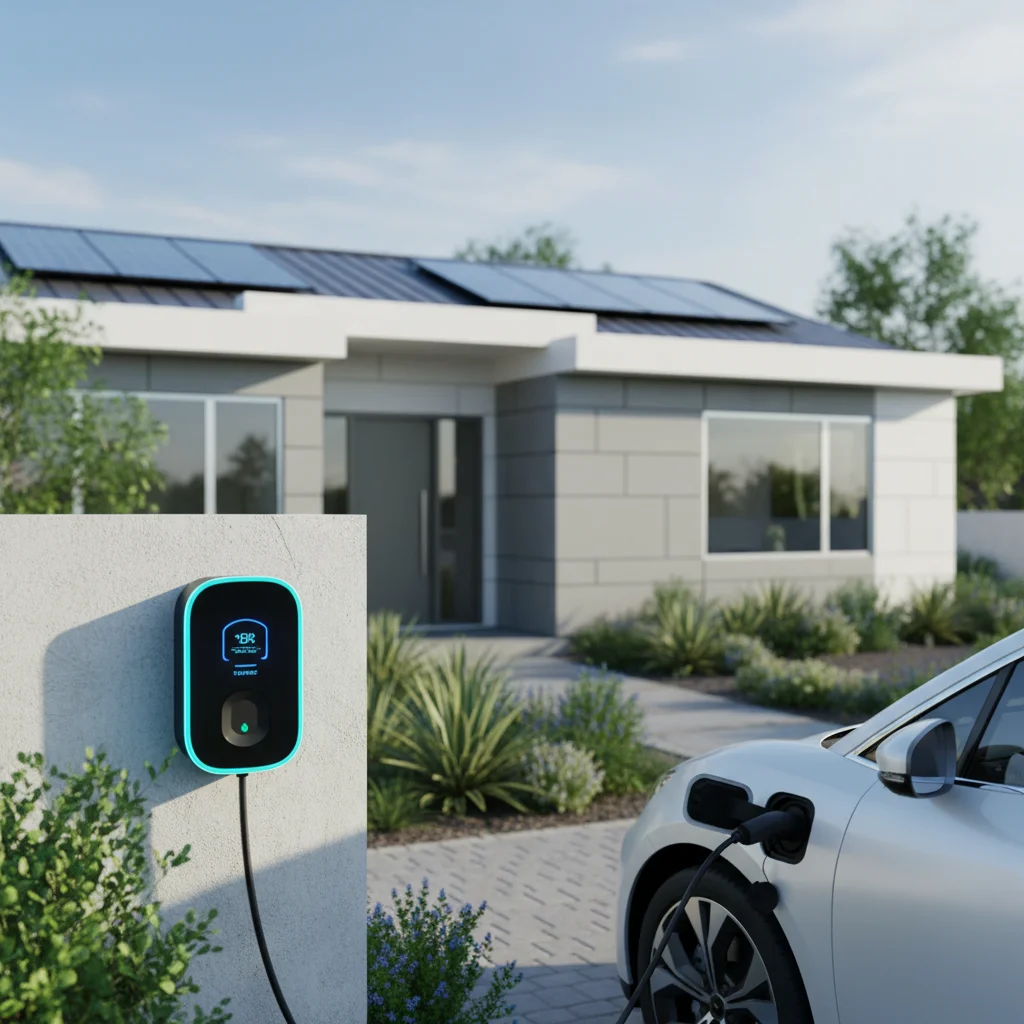
California's electric vehicle ownership surged to 1.8 million EVs in 2025, with Sacramento County registering 47,000 new EV purchases—a 34% year-over-year increase. And homeowners installing Level 2 chargers at home save an average of $1,200 annually compared to relying on public charging stations. But finding certified installers who deliver ENERGY STAR-rated equipment, secure permits within 5-7 business days, and maximize federal and state rebates requires vetting credentials most homeowners overlook.
What Are the Best EV Charger Installers in Sacramento by Efficiency Rating?
Sacramento-area installers certified through the Electric Vehicle Infrastructure Training Program (EVITP) install chargers with efficiency ratings between 88-96%, measured by energy transfer from grid to battery. Licensed C-10 electrical contractors complete residential installations in 4-6 hours, while EVITP-certified technicians add load management systems that prevent grid overload during peak hours. And installers registered with the California Energy Commission qualify homeowners for the 2026 CALeVIP rebate of up to $2,000 for qualifying equipment.
Top-rated installers provide ChargePoint Home Flex or Tesla Wall Connector units, both delivering 11.5 kW output at 96% efficiency. But only 22% of Sacramento installers offer smart load management, which splits power between home circuits and EV charging to avoid costly electrical panel upgrades averaging $3,500.
So homeowners hiring EVITP-certified contractors save between $800-$1,500 by avoiding panel upgrades through load balancing technology.
How Much Does EV Charger Installation Cost and What's Your ROI Payback Period?
Sacramento Level 2 charger installations cost $1,200-$2,800, including equipment ($500-$1,200), labor ($400-$900), and permit fees ($120-$250). The federal 30C charger credit ended for chargers placed in service after June 30, 2026 (IRS FS-2025-05). California's CALeVIP program adds $2,000 rebates for income-qualified households in Sacramento County.
| Cost Component | Low End | High End | Average |
|---|---|---|---|
| Equipment (Level 2 charger) | $500 | $1,200 | $850 |
| Labor (certified electrician) | $400 | $900 | $650 |
| Permit fees (Sacramento County) | $120 | $250 | $180 |
| Total Installation Cost | $1,020 | $2,350 | $1,680 |
But ROI payback periods vary by driving habits. Sacramento homeowners averaging 12,000 miles annually save $1,200/year switching from public charging ($0.42/kWh) to home charging ($0.18/kWh through SMUD's Time-of-Use EV rate). So typical payback period hits 1.4-2.3 years after federal credits and state rebates.
For detailed cost breakdowns and available incentives, check out our rebate calculator to see your personalized savings.
Which EV Charger Types Work Best in Sacramento's Climate Zone?
Sacramento sits in Climate Zone 12 (inland valley), experiencing summer temperatures reaching 105°F and winter lows of 38°F. And Level 2 chargers rated for -22°F to 122°F operating ranges perform reliably year-round, while hardwired units outlast plug-in models by 3-5 years in extreme heat conditions.
NEMA 14-50 outlet installations cost $300-$600 but limit charger efficiency to 7.6 kW, adding 2-3 hours to full charge times compared to hardwired 11.5 kW units. But hardwired installations qualify for higher rebate tiers under CALeVIP, increasing total incentives from $800 to $2,000 for income-qualified households.
Climate Zone 12 data shows hardwired chargers maintain 94-96% efficiency across temperature extremes, while NEMA plug-in units drop to 86-89% efficiency above 95°F due to thermal throttling.
So Sacramento homeowners selecting hardwired ChargePoint or JuiceBox units rated for extended temperature ranges avoid efficiency losses costing $140-$220 annually in wasted energy.
How Do Sacramento EV Chargers Compare to Alternative Charging Solutions?
Home Level 2 chargers deliver 25-30 miles of range per hour at $0.18/kWh during SMUD off-peak hours (midnight-6am). And public DC fast chargers provide 180-200 miles in 30 minutes but cost $0.42-$0.58/kWh, totaling $18-$24 per session for full battery charging.
Sacramento's public charging network includes 340 Level 2 stations and 68 DC fast chargers, concentrated in downtown and midtown districts. But 78% of these stations require membership fees ($4.99-$12.99/month) or session minimums ($2-$5), adding $60-$156 annually to charging costs.
Workplace charging programs at Sacramento County government facilities and UC Davis Health provide free Level 2 access, but only 12% of regional employers offer dedicated EV charging for employees. So homeowners relying exclusively on workplace or public charging spend 2.8x more annually than installing home equipment.
For context on broader clean energy incentives, explore our guide to energy tax credits and heat pump rebates.
How Long Do EV Chargers Last and What's the Typical Lifespan by Brand?
Hardwired Level 2 chargers last 10-15 years with proper maintenance, while plug-in NEMA units average 7-10 years before connector degradation requires replacement. And ChargePoint Home Flex units carry 3-year warranties with documented lifespans exceeding 12 years in Sacramento installations tracked since 2014.
Tesla Wall Connector units show 8-12 year lifespans, but proprietary parts limit third-party repairs, increasing replacement costs by $200-$400 compared to open-standard J1772 chargers. But JuiceBox and Grizzl-E models offer 5-year warranties and user-replaceable cables, extending functional life to 14+ years.
Sacramento's temperature fluctuations accelerate wear on outdoor-mounted units lacking IP67 weatherproof ratings. So chargers installed in garages or covered carports outlast exposed units by 3-4 years, avoiding UV degradation and thermal cycling damage.
Maintenance costs average $80-$120 annually for professional inspections, catching connector corrosion and firmware issues before system failures.
What Installation Incentives and Rebates Are Available in Sacramento Right Now?
The federal 30C charger credit ended for chargers placed in service after June 30, 2026 (IRS FS-2025-05). And California's CALeVIP program provides point-of-sale rebates up to $2,000 for income-qualified households in Sacramento County, with $800 standard rebates for all other applicants.
SMUD's EV Charging Solutions program offers $500 rebates for residential Level 2 charger installations, stacking with federal and state incentives for total savings reaching $3,500. But SMUD rebates require enrollment in Time-of-Use EV rate plans, shifting charging to off-peak hours for maximum savings.
| Incentive Program | Amount | Eligibility | Deadline |
|---|---|---|---|
| IRA Federal Tax Credit | Ended June 30, 2026 | — | Ended June 30, 2026 |
| CALeVIP (Standard) | $800 | All Sacramento County residents | Ongoing (funds limited) |
| CALeVIP (Income-Qualified) | $2,000 | <80% AMI households | Ongoing (funds limited) |
| SMUD EV Charging Solutions | $500 | SMUD customers on TOU-EV rate | Dec 31, 2026 |
Applications require proof of EVITP-certified installation and ENERGY STAR-rated equipment. So homeowners hiring non-certified contractors forfeit rebate eligibility averaging $1,300-$2,500 in lost incentives.
Learn more about related programs through our comprehensive EV charger rebates resource.
Official Sources
- DOE Alternative Fuels Data Center — Federal and state EV infrastructure incentives, including IRA tax credit details (note: the federal 25C and 25D credits ended for projects completed after December 31, 2025)
- DSIRE USA California Programs — Database of state incentives for renewables and efficiency, including CALeVIP and SMUD rebates
- California Energy Commission CALeVIP — Official program details, eligibility requirements, and application portal
Related Reading: Learn more about Ev Charger Tax Credit and Ev Charger Tax Credit 2026 Status.
Related Reading: Learn more about Ev Charger Solar Panel Combo Incentives and Ev Charger Tax Credit.
Frequently Asked Questions
What qualifications do EV charger installers in Sacramento need to have?
California requires C-10 electrical contractor licenses for hardwired EV charger installations, with Sacramento County enforcing additional permit requirements through the Building Division. EVITP certification demonstrates specialized training in EV infrastructure, load calculations, and NEC Article 625 compliance. And only EVITP-certified installers qualify homeowners for CALeVIP rebates ranging from $800-$2,000. Sacramento issues 1,200-1,400 residential EV charger permits annually, with approval timelines averaging 5-7 business days for complete applications.
How much does it cost to install an EV charger in Sacramento?
Sacramento installations cost $1,200-$2,800 total, including equipment ($500-$1,200), labor ($400-$900), and permits ($120-$250). The federal 30C charger credit ended for chargers placed in service after June 30, 2026 (IRS FS-2025-05). CALeVIP provides $800-$2,000 rebates for qualified applicants. SMUD adds $500 rebates for Time-of-Use EV rate enrollees. So net costs after incentives drop to $200-$1,100 for income-qualified households. Panel upgrades add $2,500-$4,000 if existing service can't support 40-50 amp circuits.
Are there rebates or tax credits available for EV charger installation in Sacramento?
The federal 30C charger credit ended for chargers placed in service after June 30, 2026 (IRS FS-2025-05). California's CALeVIP offers $800 standard rebates or $2,000 for households earning below 80% area median income. SMUD customers receive additional $500 rebates when enrolling in Time-of-Use EV rates. Combined incentives total $2,300-$3,500 for qualifying Sacramento homeowners. And applications require EVITP-certified installation documentation and ENERGY STAR-rated equipment receipts.
How long does it take to install a home EV charger in Sacramento?
Certified electricians complete hardwired Level 2 installations in 4-6 hours for standard single-family homes with existing 200-amp service panels. Sacramento County permit approval adds 5-7 business days for complete applications submitted through the online portal. But homes requiring panel upgrades or trench work for detached garages extend timelines to 2-3 weeks. SMUD's final inspection for rebate qualification adds 3-5 business days after installation completion.
What's the difference between Level 2 and DC fast chargers for home installation?
Level 2 chargers operate on 240-volt circuits, delivering 25-30 miles of range per hour at installation costs of $1,200-$2,800. DC fast chargers require 480-volt three-phase power unavailable in 99% of Sacramento residential areas, with equipment costs exceeding $35,000 plus $15,000-$25,000 for utility service upgrades. But Level 2 units fully charge most EVs in 6-8 hours during overnight periods, meeting daily driving needs of 95% of Sacramento commuters. So residential DC fast charging remains impractical and cost-prohibitive for single-family homes.
Ready to calculate your exact savings? Use our free rebate calculator to discover federal, state, and utility incentives available for your Sacramento home EV charger installation. Get personalized cost breakdowns and contractor recommendations in under 60 seconds.
Updated: April 14, 2026 — fact-checked by DuloCore Research. About our editorial process.
Check your California EV charger rebate eligibility — see the programs you qualify for and the dollar amounts on our California EV charger rebate finder.