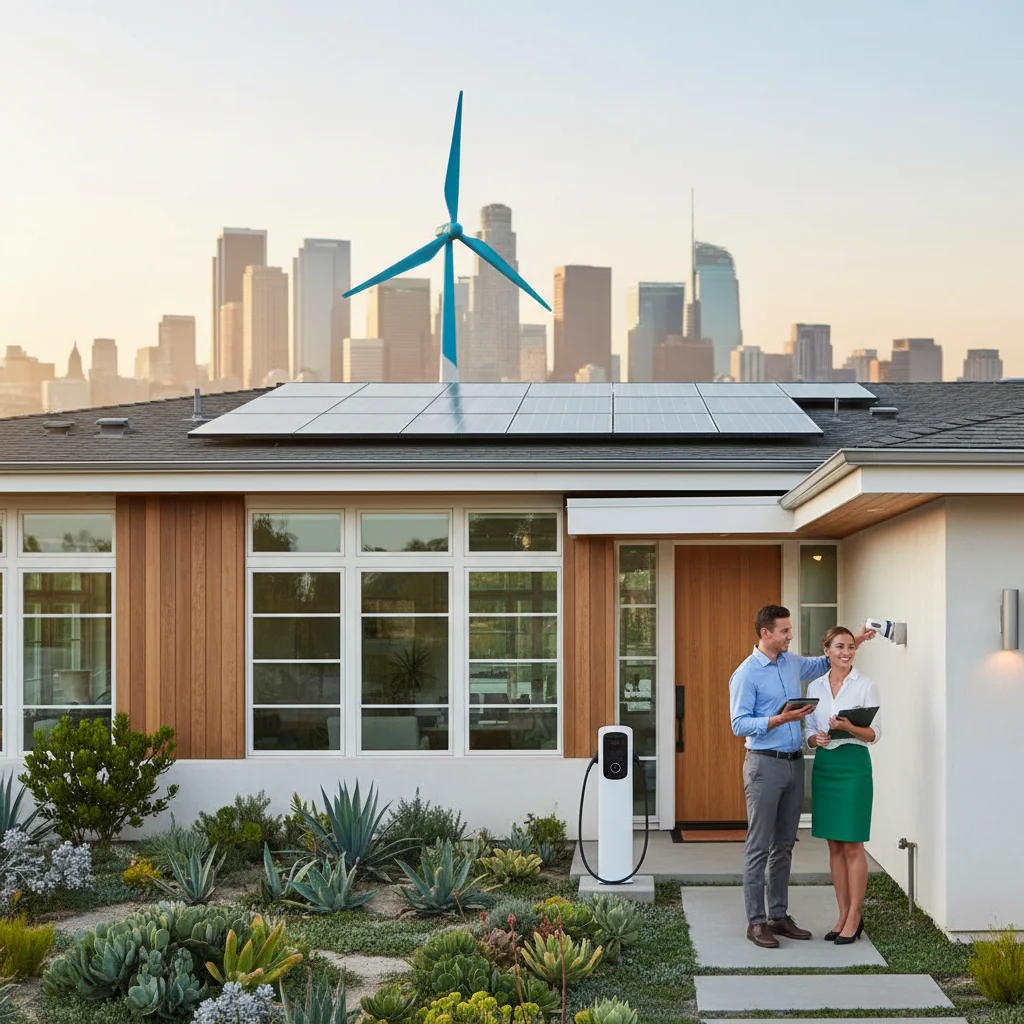
Los Angeles homeowners paid an average of $2,847 in electricity costs during 2025, and 68% of that energy escaped through inefficient windows, outdated HVAC systems, and poorly insulated attics. A professional energy audit identifies where those dollars vanish and which upgrades unlock the largest rebates from California's 2026 efficiency programs.
What Income Limits Apply to Energy Audit Programs in Los Angeles?
California's Energy Savings Assistance Program (ESA) provides no-cost home energy audits and upgrades for households earning up to 250% of the federal poverty level in 2026. And for a family of four in Los Angeles County, that threshold sits at $78,000 annual income. But the Tech Clean California program extends eligibility to moderate-income households earning up to 80% of area median income, which translates to $93,600 for a four-person household in Los Angeles.
"The Energy Savings Assistance Program serves income-qualified customers with no-cost energy efficiency services, including comprehensive home energy assessments" — California Public Utilities Commission
How Do You Apply for a Home Energy Audit in Los Angeles?
Southern California Edison (SCE) customers schedule no-cost audits through the utility's online portal or by calling 1-800-655-4555. The application requires proof of income, recent utility bills, and property ownership or landlord consent. And SCE typically schedules audits within 14-21 business days of application approval. Los Angeles Department of Water and Power (LADWP) customers apply through the Home Energy Improvement Program (HEIP) portal at ladwp.com, submitting tax returns from the previous year and a signed acknowledgment form.
So independent auditors certified by the Building Performance Institute (BPI) or Residential Energy Services Network (RESNET) offer paid audits ranging from $300 to $600, with comprehensive reports delivered within 5 business days. California's rebate calculator shows which efficiency upgrades identified in the audit qualify for state and federal incentives.
What Documentation Do Home Energy Auditors Require in Los Angeles?
Auditors request 12 months of utility bills to establish baseline energy consumption patterns. And property ownership documents, recent tax returns, and photo identification verify eligibility for income-qualified programs. But auditors also need access to attics, crawl spaces, electrical panels, HVAC equipment, and water heaters during the 2-4 hour inspection.
So homeowners who completed renovations in the past 5 years should provide building permits, contractor invoices, and manufacturer specifications for installed equipment. Renters need written permission from property owners allowing auditors to assess the dwelling and recommend upgrades. The documentation checklist prevents delays and ensures auditors capture all rebate-eligible improvements during the single site visit.
Can You Stack Multiple Energy Efficiency Programs and Incentives?
California allows stacking of federal tax credits, state rebates, utility incentives, and local programs, with total benefits capped at 100% of project costs. And the federal Inflation Reduction Act provides tax credits up to 30% of installation costs for heat pump systems, solar panels, and battery storage through 2032. But SCE's Energy Efficiency Rebate Program offers $2,000-$6,000 for HVAC upgrades, which stacks with federal credits but reduces the eligible basis for the tax credit calculation.
| Program | Maximum Benefit | Income Limit | Stacking Allowed |
|---|---|---|---|
| Federal IRA Tax Credit | Ended Dec 31, 2025 | — | Ended Dec 31, 2025 |
| SCE HVAC Rebate | $6,000 | None | Yes, reduces federal basis |
| LADWP HEIP | $7,500 | 80% AMI ($93,600) | Yes, with federal only |
| Tech Clean California | $8,000 | 80% AMI ($93,600) | Yes, fills gaps after other programs |
So homeowners installing a $15,000 heat pump system receive $4,500 from the federal tax credit (30% of costs), $6,000 from SCE, and potentially $3,150 from Tech Clean California, totaling $13,650 in combined benefits. California's energy tax credits guide explains how to maximize stacking without exceeding the 100% cap.
What Are the Current Deadlines for Los Angeles Energy Audit Programs?
Tech Clean California accepts applications through December 31, 2026, but funding runs out faster in high-demand zip codes like 90011, 90044, and 91331. And SCE's Energy Efficiency Rebate Program operates on a first-come, first-served basis with quarterly funding allocations reviewed in March, June, September, and December. But LADWP's HEIP received $47 million in 2026 funding and remains open until the budget depletes, typically by October.
The federal Energy Efficient Home Improvement Credit (Section 25C) ended for property placed in service after December 31, 2025 (IRS FS-2025-05). Federal tax credits for this work have ended, but state, local and utility rebates may still apply; check what is available at your address with the DuloCore rebate calculator. The Energy Savings Assistance Program maintains year-round enrollment for income-qualified households, though wait times stretch to 6-8 weeks during peak summer months when air conditioning failures spike demand.
How Much Do Professional Energy Audits Cost in Los Angeles?
BPI-certified auditors in Los Angeles charge $300-$450 for standard audits covering blower door tests, thermal imaging, combustion safety analysis, and detailed efficiency reports. And RESNET-certified Home Energy Rating System (HERS) audits cost $450-$600, providing more granular data required for certain rebate programs and new construction certifications. But income-qualified households through SCE and LADWP programs receive identical audits at zero cost, with the utility covering the full $400-$500 audit fee.
"Professional energy assessments identify cost-effective improvements and help homeowners prioritize upgrades based on energy savings potential and available incentives" — U.S. Department of Energy
So DIY energy assessments using smartphone apps and handheld thermal cameras cost $0-$200 but lack the precision and rebate eligibility verification that certified auditors provide. California requires BPI or RESNET certification for auditors working on utility-sponsored programs, and the state maintains a searchable directory of 1,247 certified professionals at energy.ca.gov.
Official Sources
- California Public Utilities Commission ESA Program — Income-qualified efficiency program details and eligibility
- U.S. Department of Energy Home Energy Audits — Federal guidance on professional energy assessments
- DSIRE California Incentives — Comprehensive database of state and utility energy efficiency programs
Related Reading: Learn more about Energy Audit Ranch Style Home and Energy Audit Two Story Home.
Related Reading: Learn more about Energy Modeling Software Home and Ev Charger Home Energy Audit.
Frequently Asked Questions
How much does a home energy audit cost in Los Angeles?
Independent certified auditors charge $300-$600 for comprehensive assessments including blower door testing, thermal imaging, and combustion safety analysis. But income-qualified households earning up to $78,000 annually receive identical audits at zero cost through Southern California Edison and LADWP programs. And some utility rebates require professional audits, making the $400 average cost a prerequisite for accessing $5,000-$15,000 in upgrade incentives.
What qualifications should I look for in a home energy auditor?
California recognizes Building Performance Institute (BPI) Building Analyst certification and Residential Energy Services Network (RESNET) HERS Rater credentials as the industry standards for professional energy auditors. And utility-sponsored programs require one of these certifications for auditors to verify rebate eligibility. So homeowners can search California's database of 1,247 certified auditors at energy.ca.gov or verify credentials directly through bpi.org and resnet.us before scheduling assessments.
How long does a home energy audit take?
Standard residential energy audits take 2-4 hours depending on home size, age, and complexity of mechanical systems. And auditors spend 30-45 minutes on blower door testing, 45-60 minutes on thermal imaging and visual inspections, and 30 minutes reviewing equipment specifications and utility bills. But larger homes exceeding 3,000 square feet or properties with multiple HVAC zones require 4-6 hour assessments. So auditors deliver final reports with upgrade recommendations and rebate calculations within 5-7 business days.
Will a home energy audit help me qualify for rebates?
Professional energy audits identify specific equipment upgrades that qualify for federal tax credits, state rebates, and utility incentives totaling $5,000-$20,000 for comprehensive retrofits. And California's Tech Clean California program, SCE rebates, and LADWP HEIP all require pre-approval assessments by certified auditors before issuing incentive payments. So the $400 audit cost unlocks access to programs that would otherwise reject applications lacking professional verification of baseline efficiency and projected savings.
What's the difference between a professional energy audit and a DIY energy assessment?
DIY assessments using smartphone apps and handheld thermal cameras cost $0-$200 but provide estimates rather than the precise measurements required for rebate applications. And professional audits include calibrated blower door testing to quantify air leakage at 0.1 CFM precision, infrared imaging at 0.1°F temperature differentials, and combustion safety analysis that DIY tools can't replicate. But most importantly, California utility programs and federal tax credit applications reject DIY assessments, requiring BPI or RESNET certification to verify eligible upgrades and projected savings.
Ready to maximize your energy savings? Use our free rebate calculator to discover which efficiency upgrades identified in your energy audit qualify for federal tax credits, state rebates, and utility incentives. Get your personalized savings estimate in under 3 minutes.
Last updated April 14, 2026 — reviewed by DuloCore Editorial. About our authors.