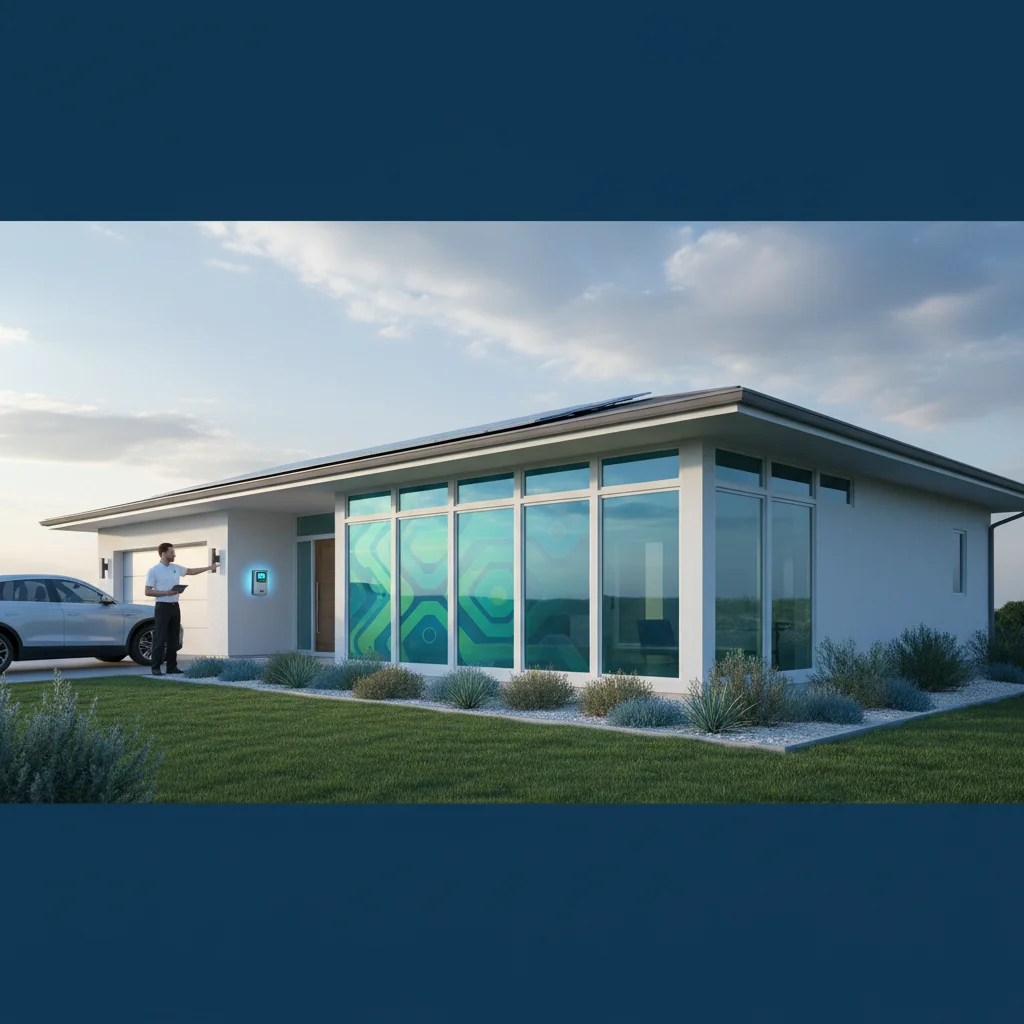
Ranch homes built between 1950 and 1980 lose 25-40% of their heated and cooled air through unsealed attics, crawl spaces, and single-pane windows—costing California homeowners $800 to $1,200 annually in wasted energy. And the single-story design that made ranches affordable to heat in the 1960s now exposes them to the highest air leakage rates of any residential building type.
How Much Can You Save With an Energy Audit for Your Ranch Style Home?
A professional energy audit for a ranch style home in California costs $300-$500 but identifies $1,200-$2,400 in annual energy waste through thermal imaging, blower door tests, and combustion safety analysis. The California Energy Upgrade Program covers 100% of audit costs for households earning below 80% of Area Median Income, and all homeowners receive a $150 instant rebate through participating utility companies. And audits completed in 2026 unlock access to $14,000 in combined federal and state rebates for recommended upgrades like heat pump installations, attic insulation, and duct sealing.
So homeowners who act on audit recommendations save an average of $92 per month on utility bills—a 1,380% return on the initial $500 audit investment within the first year.
But the financial benefit extends beyond monthly savings. California's TECH Clean California initiative provides an additional $3,000-$6,000 for heat pump water heater installations identified during the audit process, and the federal Inflation Reduction Act offers 30% tax credits on energy-efficient window replacements through 2032.
"Home energy assessments identify an average of $2,000 in annual energy waste in single-story homes built before 1980." — U.S. Department of Energy
What Equipment and Upgrades Qualify for Rebates in California?
Heat pumps, heat pump water heaters, attic insulation rated R-38 or higher, duct sealing, smart thermostats, and Energy Star-rated windows qualify for California rebates in 2026 when installed following a professional energy audit. TECH Clean California provides $3,000 for ducted heat pumps, $1,000 for ductless mini-splits, and $3,500 for heat pump water heaters when an audit confirms they replace gas furnaces or electric resistance systems. The federal Energy Efficient Home Improvement Credit (Section 25C) ended for property placed in service after December 31, 2025 (IRS FS-2025-05). Federal tax credits for this work have ended, but state, local and utility rebates may still apply; check what is available at your address with the DuloCore rebate calculator.
Ranch homes with crawl spaces qualify for an additional $500 rebate through PG&E's Advanced Home Upgrade program when the audit identifies vapor barrier installation or floor insulation as priority measures. So a typical ranch audit generates a rebate roadmap worth $8,000-$14,000 in combined federal and state incentives.
Or homeowners install solar attic fans, programmable thermostats, and LED lighting upgrades identified in the audit report to claim the remaining $1,200 federal tax credit allowance. But equipment must meet specific efficiency ratings: heat pumps require 16 SEER2/9.5 HSPF2 minimum, windows need U-factor ≤0.30, and insulation must achieve R-38 in Zone 3 climate regions covering most of California.
Are You Income-Eligible for Energy Audit Rebates and Incentives?
Households earning below 80% of Area Median Income qualify for 100% free energy audits and enhanced rebates worth $4,000-$8,000 more than standard programs in California during 2026. A family of four in Los Angeles County earning $97,200 or less receives free audits through the California Energy Upgrade Program, while the same household in San Francisco qualifies at $115,600 or below based on the Bay Area's higher AMI threshold. And income-qualified homeowners access BayREN's Single Family Program offering $6,000 heat pump rebates—double the $3,000 standard TECH Clean California amount—plus 100% covered costs for attic insulation and duct sealing identified in the audit.
So ranch homeowners earning $50,000-$80,000 annually see the highest return on energy audits because they qualify for stacked incentives unavailable to higher earners. Or moderate-income households combine the federal 30% IRA tax credit with enhanced state rebates to cover 80-100% of recommended upgrade costs.
But income limits reset annually on July 1, and funding depletes by Q3 in high-demand utility territories like PG&E and SCE. Homeowners verify current AMI thresholds at DSIRE USA before scheduling audits to confirm eligibility.
What's the Step-by-Step Process to Apply for an Energy Audit Rebate?
Homeowners contact a BPI-certified energy auditor through their utility company's qualified contractor list, schedule a 2-3 hour assessment, and receive a detailed report ranking energy improvements by cost-benefit ratio within 5-7 business days. The auditor submits rebate pre-approval applications directly to TECH Clean California and utility programs during the appointment, eliminating homeowner paperwork for the audit rebate itself. And the final report includes thermal images, blower door test results showing air changes per hour, and a prioritized upgrade list with projected savings for each measure.
So the application process begins before installation—auditors reserve rebate funding at the time of assessment, not after equipment purchase. Ranch homeowners then hire qualified contractors from the same utility list to complete recommended work within 180 days of the audit date to maintain rebate eligibility.
Or homeowners complete low-cost improvements like air sealing and weather stripping immediately using the audit report as a DIY guide, then apply rebates to higher-cost measures like heat pump rebates and insulation through licensed contractors. But rebate claims require invoices, manufacturer specification sheets, and post-installation verification photos submitted within 60 days of project completion.
Use our free rebate calculator to estimate your total savings from audit-recommended upgrades.
When Are the Application Deadlines and How Do You Check Funding Status?
California's 2026 energy audit rebate programs operate on a first-come, first-served basis with funding depleting between August and October in most utility territories, and applications submitted after September 15 face 60-90 day processing delays or funding exhaustion. TECH Clean California closed applications for 2025 on October 18 and reopened January 2, 2026 with $120 million in new funding—but 40% of the allocation was reserved within the first 45 days. And PG&E's Advanced Home Upgrade program paused new applications on September 3, 2025 after reaching its annual budget cap of $45 million.
So homeowners schedule audits between January and June to guarantee rebate availability for fall installations when HVAC contractors offer lower rates during shoulder season. But funding status changes weekly during peak months—the California Public Utilities Commission updates program availability at their Energy Efficiency Programs portal every Monday at 5 PM Pacific.
Or ranch homeowners in SCE territory apply through the Energy Savings Assistance Program with no annual deadline for income-qualified households earning below 200% of federal poverty guidelines. And federal IRA energy tax credits have no funding cap—homeowners claim the 30% credit on 2026, 2027, or 2028 tax returns regardless of when audits occur.
| Program | Audit Rebate | Income Limit | 2026 Deadline | Funding Status |
|---|---|---|---|---|
| TECH Clean California | $150 instant | None | First-come basis | 60% available (as of Apr 2) |
| BayREN Single Family | 100% free audit | 80% AMI | October 31, 2026 | 75% available |
| Energy Upgrade California | $150-$400 | Tiered by income | September 15, 2026 | 45% available |
Can You Stack Multiple Rebates and Incentives on the Same Project?
Ranch homeowners stack federal IRA tax credits with California state rebates and utility incentives to cover 70-100% of energy upgrade costs identified during audits, but each program prohibits double-dipping on the same equipment cost basis. A $10,000 heat pump installation qualifies for the $3,000 TECH Clean California rebate plus a 30% federal tax credit calculated on the remaining $7,000 cost—totaling $5,100 in combined incentives. And utility companies like PG&E add $500-$2,000 instant rebates for customers who complete three or more audit recommendations in a single project, creating a third stackable layer.
So the stacking formula works like this: state rebate first, then federal tax credit on net cost, then utility bonus for bundled measures. But the IRS explicitly prohibits claiming the 30% credit on costs already covered by state or utility rebates—homeowners subtract rebate amounts from the qualified cost basis before calculating the federal credit.
Or income-qualified households combine free audits with enhanced rebates through programs like the California Alternate Rates for Energy (CARE) that don't affect federal tax credit eligibility. And solar installations recommended in the audit qualify for separate 30% federal credit (this federal credit ended for expenditures made after December 31, 2025)s with no stacking restrictions because they use a different IRS code section than efficiency upgrades.
What Contractor Requirements Must Your HVAC Pro Meet to Qualify?
Energy audit rebates in California require contractors to hold active C-20 HVAC or C-2 Insulation licenses, maintain BPI Building Analyst certification or equivalent RESNET HERS Rater credentials, and register as approved vendors in the specific utility program database before starting work. TECH Clean California disqualifies projects when contractors lack current Workers' Compensation insurance or valid contractor bonds—homeowners verify license status at CSLB.ca.gov using the contractor's license number before signing contracts. And BayREN's Single Family Program requires contractors to complete annual online training modules covering proper heat pump sizing, refrigerant handling, and Manual J load calculations specific to ranch-style single-story layouts.
So the contractor vetting process happens before the audit—homeowners select from pre-approved lists published by their utility company to guarantee rebate eligibility. Or ranch homeowners hiring unlisted contractors risk forfeiting $3,000-$6,000 in rebates even when the installation meets building codes and manufacturer specifications.
But contractor requirements vary by program: PG&E's Advanced Home Upgrade accepts any licensed C-20 with BPI certification, while SCE's Energy Efficiency Rebate Program requires contractors to pass additional blower door testing proficiency exams. The federal Energy Efficient Home Improvement Credit (Section 25C) ended for property placed in service after December 31, 2025 (IRS FS-2025-05).
Official Sources
- U.S. Department of Energy - Energy Saver — Federal guidance on home energy audits and efficiency rebates
- DSIRE USA - California Incentives — Comprehensive database of state and utility rebate programs
- California Energy Commission — Official state energy efficiency program updates and funding status
Frequently Asked Questions
How much does an energy audit cost for a ranch style home?
Professional energy audits for ranch homes cost $300-$500 in California during 2026, but income-qualified households earning below 80% of Area Median Income receive 100% free audits through utility programs. And all homeowners get $150 instant rebates through TECH Clean California or Energy Upgrade California, reducing net cost to $150-$350. Audits include blower door tests, thermal imaging of all exterior walls, attic and crawl space inspection, and a detailed report ranking improvements by ROI within 5-7 days.
What is included in a home energy audit?
A comprehensive energy audit includes blower door pressurization testing measuring air changes per hour, infrared thermal imaging identifying insulation gaps and air leaks, combustion safety testing for gas appliances, duct leakage assessment using pressure pan testing, and window/door efficiency evaluation. BPI-certified auditors spend 2-3 hours on-site collecting data, then deliver a prioritized list of improvements with projected annual savings, rebate amounts, and payback periods for each measure. And the report serves as the required documentation for all California rebate applications in 2026.
Do I qualify for rebates after an energy audit?
All California homeowners qualify for $150-$3,000 in audit-triggered rebates regardless of income when they complete recommended upgrades through licensed contractors within 180 days of the assessment. Income-qualified households earning below 80% AMI access enhanced rebates worth $4,000-$8,000 more through programs like BayREN Single Family and Energy Savings Assistance. The federal Energy Efficient Home Improvement Credit (Section 25C) ended for property placed in service after December 31, 2025 (IRS FS-2025-05). (Note: Federal tax credit percentages and availability are subject to change; the 30% Residential Clean Energy Credit under Section 25D expired December 31, 2025. Verify current incentives at energy.gov.)
How long does a home energy audit take?
Professional energy audits for ranch style homes take 2-3 hours on-site including blower door setup, thermal imaging of all rooms, attic and crawl space inspection, and appliance testing. BPI-certified auditors then spend 3-5 hours analyzing data and preparing the detailed report with thermal images, air leakage measurements, and prioritized recommendations. So homeowners receive complete audit results within 5-7 business days, and the auditor submits rebate pre-approval applications during the appointment to reserve funding before installation begins.
What's the difference between a professional energy audit and a DIY audit?
Professional BPI-certified audits use calibrated blower door equipment measuring exact air changes per hour, infrared cameras detecting hidden insulation gaps, and combustion analyzers testing furnace safety—none available in DIY assessments. And only professional audits qualify homeowners for California's $3,000-$14,000 in rebates through TECH Clean California and utility programs in 2026. DIY audits using utility company online tools or home energy audit checklists identify obvious issues like drafty windows but miss critical problems like duct leakage or attic bypasses that professional thermal imaging reveals.
Ready to unlock $8,000-$14,000 in rebates for your ranch home? Use our rebate calculator to see exactly how much you qualify for based on your income, location, and home age. Get your personalized savings estimate in 60 seconds.
Last updated: April 14, 2026. Reviewed by the DuloCore Editorial Team. About our authors.