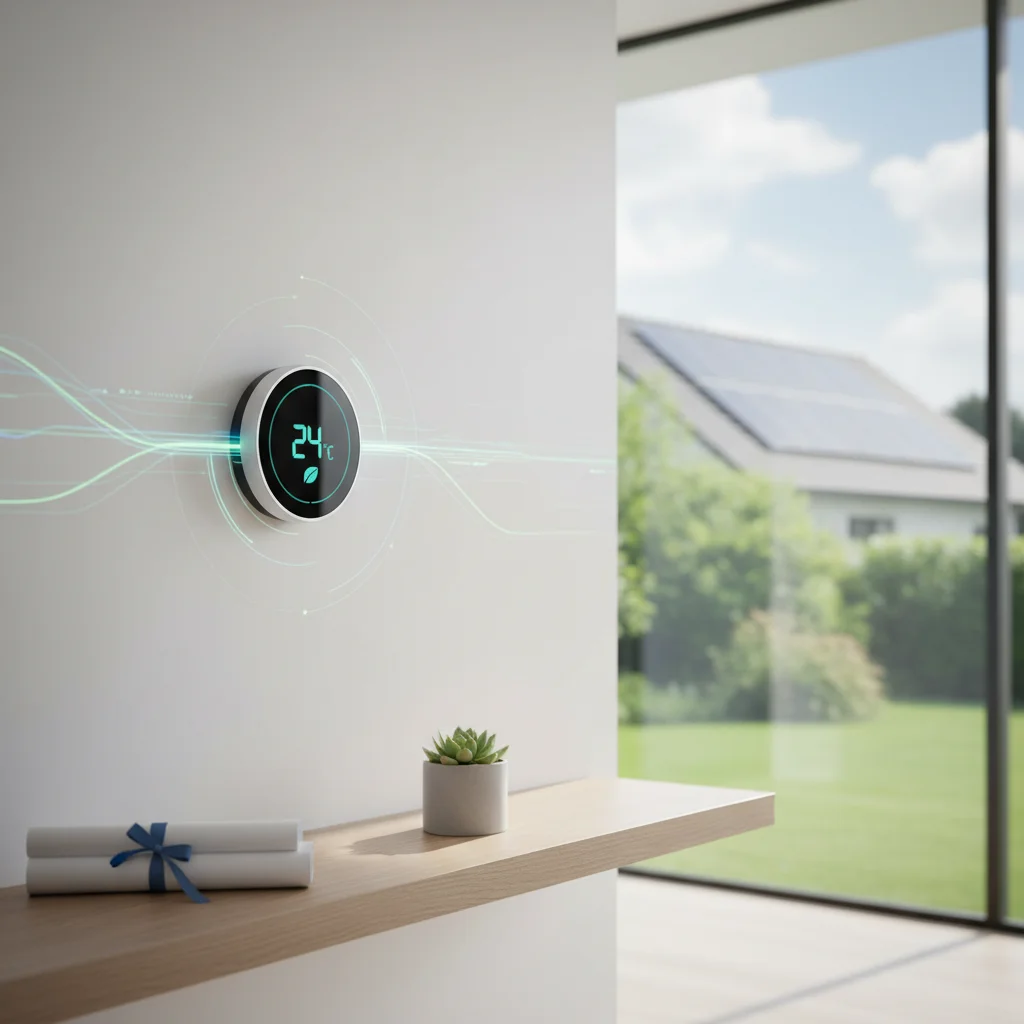
Smart thermostats now qualify for federal rebates of up to $500 and utility incentives ranging from $50 to $150 in California—and homeowners who combine these programs with HVAC upgrade credits can unlock total savings exceeding $2,000. But the rebate landscape shifted dramatically in January 2026 when federal tax credits 25C and 25D expired, replaced by Inflation Reduction Act programs with stricter income limits and device certification requirements.
How Much Can You Save With Smart Thermostat Rebates in 2026?
Federal HOMES rebates provide up to $500 for smart thermostats installed as part of whole-home energy retrofits achieving 20% or greater energy savings. And California utilities add $50-$150 rebates for ENERGY STAR certified models. Southern California Edison offers $75 per thermostat through its Smart Thermostat Program, while PG&E provides $50-$125 depending on unit type. So homeowners who stack federal HOMES funding with utility programs access $550-$650 in combined rebates. But the federal rebate requires pre-approval through participating contractors—direct consumer applications aren't accepted.
"The HOMES rebate program provides point-of-sale discounts up to $8,000 for eligible whole-home energy upgrades, including smart thermostats that contribute to the 20% savings threshold." — U.S. Department of Energy
Learn how to stack these rebates using our free rebate calculator to maximize your savings.
Which Smart Thermostats Qualify for Federal and State Rebates?
ENERGY STAR Version 4.0 certification determines federal rebate eligibility in 2026. Qualifying models include Nest Learning Thermostat (4th Gen), ecobee SmartThermostat Premium, Honeywell Home T9, and Emerson Sensi Touch 2. And these devices must demonstrate remote access capability, automatic scheduling, and occupancy sensing to meet certification standards. California's TECH Clean California initiative adds model-specific requirements—thermostats must integrate with demand response programs and support load-shifting features during peak grid events. But non-ENERGY STAR models like basic programmable thermostats don't qualify for any federal or state rebates. So homeowners should verify certification status on the ENERGY STAR product finder before purchasing.
What Are the Income Limits and Eligibility Requirements for Thermostat Rebate Programs?
Federal HOMES rebates target households earning below 80% of Area Median Income (AMI)—$89,600 for a family of four in Los Angeles County. And households below 50% AMI ($56,000) receive enhanced rebates covering 100% of project costs up to the $8,000 cap. California utility programs impose no income restrictions for standard rebates, but income-qualified tiers exist—PG&E's Energy Savings Assistance program provides free smart thermostats to households at or below 200% of federal poverty level ($62,400 for a family of four). But applicants must own and occupy the property as their primary residence. Rental properties don't qualify unless the tenant pays utility bills and receives landlord permission. So homeowners should check DSIRE USA for county-specific AMI thresholds before applying.
When Do Smart Thermostat Rebates Expire? Key Deadlines for 2026
California utility rebate programs operate on annual budget cycles ending December 31, 2026—SCE's Smart Thermostat Program has already allocated 78% of its 2026 funding as of April. And federal HOMES rebates continue through 2031 but face state-level funding exhaustion risks. California received $277 million in HOMES allocation, supporting approximately 35,000 home retrofits statewide. But first-come, first-served distribution means funding could deplete before December. So homeowners planning HVAC upgrades should submit pre-qualification applications by July 2026 to secure reservation slots. Projects must achieve final inspection by December 31, 2026 to claim utility rebates—installations completed in 2027 won't qualify for 2026 program funds.
Read about complementary heat pump rebates that pair with smart thermostat incentives for maximum savings.
Can You Stack Smart Thermostat Rebates With Other HVAC Incentives?
Federal HOMES rebates explicitly allow stacking with utility programs but prohibit double-dipping with other federal tax credits. And homeowners who claim the $2,000 HVAC tax credit under IRA Section 13301 cannot also claim HOMES funding for the same equipment—smart thermostats installed as accessories to qualifying heat pumps fall under this restriction. But utility rebates stack freely with federal tax credits. So a homeowner installing a $6,000 heat pump with a $150 smart thermostat can claim the $2,000 federal tax credit plus $75 SCE rebate for the thermostat—total savings reach $2,075. California's TECH Clean California program adds contractor incentives ranging from $100 to $500 per installation, reducing out-of-pocket costs further. Calculate your specific stacking scenario using our rebate calculator to identify optimal combinations.
Explore how energy tax credits interact with smart thermostat rebate programs.
Do You Need a Licensed Contractor to Install a Smart Thermostat and Claim Rebates?
Federal HOMES rebates mandate professional installation by licensed HVAC contractors participating in approved Home Energy Rebate programs—DIY installations don't qualify. And contractors must complete pre-retrofit energy assessments and post-installation verification inspections to document the required 20% energy savings threshold. California utility rebates impose similar requirements—PG&E's SmartRate program requires thermostats to be installed by Trade Ally Network contractors who complete demand response integration setup. But standard utility rebates for ENERGY STAR thermostats allow DIY installation if homeowners submit proof of purchase and device registration. So homeowners claiming only utility incentives can self-install, while those pursuing federal HOMES funding must hire certified contractors. Verify contractor credentials through the California Contractors State License Board before hiring.
Official Sources
- U.S. Department of Energy - SAVE — Federal rebate programs including HOMES and High-Efficiency Electric Home Rebate Act (HEEHRA) details
- ENERGY STAR Product Finder — Certified smart thermostat model lookup and eligibility verification
- DSIRE USA — Comprehensive database of state and utility rebate programs with income limits and deadlines
Related Reading: Learn more about What Is the Best Smart Thermostat for a Heat Pump in 2026? and Best Smart Thermostat Under 200 Dollars 2026.
Frequently Asked Questions
What are the best smart thermostats for 2026?
Nest Learning Thermostat (4th Gen), ecobee SmartThermostat Premium, and Honeywell Home T9 lead 2026 rankings based on ENERGY STAR certification and utility rebate compatibility. And ecobee models offer the widest demand response program support across California utilities. Nest devices provide superior learning algorithms reducing energy use by 10-12% annually. But Honeywell T9 costs $199 versus ecobee's $249, offering better value for budget-conscious buyers. All three models qualify for federal HOMES rebates when installed as part of whole-home retrofits.
How much money can you save with a smart thermostat?
Smart thermostats reduce heating and cooling costs by 8-15% annually—$120-$180 in savings for California households with average $1,200 annual HVAC expenses. And federal HOMES rebates provide up to $500 upfront cost reduction, while utility incentives add $50-$150. So total first-year savings reach $670-$830 when combining rebates with energy bill reductions. Payback periods range from 12-18 months for $200-$250 thermostat purchases. But savings vary by climate zone—coastal homeowners see lower returns than inland valley residents with extreme temperature swings.
Do smart thermostats work with all HVAC systems?
Most smart thermostats support single-stage and multi-stage heating and cooling systems, including forced air furnaces, central air conditioners, and heat pumps. But compatibility varies by C-wire (common wire) availability—homes lacking 24V continuous power require adapter installation or battery-powered models like Sensi Touch 2. And dual-fuel systems combining furnaces with heat pumps need thermostats supporting automatic fuel switching like ecobee Premium or Nest Learning. Boiler systems and baseboard heaters require line-voltage thermostats (120V/240V) not supported by most smart models. Check manufacturer compatibility tools before purchasing.
What is the easiest smart thermostat to install?
Sensi Touch 2 requires no C-wire and installs in under 30 minutes using standard tools—Emerson designed the model specifically for DIY installation. And Google Nest Thermostat (budget model, not Learning) includes built-in bubble level and step-by-step mobile app guidance reducing installation errors. But ecobee models provide free Power Extender Kit (PEK) adapters for homes without C-wires, though installation complexity increases to 60-90 minutes. California homeowners claiming utility rebates can self-install any ENERGY STAR model and submit proof of purchase for rebate approval.
Which smart thermostat has the best energy savings guarantee?
Ecobee offers a 23% energy savings guarantee backed by independent testing showing average reductions of $196 annually on heating and cooling bills. And Nest provides Energy History reports quantifying savings but doesn't offer a formal guarantee—documented user savings average 10-12% based on 2025 DOE analysis. Honeywell guarantees compatible operation but makes no specific savings claims. But actual savings depend on existing thermostat type—upgrading from basic programmable thermostats yields 3-5% gains, while replacing manual thermostats produces 15-20% reductions. California's mild climate reduces savings potential compared to extreme-weather states.
Ready to Find Your Smart Thermostat Rebates?
Use our rebate calculator to discover every federal, state, and utility incentive available for your home—get personalized rebate estimates in under 2 minutes.
Last updated April 14, 2026 — reviewed by DuloCore Editorial. About our authors.
Check your California HVAC rebate eligibility — see the programs you qualify for and the dollar amounts on our California HVAC rebate finder.