Update (2026): The federal Energy Efficient Home Improvement Credit (Section 25C) expired December 31, 2025, following the passage of the OBBBA. Check state and local programs for current incentives.
Up to 40% of the energy used for heating and cooling a typical American home is wasted due to air leaks, duct leakage, and poor insulation. This isn't just a comfort issue; it's a direct drain on your finances every single month. So before you replace that old furnace or air conditioner, a specialized audit identifies where your home is losing the most money, unlocking a clear path to targeted, cost-effective upgrades.
How much can a BPI Certified Energy Auditor help you unlock in rebates and financial incentives?
A BPI Certified Energy Auditor provides the required documentation for homeowners to access up to $14,000 in point-of-sale rebates and 30% in federal tax credits through December 31, 2025. So these professionals identify specific energy-saving opportunities that directly align with federal, state, and utility incentive programs.
A BPI (Building Performance Institute) certified energy audit is the gateway to unlocking thousands in 2026 home energy rebates. So the auditor's final report serves as the official proof needed to qualify for high-value programs like the Home Electrification and Appliance Rebate (HEEHRA) Program, which offers up to $14,000 for low-to-moderate income households. But the savings don't stop there. The report also substantiates claims for the Home Efficiency Rebates (HOMES) program, providing between $2,000 and $8,000 based on measured energy savings. And these audits document the necessary improvements to claim federal energy tax credits, which cover 30% of the cost for qualifying equipment like heat pumps and insulation, up to $3,200 annually. A professional audit pinpoints the exact upgrades that deliver maximum financial return.
What home improvements and equipment are eligible for rebates after a BPI audit, and are there income limits?
Eligible equipment after a BPI audit includes high-efficiency heat pumps, heat pump water heaters, induction stoves, electrical panel upgrades, and insulation. So many 2026 programs, like HEEHRA, have income limits, with full rebates available to households earning below 80% of the Area Median Income (AMI).
The improvements recommended in a BPI audit directly map to rebate-eligible equipment. So this includes up to $8,000 for a high-efficiency heat pump for space heating and cooling, $1,750 for a heat pump water heater, and $840 for an induction stove. But there's more. And homeowners can also access up to $4,000 for an electrical panel upgrade and $1,600 for insulation and air sealing projects. The key detail is income eligibility. For instance, the HEEHRA program provides 100% of these costs for households under 80% of AMI and 50% for those between 80-150% of AMI. A comprehensive home energy audit from a BPI professional is the first step to confirming which of these upgrades your home needs to qualify.
What is the application process for BPI-recommended energy efficiency rebates, and what are the key deadlines?
The application process involves scheduling a BPI audit, receiving a detailed report with upgrade recommendations, hiring a qualified contractor for installation, and submitting the audit report and invoices to the state energy office or utility. So the primary deadline for IRA-funded rebates extends through September 30, 2031.
Navigating the rebate application process begins with a BPI-certified audit. So once the auditor delivers a report detailing necessary upgrades, the homeowner hires a qualified contractor to complete the work. And after installation, the homeowner submits the contractor's invoices, the audit report, and a completed application form to their state’s energy office or local utility provider. The most critical deadline to remember is for the federal Inflation Reduction Act incentives, which are funded through 2031 and available to homeowners through December 31, 2025. But state and utility programs operate on annual funding cycles, so verifying 2026 deadlines is essential. Use our free rebate calculator to find specific deadlines in your area. Many programs offer point-of-sale discounts, simplifying the process by applying the rebate directly at the time of purchase.
How can you check the funding status of energy rebate programs, and can you combine multiple incentives (stacking rules)?
Homeowners check funding status for 2026 programs through their state energy office's official website or the DSIRE database. So stacking rules permit combining federal tax credits with state or utility rebates for the same project, but homeowners cannot stack two federal programs (e.g., HEEHRA and HOMES).
Knowing if a program still has funds is critical. So the best resource is your designated State Energy Office, which manages the distribution of IRA funds and provides real-time updates on program availability. Another excellent source is the Database of State Incentives for Renewables & Efficiency (DSIRE).
"DSIRE is the most comprehensive source of information on incentives and policies that support renewables and energy efficiency in the United States." — DSIRE And when it comes to combining incentives, the rules are specific. For example, you can claim the 30% federal tax credit for a new heat pump (this federal credit ended for property placed in service after December 31, 2025) and also receive a $2,000 rebate from your local utility. But federal programs cannot be stacked; a homeowner must choose between the HEEHRA or HOMES rebate for a single project. (Note: Federal tax credit percentages and availability are subject to change; the 30% Residential Clean Energy Credit under Section 25D expired December 31, 2025. Verify current incentives at energy.gov.)
Which state and utility programs offer BPI-eligible rebates, and what are the contractor requirements for these incentives?
Programs like NYSERDA in New York, Mass Save in Massachusetts, and PG&E in California offer rebates requiring a BPI-auditor-recommended project. So these 2026 programs mandate that all installation work be performed by licensed, insured, and often, program-approved contractors to ensure quality and energy savings.
Many state and utility-level incentive programs require or strongly recommend a BPI-certified audit to qualify for their highest-value rebates. For example, NYSERDA’s residential programs in New York use BPI standards as a benchmark for quality assurance. And similarly, Mass Save and California’s utility programs (PG&E, SCE) often link their top-tier heat pump rebates to improvements identified in a comprehensive energy assessment. The contractor requirements are strict. So to receive the rebate, the installation must be completed by a contractor who is not only state-licensed and insured but often must be listed on the program’s pre-approved network. This ensures the work meets specific efficiency and safety standards, protecting both the homeowner and the integrity of the rebate program.
| Program Feature | HEEHRA Rebate | HOMES Rebate | Typical Utility Rebate |
|---|---|---|---|
| Max Amount | Up to $14,000 | Up to $8,000 | $500 - $2,500 |
| Eligibility | Income-based (<150% AMI) | Performance-based (% savings) | Equipment-based (All incomes) |
| BPI Audit | Recommended | Required for high-tier | Often required |
| 2026 Deadline | Funded through 2031 | Funded through 2031 | Varies by utility (annual) |
Official Sources
- ENERGY STAR — A U.S. Environmental Protection Agency (EPA) program providing credible, objective information on energy-efficient products and practices.
- Database of State Incentives for Renewables & Efficiency (DSIRE) — The most comprehensive national database of state, local, utility, and federal incentives that promote renewable energy and energy efficiency.
- U.S. Department of Energy (DOE) — Federal guidance on the Inflation Reduction Act's home energy rebate programs and tax credits. (note: the federal 25C and 25D credits ended for projects completed after December 31, 2025)
Related Reading: Learn more about Bpi Certification Energy Auditor.
Frequently Asked Questions
What does a BPI certified energy auditor do?
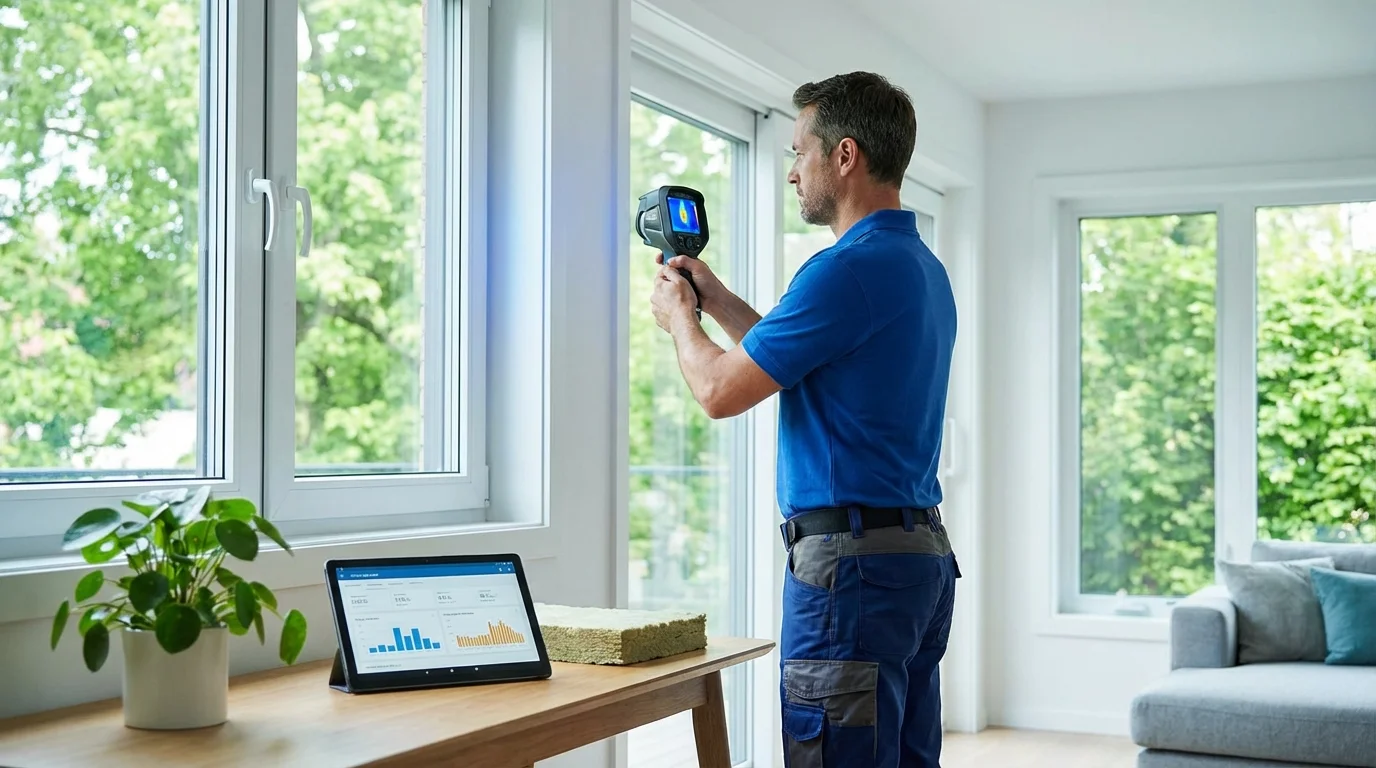
A BPI certified energy auditor conducts a comprehensive home performance assessment to identify energy waste. Using diagnostic tools like a blower door test and infrared cameras, they pinpoint air leaks, insulation gaps, and inefficient systems. The final report provides a prioritized list of improvements to reduce energy consumption by 20-40% and serves as required documentation for many rebate programs.
How much does a BPI certified energy audit cost?
The cost of a BPI certified home energy audit typically ranges from $300 to $700 in 2026. The final price depends on the size of the home, its complexity, and the specific diagnostic tests performed. And many utility companies offer rebates or subsidies for these audits, sometimes reducing the out-of-pocket cost to under $100.
Is a BPI energy audit required for home improvement rebates?
Yes, a BPI energy audit is often a mandatory prerequisite for qualifying for high-value state and federal rebate programs, such as the HOMES Rebate program. While not required for every single utility rebate, it provides the necessary third-party verification of energy savings needed for performance-based incentives that can total over $8,000.
What's involved in a BPI certified home energy assessment?
A BPI assessment is a whole-house evaluation lasting 2-4 hours. It includes a visual inspection from attic to basement, a blower door test to measure air leakage, thermographic imaging to find insulation voids, and combustion safety testing on appliances. The auditor also analyzes past utility bills to create a complete energy profile of the home.
How do I find a qualified BPI certified energy auditor?
Homeowners can find a local, qualified BPI Certified Professional using the official locator tool on the Building Performance Institute's website. And many state energy offices and local utility companies also maintain a list of pre-approved, certified auditors who are eligible to perform assessments for their specific 2026 rebate programs.
Unlock Your Home's Full Rebate Potential
An energy audit is the first step. Find out exactly how much you can save on heat pumps, insulation, and more with our free, instant rebate calculator.
Calculate Your Savings NowUpdated: April 14, 2026 — fact-checked by DuloCore Research. About our editorial process.