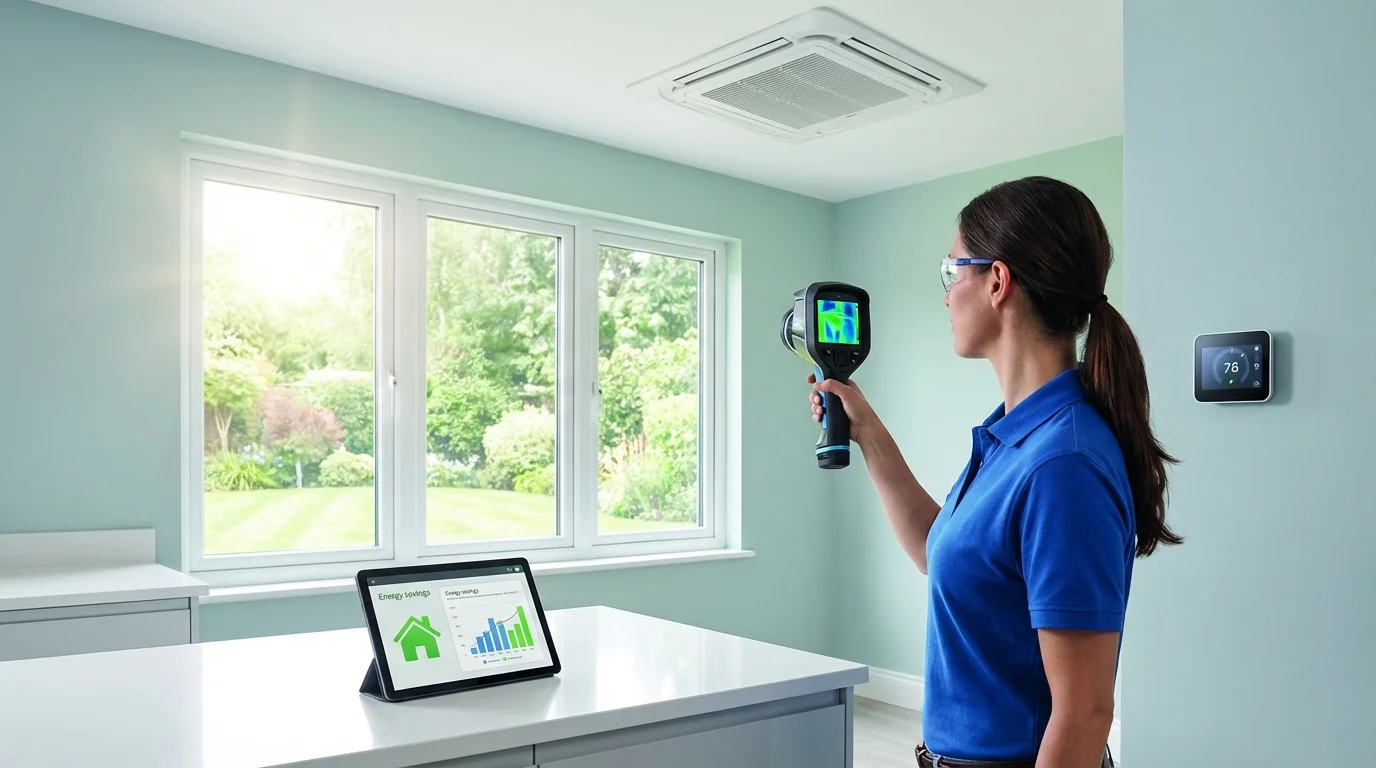
Up to 30% of the energy used to cool a home is wasted through leaky ducts, incorrect refrigerant levels, and poor airflow. So every summer, homeowners pay for cooled air that never actually reaches their living spaces, directly inflating utility bills without providing any comfort. This isn't a minor leak; it's a constant drain on both your wallet and the energy grid.
Why Should I Get a Central AC Energy Audit for My Home?
A central AC energy audit is a diagnostic service that identifies efficiency losses, such as duct leakage and improper refrigerant charge, potentially lowering cooling bills by up to 30% annually. And these audits are often a prerequisite for high-efficiency HVAC rebates available in 2026, making them a critical first step.
So what's the bottom line? A typical home loses 20 to 30 percent of the air that moves through the duct system due to leaks, holes, and poorly connected ducts. This translates directly into hundreds of dollars in wasted energy costs each year. But a central AC energy audit pinpoints these exact points of failure. The audit uses specialized tools like blower doors and duct blasters to quantify air leakage, check refrigerant charge, and measure airflow. So identifying these issues allows for targeted repairs that restore system performance, improve indoor air quality, and reduce your home's carbon footprint. And completing an audit often unlocks access to further financial incentives for system upgrades, documented in a comprehensive home energy audit report.
What Rebates and Financial Incentives Are Available for Central AC Energy Audit Testing in My State or Utility Area?
State and utility rebates for central AC energy audits are financial incentives that cover a portion of the testing cost, often ranging from $100 to $300 in 2026. And these programs aim to encourage homeowners to identify and fix energy inefficiencies before upgrading to new, more expensive equipment.
The specific rebate amount for a central AC energy audit depends entirely on your local utility provider and state energy office. For example, a utility in California offers a $150 rebate for a standalone duct leakage test, while a state program in Massachusetts bundles it into a no-cost home energy assessment. So homeowners must check with their specific electricity provider for current 2026 offerings. And these incentives are designed to lower the barrier to entry, making it affordable to diagnose problems that lead to high summer cooling bills. You can find a comprehensive list of local incentives by using a free rebate calculator to see what your home qualifies for.
Am I Eligible for Central AC Energy Audit Rebates, Are There Income Limits, and Can I Stack Multiple Incentives?
Eligibility for 2026 central AC energy audit rebates typically depends on homeownership, utility service area, and sometimes income-based qualifications. And many programs allow stacking with federal energy tax credits for subsequent upgrades, but prohibit combining with other state incentives for the same audit service.
Most utility rebate programs require you to be a residential customer in their service territory. And some programs have income limits, offering enhanced rebates or no-cost audits for households earning below 80% of the Area Median Income (AMI). So it’s critical to check the specific income requirements for your local program. When it comes to stacking, you generally can't claim two rebates for the exact same audit. But you can use an audit rebate and then claim a separate federal tax credit or utility rebate for the qualifying repairs or equipment upgrades, like new heat pump rebates, that the audit recommended.
"Many state and local utilities offer rebates or other incentives for energy-efficient products and improvements." — ENERGY STAR
What is the Application Process for Central AC Energy Audit Rebates, and What Are the Contractor Requirements?
The application process for 2026 central AC audit rebates involves hiring a certified contractor, completing the audit, and submitting an application with an invoice online or by mail. And contractors must often hold Building Performance Institute (BPI) or RESNET certifications to qualify the homeowner for the incentive.
First, homeowners must find a contractor from their utility's pre-approved list. So this ensures the technician is trained to perform the required diagnostic tests correctly. After the audit, the contractor provides a detailed report and an itemized invoice. And the homeowner then submits these documents through the utility's online portal or via a mail-in form, usually within 90 days of the service date. But failure to use a certified professional is the most common reason for rebate denial. The process is designed to verify that the audit was performed to industry standards, ensuring the recommended improvements are based on accurate data.
What Are the Deadlines and Current Funding Status for Central AC Energy Audit Programs?
Deadlines for 2026 central AC energy audit rebate programs typically fall at year-end, such as December 31, 2026, or whenever program funds are depleted. And funding status is often updated on utility websites and is subject to change, requiring prompt homeowner action to secure the incentive.
Most energy rebate programs operate on an annual budget cycle. So once the allocated funds for the year are exhausted, the program closes to new applicants until the next cycle begins, if it's renewed. For 2026, many programs will stop accepting applications in early December to ensure all paperwork is processed by the end of the year. But high demand can deplete funds much earlier, sometimes as early as Q3. Therefore, homeowners interested in these rebates should schedule their audit early in the year. Always verify the current funding status and application deadline directly on the program administrator's website before committing to any work.
How Do I Compare Different Central AC Energy Audit Programs and Maximize My Savings?
Homeowners compare central AC audit programs by evaluating rebate amounts, contractor eligibility lists, and required follow-up actions for 2026. And maximizing savings involves pairing the audit rebate with subsequent incentives for recommended upgrades, creating a comprehensive, cost-effective energy efficiency plan.
When comparing, look beyond the initial rebate amount. A $100 rebate from one utility is less valuable than a $75 rebate from another if the second utility also offers a 50% rebate up to $2,000 for the duct sealing identified in the audit. So the total potential savings is the key metric.
And homeowners should create a simple comparison table to track these details. This helps visualize the complete financial picture, including any bonus rebates for bundling multiple upgrades. The goal is to use the audit as a roadmap to unlocking thousands of dollars in further savings.
Central AC Energy Audit Incentive Comparison (2026)
| Incentive Type | Typical Rebate Amount | Key Eligibility Requirement | Typical Deadline |
|---|---|---|---|
| Utility Rebate | $100 - $300 | Must be a customer of the utility | December 31, 2026 or when funds are depleted |
| State Program | $150 - $500 (or part of a free audit) | State residency; may have income limits | Varies by state; often fiscal year-end |
| Contractor Discount | $50 - $150 | Use of a specific, participating contractor | Varies by contractor promotion schedule |
Official Sources
- Database of State Incentives for Renewables & Efficiency (DSIRE) — A comprehensive U.S. database of incentives and policies for renewables and energy efficiency.
- ENERGY STAR Rebate Finder — A federal tool to find rebates and special offers near you for ENERGY STAR certified products.
- U.S. Department of Energy (DOE) Savings — Federal guidance on home energy savings, rebates, and tax credits available through the Inflation Reduction Act. (note: the federal 25C and 25D credits ended for projects completed after December 31, 2025)
Related Reading: Learn more about Moisture Problems Energy Audit and Phantom Load Energy Audit.
Frequently Asked Questions
Who qualifies for a central AC energy audit?
Most homeowners with a central air conditioning system qualify for an audit. Eligibility for associated rebates typically requires being a customer of the sponsoring utility or residing in a specific state. And some programs, especially those offering no-cost audits, have income-based requirements, often targeting households at or below 80% of the Area Median Income (AMI) for 2026.
Is a central AC energy audit covered by home improvement rebates?
Yes, many local utilities and state energy programs offer rebates that cover a portion of the cost, typically between $100 and $300. In some cases, income-qualified programs provide the audit at no cost. These incentives are designed to encourage homeowners to identify and fix energy waste before it leads to higher bills. So always check your local utility's 2026 program offerings.
What steps are involved in a central AC energy audit?
A central AC audit involves several key diagnostic steps. A certified technician will first perform a visual inspection, then use a blower door to depressurize the house and a duct blaster to measure air leakage in the ductwork. They will also check the system's refrigerant charge and measure airflow at the registers to ensure proper distribution, a process taking 2-4 hours.
What is the deadline to complete a central AC energy audit for rebate programs?
Deadlines for 2026 rebate programs are typically December 31, 2026, or whenever the program's annual funding is exhausted. Because funding is limited and distributed on a first-come, first-served basis, programs can close months before the official end date. It is critical to apply early in the year to ensure you secure your rebate.
How does a central AC energy audit improve home energy efficiency?
An audit improves efficiency by precisely identifying energy waste. By quantifying duct leakage, which can account for up to 30% of cooling energy loss, and verifying correct refrigerant levels, the audit provides a targeted repair plan. Acting on these findings can reduce cooling costs by 15-30% and improve overall home comfort and air quality.
Last updated April 14, 2026 — reviewed by DuloCore Editorial. About our authors.