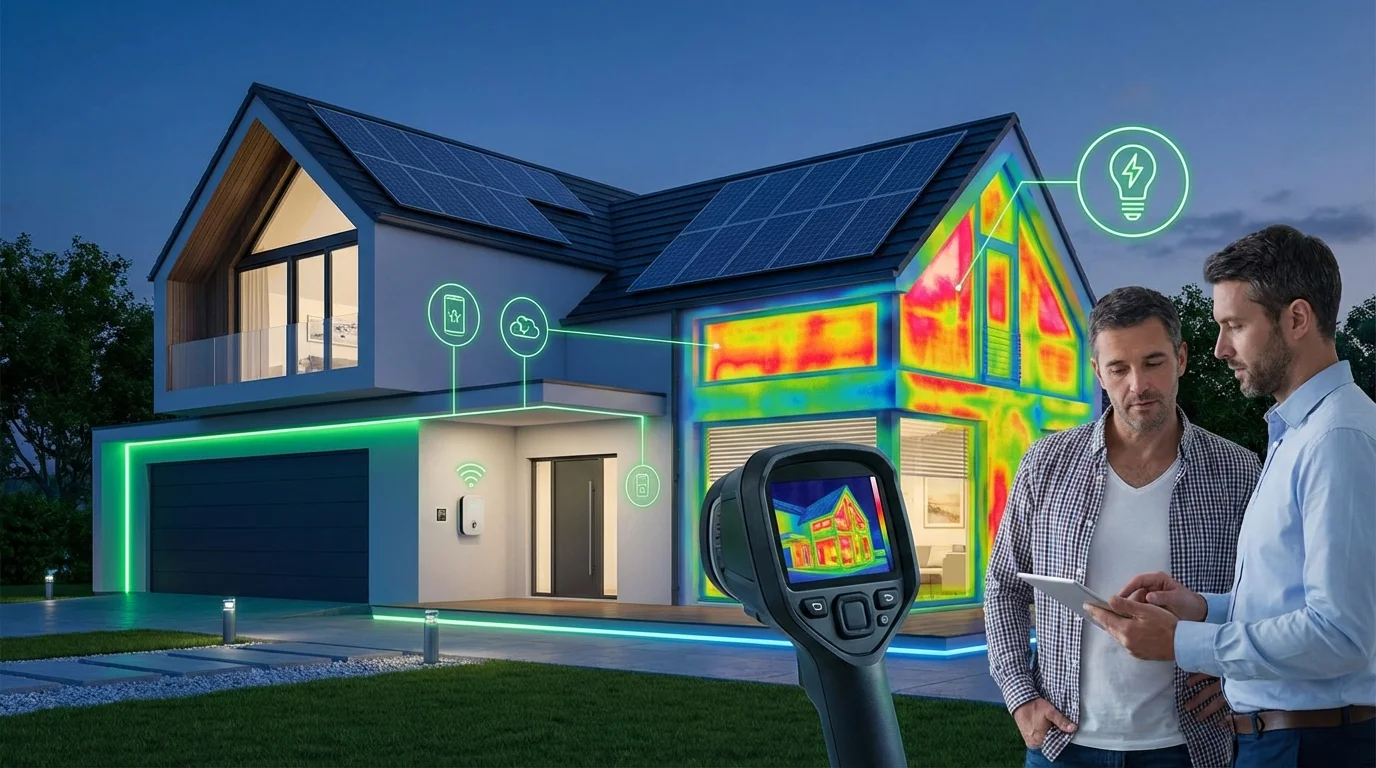
During peak summer heatwaves, the cost for utilities to generate electricity jumps by as much as 5,000%, a volatile expense passed directly to consumers through higher rates. This grid instability now creates a new opportunity for homeowners with smart technology. Utilities are actively paying customers to reduce their energy consumption during these brief, critical periods, turning smart thermostats and EV chargers into income-generating assets. And this shift fundamentally changes how homes interact with the power grid, rewarding efficiency with direct cash payments and bill credits.
How Much Can You Save with Demand Response, and What Home Energy Equipment Qualifies for Rebates?
Demand response programs offer homeowners annual incentives ranging from $50 to over $200 for participating. The exact savings depend on the utility and the enrolled equipment. Common qualifying devices for 2026 include smart thermostats, EV chargers, battery storage systems, and smart water heaters, which allow for automated, temporary adjustments in energy use.
So homeowners can earn these incentives by allowing their utility to slightly adjust their thermostat by 1-3 degrees or pause EV charging for a few hours during peak demand events. And these adjustments are typically minor, lasting only 2-4 hours and often going unnoticed. But the cumulative effect stabilizes the grid and generates direct financial rewards. Many programs also offer an upfront enrollment bonus of $25 to $75. The most lucrative incentives are often tied to battery storage systems, which provide the grid with the most flexibility. Use our free rebate calculator to find precise savings based on your location and equipment.
Am I Eligible for Demand Response Programs, and What are the Income Limits for Assistance?
Eligibility for most demand response programs depends on your utility provider and owning compatible equipment, not your income. So homeowners with a smart thermostat from brands like Nest or ecobee, or a connected EV charger, generally qualify. And there are typically no income caps for standard participation incentives, as these programs benefit the entire grid. But some states offer enhanced incentives or free equipment for low-to-moderate-income (LMI) households. For example, a household earning below 80% of the Area Median Income (AMI) receives priority enrollment or a zero-cost smart thermostat installation. A comprehensive home energy audit is the first step to identify all eligible upgrades and programs for your specific financial situation.
"Demand-side management, which includes energy efficiency and demand response, can be a cost-effective alternative to investments in electricity infrastructure..." — U.S. Department of Energy
What is the Application Process for Demand Response Rebates, and What are the Key Deadlines?
The application process for demand response programs in 2026 is streamlined and primarily digital. Homeowners typically enroll directly through their utility's online portal or via the app of their smart device manufacturer (e.g., Google Home or Tesla). So the application requires providing your utility account number and granting permission for the utility to communicate with your device. And approval often takes just 5-10 business days. Most programs feature rolling enrollment with no firm deadlines, allowing customers to sign up at any time. But some seasonal programs, like summer A/C cycling initiatives, have preferred enrollment periods between March 1 and May 31 to ensure readiness for the peak season. Always verify specific 2026 program timelines with your local utility.
How Do I Find Demand Response Programs in My State or Utility, and Can I Stack Incentives?
Finding local demand response programs starts with your electric utility's website, which almost always has a dedicated section for energy-saving incentives. Or, national databases provide comprehensive listings. So searching these resources by state reveals all available 2026 programs. And incentive stacking is a key strategy for maximizing value. Homeowners can often combine a utility's demand response enrollment bonus with federal energy tax credits for purchasing the qualifying equipment. For instance, installing a battery storage system makes you eligible for both a 30% IRA tax credit on the installation cost and your utility's annual demand response payment, which averages $150. But check program rules, as some utilities prohibit participation in multiple demand response programs simultaneously.
Demand Response Program Comparison (2026 Examples)
| Program / Utility | Incentive Amount | Eligible Equipment | Enrollment Deadline |
|---|---|---|---|
| PG&E (CA) | $50-$120 annually | Smart Thermostats, EV Chargers | Rolling Enrollment |
| Con Edison (NY) | $85 upfront + bill credits | Window A/C, Smart Thermostats | May 31, 2026 |
| Austin Energy (TX) | Up to $250/year | Battery Storage, Thermostats | Rolling Enrollment |
Are There Specific Contractor Requirements for Demand Response Installations, and What is the Funding Status?
For most demand response programs, no specific contractor is required because they rely on homeowner-installed smart devices like thermostats. So if you can install a Google Nest yourself, you can enroll. But for more complex systems like battery storage or central air conditioners tied to the program, installation must be performed by a licensed and insured HVAC or electrical contractor. And many utility programs maintain a list of pre-approved, certified installers to ensure compliance and safety. Funding for these 2026 programs is generally stable and sourced from utility operational budgets approved by state public utility commissions. As grid stabilization is a top priority, these funds are rarely depleted mid-year. Exploring heat pump rebates often reveals contractors already familiar with these integrated systems.
"DSIRE is the most comprehensive source of information on incentives and policies that support renewables and energy efficiency in the United States." — DSIRE
Official Sources
- Database of State Incentives for Renewables & Efficiency (DSIRE) — A comprehensive U.S. database of energy-related incentives and policies managed by the N.C. Clean Energy Technology Center.
- ENERGY STAR Rebate Finder — A federal tool from the EPA that helps consumers find local rebates for ENERGY STAR certified products.
Related Reading: Learn more about Blower Door Test Home Energy and Energy Modeling Software Home.
Frequently Asked Questions
What are the eligibility requirements for home demand response programs?
Eligibility typically requires being a customer of a participating utility and owning a compatible smart device, such as a smart thermostat, EV charger, or battery storage system. There are generally no income requirements for standard programs, though some assistance programs for low-income households exist. Your home must be located within the utility's service territory.
How much can I save on my energy bill by participating in demand response?
Participants typically earn between $50 and $200 annually, paid either as a lump sum or as bill credits. The exact amount depends on the utility, the enrolled devices, and the number of demand response events each season. Some programs also offer a one-time enrollment bonus of $25 to $75.
What is the typical enrollment process for residential demand response programs?
Enrollment is usually a simple online process that takes 5-10 minutes. Homeowners sign up through their utility's website or their smart device's mobile app. You will need your utility account number to link the device to your account and grant permission for the utility to make minor, temporary adjustments.
How does a demand response event affect my home's energy use and comfort?
During an event, which typically lasts 2-4 hours, your utility will automatically make small adjustments. For a smart thermostat, this means pre-cooling your home and then raising the setpoint by 1-3 degrees. For an EV charger, it means pausing charging. Most participants report not noticing any change in comfort.
Are there specific deadlines to sign up for demand response incentives?
Most programs have rolling enrollment, allowing you to sign up anytime. However, seasonal programs, particularly for summer air conditioning, often have preferred sign-up periods before June 1 to ensure you are enrolled for the peak demand season. Always check your specific 2026 utility program for any deadlines.
Maximize Your Home Energy Savings
Don't leave money on the table. Demand response is just one of many incentives available for your home. Use our free, up-to-date rebate calculator to instantly discover every federal, state, and utility rebate you qualify for based on your ZIP code.
Calculate Your Savings NowLast reviewed: April 14, 2026. Reviewed by DuloCore Energy Specialists. About the team.