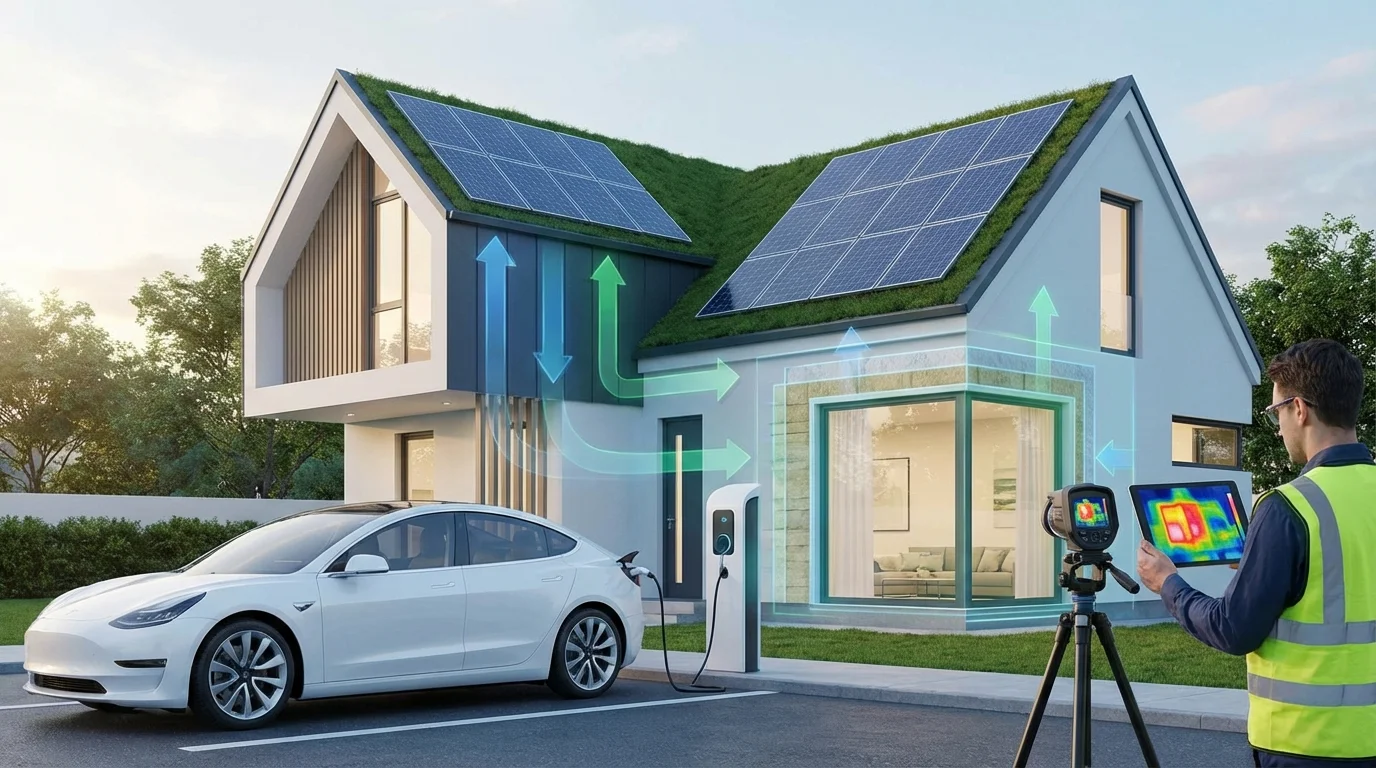
Charging an electric vehicle at home increases a household's electricity consumption by an average of 30% to 50%. This sudden demand often requires more than just plugging into a standard outlet; it necessitates a comprehensive look at a home's entire electrical ecosystem. So, without proper planning and system upgrades, homeowners face higher utility bills and the risk of overloading their existing electrical panels, potentially leading to circuit damage or power outages. The transition to an EV is not just about the car, but about preparing the home to support it efficiently and affordably.
The core tension for new EV owners is balancing the convenience of home charging with the immediate 30% to 50% spike in electricity costs and the potential $1,500 to $3,500 expense for necessary electrical upgrades. Managing this electric vehicle home energy impact is crucial. So, homeowners must navigate a complex landscape of utility rate plans, federal energy tax credits, and local rebates to offset these new expenses. But without a clear strategy, the total cost of ownership for an EV extends far beyond the sticker price.
How can financial incentives reduce my EV's home energy impact?
Financial incentives for EV charging directly reduce the upfront cost of necessary home upgrades by 30% to 100%. These programs, offered by federal, state, and utility providers for 2026, include tax credits, direct cash rebates, and bill credits. So, they target specific equipment like Level 2 chargers and electrical panel upgrades. By lowering the initial investment from over $2,000 to under $500 in some cases, these incentives make the transition to home charging more accessible. And this financial assistance ensures a home's electrical system can safely and efficiently handle the new load from an EV. But homeowners must actively seek out and apply for these funds, as they are not automatic. The primary goal is to mitigate the financial burden of preparing a home for an EV, thereby accelerating adoption and promoting grid stability through managed charging programs.
What specific equipment and upgrades qualify for EV home energy rebates in my area?
Eligible equipment for EV home energy rebates in 2026 typically includes Level 2 (240-volt) chargers, dedicated circuit installation, and electrical panel upgrades of up to 200 amps. Some utility programs also offer incentives for smart chargers that allow for off-peak charging schedules. And these rebates often cover a percentage of both equipment and labor costs. For example, a state program may offer a $500 rebate for a qualified Level 2 charger, while a local utility provides an additional $250 for installing a new 240-volt outlet. So, the key is verifying which specific models and service upgrades are listed on your local utility or state energy office's eligibility list before purchase. But prerequisite work, like trenching for a new electrical line, is often excluded from these programs. A preliminary home energy audit can identify necessary upgrades.
Am I eligible for EV home energy incentives, and are there income limits?
Eligibility for 2026 EV home energy incentives depends on geography, utility provider, and often, household income. Federal tax credits, such as those under the IRA, are available to most taxpayers, but state and utility rebates frequently have stricter requirements. And many programs are reserved for residential customers in single-family homes. So, a growing number of incentives are income-qualified, offering higher rebate amounts—sometimes covering 100% of project costs—for low-to-moderate-income (LMI) households, typically defined as those earning below 80% of the Area Median Income (AMI). But homeowners must provide documentation like tax returns to verify income status. It's essential to check the specific AMI thresholds for your county and the program's terms before applying. You can use a free rebate calculator to check eligibility.
What's the application process, deadline, and funding status for EV home energy rebates?
The application process for 2026 EV home energy rebates usually involves an online portal where homeowners submit an application, purchase receipts, and photos of the installation. And some programs require pre-approval before any work begins. Deadlines are critical; many state and utility programs operate on an annual budget and close once funds are depleted, often by the third quarter of the year. So, applicants must monitor the program's funding status, which is typically displayed on the administrator's website.
"Many programs are offered on a first-come, first-served basis until program funds are exhausted." — DSIRE
But missing a deadline or submitting an incomplete application results in a denied claim. Always confirm the 2026 submission window and required documents, like contractor invoices and permits, to ensure a successful application.
Can I combine EV home energy incentives, and what contractor rules apply?
Homeowners can often combine, or "stack," multiple EV home energy incentives in 2026. For instance, the 30% federal tax credit for charging equipment can be combined with a state rebate of $500 and a local utility incentive of $250. But some programs have anti-stacking clauses, prohibiting combination with other offers for the same piece of equipment. So, it's essential to read the terms for each program. And most rebate programs require that all electrical work be performed by a licensed and insured contractor.
"To ensure safety and reliability, it is recommended that a qualified electrician install your home charging station." — U.S. Department of Energy
Homeowners must provide the contractor's license number and a detailed invoice as part of the rebate application. So, using an un-licensed installer will disqualify the project from receiving any financial incentives. This rule ensures all upgrades meet local electrical codes.
EV Home Energy Incentive Comparison (2026)
| Incentive Program | Typical Amount | Key Eligibility | Common Deadline |
|---|---|---|---|
| Federal Tax Credit (IRA) | Ended Dec 31, 2025 | — | Ended Dec 31, 2025 |
| State Rebate (e.g., CA) | $250 - $750 | State residency, specific equipment | Varies, often funds deplete |
| Utility Rebate (e.g., ConEd) | $150 - $500 | Must be a customer, smart charger req. | Annually, first-come, first-served |
Official Sources
- Database of State Incentives for Renewables & Efficiency (DSIRE) — A comprehensive U.S. database of incentives and policies for renewables and energy efficiency.
- ENERGY STAR Rebate Finder — A tool from the EPA to find local rebates on ENERGY STAR certified products, including EV chargers.
- U.S. Department of Energy - Save Money, Save Energy — Federal guidance on energy-saving improvements, tax credits, and available programs. (note: the federal 25C and 25D credits ended for projects completed after December 31, 2025)
Related Reading: Learn more about Home Energy Scoring Tool and Home Performance With Energy Star.
Frequently Asked Questions
How much does charging an electric vehicle typically add to my monthly home energy costs?
Charging an EV typically adds $30 to $100 per month to a residential electricity bill, assuming an average of 1,000 miles driven per month and an electricity rate of $0.17 per kilowatt-hour (kWh). The exact cost depends on your local utility rates, the EV's efficiency (miles/kWh), and your driving habits. So, enrolling in a time-of-use (TOU) rate plan and charging during off-peak hours can reduce this cost by 20% to 40%.
What home electrical upgrades are eligible for rebates to support EV charging?
Eligible upgrades for 2026 rebates commonly include the installation of a new 240-volt outlet, a dedicated 40- or 50-amp circuit for the charger, and a service panel upgrade to 200 amps if the existing panel lacks capacity. Some programs also provide incentives for installing a whole-home surge protector. But cosmetic work or non-essential wiring is not covered. Always check the specific program's list of qualifying upgrades before starting work.
Are there specific rebates for installing a Level 2 EV charger at home?
Yes, numerous state and local utility programs in 2026 offer specific rebates for installing a Level 2 (240-volt) EV charger. These rebates range from $250 to over $750 and often cover a portion of both the charger cost and the installation labor. And many programs require the charger to be ENERGY STAR certified or a "smart" charger capable of connecting to the utility's network for demand response events.
Ready to Power Your EV for Less?
Adding an EV increases your home's energy use, but you don't have to pay full price for the necessary upgrades. DuloCore's platform identifies every available rebate and tax credit for your new charger and electrical work.
Calculate Your EV Upgrade Savings Now
Last updated April 14, 2026 — reviewed by DuloCore Editorial. About our authors.