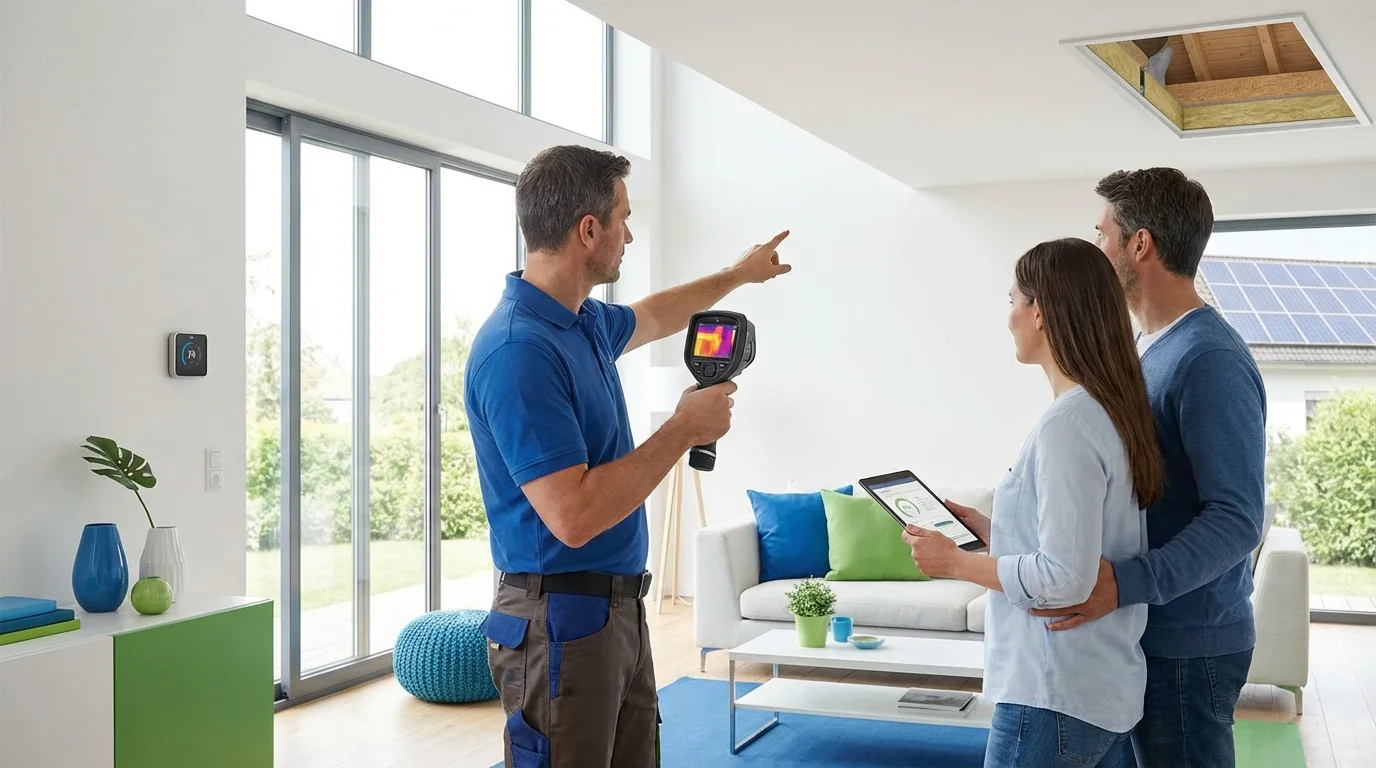
The average U.S. household spends over $2,000 on energy bills annually, yet up to 30% of that energy is wasted due to inefficiencies like air leaks and outdated equipment. A home energy audit pinpoints these exact problems, moving homeowners from guessing about energy loss to implementing targeted, cost-saving solutions. So these audits don't just identify problems; they unlock a direct path to lower utility bills and access to thousands of dollars in financial incentives designed to fix the issues they uncover.
What are the Biggest Energy Wasters in My Home, and Which Upgrades Qualify for Financial Aid?
A professional home energy audit identifies the biggest energy wasters, which are typically heating and cooling systems (47% of energy use), water heating (14%), and air leakage through gaps in the building envelope. Upgrades like insulation, air sealing, new windows, and high-efficiency heat pumps directly qualify for 2026 rebates.
So what does this mean for your wallet? The Department of Energy estimates that air leaks alone account for 25% to 40% of the energy used for heating and cooling in a typical home. And addressing these gaps through professional air sealing and insulation is one of the most cost-effective upgrades available. But the savings don't stop there. Upgrading an old HVAC system to a new ENERGY STAR-certified heat pump reduces heating and cooling costs by up to 50%. These specific, audit-recommended improvements are precisely what federal, state, and utility rebate programs target. So homeowners who complete a home energy audit get a prioritized list of upgrades—like attic insulation, heat pump water heaters, and electrical panel updates—that are eligible for financial aid, turning an audit report into a roadmap for savings.
How Much Can I Save? Understanding Rebate Amounts and Tax Credits by State and Utility.
Homeowners in 2026 access savings up to $14,000 from point-of-sale rebates and an additional 30% back from federal tax credits for eligible upgrades. So the exact rebate amount for a heat pump (this federal credit ended for property placed in service after December 31, 2025) water heater, for instance, varies from $1,750 federally to an additional $500 from a local utility. (Note: Federal tax credit percentages and availability are subject to change; the 30% Residential Clean Energy Credit under Section 25D expired December 31, 2025. Verify current incentives at energy.gov.)
The total financial incentive depends entirely on your location, income, and the specific equipment installed. For example, under the Home Electrification and Appliance Rebate (HEAR) program, a low-income household receives up to $8,000 for a new heat pump. And a moderate-income household qualifies for up to $4,000 for the same upgrade. But state and utility programs often add to this. A California resident, for instance, stacks a state incentive on top of the federal rebate. The Inflation Reduction Act (IRA) also provides uncapped 30% energy tax credits for projects like geothermal systems and rooftop solar (this federal credit ended for expenditures made after December 31, 2025), with no annual limit. So combining these programs maximizes financial returns on energy efficiency investments.
Am I Eligible? Income Limits, Equipment Standards, and Contractor Requirements for Energy Programs.
Eligibility for 2026 energy programs is determined by household income, equipment specifications, and contractor qualifications. For instance, the largest rebates are reserved for households earning less than 80% of their Area Median Income (AMI), while partial rebates extend to those earning up to 150% of AMI.
So verifying your eligibility is the first critical step. Equipment must meet specific efficiency standards, such as those set by ENERGY STAR or the Consortium for Energy Efficiency (CEE). And installing a non-certified appliance automatically disqualifies you from receiving a rebate. But contractor choice also matters. Many programs, especially at the state and utility level, require installation by a licensed and program-approved professional. This ensures the work is done correctly and meets performance standards. For example, some heat pump rebates are only valid if the system is installed by a technician with specific North American Technician Excellence (NATE) certifications. So always check your local program’s contractor list before signing a contract.
What's the Process? Navigating Applications, Deadlines, and Funding Status for Home Energy Upgrades.
The process for securing 2026 energy rebates involves an initial assessment, pre-approval, installation by a qualified contractor, and submission of a final application with invoices. So homeowners must follow these steps precisely, as missing a deadline or using the wrong form results in denial of funds.
First, a home energy audit identifies qualifying projects. Next, the homeowner often submits a pre-application to their state energy office or utility to reserve funding, as many programs operate on a first-come, first-served basis. And once pre-approved, the upgrade is completed by a vetted contractor. The final application requires detailed documentation, including equipment model numbers, installation costs, and proof of payment. Deadlines are strict, typically falling at the end of the calendar year or when program funds are exhausted. So checking the program’s funding status online is essential before starting a project. Use our free rebate calculator to see what’s available in your area.
Can I Combine Incentives? Understanding Stacking Rules for Maximum Energy Savings.
Homeowners can combine or "stack" multiple incentives in 2026, layering federal tax credits with state and utility rebates for the same project. So this strategy reduces the net cost of an energy upgrade by 50% or more, turning expensive projects into affordable investments with rapid payback periods.
The key is understanding the rules. For example, a homeowner installs a $10,000 heat pump. They are eligible for an $8,000 point-of-sale rebate through the federal HEAR program. But their local utility also offers a $1,000 rebate for the same equipment. So the total rebate is $9,000, reducing the upfront cost to just $1,000. And the remaining $1,000 out-of-pocket cost is then eligible for the 30% federal energy tax credit, saving an additional $300. Not all programs allow stacking, so it's critical to read the terms for each incentive.
Energy Incentive Program Comparison (2026)
| Program Name | Incentive Type | Max Amount | Key Eligibility |
|---|---|---|---|
| Home Electrification (HEAR) | Point-of-Sale Rebate | $14,000 | Income-based (<150% AMI) |
| Clean Energy Credit (IRA) | Ended Dec 31, 2025 | Ended Dec 31, 2025 | — |
| State/Utility Programs | Rebate / Credit | Varies ($500-$5,000) | Location, specific utility |
Official Sources
- Database of State Incentives for Renewables & Efficiency (DSIRE) — A comprehensive U.S. database of incentives and policies for renewables and efficiency.
- ENERGY STAR Rebate Finder — A federal tool for finding rebates on ENERGY STAR certified products.
- IRS Credits and Deductions — Official IRS guidance on federal energy tax credits available to homeowners. (note: the federal 25C and 25D credits ended for projects completed after December 31, 2025)
Frequently Asked Questions
What are the most common energy waste culprits identified by home energy audits?
The most common culprits are insufficient insulation, air leaks around windows and doors, and inefficient HVAC systems. Together, these account for over 50% of a typical home's energy consumption. An audit uses tools like blower doors and infrared cameras to pinpoint these specific leaks and thermal weaknesses.
How do I get an energy audit to pinpoint my home's biggest energy losses?
Homeowners can hire a certified energy auditor through organizations like the Building Performance Institute (BPI) or the Residential Energy Services Network (RESNET). Many local utility companies also offer subsidized or free energy assessments, often as a prerequisite for their rebate programs, which typically cost between $300 and $600.
Are there rebates available for fixing the major energy waste issues found in an audit?
Yes, extensive rebates are available in 2026 for fixing issues identified in an audit. Federal programs offer up to $1,600 for insulation and air sealing and up to $8,000 for a new heat pump. State and utility programs often provide an additional $500 to $2,000 for the same upgrades.
What is the typical process after an energy audit identifies significant energy waste in my home?
After an audit, you receive a detailed report prioritizing upgrades by cost-effectiveness. The next step is to get quotes from qualified contractors for the recommended work, like insulation or a heat pump installation. Then, you apply for pre-approval for relevant rebates before starting the project to reserve your funding.
How much money can I typically save by addressing the top energy wasters identified in a home audit?
Addressing the top issues from an audit, such as air sealing and adding insulation, saves homeowners an average of 15% on heating and cooling costs. Upgrading to a high-efficiency heat pump saves an additional 30-50% annually. This translates to total savings of $400 to $800 per year for the average home.
Unlock Your Home's Savings Potential
Stop guessing where your energy dollars are going. An energy audit is the first step, but finding the rebates to fix the problems is the next. Use our free, up-to-date tool to see every incentive you qualify for in 2026.
Calculate Your Savings NowLast reviewed: April 14, 2026. Reviewed by DuloCore Energy Specialists. About the team.