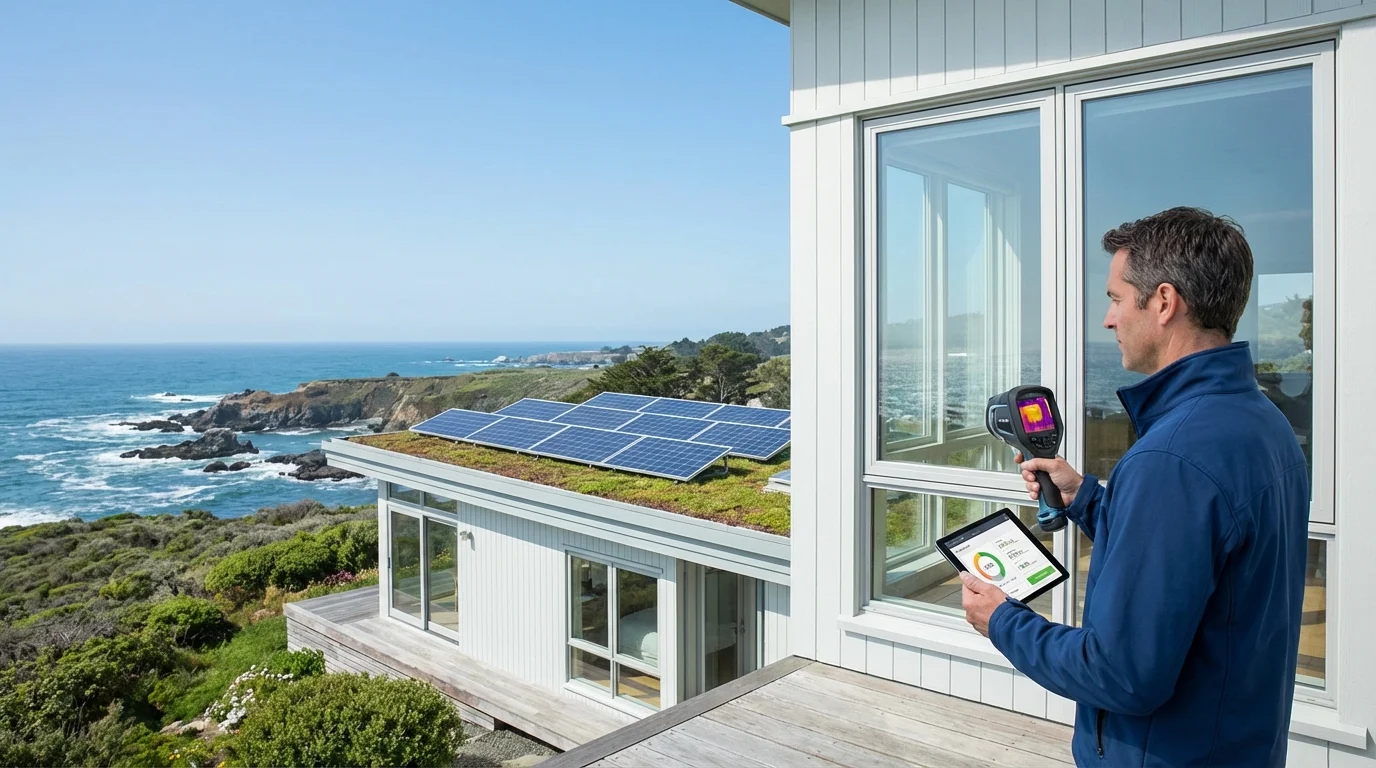
Homes within 50 miles of a coastline use up to 15% more energy for cooling and dehumidification than their inland counterparts due to persistent high humidity and salt air corrosion degrading HVAC systems. This constant environmental stress creates hidden energy drains that silently inflate utility bills month after month. So a standard energy audit isn't enough; a specialized assessment is required to identify and fix these coastal-specific inefficiencies before they escalate.
What Specific State and Utility Rebates are Available for Coastal Home Energy Audits?
Coastal energy audit rebates are state- and utility-specific incentive programs offering homeowners direct financial reimbursements, typically between $100 and $300, for professional home energy assessments in 2026. These programs target inefficiencies caused by humidity, salt spray, and high winds, encouraging resilience and reduced energy consumption.
Many coastal states offer targeted rebates to address their unique climate challenges. For instance, Florida Power & Light's 2026 program provides a $150 rebate for a comprehensive audit that includes duct leakage testing, crucial for humid environments. Similarly, California's PG&E offers up to $200 for audits in specific coastal zones prone to marine layer moisture intrusion. But these programs are geographically specific and tied to your utility provider. So homeowners must verify their eligibility based on their service address. And these funds are often limited and distributed on a first-come, first-served basis each calendar year. It's essential to check the DSIRE database for the most current 2026 incentives. Many of these audits also unlock further rebates for upgrades like new heat pump rebates.
Am I Eligible for Coastal Energy Audit Rebates Based on Income Limits and Stacking Rules?
Eligibility for coastal energy audit rebates is determined by household income, location, and the ability to stack incentives, with many 2026 programs capping income at 80% of the Area Median Income (AMI) for enhanced or free audits. Stacking rules permit combining utility rebates with federal credits.
Most standard utility rebates for energy audits don't have income restrictions, offering a flat rate of $100-$300 to all customers. But enhanced programs, often state-funded, provide free or deeply subsidized audits for low-to-moderate-income households. For example, a household earning below 80% of AMI qualifies for a no-cost audit under certain 2026 state weatherization programs. And homeowners can stack these rebates. A utility rebate of $150 for an audit can be combined with federal energy tax credits covering 30% of the cost of subsequent upgrades, up to $3,200 annually. So verifying both your utility's rules and the latest IRA tax guidelines is a critical first step.
What is the Application Process and What Contractor Requirements are Needed for Coastal Energy Audit Programs?
The application process for 2026 coastal energy audit rebates requires submitting an online or mail-in form to the utility provider post-audit, accompanied by a paid invoice from a certified contractor. Most programs mandate that the auditor holds a Building Performance Institute (BPI) or RESNET certification.
Securing a rebate begins with finding a qualified professional. Utilities maintain a list of pre-approved, certified contractors on their websites, which ensures the audit meets program standards. After the home energy audit is completed, the homeowner pays the contractor directly. And then they submit the rebate application with a copy of the detailed report and the itemized invoice. So the process typically takes 4-8 weeks for the rebate check or bill credit to be issued. But incomplete applications or using a non-certified contractor are the primary reasons for denial. Therefore, confirming contractor credentials before scheduling the audit is the most important step in the entire process.
How Do Different Coastal Energy Audit Programs Compare in Terms of Benefits and Eligible Equipment?
Coastal energy audit programs vary by utility, offering rebates from $100 to over $500, with benefits tied to identifying region-specific issues like moisture control and air sealing. Eligible equipment for subsequent rebates often includes impact-resistant windows, dehumidifiers, and corrosion-resistant HVAC units unavailable in inland programs.
The primary difference lies in the scope and resulting recommendations. A standard audit focuses on insulation and air leaks. But a coastal audit program prioritizes moisture management and structural resilience. For example, Duke Energy's coastal program in the Carolinas provides a specific rebate track for sealed attic systems and dehumidifiers, which are critical for preventing mold. So the value isn't just the initial audit rebate but the access to follow-on incentives. An audit can unlock a 20% bonus rebate on hurricane-rated windows or a $500 incentive for a high-SEER, salt-air-resistant heat pump. Use our free rebate calculator to see what you qualify for.
Coastal Energy Audit Program Comparison (2026)
| Program / Utility | Rebate Amount | Key Eligibility | Typical Deadline |
|---|---|---|---|
| FPL (Florida) | $150 | Must be an FPL residential customer. | December 31, 2026 |
| PG&E (California) | Up to $200 | Customer in designated coastal zone. | Varies by program |
| Mass Save (MA) | No-cost audit | Residential customer of participating utility. | Rolling |
What Are the Deadlines and How Can I Check the Funding Status for Coastal Home Energy Audit Incentives?
Coastal home energy audit incentive deadlines for 2026 are typically set for December 31st, but funding is finite and often exhausted by Q3. Homeowners can check the current funding status directly on their utility provider's website, which usually features a real-time tracker or program status page.
Most utility rebate programs operate on an annual budget cycle that resets on January 1st. And popular programs, like those offering no-cost audits, can run out of funds as early as September. For this reason, acting early in the year is crucial. The program's webpage is the official source for this information.
So if the website indicates "Funding is currently limited" or "Program is fully subscribed," no new applications will be accepted until the next year. But some states have waiting lists. So it is always best to check the portal or call the utility's energy efficiency hotline for the most accurate, up-to-the-minute status before scheduling an audit.
Official Sources
- DSIRE — A comprehensive database of state, local, utility, and federal incentives and policies that promote renewable energy and energy efficiency.
- ENERGY.GOV Rebates — Federal resource for understanding the Inflation Reduction Act's home energy rebate programs and tax credits. (note: the federal 25C and 25D credits ended for projects completed after December 31, 2025)
Related Reading: Learn more about Energy Audit New Construction and Energy Audit Priority Recommendations.
Frequently Asked Questions
Is my coastal home eligible for a free or subsidized energy audit?
Eligibility for a free or subsidized audit typically depends on your household income and utility provider. Many 2026 state-run programs offer no-cost audits to homeowners earning at or below 80% of the Area Median Income (AMI). So check your local utility's "Energy Efficiency" or "Weatherization Assistance" program page for specific income thresholds.
What is the typical cost of an energy audit for a property in a coastal region?
A comprehensive energy audit for a coastal home typically costs between $300 and $700 in 2026. The price varies based on the size of the home and the inclusion of specialized tests like blower door tests for air leakage and thermographic scans for moisture intrusion, which are critical in humid, windy environments.
What specific steps are involved in an energy audit for a coastal home?
A coastal home energy audit includes a standard visual inspection, a blower door test to measure air tightness, and an infrared camera scan to detect insulation gaps. But it also adds a specific focus on moisture intrusion points, HVAC system corrosion from salt air, and the integrity of windows and doors against wind-driven rain.
Are there specific deadlines to apply for energy audit rebates for coastal properties?
Yes, most utility-funded rebate programs for 2026 have a firm application deadline of December 31, 2026, or whenever program funds are exhausted. Because funding is limited and popular programs can close by late summer, it's best to apply early in the calendar year to ensure you receive the rebate.
How does an energy audit help mitigate unique challenges for coastal homes?
An energy audit identifies how salt, humidity, and high winds impact energy use. It pinpoints air leaks that let in humid air, forcing your HVAC to work 20% harder. It also assesses corrosion on AC units and identifies weak points in the building envelope vulnerable to wind-driven rain, preventing costly moisture damage.
Find Every Coastal Rebate You Qualify For
Don't leave money on the table. Our tool instantly scans every federal, state, and utility rebate available for your coastal home.
Calculate Your Savings NowUpdated: April 14, 2026 — fact-checked by DuloCore Research. About our editorial process.