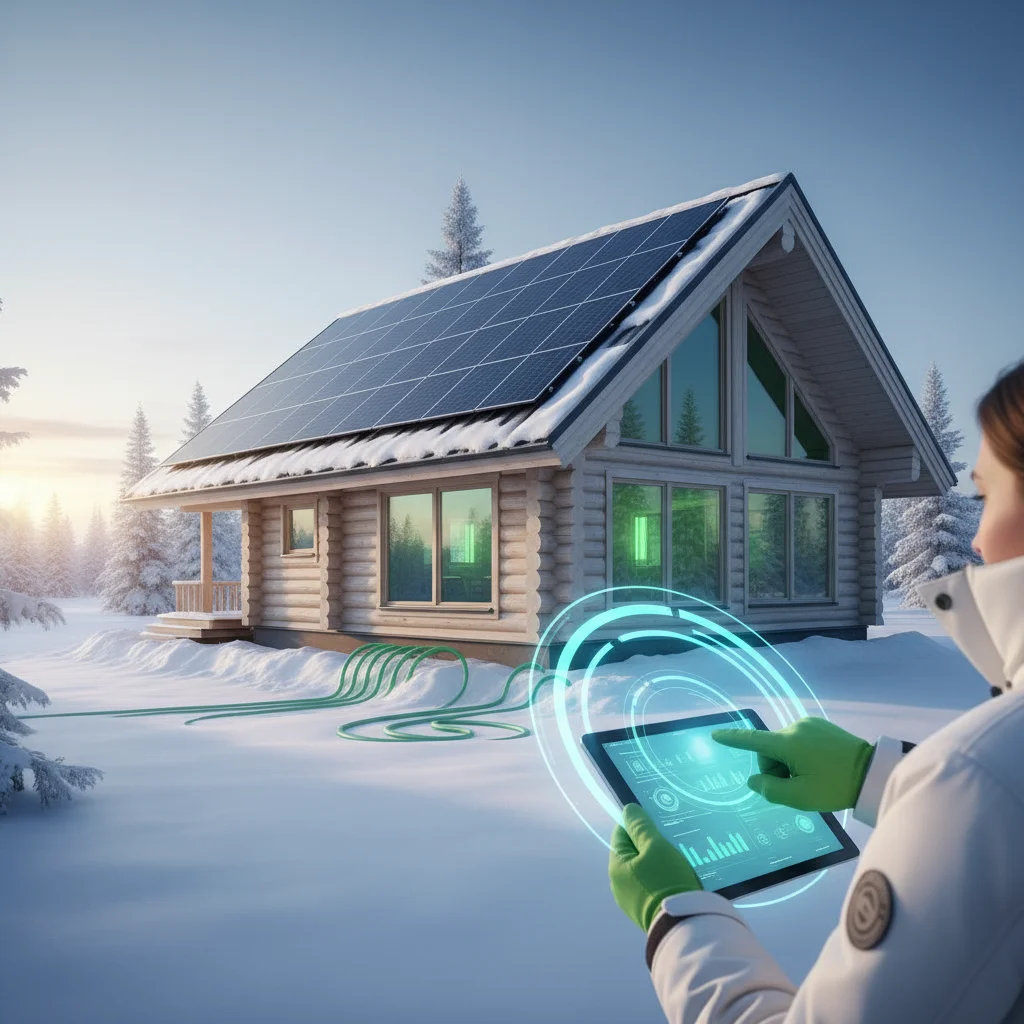
Log cabins lose 25-40% more heat than conventional homes due to settling gaps and exposed wood construction. And that thermal leakage translates to $800-$1,200 in wasted energy costs annually for a typical 1,500-square-foot log home in Northern California.
How Much Can You Save With Energy Audit Rebates for Log Cabins?
Log cabin owners in California qualify for $400-$600 in energy audit rebates through the IRA Home Efficiency Rebates program in 2026, covering 50-100% of professional audit costs based on household income. Homes receiving audit recommendations save an average of $350 annually on heating and cooling expenses after implementing weatherization upgrades.
The California Energy Commission allocates $50 million in 2026 funding for residential energy audits, with priority given to homes built before 1990—the construction era when most log cabins were erected. So homeowners earning below 150% of area median income receive 100% audit cost coverage up to $600. And households between 150-225% AMI qualify for 50% coverage up to $400.
But the savings extend beyond the free audit itself. Log cabin assessments identify an average of $8,000-$12,000 in eligible efficiency upgrades that unlock additional IRA rebates worth $4,000-$8,000 per household. Typical audit recommendations include air sealing between logs ($1,500-$3,000), attic insulation upgrades ($2,000-$4,000), and ductless heat pump installations ($6,000-$10,000).
Calculate your potential savings with our rebate calculator based on your cabin's specifications and location.
What Equipment Qualifies for Log Cabin Energy Audit Rebates?
Professional energy audits qualifying for 2026 IRA rebates must include blower door testing, thermal imaging, combustion safety testing, and detailed efficiency recommendations performed by a BPI-certified or HERS-certified assessor. Qualifying audits cost $300-$600 in California and identify air leakage rates, insulation gaps, and HVAC efficiency deficiencies specific to log construction.
Blower door tests measure air changes per hour (ACH), with log cabins typically scoring 8-15 ACH50 compared to 3-5 ACH50 for conventional homes. And thermal imaging reveals heat loss patterns through settling gaps between logs, corner joints, and window penetrations. So auditors prioritize air sealing recommendations that deliver 15-25% energy savings for log homes.
The audit report must document baseline energy usage and project post-upgrade savings to qualify for downstream heat pump rebates and weatherization incentives worth $4,000-$14,000. California utilities including PG&E, SCE, and SDG&E accept BPI Building Analyst or HERS Rater certifications for audit qualification.
But DIY energy assessments and utility-provided walk-through audits don't meet the comprehensive testing requirements for IRA rebate eligibility. Only third-party certified auditors using calibrated diagnostic equipment qualify for the $400-$600 audit rebate coverage.
Are You Eligible? Understanding Income Limits and Requirements
California households earning below 225% of area median income qualify for 50-100% energy audit rebate coverage in 2026, with full $600 reimbursement for incomes under 150% AMI and partial $400 coverage for higher earners. Area median income thresholds vary by county—$88,100 for a family of four in Fresno County versus $142,800 in San Francisco County.
| Income Level | AMI Percentage | Audit Coverage | Maximum Rebate |
|---|---|---|---|
| Low Income | 0-150% AMI | 100% | $600 |
| Moderate Income | 150-225% AMI | 50% | $400 |
| Above Threshold | 225%+ AMI | Not Eligible | $0 |
And homeowners must own and occupy the log cabin as their primary residence. So rental properties, vacation cabins, and investment properties don't qualify for residential audit rebates. But second homes used as primary residences for 6+ months annually meet the occupancy requirement.
Multifamily log cabin structures with 1-4 units qualify if the owner occupies one unit. Manufactured log homes and modular log cabins qualify equally with site-built construction. Or log cabin additions to conventional homes qualify for whole-house audits covering both structural types.
The property must have been constructed before the audit date—new construction projects don't qualify until occupancy. Income verification requires tax returns from the most recent filing year.
What's the Step-by-Step Application Process for Energy Audit Rebates?
California homeowners apply for energy audit rebates through their utility company's IRA Home Efficiency Rebates portal within 180 days of audit completion, submitting the certified audit report, proof of payment, and income verification documents for review and reimbursement within 30-60 days. PG&E, SCE, and SDG&E each operate separate application portals with standardized documentation requirements.
The process begins with scheduling a certified energy auditor through the utility's approved contractor network. And auditors complete testing within 3-5 hours, delivering a detailed report within 7-10 business days. So homeowners receive itemized upgrade recommendations with projected savings and rebate eligibility for each measure.
After paying the auditor directly ($300-$600), homeowners submit the rebate application including the audit invoice, completed report, and W-2 or tax return for income verification. But the utility reviews applications in the order received, processing payments via check or direct deposit.
The audit report remains valid for 12 months for follow-up rebate applications. Learn more about related incentives in our guide to energy tax credits.
When Are the Deadlines and How Do I Check Funding Status?
California's IRA Home Efficiency Rebates program operates through December 31, 2026, with quarterly funding allocations distributed on a first-come, first-served basis until the $50 million state allocation is exhausted. Each utility publishes real-time funding availability on their rebate portal, with waitlist notifications when quarterly allocations reach 90% capacity.
PG&E allocated $28 million for 2026 energy audit rebates, serving approximately 50,000 households at an average rebate of $560 per audit. And SCE budgeted $15 million for 26,000 audits, while SDG&E reserved $7 million for 12,000 households. So early application maximizes rebate certainty before funding depletion.
"The Home Efficiency Rebates program prioritizes low-income households with expedited processing within 21 days for applicants below 150% AMI." — U.S. Department of Energy
Applications submitted after funding exhaustion enter a waitlist for the following quarter's allocation. But waitlist applicants receive priority processing once new funding becomes available. Or homeowners can apply through an alternate utility if they receive service from multiple providers.
Can You Stack Energy Audit Rebates With Other Incentives?
Log cabin energy audits qualify for concurrent federal IRA rebates, California state incentives, and utility efficiency programs in 2026, with combined coverage reaching 100% of audit costs plus $4,000-$14,000 in follow-up weatherization and equipment upgrade rebates based on audit recommendations. Stacking rules prohibit receiving duplicate rebates for the same audit from multiple sources.
The $400-$600 audit rebate stacks with downstream Home Efficiency Rebates worth up to $8,000 for air sealing, insulation, and HVAC upgrades identified in the assessment. And the separate Home Electrification and Appliance Rebates program provides $4,000-$6,000 for heat pump installations recommended during log cabin audits.
California's Self-Generation Incentive Program adds $1,000-$3,000 for battery storage systems paired with solar installations identified in audit reports. So total rebate potential reaches $14,000-$18,000 for comprehensive log cabin efficiency upgrades starting with a qualifying energy audit.
But homeowners can't receive both the IRA audit rebate and a separate utility audit incentive for the same assessment. The audit must serve as the qualifying documentation for all downstream rebate applications within the 12-month validity period.
Do You Need a Certified Contractor for Log Cabin Energy Audits?
California requires BPI Building Analyst certification or HERS Rater credentials for energy auditors performing IRA-rebate-eligible assessments in 2026, ensuring proper blower door testing, combustion safety analysis, and equipment diagnostics specific to log construction thermal dynamics. Utility contractor networks list 850+ certified auditors statewide, with availability within 2-4 weeks in most regions.
BPI certification requires 40 hours of training, field examination, and annual continuing education on building science principles. And HERS Rater certification includes specialized training on thermal bypass inspection and air leakage diagnostics critical for log cabin assessments. So certified auditors understand the unique settling patterns and moisture management requirements of log construction.
Uncertified contractors, home inspectors, and HVAC technicians don't qualify for the $400-$600 audit rebate regardless of experience level. But homeowners can verify auditor credentials through the BPI Professional Directory or RESNET HERS Rater registry before scheduling services.
The certified auditor must complete the assessment, generate the report, and submit contractor-side documentation to the utility for homeowner rebate processing. Or homeowners working with uncertified assessors forfeit rebate eligibility entirely.
Explore comprehensive weatherization guidance in our home energy audit resource library.
Official Sources
- U.S. Department of Energy - Save Energy, Save Money — Federal guidance on IRA rebate programs and energy efficiency incentives
- DSIRE USA - California Incentives — Comprehensive database of state energy rebates and tax credits (note: the federal 25C and 25D credits ended for projects completed after December 31, 2025)
- California Energy Commission — State-specific program details and funding allocation updates
Related Reading: Learn more about Basement Insulation Energy Audit and Boiler Energy Audit Inspection.
Related Reading: Learn more about Average Energy Savings After Audit and Basement Insulation Energy Audit.
Frequently Asked Questions
What is an energy audit for a log cabin?
An energy audit for a log cabin is a comprehensive assessment using blower door testing, thermal imaging, and combustion safety analysis to measure air leakage, insulation deficiencies, and HVAC efficiency specific to log construction. Certified auditors identify 8-15 air changes per hour in typical log homes compared to 3-5 ACH in conventional construction, revealing $800-$1,200 in annual energy waste. The audit produces a detailed report with prioritized upgrade recommendations and projected savings for each measure.
How much does an energy audit cost for a log cabin?
Energy audits for log cabins cost $300-$600 in California in 2026, with prices varying based on home size, accessibility, and testing complexity. The IRA Home Efficiency Rebates program covers 50-100% of audit costs for households earning below 225% of area median income, providing $400-$600 in reimbursement within 30-60 days of application submission. So qualifying homeowners pay $0-$300 out-of-pocket after rebate processing.
Are log cabins eligible for energy audit rebates?
Log cabins qualify for the same $400-$600 IRA energy audit rebates as conventional homes in California if they serve as the owner's primary residence and meet household income thresholds below 225% of area median income. Manufactured log homes, modular log construction, and site-built log cabins all qualify equally. And log cabin additions to conventional homes qualify for whole-house audits covering both structural types, with rebate amounts based on total square footage and testing complexity.
How long does an energy audit take for a log cabin?
Professional energy audits for log cabins require 3-5 hours for blower door testing, thermal imaging, combustion safety analysis, and visual inspection of all conditioned spaces. And auditors deliver the completed report within 7-10 business days, documenting baseline energy usage, air leakage rates, and prioritized upgrade recommendations. So the entire process from scheduling to report delivery spans 2-3 weeks in most California regions based on auditor availability.
What's the difference between an energy audit and a home energy assessment?
Energy audits include calibrated blower door testing measuring air changes per hour and thermal imaging documenting heat loss patterns, while basic home energy assessments rely on visual inspection and utility bill review without diagnostic equipment. And only comprehensive audits performed by BPI-certified or HERS-certified professionals qualify for the $400-$600 IRA rebate in California. So utility-provided walk-through assessments and DIY evaluations don't meet the testing requirements for rebate eligibility or downstream weatherization incentive qualification.
Ready to unlock $400-$600 in energy audit rebates for your log cabin? Use our free rebate calculator to estimate your total savings potential from audits, weatherization upgrades, and equipment rebates based on your income and location. Get your personalized rebate estimate in 60 seconds.
Last updated April 14, 2026 — reviewed by DuloCore Editorial. About our authors.