Update (2026): The federal Energy Efficient Home Improvement Credit (Section 25C) expired December 31, 2025, following the passage of the OBBBA. Check state and local programs for current incentives.
Up to 30% of a home's heating and cooling energy is lost through air leaks around windows, doors, and ducts. Many homeowners delay fixing these issues, believing the required energy audit is an expensive, complicated process with little return. But this delay costs them an average of $200-$400 in wasted energy expenses each year. So addressing these inefficiencies through a professional assessment isn't just about comfort; it's a direct financial strategy.
Are Energy Audits Too Expensive, and What Rebates Are Available from My State or Utility?
Energy audit costs are frequently offset by state and utility rebates, with many 2026 programs covering 50-100% of the expense, up to a $500 cap. These incentives make professional assessments accessible, transforming a perceived cost into a direct investment with a fast payback from energy savings.
The belief that energy audits are an out-of-pocket expense is a primary myth preventing homeowners from accessing thousands in savings. In 2026, dozens of state energy offices and local utilities offer direct rebates that reduce the initial cost to less than $100, and sometimes to $0. For instance, some programs provide a no-cost audit if the homeowner proceeds with recommended upgrades like insulation or air sealing. And these initial rebates are just the beginning. The audit itself is the required first step to unlock much larger incentives for equipment upgrades, such as heat pump rebates that offer up to $8,000. So the audit doesn't represent a cost; it represents the gateway to accessing a cascade of home improvement funding that lowers both upfront project costs and long-term utility bills.
Do I Need a Certified Contractor, and What Equipment Qualifies for Audit Incentives?
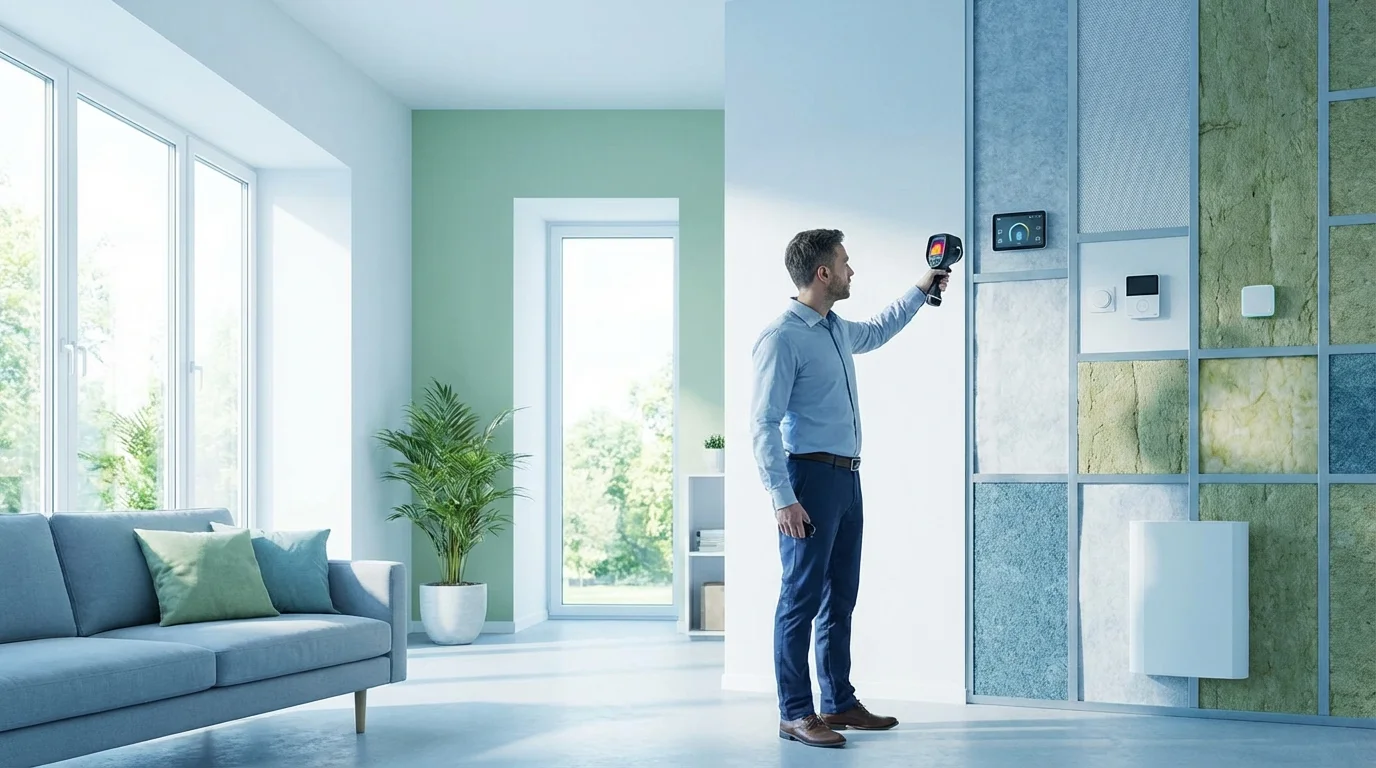
Certified energy auditors, credentialed by organizations like the Building Performance Institute (BPI), are required for a homeowner to qualify for most 2026 state and federal energy rebates. These professionals use specialized equipment, such as blower doors and infrared cameras, to pinpoint inefficiencies qualifying for upgrade incentives.
Using a certified contractor is non-negotiable for rebate eligibility. Programs mandate these credentials to ensure a standardized, high-quality assessment. So this audit unlocks incentives for a specific list of improvements. Eligible equipment typically includes attic and wall insulation, air sealing of gaps and cracks, duct sealing and insulation, high-efficiency windows, and upgrades to HVAC systems. The Department of Energy confirms that these measures provide the fastest return on investment.
"Sealing and insulating the "shell" of your home—its outer walls, ceiling, windows, doors, and floors—is often the most cost effective way to improve energy efficiency and comfort." — U.S. Department of Energy
Completing these upgrades after an audit makes a homeowner eligible for further energy tax credits under the 2026 IRA framework.
Are There Income Limits for Energy Audit Assistance, and How Does the Application Process Work?
Income-qualified assistance programs often cover 100% of an energy audit's cost for households earning below 80% of the Area Median Income (AMI). The application process for these 2026 programs typically involves income verification, scheduling an audit with an agency-approved contractor, and reviewing the subsequent report.
Many homeowners incorrectly assume they won't qualify for assistance. But programs like the federal Weatherization Assistance Program (WAP) and various state-level initiatives are designed to help low-to-moderate-income families. The application process is straightforward. First, a homeowner contacts their local WAP agency or utility provider to verify eligibility based on household size and income. Next, they submit documentation like a utility bill and income statement. Once approved, the agency schedules a no-cost home energy audit with a certified professional. So this audit identifies critical health and safety issues alongside energy-saving opportunities, with the program often covering the full cost of the recommended improvements. Use our free rebate calculator to find qualifying programs in your area.
When Do Energy Audit Programs End, and Can I Stack Different Funding Sources?
State and utility energy audit rebates typically operate on an annual cycle, with 2026 funding allocated until December 31 or until funds are exhausted. Homeowners can stack these local rebates with long-term federal IRA tax credits, which extend through December 31, 2025, to maximize their total financial return.
A common misconception is that programs are permanent. But state and utility budgets are approved annually, meaning 2026 rebate programs expire at the end of the year. This creates urgency for homeowners to act. The good news is that funding sources are designed to be combined. For example, a homeowner can receive a $300 rebate from their utility for an energy audit and then use that audit to qualify for a state rebate covering 50% of an insulation project's cost, up to $2,000. The federal Energy Efficient Home Improvement Credit (Section 25C) ended for property placed in service after December 31, 2025 (IRS FS-2025-05). Federal tax credits for this work have ended, but state, local and utility rebates may still apply; check what is available at your address with the DuloCore rebate calculator. This stacking strategy dramatically reduces the out-of-pocket expense for comprehensive energy upgrades, making them affordable for more households.
2026 Energy Audit & Upgrade Incentive Comparison
| Program Type | Typical Rebate/Credit Amount | Key Eligibility Requirement | 2026 Deadline |
|---|---|---|---|
| Utility Rebate | $50 - $500 for audit; $200 - $2,500 for upgrades | Must be a customer in the service area | December 31, 2026 |
| State Program | Varies; up to 100% cost coverage for LMI households | State residency; some have income limits | Varies; often Q4 2026 |
| Federal IRA Credit | Ended Dec 31, 2025 | — | December 31, 2025 |
Official Sources
- DSIRE (Database of State Incentives for Renewables & Efficiency) — The most comprehensive source for up-to-date information on state and utility energy rebates.
- ENERGY STAR — A federal resource from the EPA providing a rebate finder tool and guidance on energy-efficient products.
"DSIRE is the most comprehensive source of information on incentives and policies that support renewables and energy efficiency in the United States." — NC Clean Energy Technology Center
Frequently Asked Questions
Does an energy audit actually save money in the long run, or is it an unnecessary expense?
Yes, a professional energy audit directly leads to savings. Homeowners who implement recommended upgrades after an audit, such as air sealing and adding insulation, typically save 15-25% on their heating and cooling bills. For an average household, this translates to $200-$500 in annual savings, allowing the initial audit cost to be recouped in under two years.
Do newer homes benefit from an energy audit, or are they only for older properties?
Even new homes benefit from an energy audit. While modern building codes are stricter, construction defects like improper insulation installation, leaky ductwork, or unsealed window frames are common. An audit using tools like a blower door test can identify these hidden issues, which are often covered by a builder's warranty if caught within the first 1-2 years.
Does an energy audit obligate me to perform costly home improvements?
No, an energy audit carries no obligation. The final report is a roadmap, not a contract. It provides a prioritized list of potential upgrades, from low-cost DIY fixes like weatherstripping to larger projects like insulation. Homeowners choose which, if any, improvements to make based on their budget and the projected return on investment for each item.
Is a professional energy audit more effective than a DIY home energy assessment?
A professional audit is far more effective. While a DIY assessment is a good start, it can't replicate the diagnostic precision of professional equipment. Certified auditors use blower doors to measure airtightness and infrared cameras to visualize heat loss, identifying issues invisible to the naked eye. These detailed findings are also required to qualify for most 2026 rebates and tax credits.
Unlock Your Home's Savings Potential
Stop guessing where your energy dollars are going. An energy audit is the first step to unlocking thousands in rebates and lowering your utility bills.
Last updated: April 14, 2026. Reviewed by the DuloCore Editorial Team. About our authors.