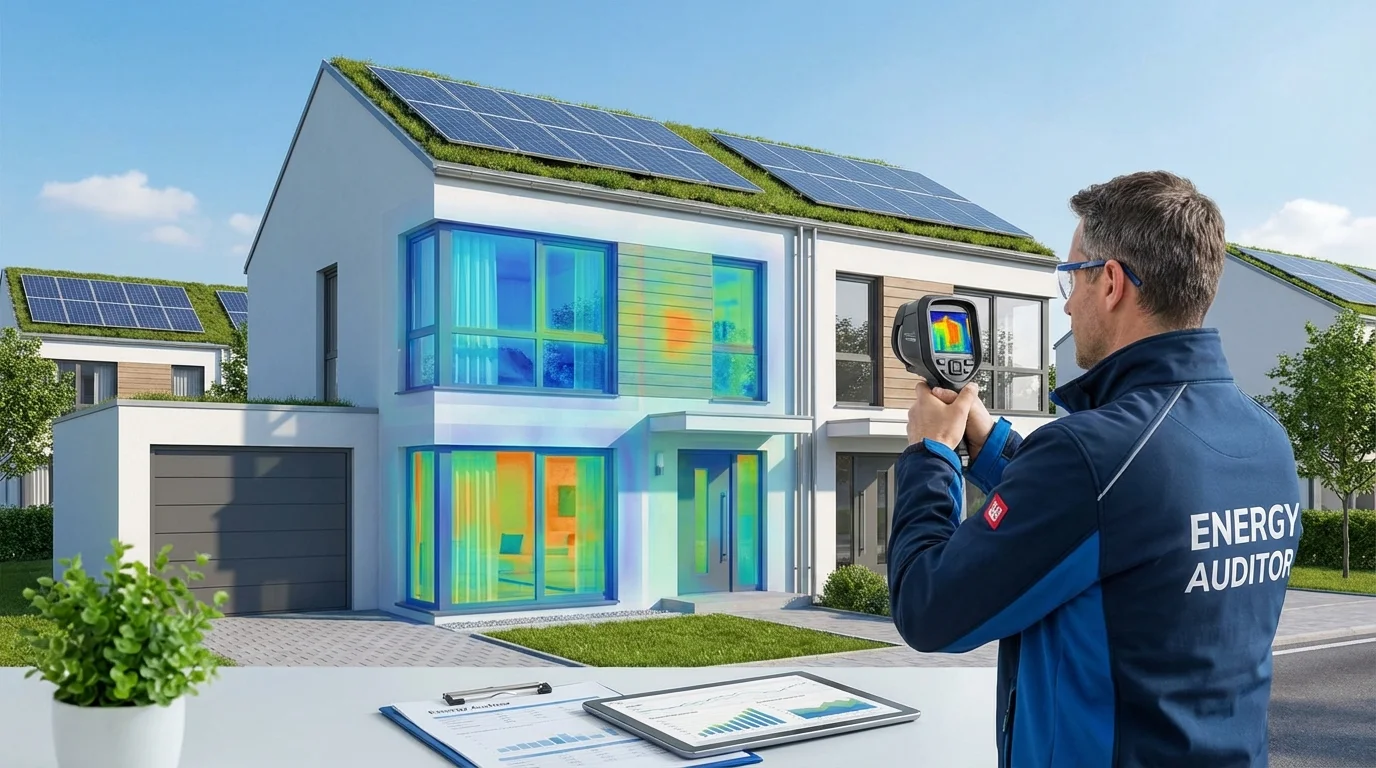
Up to 25% of the heat in a typical townhouse escapes through poorly sealed windows, attics, and even shared party walls. This invisible drain on your finances is happening right now, silently increasing your utility bills every month. But identifying these leaks doesn't require guesswork; it requires a targeted assessment that unlocks thousands in government and utility-sponsored financial incentives designed to stop the waste.
What Rebate Amounts and Financial Incentives Are Available for a Townhouse Energy Audit?
Townhouse energy audit rebates are financial incentives from state and utility programs offering homeowners between $150 and $500 to offset professional assessment costs in 2026. And these funds directly reduce the upfront expense of identifying key energy-saving upgrades like insulation, air sealing, or new HVAC systems.
Financial incentives for a townhouse energy audit vary widely by location but typically cover 50-100% of the assessment cost, up to a cap of around $500. For instance, a state program in Massachusetts offers a no-cost audit, while a utility in California provides a $200 rebate. So homeowners can receive direct financial assistance that makes the initial step toward energy efficiency more accessible. The Inflation Reduction Act (IRA) also provides federal energy tax credits for the upgrades recommended by the audit, covering up to 30% of the cost for improvements like new windows or insulation, capped at $3,200 annually. But the audit itself is the key that unlocks eligibility for these larger upgrade rebates. And the process begins by checking your local utility’s 2026 program offerings for specific rebate amounts and application details.
Am I Eligible for State and Utility Energy Audit Programs, and Are There Income Limits?
Eligibility for state and utility energy audit programs in 2026 depends on homeownership, location within a service area, and, in some cases, household income. And these programs often have specific tiers, with enhanced rebates or no-cost audits available for households earning below 80% of the area median income (AMI).
Eligibility for townhouse energy audit programs is primarily determined by your utility provider and state of residence. Homeowners, and sometimes renters with owner permission, qualify if the property is within the program's designated service territory. So verifying your address with your electric or gas company is the first step. And many programs have income-based tiers. For example, households below 80% of the Area Median Income (AMI) often qualify for free audits and increased rebates for subsequent upgrades. But households above this threshold are still eligible for standard rebates, which cover a portion of the audit cost, typically $150-$300. You can confirm specific income limits and eligibility requirements by using DuloCore's free rebate calculator or visiting your utility’s website directly.
How Do I Apply for Townhouse Energy Audit Rebates, What Are the Deadlines, and Is Funding Still Available?
The application process for townhouse energy audit rebates involves finding a certified auditor, scheduling the assessment, and submitting a rebate form with the paid invoice to your utility or state agency before the 2026 program deadline. And funding is typically allocated annually and disbursed on a first-come, first-served basis.
Applying for a townhouse energy audit rebate is a straightforward, multi-step process. First, you must identify your local utility or state energy office’s 2026 program and confirm funding availability, as these programs often operate on an annual budget. Next, you must select a certified energy auditor from their approved list. After the audit is complete, you submit a rebate application form, a copy of the detailed audit report, and a paid invoice. Deadlines are strict, often falling at the end of the calendar year, such as December 31, 2026, or when funds are exhausted. So applying promptly after the audit is completed ensures you don't miss out. Many utilities now offer online portals for faster submission and processing.
"Many state and local governments offer incentives for home energy audits and energy-saving upgrades. Check with your state energy office or your utility for information about programs in your area." — U.S. Department of Energy
Can I Combine (Stack) Multiple Rebates for My Townhouse's Energy Audit and Upgrades?
Rebate stacking for townhouse energy audits and subsequent upgrades is permitted by many programs in 2026, allowing homeowners to combine a utility rebate with a state incentive or federal tax credit. But rules prevent combining two utility rebates for the same audit or exceeding 100% of the project cost.
Stacking multiple incentives is a key strategy for maximizing savings. For example, a homeowner can use a $200 utility rebate to cover the cost of the initial energy audit. And based on that audit's recommendations, the homeowner can then install a new heat pump and claim both a $2,000 state heat pump rebate and a federal IRA tax credit for 30% of the remaining project cost. The primary rule is that you can't "double-dip" from the same funding source for the same measure. So, you can’t claim a rebate from both your gas and electric utility for the same audit. But combining a utility rebate (for the audit) with a state rebate (for insulation) and a federal tax credit (for windows) is a common and effective approach to reducing total out-of-pocket costs by over 50%.
| Program / Incentive | Typical Amount (2026) | Key Eligibility Requirement | Application Deadline |
|---|---|---|---|
| State Energy Office Rebate | $150 - $300 for audit | Must be a state resident | Often Dec. 31 or when funds run out |
| Local Utility Rebate | 50-100% of audit cost (up to $500) | Must be a customer in service area | Varies by utility (check website) |
| IRA Federal Tax Credit (Upgrades) | Ended Dec 31, 2025 | — | Ended Dec 31, 2025 |
What Are the Contractor Requirements for Rebate-Eligible Energy Audits and Equipment Installation?
Rebate-eligible energy audits and upgrades for townhouses require contractors with specific certifications, such as from the Building Performance Institute (BPI) or RESNET. And utilities and state programs maintain lists of approved, licensed, and insured contractors who must be used to qualify for financial incentives in 2026.
You can't just hire any contractor to perform a rebate-eligible energy audit. State and utility programs require the assessment to be conducted by a certified professional. The most common certifications are from the Building Performance Institute (BPI) as a Building Analyst or from the Residential Energy Services Network (RESNET) as a HERS Rater. These certifications ensure the auditor follows standardized procedures for testing, such as blower door tests and infrared thermography. So your first step is to obtain the official list of approved contractors from your utility's website. Using an uncertified contractor will automatically disqualify you from receiving a rebate. The same stringent requirements apply to the installation of recommended upgrades like HVAC systems or insulation; the work must be done by a licensed and insured professional. A detailed breakdown can be found in our guide to a home energy audit.
"DSIRE is the most comprehensive source of information on incentives and policies that support renewables and energy efficiency in the United States." — DSIRE
Official Sources
- ENERGY STAR Rebate Finder — A federal tool from the EPA to find local rebates and special offers for ENERGY STAR certified products.
- Database of State Incentives for Renewables & Efficiency (DSIRE) — A comprehensive database of state, local, utility, and federal incentives that promote energy efficiency.
- IRS Home Energy Tax Credits — Official guidance from the IRS on federal tax credits available for energy-efficient home improvements. (note: the federal 25C and 25D credits ended for projects completed after December 31, 2025)
Related Reading: Learn more about Ashrae Energy Audit Levels Explained and Can I Do My Own Energy Audit.
Related Reading: Learn more about Energy Audit Log Cabin.
Related Reading: Learn more about Indoor Air Quality Energy Audit and Vapor Barrier Energy Audit.
Frequently Asked Questions
What are the eligibility requirements for an energy audit on a townhouse?
Eligibility for a townhouse energy audit rebate primarily depends on two factors: location and homeownership. You must reside within the service territory of the sponsoring utility or state program. And programs are typically available only to homeowners, though some allow renters to participate with the owner's written consent. Income-qualified programs exist, offering enhanced or free audits for households earning below 80% of the Area Median Income.
How much does a professional energy audit cost for a townhouse, and what rebates are available?
A professional energy audit for a townhouse typically costs between $300 and $600 in 2026. However, available rebates from state and utility programs can cover 50-100% of this cost. For example, many utilities offer a direct rebate of $150-$300, while some state programs provide the audit at no cost to the homeowner. The final out-of-pocket expense for a townhouse owner is often less than $150.
What is the typical process for a home energy audit in a townhouse?
Last updated: April 14, 2026. Reviewed by the DuloCore Editorial Team. About our authors.