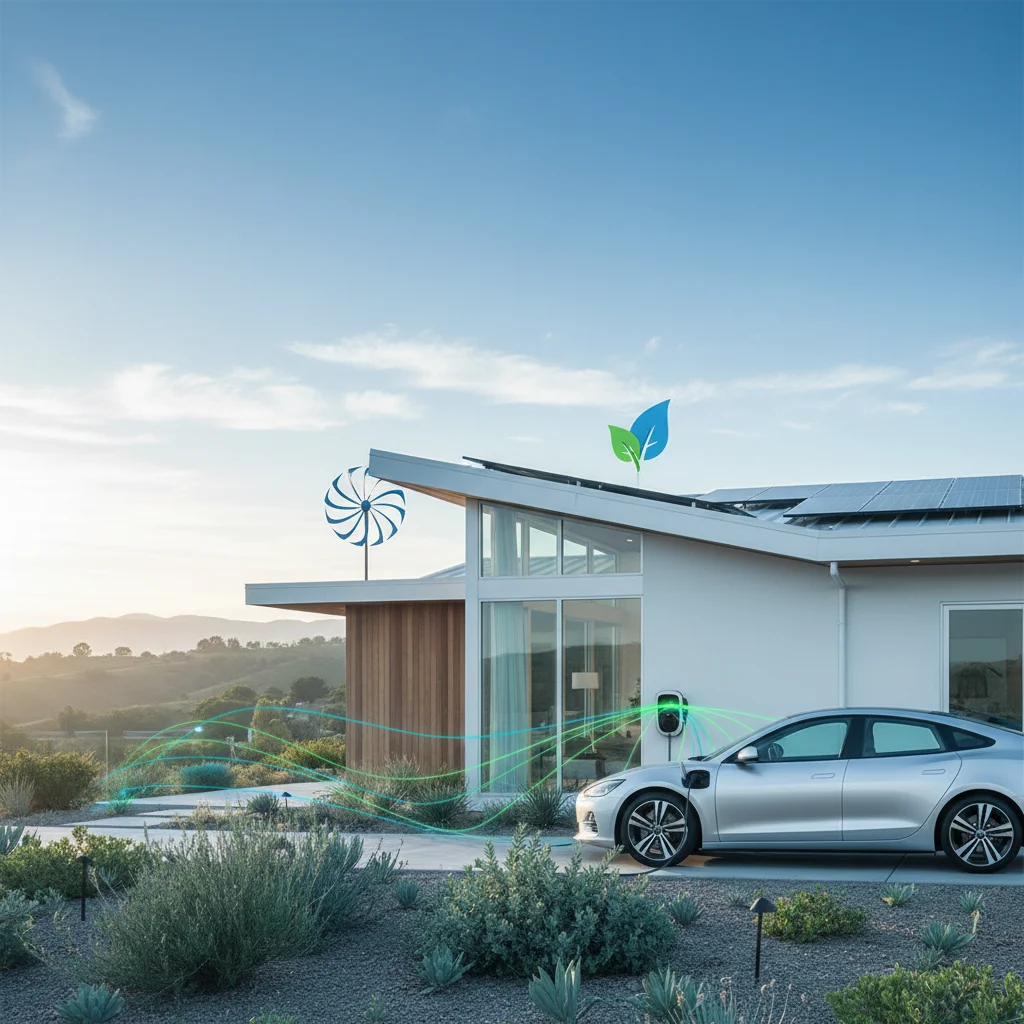
EV Charger Rebates California
Ev Charger Rebates California: everything you need to know about eligibility, amounts, and the application process.
California's Clean Vehicle Rebate Project paid out $1.3 billion to EV buyers between 2010 and 2025, yet thousands of homeowners miss out on separate rebates worth up to $14,000 for installing Level 2 chargers. And that's before stacking utility incentives, federal tax credits, and local programs that can cut installation costs by 70% or more.
What EV Charger Rebates Are Available in California for 2026?
California homeowners installing Level 2 EV chargers in 2026 qualify for stacked rebates from the federal Alternative Fuel Vehicle Refueling Property Credit (30% of costs up to $1,000), California's CALeVIP program (up to $2,000 for income-qualified households), and utility programs like PG&E's $800 rebate or SCE's $1,000 incentive. And the Inflation Reduction Act extended federal credits through 2032, making 2026 an optimal year for installation.
The federal credit covers 30% of hardware and installation costs, capped at $1,000 for residential properties. But California's patchwork of state and utility programs adds significant value. CALeVIP (California Electric Vehicle Infrastructure Project) targets multi-unit dwellings and income-qualified homeowners with rebates ranging from $1,500 to $8,000 depending on location and charger specifications. So homeowners in disadvantaged communities designated by CalEnviroScreen 4.0 often qualify for higher rebate tiers.
Utility companies operate their own programs separate from state initiatives. PG&E's EV Charge Network offers $800 for single-family homes and up to $14,000 for multi-family properties. SCE provides $1,000 for residential chargers plus $250 for smart charging equipment. SMUD (Sacramento Municipal Utility District) pays $500 for standard Level 2 chargers and $1,500 for dual-port installations. And these utility rebates don't reduce the federal tax credit—homeowners claim both independently.
Local air quality management districts sweeten the deal further. The Bay Area AQMD pays $1,500 for electric panel upgrades required for charger installation, while the South Coast AQMD offers $1,000 for Level 2 equipment. So total rebate packages in high-incentive zones can exceed $6,000 before accounting for the federal credit.
Learn more about related incentives through our guide on energy tax credits for comprehensive savings strategies.
Which Documentation Do You Need to Qualify for EV Charger Rebates?
Homeowners claiming California EV charger rebates in 2026 must submit proof of purchase receipts, paid installation invoices, electrical permits from local jurisdictions, and manufacturer specification sheets confirming UL-listed or ENERGY STAR certification. And the federal tax credit requires IRS Form 8911 (Alternative Fuel Vehicle Refueling Property Credit) filed with annual tax returns, while utility programs demand account verification and photos of installed equipment.
The receipt trail starts with hardware purchases. Invoices must show itemized costs for the charging unit, mounting hardware, and any required electrical components. And generic receipts from home improvement stores won't suffice—documentation needs to specify the charger model number and manufacturer. So homeowners buying used equipment or discounted units from unverified sellers risk disqualification.
Installation invoices require contractor details including California Contractor's State License Board (CSLB) license numbers. Or homeowners performing DIY installations forfeit most utility rebates that mandate professional installation by C-10 licensed electricians. And the invoice must separate labor costs from materials because some programs cap reimbursements at 50% of total project costs.
Electrical permits prove code compliance. California's Title 24 building standards require 240-volt circuits for Level 2 chargers, and inspectors verify proper grounding, breaker sizing, and conduit installation. But permit wait times vary—Los Angeles County averages 14 business days while rural counties process applications within 3-5 days.
Tax documentation adds another layer. The IRS Form 8911 requires the installation address, charger specifications, and total qualified costs. And homeowners claiming the federal credit must retain all receipts for seven years per IRS audit protocols. So digital backups of permits, photos, and invoices stored in cloud services protect against lost paperwork.
For context on other home efficiency rebates, explore our coverage of heat pump rebates.
Do You Need Pre-Approval Before Installing Your EV Charger?
California utility rebates require pre-approval applications submitted before purchasing equipment or scheduling installation, with approval timelines ranging from 7 to 45 business days depending on program demand and seasonal backlogs. But the federal tax credit and most local air quality district rebates operate as post-installation claims with no pre-approval requirements.
PG&E's EV Charge Network mandates pre-enrollment through an online portal where homeowners submit property details, electrical panel capacity, and planned installation dates. And the utility reserves rebate funds within 14 days of application approval, locking in the incentive amount even if program caps change mid-year. So early application protects against funding exhaustion that occurs in high-demand quarters.
SCE's Charge Ready program requires site assessments before approval. Utility representatives inspect electrical panels to confirm 200-amp service capacity and available breaker slots. Or homes with 100-amp panels need costly upgrades that can add $2,500-$4,000 to project costs. And the assessment takes 21-28 days on average, pushing total pre-approval timelines to six weeks.
CALeVIP operates differently across regions. The Bay Area program accepts rolling applications with 30-day approval windows, while the Central Valley program uses quarterly funding rounds that close when allocated budgets reach capacity. So homeowners in competitive zones submit applications the first week of each quarter to maximize approval odds.
The federal credit simplifies the process. Homeowners install chargers, collect receipts, and claim the credit when filing taxes. And there's no pre-registration with the IRS or Department of Energy. But the installation must occur within the tax year claimed—December 31 installations qualify for that year's return, while January 1 installations roll to the following year.
Use our free rebate calculator to estimate your total savings from all available programs.
How Much Can You Save? Rebate Amounts and Financial Incentives Explained
California homeowners installing Level 2 EV chargers in 2026 save between $2,800 and $14,000 through stacked federal, state, utility, and local rebates, with typical installations costing $1,200-$3,500 and total incentives covering 60-80% of expenses in high-rebate zones like the Bay Area and disadvantaged communities. And low-income households earning below 80% of area median income (AMI) qualify for enhanced rebates that can exceed installation costs.
The federal Alternative Fuel Vehicle Refueling Property Credit provides 30% of qualified expenses up to $1,000. So a $2,500 installation (including $1,200 for a 40-amp charger and $1,300 for labor) generates a $750 credit. But the cap limits returns for expensive installations requiring panel upgrades or long conduit runs.
California's CALeVIP scales rebates by income and location. Standard residential rebates range from $1,500 to $2,000, but homeowners in CalEnviroScreen 4.0 designated communities receive $4,000-$8,000. And low-income applicants earning below 80% AMI qualify for the maximum tier regardless of location. So a disadvantaged community resident installing a $3,000 charger could receive $8,000 in CALeVIP funds plus $750 federal credit—a net profit before electricity savings.
Utility rebates add predictable amounts. PG&E pays $800 for single-family homes and $2,500 for multi-family properties. SCE provides $1,000 plus an additional $250 for smart chargers with time-of-use optimization. SMUD offers $500 standard or $1,500 for dual-port Level 2 units. And SDG&E pays $1,000 for residential installations in its Power Your Drive program.
Local air quality district incentives target panel upgrades. The Bay Area AQMD's $1,500 electrical service rebate covers 75% of typical 200-amp panel replacements. So homeowners facing $2,000 upgrade requirements reduce out-of-pocket costs to $500. And these district rebates stack with all other programs without reducing federal or state amounts.
"The federal Alternative Fuel Vehicle Refueling Property Credit provides a credit of 30% of the cost of qualified alternative fuel vehicle refueling property, subject to a maximum credit of $1,000." — IRS Alternative Fuel Refueling Property Credit
Real-world examples illustrate combined savings. A San Francisco homeowner installing a $2,800 Level 2 charger qualifies for $750 federal credit, $2,000 CALeVIP rebate, $800 PG&E rebate, and $1,500 Bay Area AQMD panel upgrade rebate—totaling $5,050 in incentives for a $2,800 installation. Or a Fresno resident in a disadvantaged community receives $750 federal credit, $8,000 CALeVIP rebate, and $1,000 PG&E rebate—$9,750 total for a $3,200 project.
Compare these opportunities to similar programs in our ev charger rebates national overview.
What's the Step-by-Step Process to Claim Your EV Charger Rebate?
Claiming California EV charger rebates in 2026 follows a five-step sequence: submit pre-approval applications to utility programs (7-45 days for approval), purchase UL-listed Level 2 equipment ($800-$2,000), hire C-10 licensed electricians for installation ($1,000-$2,500), obtain electrical permits and final inspections (14-30 days), and file rebate claims with receipts and photos (reimbursement within 60-90 days). And the federal tax credit gets claimed separately on IRS Form 8911 during annual tax filing.
Step one targets utility pre-approval. Homeowners create accounts on utility portals (PG&E's EV Charge Network, SCE's Charge Ready, or SMUD's EV charger program), enter property details, and upload recent electric bills. And applications require photos of existing electrical panels to verify capacity. So homeowners with 100-amp service learn immediately if panel upgrades are mandatory.
Step two involves equipment selection. California's Title 24 compliance standards require chargers with automatic shutoff features and ground-fault protection. And most utility rebates mandate ENERGY STAR certified or UL-listed units. So popular models like the ChargePoint Home Flex ($699), JuiceBox 40 ($599), or Grizzl-E Classic ($399) meet requirements. But the cheapest Amazon listings often lack proper certifications that disqualify rebate claims.
Step three covers installation. C-10 licensed electricians charge $1,000-$2,500 depending on distance from the panel to the charger location, required conduit length, and wall penetrations. And permits add $150-$400 to costs. So homeowners installing chargers in garages adjacent to panels pay less than those mounting units on opposite sides of homes.
Step four handles permits and inspections. Homeowners or contractors submit electrical permit applications to local building departments, listing charger specifications and circuit details. And inspectors verify proper wire gauge (8 AWG for 40-amp chargers, 6 AWG for 50-amp), GFCI breaker installation, and code-compliant mounting height. But failed inspections delay rebate claims until corrections get approved.
Step five finalizes rebate submissions. Utility portals require uploading paid invoices, permit sign-off documents, and photos of installed chargers showing visible serial numbers. And claims get processed within 60-90 days, with funds deposited to bank accounts or applied as bill credits. So homeowners tracking reimbursements through portal dashboards see status updates at approval, processing, and payment stages.
"California's CALeVIP offers rebates from $1,500 to $8,000 for residential EV charger installations, with higher amounts available for low-income households and disadvantaged communities." — California Energy Commission CALeVIP
The federal credit operates independently. Homeowners claim the Alternative Fuel Vehicle Refueling Property Credit on IRS Form 8911, attaching it to Form 1040 during tax filing. And the credit reduces tax liability dollar-for-dollar. But it's nonrefundable—homeowners with insufficient tax liability carry forward unused credit amounts to future years.
What Are the Eligibility Requirements and Deadlines for California Rebates?
California EV charger rebates in 2026 require applicants to own single-family homes or reside in multi-unit properties with dedicated parking, install Level 2 chargers drawing 240 volts with minimum 16-amp capacity, and maintain active utility accounts in participating service territories. And program deadlines vary: the federal credit expires December 31, 2032, CALeVIP operates until regional budgets deplete (typically Q3-Q4 each year), and utility programs run annually with funding released in January.
Homeownership verification comes first. Utility rebates require applicants to match names on electric accounts with property titles. And renters need written landlord permission plus proof of lease terms exceeding 12 months. So short-term renters don't qualify for most programs.
Property type affects rebate tiers. Single-family detached homes qualify for standard amounts, while multi-unit dwellings access enhanced rebates. PG&E pays $800 for single-family but $14,000 for multi-family properties installing shared charging infrastructure. And condos with assigned parking count as single-family for rebate purposes.
Charger specifications matter. California programs mandate Level 2 equipment operating at 240 volts. And most require minimum 16-amp output, disqualifying portable 120-volt "Level 1" chargers that plug into standard outlets. So the $300 mobile chargers bundled with Teslas don't qualify, but the $500 Wall Connector does.
Income limits unlock enhanced rebates. CALeVIP defines low-income as households earning below 80% of area median income (AMI). And San Francisco's 2026 AMI is $146,300 for four-person households, making the 80% threshold $117,040. So families earning $115,000 qualify for maximum CALeVIP rebates that can reach $8,000.
Geographic restrictions limit access. CALeVIP operates in specific regions—Bay Area, Central Valley, Southern California—but not statewide. And utility rebates only apply within service territories. So PG&E customers in Northern California can't access SCE's Southern California programs.
Deadline tracking prevents missed opportunities. The federal credit expires December 31, 2032, giving homeowners six years to install chargers. But CALeVIP regional programs deplete annually, with Bay Area funding exhausting by August in high-demand years. And utility programs reset January 1 each year with fixed budgets that run out by September in competitive districts.
Application windows create urgency. SCE's Charge Ready program accepts applications year-round but prioritizes submissions by date received. And PG&E's EV Charge Network reserves funds for 90 days after pre-approval, requiring installation completion within that window or forfeiting the rebate.
Official Sources
- IRS Alternative Fuel Vehicle Refueling Property Credit — Federal tax credit details and filing requirements for EV charging equipment
- California Energy Commission CALeVIP — Statewide rebate program information, regional eligibility maps, and application portals
- U.S. Department of Energy Alternative Fuels Data Center — Comprehensive database of federal and California EV incentives with annual updates
Related Reading: Learn more about Ev Charger Brand Comparison and Ev Charger Buying Guide.
Related Reading: Learn more about Ev Charger Rebate California and Ev Charger Rebates.
Frequently Asked Questions
What are the current EV charger rebates available in California?
California offers the federal Alternative Fuel Vehicle Refueling Property Credit (30% of costs up to $1,000), CALeVIP rebates ($1,500-$8,000 depending on income and location), utility rebates from PG&E ($800), SCE ($1,000), and SMUD ($500-$1,500), plus local air quality district incentives ($1,000-$1,500). And these programs stack, allowing homeowners to claim multiple rebates for the same installation. So total incentives range from $2,800 to $14,000 in high-rebate zones.
Who is eligible for California EV charger rebates?
Homeowners with active utility accounts in participating service territories qualify for Level 2 charger rebates, while renters need landlord permission and leases exceeding 12 months. And income-qualified households earning below 80% of area median income access enhanced CALeVIP rebates up to $8,000. But chargers must be UL-listed or ENERGY STAR certified, installed by C-10 licensed electricians, and operate at 240 volts with minimum 16-amp capacity.
How much money can you get back for installing an EV charger in California?
Typical installations costing $1,200-$3,500 generate $2,800-$6,000 in combined federal, state, and utility rebates, covering 60-80% of expenses. And low-income homeowners in disadvantaged communities receive up to $14,000 through stacked CALeVIP ($8,000), utility ($800-$1,000), local air quality district ($1,500), and federal credits ($750). So net costs after rebates range from $0 to $1,200 for standard installations.
What is the application process for California EV charger rebates?
Homeowners submit pre-approval applications to utility programs 7-45 days before installation, purchase certified Level 2 equipment, hire C-10 licensed electricians, obtain electrical permits and inspections (14-30 days), and file rebate claims with receipts and photos (60-90 day reimbursement). And the federal credit gets claimed on IRS Form 8911 during annual tax filing. But skipping pre-approval for utility rebates results in automatic disqualification.
When do California EV charger rebates expire?
The federal Alternative Fuel Vehicle Refueling Property Credit expires December 31, 2032, while CALeVIP regional programs deplete annually by Q3-Q4 when budgets exhaust. And utility rebates reset January 1 each year with fixed allocations that run out by September in high-demand areas. So homeowners maximize savings by applying early in the calendar year before funding caps.
Ready to maximize your EV charger rebate savings? Use our free rebate calculator to instantly estimate your total incentives from federal, state, utility, and local programs. Get your personalized rebate breakdown in under 60 seconds and start your installation with confidence.
Last updated April 14, 2026 — reviewed by DuloCore Editorial. About our authors.
Find Your Rebates
Use our calculator to see how much you can save on your home improvement project.
Calculate My Savings