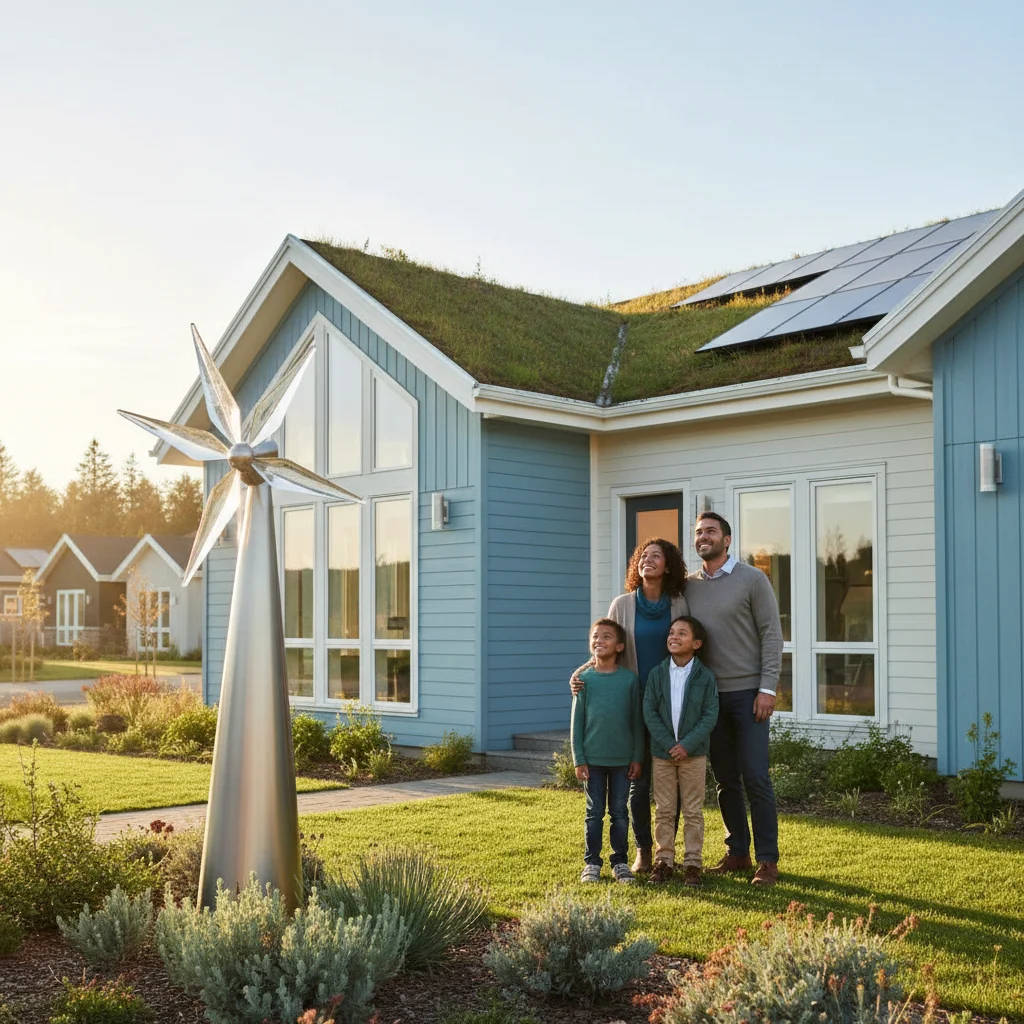
Over 30 million American households spend more than 10% of their income on energy bills—a burden the U.S. Department of Energy calls "energy poverty." And for families earning less than 200% of the federal poverty line, that percentage often doubles. But federally funded weatherization programs have sealed and insulated 7.8 million homes since 1976, cutting energy bills by an average of $372 per year while creating healthier indoor air quality for children and elderly residents.
Which Federal Programs Offer Free Home Weatherization?
The Weatherization Assistance Program (WAP), administered by the U.S. Department of Energy, provides free energy efficiency upgrades to low-income households. WAP allocates over $380 million annually to state and local agencies, which perform comprehensive home energy audits and install insulation, air sealing, furnace repairs, LED lighting, and water heater upgrades. The program prioritizes households with elderly residents, children under age 6, and individuals with disabilities. WAP-funded contractors use diagnostic tools like blower door tests and infrared cameras to identify air leakage points before installing materials worth $5,000-$8,000 per home. And the Infrastructure Investment and Jobs Act added $3.5 billion in supplemental funding through 2026, enabling states to weatherize 450,000 additional homes beyond baseline allocations.
"The Weatherization Assistance Program reduces energy bills by an average of $372 per year while improving home comfort and safety." — U.S. Department of Energy
What Income Level Qualifies for Free Weatherization Services?
Households earning at or below 200% of the federal poverty level qualify for free weatherization services in 2026. For a family of four, that threshold equals $62,400 annual income. But state agencies can raise the limit to 60% of state median income in areas where that figure exceeds 200% of poverty—a provision that expands eligibility in high-cost states like California, Massachusetts, and New York. Priority goes to households with members age 60 or older, children under age 6, or individuals with disabilities documented by Social Security or state agencies. So a family of three earning $53,000 in rural Iowa qualifies immediately, while the same family in San Francisco qualifies under the state median income rule despite higher earnings.
Applicants must provide proof of income through recent pay stubs, tax returns, or benefit award letters for programs like SNAP, TANF, or Supplemental Security Income. Renters qualify if landlords sign consent forms allowing energy efficiency work and agreeing not to raise rent for 12 months after installation. And manufactured home residents qualify if the structure sits on a permanent foundation and the homeowner owns the land or holds a long-term lease.
2026 Federal Poverty Level Guidelines
- 1 person: $15,060 / 200% = $30,120 - 2 people: $20,440 / 200% = $40,880 - 3 people: $25,820 / 200% = $51,640 - 4 people: $31,200 / 200% = $62,400 - 5 people: $36,580 / 200% = $73,160 Alaska and Hawaii use higher baseline figures. Add $5,380 per additional person.What Work Gets Done During a Free Weatherization Visit?
A certified energy auditor conducts a comprehensive home assessment using blower door tests to measure air leakage and infrared cameras to detect thermal bridging through walls and ceilings. The audit generates a work order prioritizing measures with the highest savings-to-investment ratio, typically starting with air sealing gaps around windows, doors, electrical outlets, and attic access hatches using caulk and weatherstripping. Contractors then install attic insulation to R-38 or R-49 levels, add basement or crawlspace insulation, and seal ductwork leaks that waste 20-30% of conditioned air in typical homes. And the program covers furnace tune-ups, refrigerator replacement for units over 15 years old, LED bulb installation, and low-flow showerhead upgrades—all at zero cost to the homeowner.
WAP contractors must test carbon monoxide levels and ensure combustion appliances vent properly before completing work. Health and safety measures account for up to 15% of per-home budgets, covering issues like exposed wiring, faulty smoke detectors, and minor roof repairs needed to prevent insulation damage. So a household in Detroit might receive $7,200 in work including blown-in cellulose insulation, air sealing that reduces drafts by 40%, and a new programmable thermostat that cuts heating costs by $180 annually.
Use the free rebate calculator to estimate energy savings from weatherization upgrades specific to your home size and heating system.
How Do State Weatherization Programs Differ from Federal?
State weatherization programs supplement federal WAP funding with utility partnerships, state energy office budgets, and Low-Income Home Energy Assistance Program (LIHEAP) transfers. California's Energy Savings Assistance Program, for example, serves households earning up to 250% of poverty and covers air conditioning upgrades in hot inland valleys—measures federal WAP excludes. And New York's EmPower+ initiative bundles weatherization with heat pump installations for qualified households, delivering $12,000-$15,000 in combined equipment and efficiency work. Oregon allows income limits up to 60% of state median regardless of federal poverty ratios, expanding coverage to $85,000 annual earnings for families of four in Portland metro areas.
But state programs face longer waitlists than federally funded work. Massachusetts weatherization agencies report 6-12 month queues in urban counties, while rural Vermont completes applications within 60 days due to lower demand and dedicated contractor networks. Link to weatherization assistance program eligibility for state-by-state qualification rules and processing times.
State Weatherization Enhancements in 2026
**California**: Covers air conditioning repair/replacement in Climate Zones 13-15 **New York**: Includes heat pump installation for natural gas conversion **Illinois**: Adds solar thermal hot water systems in pilot counties **Washington**: Covers electric vehicle charger installation for income-qualified EV owners **Colorado**: Bundles indoor air quality testing and remediation with standard weatherizationHow Much Does Free Weatherization Save on Energy Bills?
Weatherization saves households an average of $372 per year on combined heating, cooling, and electricity costs according to DOE evaluations of 30,000 homes completed between 2019-2024. But savings vary by climate zone and heating fuel type. Homes in cold climates with natural gas furnaces save $420-$550 annually after insulation upgrades and air sealing reduce heating load by 25-32%. And homes using electric resistance heat or propane see savings of $600-$800 per year due to higher baseline fuel costs—propane averages $3.89 per gallon in 2026, triple the equivalent cost of natural gas per BTU delivered.
The program delivers $2.70 in energy savings for every $1.00 invested over the average 20-year lifespan of installed measures. So the typical $6,500 weatherization package generates $17,550 in utility bill reductions before insulation settles or air sealing materials degrade. And health benefits add unmeasured value: DOE studies link weatherization to 16% fewer missed school days for children with asthma and 12% reductions in emergency room visits for respiratory illness among elderly residents.
| Climate Zone | Average Annual Savings | Payback Period | Primary Measures |
|---|---|---|---|
| Cold (Zone 6-7) | $480 | 13.5 years | Attic insulation, air sealing, furnace tune-up |
| Mixed (Zone 4-5) | $365 | 17.8 years | Wall insulation, duct sealing, water heater wrap |
| Hot-Humid (Zone 2-3) | $290 | 22.4 years | Radiant barrier, duct sealing, refrigerator replacement |
Learn how attic insulation energy savings compound with basement and wall improvements to reduce whole-home heat loss.
How to Find Free Weatherization Programs Near You
Contact your state's weatherization office through the DOE's online locator tool at energy.gov/scep/wap-formula-grants, which lists agencies serving every county and tribal area in the U.S. Local community action agencies administer most programs and maintain application forms on their websites, typically requiring proof of income, homeownership or landlord consent, and recent utility bills showing current energy costs. And many utilities offer intake assistance—calling your electric or gas provider's customer service line often connects to weatherization coordinators who schedule audits and verify eligibility on the spot.
But application volume surges in fall as heating season approaches, creating 4-6 month backlogs in high-demand states. Submit applications in spring or early summer for faster processing and winter completion timelines. LIHEAP recipients often qualify for expedited weatherization if they've received heating assistance within the past 12 months—agencies prioritize households already demonstrating energy cost burden.
"Families receiving LIHEAP heating assistance automatically meet income requirements for weatherization programs in 47 states." — National Energy Assistance Directors Association
Coordinate weatherization with heat pump rebates available through state energy offices and utility efficiency programs—some agencies bundle installations to maximize federal and state incentives.
Official Sources
- DOE Weatherization Assistance Program — Federal program details, funding allocations, and state agency directory
- LIHEAP Clearinghouse — Heating assistance programs that often coordinate with weatherization services
- DSIRE Database — Comprehensive listing of state and utility efficiency programs including income-qualified offerings
Frequently Asked Questions
How much can I save with free weatherization programs low income 2026?
Low-income weatherization programs save households an average of $372 per year on energy bills, with savings ranging from $290 in hot climates to $550 in cold regions with high heating costs. Homes using propane or electric resistance heat see larger reductions of $600-$800 annually due to expensive fuel types. And the typical weatherization package worth $5,000-$8,000 generates over $17,000 in utility savings over 20 years.
What are the eligibility requirements for free weatherization programs low income 2026?
Households earning at or below 200% of the federal poverty level qualify for free weatherization in 2026—$62,400 for a family of four nationally. But states can raise limits to 60% of state median income, expanding coverage to $85,000+ in high-cost areas. Priority goes to homes with elderly residents, young children, or disabled members. And renters qualify if landlords sign consent forms and agree not to raise rent for 12 months after work completes.
Can I combine free weatherization programs low income 2026 with other incentives?
Free weatherization combines with many rebate programs because WAP-funded work doesn't count as homeowner expense for tax credit purposes. Households can claim energy tax credits for upgrades installed outside the weatherization package, like heat pumps or solar panels paid through separate incentive programs. But stacking federal and state weatherization funds on identical measures violates double-dipping rules—coordinate with program managers before pursuing overlapping efficiency work.
How long does the weatherization application process take in 2026?
Weatherization application processing takes 60-180 days depending on local demand and contractor availability. Rural areas complete work faster due to shorter waitlists, while urban agencies face 6-12 month backlogs during peak fall enrollment. And households with urgent health or safety issues—like broken heating systems or dangerous wiring exposed during audits—receive expedited service within 30 days under emergency protocols in most states.
Does weatherization cover air conditioning replacement for low-income families?
Federal WAP guidelines exclude air conditioning replacement except in states where cooling degree days exceed heating degree days annually—primarily Arizona, southern California, Florida, and Texas. But state-funded programs like California's Energy Savings Assistance cover AC upgrades in hot inland climate zones. And utility efficiency programs often bundle cooling equipment with weatherization for income-qualified customers in all regions. Check whether air sealing cost and savings from weatherization reduce cooling loads enough to downsize replacement AC units.
Ready to lower your energy bills? Use the free rebate calculator to find every weatherization program, utility rebate, and tax credit available at your income level and location. Get your personalized savings estimate in 60 seconds.