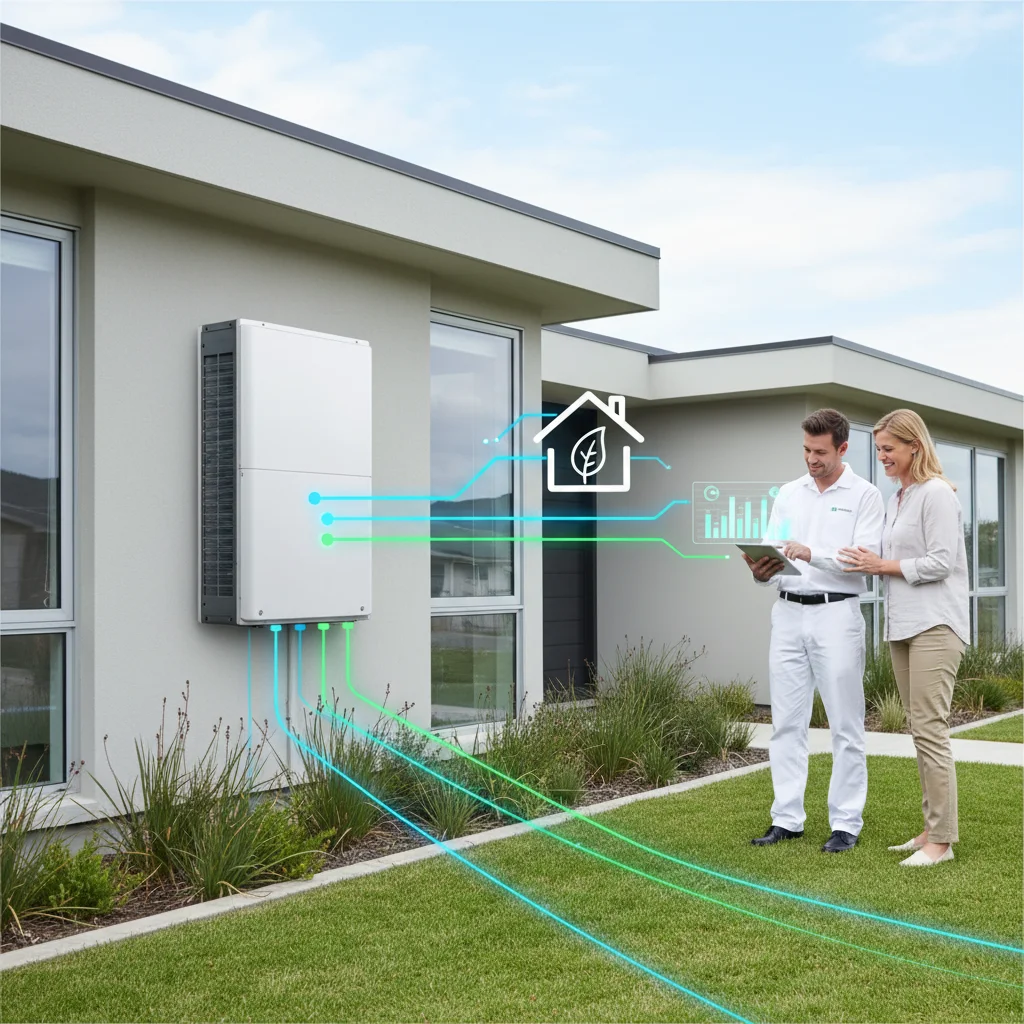
A professional energy audit completed before installing a heat pump unlocks an average of $2,300 in additional rebates and tax credits that homeowners miss when they skip this step. And the audit itself costs between $200 and $500, but many California utilities cover the full expense through efficiency programs.
How Much Does a Heat Pump Energy Audit Cost?
Professional heat pump energy audits in California cost $200 to $500 for a whole-home assessment. And most homeowners pay nothing out of pocket because utilities like PG&E, SCE, and SoCalGas reimburse 100% of audit costs through efficiency programs. So the audit pays for itself before installation even begins.
Answer Capsule: Professional heat pump energy audits in California cost $200-$500 for comprehensive assessments in 2026, but PG&E, SCE, and SoCalGas reimburse 100% of audit costs through utility efficiency programs, making the service free for most homeowners before installation.
The assessment takes 2 to 4 hours and includes blower door testing, thermal imaging, duct leakage measurement, and equipment sizing calculations. Certified auditors identify air leaks, insulation gaps, and ductwork inefficiencies that reduce heat pump performance by 20% to 40%. And fixing these issues before installation saves $400 to $900 annually on energy bills.
Audits also determine the correct heat pump size for your home—a calculation that prevents the $3,000 to $8,000 mistake of buying oversized equipment that cycles on and off constantly. Check your local rebate calculator to see which utility programs cover audit costs in your area.
Which Heat Pump Brands Qualify for Rebates and Tax Credits?
Carrier, Lennox, Trane, Mitsubishi, and Daikin heat pumps qualify for federal IRA tax credits and California utility rebates in 2026. But equipment qualifies based on ENERGY STAR certification and minimum SEER2 ratings of 16 for central systems or 15 for ductless mini-splits—not brand names alone.
Answer Capsule: Carrier, Lennox, Trane, Mitsubishi, and Daikin heat pumps qualify for 2026 federal IRA tax credits and California utility rebates when models meet ENERGY STAR certification with SEER2 ratings of 16+ for central systems or 15+ for ductless mini-splits.
California utilities offer $3,000 to $6,500 in rebates for ENERGY STAR certified heat pumps. The federal Energy Efficient Home Improvement Credit (Section 25C) ended for property placed in service after December 31, 2025 (IRS FS-2025-05). And combining these programs delivers total savings of $5,000 to $8,500 on qualifying systems.
The federal Energy Efficient Home Improvement Credit (Section 25C) ended for property placed in service after December 31, 2025 (IRS FS-2025-05).
Lower-cost brands like Goodman and American Standard also qualify if they meet efficiency thresholds. So the certification matters more than the manufacturer's reputation. Review heat pump rebates to compare brand-specific incentive amounts.
What Energy Efficiency Rating Should You Look for in a Heat Pump?
Target SEER2 ratings of 18 or higher and HSPF2 ratings of 9.5 or higher to maximize rebates and minimize operating costs. And these ratings deliver 25% to 40% lower energy bills compared to minimum-efficiency models rated at SEER2 16.
Answer Capsule: Target heat pump SEER2 ratings of 18+ and HSPF2 ratings of 9.5+ in 2026 to maximize California utility rebates and federal tax credits while achieving 25-40% lower energy bills compared to minimum-efficiency SEER2 16 models.
California's tiered rebate structure rewards higher efficiency—PG&E offers $3,000 for SEER2 16 systems but $4,500 for SEER2 18+ models. So the $800 to $1,200 premium for high-efficiency equipment pays back in 18 to 24 months through rebates and energy savings.
| Efficiency Tier | SEER2 Rating | HSPF2 Rating | PG&E Rebate | Annual Savings |
|---|---|---|---|---|
| Standard | 16 | 8.5 | $3,000 | $0 (baseline) |
| High | 18 | 9.5 | $4,500 | $280-$360 |
| Premium | 20+ | 10+ | $6,000 | $450-$580 |
And climate zones matter—coastal areas need lower HSPF2 ratings than inland regions where heating loads increase. Energy audits calculate the optimal efficiency tier for your specific climate zone and home size.
How Long Does It Take to Recover Your Investment in a Heat Pump?
Heat pump installations pay back in 4 to 8 years through combined rebates, tax credits, and energy savings. And California homeowners recover costs faster than the national average of 7 to 12 years because utility rebates cover 40% to 60% of total installation expenses.
Answer Capsule: Heat pump installations in California pay back in 4-8 years through 2026 utility rebates, federal IRA tax credits, and energy savings, recovering costs faster than the 7-12 year national average because rebates cover 40-60% of installation expenses.
A $12,000 heat pump installation breaks down like this: $4,500 utility rebate, $2,000 federal tax credit, and $800 annual energy savings. So homeowners recover $7,300 in year one and reach full payback by year six.
Homes replacing electric resistance heating or propane furnaces see payback periods under 5 years because operating cost reductions exceed $1,200 annually. But homes switching from natural gas furnaces take 7 to 9 years due to smaller monthly savings of $400 to $600.
The federal Energy Efficient Home Improvement Credit (Section 25C) ended for property placed in service after December 31, 2025 (IRS FS-2025-05).
Calculate your specific payback timeline using our free rebate calculator with your current fuel type and energy costs.
Is a Heat Pump Right for Your Climate Zone?
Heat pumps work efficiently in all 16 California climate zones in 2026, including cold-weather regions like Lake Tahoe and mountain communities. And modern cold-climate heat pumps maintain 100% heating capacity down to 5°F, eliminating the need for backup heating systems.
Answer Capsule: Heat pumps work efficiently in all 16 California climate zones in 2026, including cold Lake Tahoe and mountain regions, because modern cold-climate models maintain 100% heating capacity down to 5°F without requiring backup heating systems.
California's Mediterranean and desert climates match heat pump sweet spots—mild winters and hot summers where cooling efficiency matters most. Coastal zones 3-7 save $600 to $900 annually, while inland zones 10-16 save $800 to $1,300 by replacing air conditioning and furnace systems simultaneously.
But high-desert and mountain zones require cold-climate models rated for subzero performance. Mitsubishi Hyper-Heat and Carrier Greenspeed models maintain efficiency at -13°F, covering California's coldest inhabited areas. And these systems cost $1,500 to $2,500 more than standard models but qualify for the same rebate amounts.
Energy audits determine climate-specific equipment requirements and prevent the common mistake of installing standard models in cold zones where performance drops 40% to 60% below 25°F. Review energy tax credits for climate-zone-specific incentive programs.
Heat Pump vs. Traditional HVAC: Which Is Better for Your Home?
Heat pumps deliver 3 to 4 units of heating or cooling for every 1 unit of electricity consumed, beating traditional HVAC systems that convert energy at 0.95 to 0.98 efficiency. And this 300% to 400% efficiency advantage cuts energy bills by $700 to $1,400 annually.
Answer Capsule: Heat pumps deliver 3-4 units of heating or cooling per 1 unit of electricity in 2026, beating traditional HVAC's 0.95-0.98 efficiency and cutting California energy bills by $700-$1,400 annually through 300-400% efficiency advantages.
| System Type | Efficiency | Annual Cost | Lifespan | Rebates Available |
|---|---|---|---|---|
| Heat Pump | 300-400% | $600-$900 | 15-20 years | $5,000-$8,500 |
| Gas Furnace + AC | 95-98% | $1,200-$1,800 | 12-15 years | $0-$500 |
| Electric Resistance | 100% | $2,400-$3,200 | 10-15 years | $0 |
Traditional systems require two separate units—a furnace for heating and air conditioner for cooling—while heat pumps handle both functions in one system. So installation costs drop by $2,000 to $4,000, and maintenance expenses decrease because only one system needs annual service.
But gas furnaces still make sense in homes with extremely low natural gas rates under $0.80 per therm. Energy audits calculate fuel-cost breakeven points and recommend the most cost-effective system for your specific utility rates and climate zone.
How Long Will Your Heat Pump Last and What Maintenance Does It Need?
Heat pumps last 15 to 20 years with annual maintenance that costs $150 to $250 per year. And proper maintenance prevents the 30% to 50% efficiency loss that occurs when filters clog, refrigerant levels drop, or outdoor coils collect debris.
Answer Capsule: Heat pumps last 15-20 years in California with annual maintenance costing $150-$250 that prevents 30-50% efficiency losses from clogged filters, low refrigerant, and debris-covered outdoor coils that reduce performance and increase operating costs.
Annual service includes filter replacement, refrigerant level checks, electrical connection inspection, and condenser coil cleaning. And these tasks take 60 to 90 minutes and prevent 80% of premature failures. Skipping maintenance voids manufacturer warranties and reduces lifespan to 10 to 12 years.
Coastal installations need quarterly coil cleaning because salt air accelerates corrosion—a $75 service that extends equipment life by 3 to 5 years. And inland desert areas require monthly filter changes during high-wind seasons when dust infiltration increases.
Manufacturers like Carrier and Lennox offer 10-year parts warranties, but labor coverage ends after 1 to 2 years. So extended warranties costing $400 to $800 make financial sense for systems in harsh coastal or desert environments where repair costs run $500 to $1,500 per incident.
Official Sources
- Department of Energy Save Program — Federal guidance on heat pump efficiency, rebates, and tax credit eligibility (note: the federal 25C credit ended for property placed in service after December 31, 2025)
- ENERGY STAR Heat Pumps — Certified product database with efficiency ratings and performance specifications
- DSIRE USA — Comprehensive database of state and utility rebate programs with current 2026 incentive amounts
Related Reading: Learn more about Heat Pump Water Heater Efficiency.
Frequently Asked Questions
What are the main benefits of a heat pump energy audit?
Energy audits identify air leaks, insulation gaps, and ductwork problems that reduce heat pump efficiency by 20% to 40%. And fixing these issues before installation saves $400 to $900 annually on energy bills while unlocking an average of $2,300 in additional rebates. Audits also calculate correct equipment sizing to prevent the $3,000 to $8,000 mistake of buying oversized systems that cycle inefficiently.
How much does a heat pump energy audit cost?
Professional energy audits cost $200 to $500 in California, but PG&E, SCE, and SoCalGas reimburse 100% through utility efficiency programs in 2026. And the assessment takes 2 to 4 hours, including blower door testing, thermal imaging, and duct leakage measurement. Most homeowners pay nothing out of pocket because utilities cover full audit costs when homeowners complete recommended efficiency upgrades.
Are heat pump energy audits required to qualify for rebates?
California utilities require energy audits for rebates exceeding $3,000, but federal IRA tax credits don't mandate audits in 2026. And some utility programs like PG&E's Energy Upgrade California require whole-home assessments before approving rebates above $4,500. But smaller rebates under $2,000 typically don't require audits—just equipment efficiency documentation. Check specific program requirements using our home energy audit guide.
How long does a heat pump energy audit take to complete?
Professional energy audits take 2 to 4 hours depending on home size and complexity. And the process includes 45 to 60 minutes of equipment testing, 30 to 45 minutes of insulation and air sealing assessment, and 30 to 60 minutes of report generation. Results arrive within 3 to 5 business days with specific equipment recommendations and rebate qualification documentation.
What's the difference between a heat pump energy audit and a home energy audit?
Heat pump energy audits focus specifically on HVAC system sizing, ductwork efficiency, and heating load calculations for equipment selection. And comprehensive home energy audits cover additional systems like water heating, appliances, lighting, and building envelope performance. But most California utility programs require whole-home audits to qualify for maximum rebates of $6,000 to $8,500, so homeowners benefit from the broader assessment.
Ready to see how much you can save? Use our free rebate calculator to get personalized heat pump rebate estimates, audit costs, and energy savings projections for your California home. Get your custom savings report in under 2 minutes.
Updated: April 14, 2026 — fact-checked by DuloCore Research. About our editorial process.
Check your California heat pump rebate eligibility — see the programs you qualify for and the dollar amounts on our California heat pump rebate finder.