Update (2026): The federal Energy Efficient Home Improvement Credit (Section 25C) expired December 31, 2025, following the passage of the OBBBA. Check state and local programs for current incentives.
Over 40% of a typical home's energy bill goes toward heating and cooling, yet outdated systems and poor insulation leak thousands of dollars annually. A targeted heat pump energy audit evaluation is the first step to reclaiming that lost money, identifying specific inefficiencies that directly impact HVAC performance before you invest in a new system. So homeowners who skip this crucial step often see 20-30% lower savings than projected.
What Does a Heat Pump Energy Audit Evaluation Actually Tell Me About My Home's Efficiency?
A heat pump energy audit evaluation provides a detailed diagnostic report on a home's thermal envelope and HVAC readiness. It quantifies air leakage rates, insulation R-values, and ductwork integrity, directly identifying sources of energy loss. This 2026 assessment includes a Manual J load calculation, which determines the precise heating and cooling capacity required for the home.
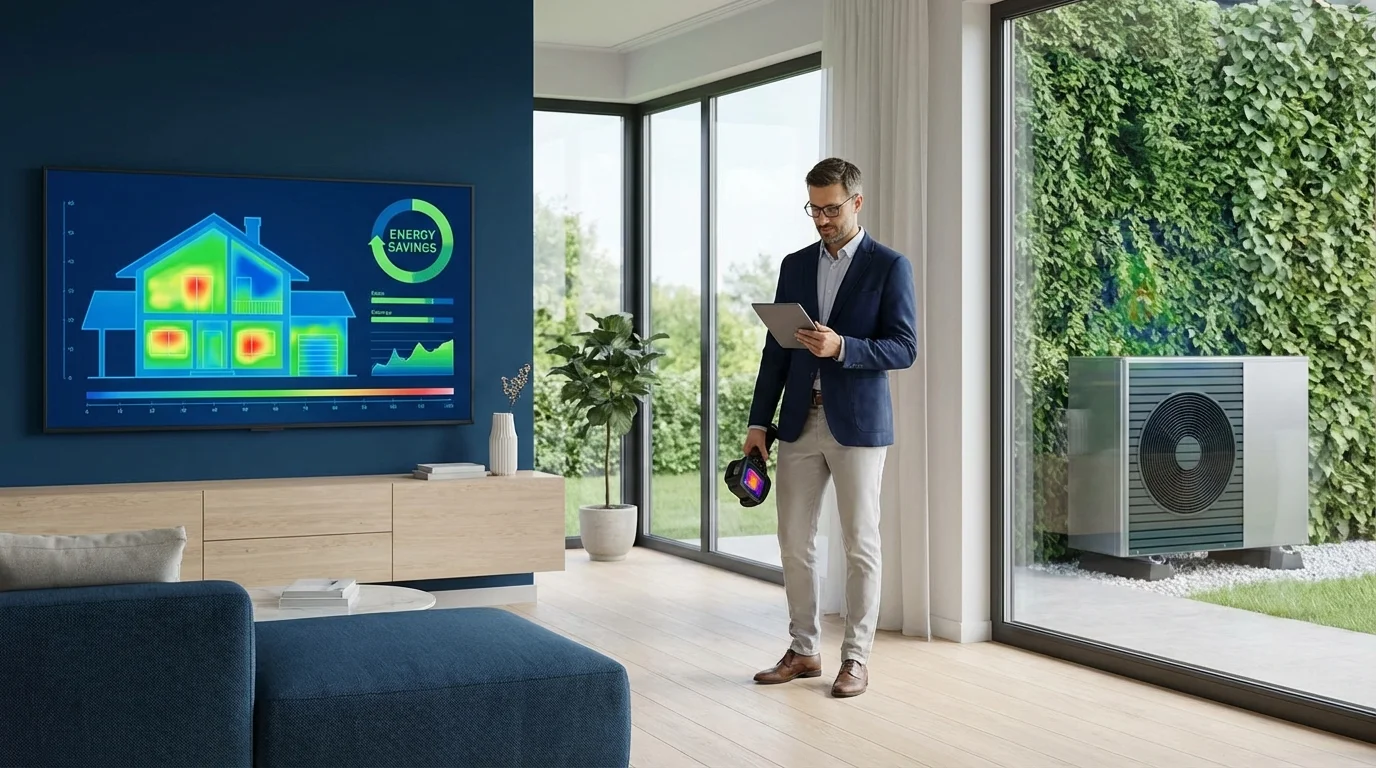
The evaluation pinpoints specific areas of energy waste that directly affect a heat pump's performance. For example, the blower door test measures air changes per hour (ACH), with a target of 3.0 ACH or lower for modern efficiency. And infrared thermography reveals missing insulation in wall cavities or attics, which forces a heat pump to run longer. But the most critical output is the Manual J load calculation. This calculation prevents the installation of an oversized or undersized unit—a common error that reduces efficiency by up to 30% and shortens equipment lifespan by 3-5 years. The audit provides a clear roadmap for air sealing and insulation upgrades needed to maximize the return on a new heat pump investment, often required for securing top-tier heat pump rebates. So the final report gives homeowners a data-backed plan to achieve optimal system performance and lower utility bills.
What Are the Typical Costs for a Recommended Heat Pump System and Its Installation?
The total cost for a new heat pump system and its installation ranges from $8,000 to $20,000 in 2026. This price includes the outdoor condenser, indoor air handler, and professional labor. High-efficiency models with SEER2 ratings above 17 and HSPF2 ratings above 9.5 fall in the upper end of this range.
The final price tag depends heavily on system specifications and home characteristics. For instance, a 3-ton unit for a 2,000-square-foot home costs between $10,000 and $15,000. But homes requiring ductwork modifications or electrical panel upgrades will see costs increase by $2,000 to $5,000. Brands like Mitsubishi, Daikin, and Bosch, known for their cold-climate performance, often command a 10-15% price premium over standard models. So while the upfront cost is a factor, federal energy tax credits and local rebates can offset the initial investment by $2,000 to $8,000. Homeowners use a professional installer to ensure the system qualifies for these financial incentives and operates at its rated efficiency. And a detailed quote from a certified technician provides the most accurate cost breakdown for a specific property.
How Can I Qualify for Heat Pump Rebates, and Which Brands Meet Eligibility Specifications?
To qualify for 2026 heat pump rebates, a system must meet specific efficiency tiers set by ENERGY STAR and local utility programs. The federal IRA tax credit requires a minimum SEER2 (Seasonal Energy Efficiency Ratio 2) of 16.0 and HSPF2 (Heating Seasonal Performance Factor 2) of 9.5 for split systems.
Many state and utility programs have even stricter requirements for their highest rebate tiers, often demanding SEER2 ratings of 17.0 or higher. Brands like Mitsubishi (Hyper-Heat series), Fujitsu (Halcyon XLTH), Bosch (IDS Premium), and Daikin (Aurora) consistently produce models that meet these top-tier specifications.
"To be sure the model you are considering is eligible, ask your contractor to provide the specific model numbers and the AHRI certificate for your new system." — ENERGY STAR
So homeowners must verify the exact model numbers on the Air-Conditioning, Heating, and Refrigeration Institute (AHRI) directory before purchase. And the installation must be completed by a licensed contractor. But simply buying a qualifying unit isn't enough; a home energy audit is often a prerequisite for unlocking the maximum rebate amount, which can reach up to $8,000 in some states.
What is the Expected ROI and Payback Period for an Energy-Efficient Heat Pump System?
The expected payback period for an energy-efficient heat pump system is typically 5 to 10 years. This return on investment (ROI) is achieved through annual energy savings of $500 to $1,200 and available rebates. The payback shortens in regions with higher electricity costs and colder climates.
The ROI calculation is straightforward. A system costing $12,000 after a $4,000 rebate has a net cost of $8,000. If it saves $1,000 per year compared to an old furnace or electric baseboard heat, the payback period is 8 years. So homeowners in colder climates replacing oil furnaces see the fastest returns, often in 5-7 years, due to savings of up to 50% on heating costs. But the ROI is diminished if the home is poorly insulated. An energy audit evaluation identifies these issues, ensuring the projected savings are realized. Use our free rebate calculator to estimate your specific payback period and potential savings. And combining federal credits with state and utility rebates accelerates the payback period by 1-2 years on average.
Is a Heat Pump Suitable for My Climate Zone, and How Does It Compare to Alternative HVAC Systems?
Modern cold-climate heat pumps are suitable for all U.S. climate zones, delivering efficient heating in temperatures as low as -15°F. Models with vapor injection technology maintain up to 100% heating capacity at 5°F. So they are a direct replacement for furnaces and boilers even in the coldest regions.
Compared to traditional HVAC systems, heat pumps offer distinct advantages. A gas furnace has a maximum efficiency of around 98% AFUE (Annual Fuel Utilization Efficiency). But a heat pump operates at 200-400% efficiency because it moves heat rather than creating it. So it uses 50% less electricity than electric resistance heating. And unlike furnaces, heat pumps also provide high-efficiency air conditioning. Geothermal heat pumps offer even greater efficiency, with 400-600% efficiency ratings, but their installation costs are 2-3 times higher, ranging from $20,000 to $40,000. For most homeowners, an air-source heat pump provides the best balance of installation cost, energy savings, and year-round comfort, making it a versatile alternative to separate heating and cooling systems.
What Lifespan and Maintenance Requirements Should I Expect from a Modern Heat Pump?
A modern heat pump has an expected lifespan of 15 to 20 years with proper maintenance. This longevity is comparable to traditional furnaces and central air conditioners. The system's lifespan is directly influenced by installation quality, climate, and adherence to a regular service schedule.
Annual professional maintenance is crucial for reaching this 15+ year lifespan. A typical service visit costs $100 to $200 and includes cleaning coils, checking refrigerant levels, and testing electrical components. And homeowners should perform monthly maintenance, such as cleaning or replacing air filters, to ensure optimal airflow and prevent strain on the compressor.
"Maintain your equipment to prevent future problems and unwanted costs. Keep your cooling and heating system at peak performance by having a contractor do annual pre-season check-ups." — U.S. Department of Energy
But neglecting this maintenance can reduce the system's efficiency by 10-25% and shorten its lifespan by 5 years or more. So scheduling annual tune-ups protects the investment and ensures the unit operates at its specified SEER2 and HSPF2 ratings, keeping energy bills low throughout its service life.
2026 Heat Pump Rebate Program Comparison
| Program Name | Rebate/Credit Amount | Key Eligibility Requirement | 2026 Deadline |
|---|---|---|---|
| Federal IRA Tax Credit | Ended Dec 31, 2025 | — | December 31, 2025 |
| CA TECH Clean Heat | Up to $3,100 | SEER2 ≥ 17, HSPF2 ≥ 9.5 | Varies by contractor |
| NY Clean Heat Program | Up to $4,000 | Cold climate unit, professional install | Ongoing (verify yearly) |
| MA Mass Save Rebate | Up to $10,000 | Whole-home system, weatherization | December 31, 2026 |
Official Sources
- ENERGY STAR Heat Pumps — Official specifications and lists of certified energy-efficient heat pump models.
- DSIRE Database — A comprehensive database of state and utility incentives for renewable energy and energy efficiency.
- IRS Home Energy Credits — Federal guidance on tax credits available for energy-efficient home improvements, including heat pumps. (note: the federal 25C and 25D credits ended for projects completed after December 31, 2025)
Related Reading: Learn more about Heat Pump Water Heater Efficiency.
Frequently Asked Questions
Who is eligible for a heat pump energy audit evaluation?
Any homeowner is eligible to schedule a heat pump energy audit evaluation. And it is highly recommended for those with homes older than 10 years or those experiencing high utility bills. So eligibility for audit-related rebates often requires the homeowner to be a customer of a participating utility company. These programs typically target owners of single-family homes or small multi-family buildings of 2-4 units.
What does a heat pump energy audit evaluation typically involve?
The evaluation typically involves a 2-4 hour on-site inspection. Key components include a blower door test to measure air leakage, infrared thermal imaging to detect insulation gaps, and a full inspection of existing HVAC ductwork and equipment. So the auditor also performs a Manual J load calculation to determine the exact size of the heat pump your home requires, ensuring you don't over- or under-size the new system.
How much does a heat pump energy audit evaluation cost, and are rebates available for it?
A comprehensive heat pump energy audit evaluation costs between $300 and $700 in 2026. But many utility companies offer rebates that cover a portion or the full cost of the audit. For example, some programs provide an instant rebate of $150 or offer the audit for a co-pay of just $50. So homeowners should check with their local electricity or gas provider for available incentives before scheduling the service.
Are there deadlines to complete a heat pump energy audit for rebate eligibility?
Yes, deadlines are common. Many state
Last updated April 14, 2026 — reviewed by DuloCore Editorial. About our authors.
Check your California heat pump rebate eligibility — see the programs you qualify for and the dollar amounts on our California heat pump rebate finder.