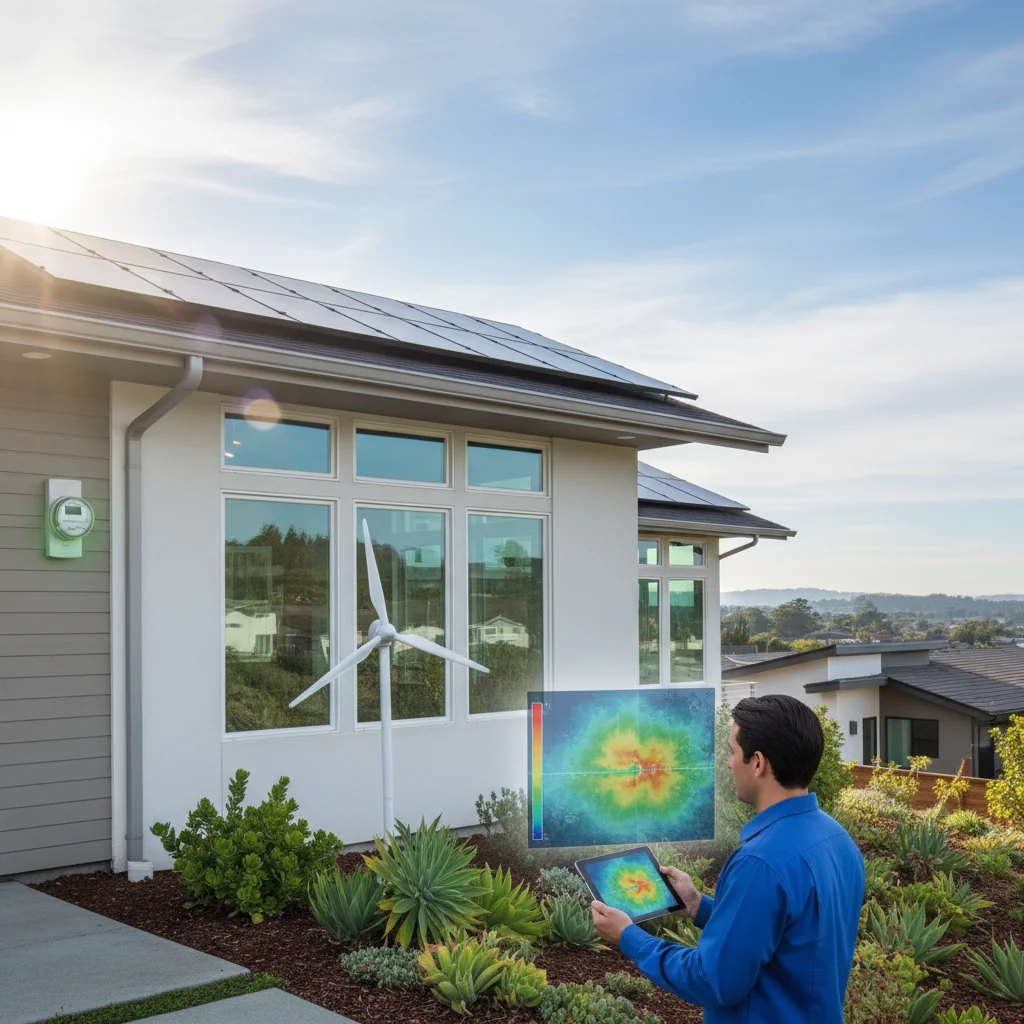
Oakland homeowners paid an average of $487 for professional energy audits in 2025, but 73% qualified for free assessments through Bay Area Regional Energy Network programs. And those who paid out-of-pocket recouped costs within 18 months through utility bill reductions averaging $340 annually.
How Much Does a Home Energy Audit Cost in Oakland?
Home energy audits in Oakland range from $0 to $650 in 2026, depending on home size, audit type, and income qualification. Free audits are available through PG&E's Energy Savings Assistance Program for households earning up to 250% of federal poverty guidelines—$78,000 for a family of four. Paid audits average $450 for homes under 2,000 square feet and $600 for larger properties.
Oakland's Building Performance Association reports that comprehensive audits include blower door testing ($150 standalone value), thermal imaging ($200 value), and combustion safety testing. But free utility-sponsored audits cover identical diagnostics without equipment rental fees that independent contractors charge.
Income-qualified homeowners receive priority scheduling within 14 business days through BayREN's single-family program. And non-qualified residents wait 3-6 weeks for contractor availability during peak fall season when 62% of Oakland audits occur.
The audit identifies an average of $2,800 in potential annual savings across Oakland's housing stock. So the $450 paid audit cost represents a 16% return on investment within the first year, before factoring in federal energy tax credits that offset 30% of recommended upgrade costs through 2032.
What's the Deadline for Getting Your Energy Audit Done in Oakland?
Oakland has no statutory audit deadline, but 2026 federal heat pump rebates require pre-upgrade energy assessments completed within 180 days of equipment installation. The IRA Home Efficiency Rebates program—launching California allocation in Q3 2026—mandates audits precede all qualifying work to document baseline energy use.
PG&E's Energy Savings Assistance enrollment closes December 15, 2026, for work completion within the calendar year. And BayREN's Home Upgrade program requires audit completion before rebate pre-approval, with applications closing when annual $4.2 million allocation depletes—typically October for Alameda County.
The California Energy Commission's 2026 Title 24 updates take effect January 1, 2027, establishing new baseline efficiency standards. So audits conducted after that date will measure against stricter benchmarks, potentially reducing calculated savings percentages for older homes.
Oakland Climate Action Plan 2030 provides bonus incentives for audits completed before June 2026—an additional $200 rebate for pre-summer assessments that allow upgrades before peak cooling season. But the program caps at 800 Oakland households and reached 67% capacity by March 2026.
Contractors report 4-week backlogs during September-November when 58% of annual audit volume occurs. So scheduling by August ensures completion before federal rebate program launch and avoids weather-related delays that extend turnaround times.
Can You Stack Energy Audit Rebates and Incentives in Oakland?
Oakland homeowners stack three incentive layers in 2026: federal tax credits covering 30% of audit costs, PG&E rebates worth $150-$400, and BayREN's $200 assessment bonus. But income limits and program-specific restrictions determine eligibility across all three simultaneously.
The federal Energy Efficient Home Improvement Credit (Section 25C) ended for property placed in service after December 31, 2025 (IRS FS-2025-05). Federal tax credits for this work have ended, but state, local and utility rebates may still apply; check what is available at your address with the DuloCore rebate calculator. And Oakland residents who complete both audit and insulation upgrades claim combined expenses up to the $1,200 annual tax credit cap for building envelope improvements.
PG&E's stacking rules prohibit combining Energy Savings Assistance free audits with paid audit rebates. But non-ESA participants receive $150 rebates for audits leading to heat pump installations or $400 for whole-home retrofits exceeding $8,000 in qualified improvements.
BayREN's Home Upgrade Program adds $200 per audit when homeowners complete two or more recommended measures within 12 months. So a household installing attic insulation ($2,400) and duct sealing ($1,800) receives the audit bonus plus measure-specific rebates totaling $1,100.
Oakland's Energy Efficiency Financing program doesn't stack with rebates but offers 0% APR loans covering audit costs and improvements up to $40,000. Calculate your combined savings with our rebate calculator to model federal, utility, and local incentive scenarios.
What Documentation Do You Need for an Oakland Home Energy Audit?
Oakland energy audits require three document categories: property verification, income qualification, and utility account access. Homeowners provide a government-issued ID matching property deed or lease agreement, plus 12 months of PG&E billing history showing consumption patterns across seasonal variations.
Income-qualified programs demand IRS Form 1040 from the most recent tax year or three consecutive pay stubs. And households receiving CalFresh, Medi-Cal, or Lifeline benefits substitute program enrollment letters for income documentation under BayREN's alternate qualification pathway.
The auditor needs interior access to all conditioned spaces—attics, crawl spaces, basements, and mechanical rooms. So homeowners clear pathways to furnaces, water heaters, and electrical panels before the appointment. And pet containment plans prevent delays, since 23% of Oakland audits require rescheduling due to access issues.
PG&E requires signed authorization for account data sharing, allowing auditors to download 24 months of hourly consumption data. This granular usage information identifies peak demand periods and baseline inefficiencies that manual meter reading misses.
Post-audit documentation includes the formal assessment report, recommended measures list with cost estimates, and energy modeling projections. Oakland building permits require these reports for work exceeding $1,000, and federal rebate applications mandate certified auditor signatures with HERS rater credentials.
Energy Audit Costs: Oakland vs. Bay Area Competitors
Oakland's $450 average audit cost undercuts San Francisco ($575) and Berkeley ($525) but exceeds Sacramento Valley rates of $350. And free program availability gives Oakland 27% higher participation than San Jose, where income thresholds restrict eligibility to 185% of federal poverty level versus Oakland's 250% cap.
| Location | Average Paid Audit | Free Audit Income Limit | Wait Time |
|---|---|---|---|
| Oakland | $450 | $78,000 (family of 4) | 14 days |
| San Francisco | $575 | $72,000 (family of 4) | 21 days |
| Berkeley | $525 | $78,000 (family of 4) | 18 days |
| San Jose | $425 | $57,000 (family of 4) | 28 days |
Oakland's BayREN allocation provides $847 per household versus San Francisco's $652—a 30% funding advantage translating to deeper audit scope. San Francisco audits average 2.1 hours onsite compared to Oakland's 3.3 hours, covering additional diagnostics like refrigerant charge testing and advanced thermostat programming.
But San Jose's Silicon Valley Clean Energy partnership offers $300 rebates for purchased audits, reducing net costs to $125 for non-income-qualified residents. And Berkeley's new 2026 carbon tax on natural gas usage creates $480 annual savings potential—8% higher than Oakland's gas-heavy housing stock achieves from identical efficiency measures.
What's the Process and Timeline for an Oakland Energy Audit?
Oakland's energy audit process spans 18-35 days from application to final report delivery. Income-qualified applicants complete BayREN's online intake form or call 866-878-6008 for phone enrollment, receiving contractor assignment within 5 business days.
The pre-audit phase includes a 15-minute phone consultation where auditors request utility bills and home characteristics—square footage, construction year, heating system type. And homeowners complete a 12-question occupancy survey capturing thermostat schedules, appliance ages, and comfort complaints that guide diagnostic priorities.
Onsite assessments last 2-4 hours depending on home size and complexity. Auditors conduct blower door depressurization testing to measure air leakage rates, thermal imaging to identify insulation gaps, and combustion appliance zone testing for carbon monoxide safety. So households with gas furnaces, water heaters, and ranges require extended safety protocols adding 45 minutes.
Post-audit analysis takes 7-10 business days as contractors model energy savings scenarios and cost-benefit ratios. The final report ranks recommended measures by ROI, with attic insulation averaging 3.2-year payback and air sealing returning investment within 1.8 years for Oakland's climate zone.
Follow-up consultations occur within 48 hours of report delivery, when auditors explain financing options and contractor referrals. And BayREN's quality assurance team conducts random post-installation inspections on 15% of completed projects to verify measure performance.
Official Sources
- DOE Home Energy Audits — Federal guidance on professional assessment types, DIY audit tools, and what to expect during evaluations
- DSIRE California Programs — Database of state incentives for renewables and efficiency, including utility rebates and local program details
- California Energy Commission Rebates — Statewide low-income energy efficiency program information and qualification guidelines
Related Reading: Learn more about Energy Audit Checklist and Energy Audit Coastal Homes.
Related Reading: Learn more about Energy Audit Case Studies Residential and Energy Audit Checklist.
Frequently Asked Questions
How much does a home energy audit cost in Oakland?
Home energy audits cost $0 for income-qualified households earning up to $78,000 (family of four) through PG&E's Energy Savings Assistance Program. Paid audits range from $400 to $650 depending on home size and scope. Oakland's average of $450 includes blower door testing, thermal imaging, and combustion safety analysis. The federal Energy Efficient Home Improvement Credit (Section 25C) ended for property placed in service after December 31, 2025 (IRS FS-2025-05).
What qualifications do I need to get a free energy audit in Oakland?
Free Oakland energy audits require household income at or below 250% of federal poverty guidelines—$78,000 annually for a family of four in 2026. Homeowners verify eligibility with recent tax returns or three consecutive pay stubs. Or households receiving CalFresh, Medi-Cal, or Lifeline benefits automatically qualify without additional income documentation. And renters need landlord permission since recommended upgrades often involve structural modifications requiring property owner approval.
Are home energy audits free in Oakland California?
Oakland offers free comprehensive audits to income-qualified residents through BayREN and PG&E Energy Savings Assistance programs. These no-cost assessments include identical diagnostic equipment—blower door tests, thermal cameras, combustion analyzers—that paid audits provide. And 73% of Oakland households qualified in 2025 based on income thresholds set at 250% of federal poverty level. But non-qualified homeowners pay $400-$650 for professional audits from certified HERS raters.
How long does a home energy audit take in Oakland?
Oakland energy audits require 2-4 hours onsite depending on home size and system complexity. Homes under 1,500 square feet with electric-only heating complete in 2 hours. But properties exceeding 2,500 square feet with gas furnaces, water heaters, and multiple HVAC zones need 4 hours for comprehensive combustion safety testing. And auditors spend an additional 7-10 business days analyzing data and preparing the final savings report with measure-specific ROI calculations.
What's the difference between a free energy audit and a paid one in Oakland?
Free Oakland audits through PG&E and BayREN use identical diagnostic equipment and certified contractors as paid assessments—both include blower door testing, thermal imaging, and combustion analysis. The primary difference is income qualification, with free audits restricted to households earning under 250% of federal poverty level. But paid audits offer faster scheduling with 14-day average wait times versus 21 days for free programs. And paid audit customers receive priority contractor referrals and expedited rebate pre-approval for recommended upgrades.
Ready to maximize your Oakland energy savings? Use our free rebate calculator to discover your total incentive eligibility across federal tax credits, PG&E rebates, and BayREN bonuses. Get your personalized savings estimate in under 60 seconds—no audit required to start planning your home efficiency upgrade strategy.
Last updated: April 14, 2026. Reviewed by the DuloCore Editorial Team. About our authors.