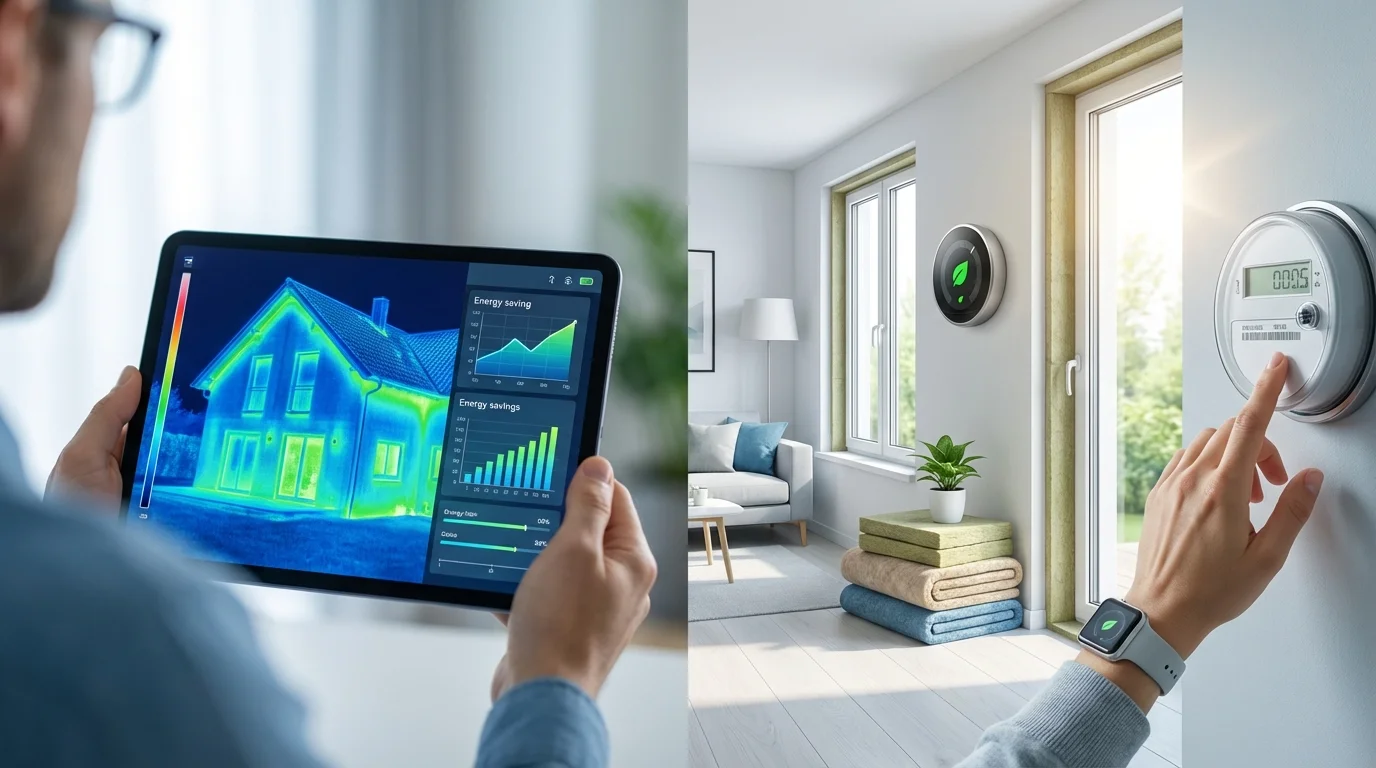
The average American household spends over $2,000 per year on energy bills, with up to 30% of that energy being wasted through drafts, old appliances, and poor insulation. Rising utility costs in 2026 make this wasted energy a direct financial drain. A professional home energy audit pinpoints exactly where these losses occur, unlocking thousands of dollars in annual savings and rebate opportunities that most homeowners miss.
What Specific Rebates and Tax Credits Can I Get for Home Energy Upgrades, and How Much Can I Save?
The federal Energy Efficient Home Improvement Credit (Section 25C) ended for property placed in service after December 31, 2025 (IRS FS-2025-05). Federal tax credits for this work have ended, but state, local and utility rebates may still apply; check what is available at your address with the DuloCore rebate calculator. So state and utility rebates offer an additional $500 to $8,000 for equipment like heat pumps, insulation, and high-efficiency windows, depending on the location.
The primary federal incentive is the Inflation Reduction Act's (IRA) Energy Efficient Home Improvement Credit, which provides a 30% tax credit (this federal credit ended for property placed in service after December 31, 2025) for qualifying projects. And this credit has an annual limit of $1,200 for insulation and air sealing, or up to $2,000 for electric heat pumps and heat pump water heaters, with a combined annual cap of $3,200. But the real savings come from stacking these with state and utility programs. For example, a homeowner in Massachusetts receives a federal credit for a new heat pump and also qualifies for the Mass Save program's heat pump rebates of up to $10,000. So the total out-of-pocket cost is reduced by over 50%. An audit identifies which specific upgrades provide the highest return and qualify for the most lucrative incentives.
The core tension for homeowners is the gap between knowing their energy bills are high and understanding the specific, actionable steps to lower them. A home energy audit bridges this gap with data. According to the U.S. Department of Energy, a comprehensive audit identifies energy savings of 5% to 30% on annual utility bills. For a household spending $2,200 per year, that translates to a direct savings of $110 to $660 annually, year after year. So these audits don't just suggest improvements; they provide a customized financial roadmap to maximize savings through targeted upgrades and available government incentives.
Who is Eligible for Energy Efficiency Programs, and Are There Income Limits?
Federal tax credits are available to all homeowners with tax liability, without income caps for 2026. But state-level Home Energy Rebate Programs often have income limits, with enhanced rebates for households earning below 80% or 150% of the Area Median Income (AMI), depending on the specific program.
Federal energy tax credits are broadly accessible to homeowners for their primary residence. But state-administered programs, funded through the IRA's Home Electrification and Appliance Rebate (HEAR) and Home Efficiency Rebate (HOMES) programs, are income-dependent. The HEAR program, for instance, offers point-of-sale rebates covering up to 100% of project costs (capped at $14,000) for low-income households (below 80% of AMI). And moderate-income households (80-150% of AMI) qualify for rebates covering 50% of costs. So eligibility for these enhanced state-level programs requires verifying your household income against the local AMI, a figure that changes by county and is published by the Department of Housing and Urban Development (HUD).
What is the Application Process for Home Energy Rebates, What Are the Key Deadlines, and Is Funding Still Available?
The application process typically involves a pre-approval, installation by a certified contractor, and submission of invoices. Form 5695 only covers qualifying work completed by December 31, 2025 and claimed on a 2025 return; the federal 25C and 25D credits ended after that date (IRS FS-2025-05). And state rebate programs have varying 2026 deadlines, and funding is allocated on a first-come, first-served basis.
For state and utility rebates, the process begins before purchase. Homeowners must first confirm program eligibility and often secure pre-approval. After a qualified contractor completes the installation, final invoices and project documentation are submitted to the program administrator for reimbursement. Form 5695 only covers qualifying work completed by December 31, 2025 and claimed on a 2025 return; the federal 25C and 25D credits ended after that date (IRS FS-2025-05). It’s critical to act quickly, as state-level funding is finite.
"The Home Energy Rebate programs will be administered by each state and territory. States are expected to launch their programs in 2026." — U.S. Department of Energy
So once a state's allocated funds are depleted for the year, no more rebates are issued until the next funding cycle.
Can I Combine (Stack) Different Energy Savings Programs, and Are There Specific Contractor Requirements?
Homeowners can often stack federal tax credits with state and utility rebates for the same project in 2026. But some state programs prohibit stacking with other local incentives. And many programs mandate installation by a licensed, insured, or program-certified contractor to ensure quality and eligibility.
Stacking incentives is the key to maximizing savings. For instance, a homeowner can claim the 30% federal tax credit for a new geothermal system and simultaneously apply for a state-level geothermal (this federal credit ended for expenditures made after December 31, 2025) tax credit. However, program rules must be checked carefully. Some utilities won't allow their rebate to be combined with a state-level rebate for the same piece of equipment. So contractor requirements are also non-negotiable. Most incentive programs maintain a list of approved or certified professionals who are trained on program standards and installation best practices. Using a non-certified contractor almost always results in a denied rebate application, regardless of how well the equipment is installed. (Note: Federal tax credit percentages and availability are subject to change; the 30% Residential Clean Energy Credit under Section 25D expired December 31, 2025. Verify current incentives at energy.gov.)
How Do Home Energy Audit Incentives Vary by State and Local Utility Programs?
State and utility incentives for a home energy audit vary from a free service to a rebate of $150 to $500, depending on the jurisdiction in 2026. For example, programs in California and New York offer higher rebates than those in states with fewer climate initiatives.
Incentives are hyperlocal. A utility in a state with aggressive decarbonization goals, like New York's NYSERDA, may cover 100% of the audit cost for income-qualified residents. In contrast, a utility in another state may offer a flat $100 rebate. The value of the incentive is directly tied to local and state energy policy. And these programs are designed to reduce strain on the electrical grid and meet environmental targets. So homeowners in regions with higher energy costs or more progressive regulations typically find the most generous support for audits and subsequent upgrades. Use our free rebate calculator to find precise savings and audit incentives available in your ZIP code based on 2026 program data.
Home Energy Upgrade Incentive Comparison (2026)
| Program Type | Max Amount (2026) | Key Eligibility | Typical Deadline |
|---|---|---|---|
| Federal IRA Tax Credit | Ended Dec 31, 2025 | — | Ended Dec 31, 2025 |
| State HEAR Rebate | $14,000 total | Income <150% of Area Median Income | Varies by state; funding is limited |
| Local Utility Rebate | $500 - $10,000 | Must be a customer of the utility | Often Dec. 31, 2026, or when funds run out |
Official Sources
- DSIRE (Database of State Incentives for Renewables & Efficiency) — A comprehensive database of state, local, utility, and federal incentives that promote renewable energy and energy efficiency.
- ENERGY STAR — A U.S. Environmental Protection Agency (EPA) program providing information on energy-efficient products and rebate finders.
- U.S. Department of Energy (DOE) — Federal guidance on home energy savings, rebates, and tax credits available through the Inflation Reduction Act. (note: the federal 25C and 25D credits ended for projects completed after December 31, 2025)
Related Reading: Learn more about Home Automation Energy Savings and Programmable Thermostat Energy Savings.
Frequently Asked Questions
How much money can I typically save on energy bills after a home energy audit?
Homeowners typically save between 5% and 30% on their annual energy bills after implementing recommendations from a professional audit. For a home with a $2,200 annual energy cost, this translates to $110 to $660 in savings each year. The exact amount depends on the specific improvements made, such as air sealing, adding insulation, or upgrading to a high-efficiency HVAC system.
Is the cost of a home energy audit worth the potential long-term energy savings?
Yes, the cost of a home energy audit, which ranges from $300 to $600, is generally recovered through energy savings. With potential annual savings of $200-$900 or more, the payback period is often just 1 to 3 years. Many states and utilities also offer rebates of $150 or more that reduce the initial cost of the audit itself, further shortening the payback time.
What types of home improvements offer the highest savings potential identified by an energy audit?
An energy audit typically identifies air sealing and insulation as the improvements with the highest return on investment, often reducing heating and cooling costs by 15-25%. Upgrading to a high-efficiency heat pump HVAC system offers the next highest savings, potentially cutting heating costs by up to 50% compared to older electric resistance or fuel oil systems.
Last updated: April 14, 2026. Reviewed by the DuloCore Editorial Team. About our authors.