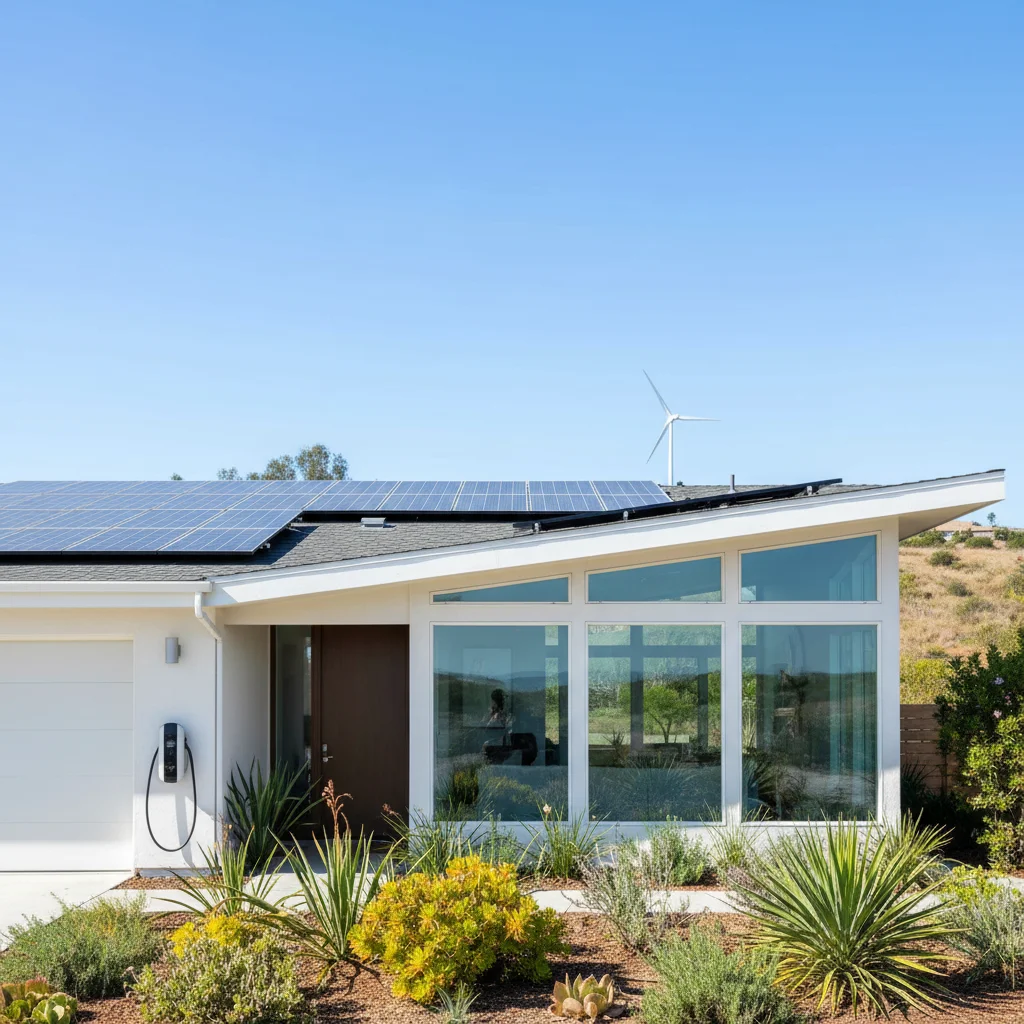
California homeowners left $187 million in unclaimed energy rebates on the table in 2025, money that could have covered 30% to 100% of heat pump installations, weatherization upgrades, and electrical panel work. And the window to capture 2026 funding closes faster than most realize—utility programs exhaust their allocations by September, federal tax credit documentation deadlines hit in January 2027, and state TECH Clean California vouchers disappear within 72 hours of opening each funding cycle.
California energy rebate applications in 2026 require submitting pre-approval forms before starting work, uploading contractor invoices and equipment specifications within 90 days of project completion, and providing income verification for means-tested programs like TECH Clean California ($3,000–$8,000) and utility-sponsored weatherization rebates ($2,000–$6,500). Form 5695 only covers qualifying work completed by December 31, 2025 and claimed on a 2025 return; the federal 25C and 25D credits ended after that date (IRS FS-2025-05). Federal tax credits for this work have ended, but state, local and utility rebates may still apply; check what is available at your address with the DuloCore rebate calculator.
What are the current energy rebate programs available in California for 2026?
California homeowners access rebates through three distinct channels: federal IRA tax credits, state-administered voucher programs, and utility-sponsored incentives. The federal Energy Efficient Home Improvement Credit (Section 25C) ended for property placed in service after December 31, 2025 (IRS FS-2025-05). The Inflation Reduction Act eliminated the old Section 25C and 25D credits on January 1, 2026, replacing them with income-tiered credits that scale up to $14,000 for households earning under 80% of area median income.
TECH Clean California offers point-of-sale vouchers worth $3,000 for moderate-income households and $8,000 for low-income households on heat pump installations, applied directly at the time of purchase through participating contractors. And utility programs like PG&E's Energy Savings Assistance, SoCalGas's Energy Upgrade California, and SMUD's Home Performance Program deliver $2,000–$6,500 for comprehensive weatherization packages including attic insulation, duct sealing, and HVAC tune-ups.
"The Inflation Reduction Act provides up to $14,000 in direct rebates for income-qualified households making energy efficiency improvements, with funds administered through state energy offices." — U.S. Department of Energy
But the three program types operate on incompatible timelines—federal credits apply at tax time in 2027, TECH vouchers require pre-reservation before contractor quotes, and utility rebates demand pre-approval inspections 10–15 business days before work starts.
How much can you save with California energy rebates?
A heat pump installation costing $18,000 in the Bay Area generates $5,400 in federal tax credits (30% of project cost), $8,000 in TECH Clean California vouchers for income-qualified households, and $2,500 in PG&E utility rebates—totaling $15,900 in combined incentives that reduce net cost to $2,100. Weatherization projects costing $8,500 for attic insulation, air sealing, and duct work yield $2,550 in federal credits and $3,000–$4,500 in utility rebates, bringing net cost down to $2,450–$3,450.
So the stacking potential reaches 85–90% of total project costs for income-qualified households combining all three rebate channels. And electrical panel upgrades required for heat pump installations qualify for separate $600 federal credits on top of equipment rebates, creating unexpected additional savings on necessary electrical work.
Rebate amounts vary by equipment type: heat pump water heaters generate $2,000 federal credits plus $500–$1,000 utility incentives, Energy Star windows deliver $600 federal credits (up to 30% of cost, $600 maximum), and smart thermostats trigger $100–$150 utility rebates when paired with HVAC upgrades. Use our free rebate calculator to model your specific project's incentive stack based on income level, utility territory, and planned improvements.
Am I eligible for California energy rebates?
The federal home energy tax credits (Sections 25C and 25D) ended for projects completed after December 31, 2025 (IRS FS-2025-05). Households earning under 80% of area median income ($104,400 for a family of four in Los Angeles County, $126,800 in San Francisco County) qualify for enhanced rebates covering up to 100% of project costs. TECH Clean California sets eligibility at $45,960–$91,920 annual income for moderate-income vouchers and under $45,960 for low-income vouchers, with exact thresholds adjusting by county and household size.
And utility rebates split into two tracks: income-qualified programs like PG&E's Energy Savings Assistance (free upgrades for households under 250% of federal poverty level, roughly $78,000 for a family of four) and general market programs open to all customers regardless of income. So a household earning $85,000 in Sacramento qualifies for federal tax credits and SMUD's market-rate rebates but falls outside TECH Clean California's income ceiling.
Homeowners must occupy the property as a primary residence for federal credits, while rental property owners qualify only if they cover 100% of upgrade costs without passing expenses to tenants. But renters themselves can claim federal credits for portable equipment like heat pump window units or portable heat pumps if they purchase and install devices in their rented units, a little-known provision that opens credits to non-homeowners.
What documentation do you need to apply for California energy rebates?
Form 5695 only covers qualifying work completed by December 31, 2025 and claimed on a 2025 return; the federal 25C and 25D credits ended after that date (IRS FS-2025-05). And the IRS demands receipts retained for seven years after filing, though returns typically process without submitting documents unless audited.
TECH Clean California applications need pre-approval through the online portal before purchasing equipment, requiring uploaded income verification (W-2s, pay stubs, or tax returns from the prior year), proof of home ownership (property tax bills or mortgage statements), and contractor quotes on company letterhead detailing equipment model numbers and AHRI certification numbers. So homeowners must secure three competing quotes to compare pricing and ensure selected contractors participate in the TECH network.
Utility rebates demand pre-inspection applications submitted 10–15 business days before work begins, post-installation verification inspections photographing equipment serial numbers and installation quality, and final invoices showing payment to licensed contractors (owner-installed work doesn't qualify). But the pre-inspection requirement creates the biggest bottleneck—PG&E's inspection backlog stretches to 21 business days during peak summer months, forcing homeowners to delay projects or risk rebate forfeiture.
What's the deadline to apply for California energy rebates in 2026?
Form 5695 only covers qualifying work completed by December 31, 2025 and claimed on a 2025 return; the federal 25C and 25D credits ended after that date (IRS FS-2025-05). The federal home energy tax credits (Sections 25C and 25D) ended for projects completed after December 31, 2025 (IRS FS-2025-05).
TECH Clean California operates on a "first-come, first-served" funding model with quarterly application windows opening unannounced and closing within 48–96 hours once allocations exhaust. The January 2026 funding round depleted $43 million in voucher reservations within 51 hours, leaving thousands of applications unfunded and waitlisted until the next quarterly release. So homeowners monitoring the TECH Clean California portal must submit applications within minutes of window openings to secure vouchers.
But utility rebates impose the strictest deadlines: applications expire 90 days after submission if work doesn't start, completed projects require rebate claims within 180 days of final inspection, and annual program budgets exhaust by August–October in high-demand territories like PG&E and SoCalGas. PG&E's 2025 Energy Savings Assistance funding ran out on September 12, forcing late-year applicants to wait until January 2026 budget replenishment.
How does the application process work step-by-step?
The stacking strategy determines application sequencing—homeowners must apply for TECH vouchers first (pre-purchase requirement), then submit utility pre-approvals (10–15 days before work starts), complete installations, claim utility rebates within 180 days, and file federal tax credits in April 2027. Starting with TECH reservations locks in $3,000–$8,000 before pricing equipment, preventing contractors from inflating quotes to capture rebate amounts.
Step 1: Create a TECH Clean California account and upload income verification documents, waiting for approval (typically 3–5 business days). Step 2: Reserve a voucher during open enrollment windows by submitting contractor quotes and equipment specifications, receiving a reservation number valid for 180 days. Step 3: Submit utility pre-approval applications with contractor details, equipment model numbers, and installation timelines, scheduling required pre-inspections.
Step 4: Complete installation using licensed contractors (C-20 HVAC or C-61 electrical licenses required), ensuring work passes Title 24 building code inspections. Step 5: Upload post-installation photos, final invoices, and equipment serial numbers to utility portals within 14 days of completion, triggering verification inspections (7–10 business days). Step 6: Receive utility rebate checks (mailed within 6–8 weeks), then compile all documentation for IRS Form 5695 filing in early 2027.
But the process breaks down when pre-approval inspections reveal code violations or outdated electrical systems—discovering a 100-amp panel can't support a heat pump during the pre-inspection delays projects by 4–6 weeks for panel upgrades, often causing TECH voucher reservations to expire and forcing reapplication in the next funding cycle. Read our guide on electrical panel upgrades to avoid this bottleneck.
Official Sources
- U.S. Department of Energy Save Energy, Save Money — Federal energy efficiency rebates, tax credits, and IRA program details for homeowners (note: the federal 25C and 25D credits ended for projects completed after December 31, 2025)
- DSIRE USA California Programs — Comprehensive database of state and utility energy incentives, updated quarterly with current program rules
- TECH Clean California — Official state heat pump voucher program with real-time funding availability and application portal
Related Reading: Learn more about Energy Audit Townhouse and Energy Star Appliance Rebates Near Me.
Frequently Asked Questions
What are the eligibility requirements for California energy rebates?
The federal home energy tax credits (Sections 25C and 25D) ended for projects completed after December 31, 2025 (IRS FS-2025-05). Households under 80% of area median income qualify for enhanced rebates up to 100% of costs. TECH Clean California caps eligibility at $91,920 for moderate-income and $45,960 for low-income households. Utility programs like PG&E's Energy Savings Assistance serve households under 250% of federal poverty level (~$78,000 for a family of four), while market-rate utility rebates remain open to all customers.
How much money can you get from California energy rebates?
Combined federal, state, and utility rebates deliver $8,000–$15,900 on heat pump installations costing $15,000–$20,000, reducing net costs to $2,100–$7,000. Federal credits contribute $2,000–$5,400 (30% of project cost), TECH vouchers add $3,000–$8,000 for income-qualified households, and utility rebates provide $2,000–$6,500. Weatherization projects generate $5,000–$7,500 in combined incentives on $8,000–$10,000 investments. Calculate your specific savings with our rebate calculator.
What is the application process for California energy rebates?
Reserve TECH Clean California vouchers first during quarterly enrollment windows (funds exhaust in 48–72 hours), then submit utility pre-approval applications 10–15 days before work starts. Complete installations using licensed contractors, upload post-installation documentation to utility portals within 14 days, and file IRS Form 5695 with 2026 tax returns by April 15, 2027. Utility rebate checks arrive 6–8 weeks after verification inspections.
When is the deadline to apply for California energy rebates?
Form 5695 only covers qualifying work completed by December 31, 2025 and claimed on a 2025 return; the federal 25C and 25D credits ended after that date (IRS FS-2025-05). TECH Clean California opens quarterly funding windows that close within 48–96 hours once allocations exhaust—the January 2026 round depleted in 51 hours. Utility rebates impose 90-day application expiration from submission and 180-day claim deadlines after project completion, with annual budgets exhausting by August–October in high-demand territories.
What is the difference between federal and California state energy rebates?
The federal home energy tax credits (Sections 25C and 25D) ended for projects completed after December 31, 2025 (IRS FS-2025-05). California's TECH Clean California delivers point-of-sale vouchers ($3,000–$8,000) applied immediately at purchase through participating contractors, requiring income verification and pre-reservation during limited enrollment windows. Utility rebates ($2,000–$6,500) demand pre-approval inspections and post-installation verification but impose no income limits for market-rate programs.
Ready to stack your rebates? Use our free rebate calculator to discover exactly which federal, state, and utility programs apply to your home, income level, and planned upgrades—then generate a step-by-step application timeline that maximizes your savings while meeting every deadline.
Last updated April 14, 2026 — reviewed by DuloCore Editorial. About our authors.