Update (2026): The federal Energy Efficient Home Improvement Credit (Section 25C) expired December 31, 2025, following the passage of the OBBBA. Check state and local programs for current incentives.
Up to 30% of a home's heating and cooling energy is lost through air leaks in windows, doors, and ducts. This energy waste directly translates to higher utility bills every month, a problem that a mini split energy audit assessment is designed to pinpoint and solve. So homeowners are now using these assessments not just to identify efficiency gaps but to unlock thousands of dollars in government rebates for new, high-efficiency mini split systems.
How Much Can You Save on a Mini Split Energy Audit, and Are You Eligible for Rebates?
A mini split energy audit assessment qualifies homeowners for 2026 federal rebates up to $150 and state incentives averaging $100-$300. Eligibility often requires using a certified auditor and meeting income thresholds for enhanced rebates, with programs funded through the Inflation Reduction Act (IRA).
An energy audit is the required first step for accessing the most valuable rebates for mini split heat pumps. The federal government, under the IRA, offers a direct rebate of up to $150 to cover the cost of a home energy audit. And this audit identifies the specific upgrades your home needs to maximize efficiency, which then qualifies you for larger equipment rebates. For instance, the Home Electrification and Appliance Rebate (HEEHRA) program provides up to $8,000 for a new heat pump for low-income households. So completing the audit is not just about finding leaks; it's the gateway to accessing these 2026 funds. State and utility programs often add their own incentives, sometimes offering an additional $100-$300 for the audit itself, further reducing the upfront cost for homeowners seeking to upgrade their HVAC systems.
What's the Step-by-Step Process to Apply for Mini Split Rebates, and What Are the Contractor Requirements?
The 2026 mini split rebate application process requires a pre-installation energy audit from a certified contractor. So homeowners submit the audit report, equipment invoices, and proof of income to their state energy office or utility. Contractor certification, like BPI, is mandatory for most programs.
The application journey begins with scheduling an assessment with a Building Performance Institute (BPI) certified technician. This isn't optional for most programs. So after the audit, the technician provides a detailed report outlining recommended upgrades, including the appropriate mini split model. And homeowners then purchase and install an ENERGY STAR certified system. The contractor must follow all local codes and program-specific installation guidelines. Once the installation is complete, the homeowner gathers the audit report, the final paid invoice, and equipment specification sheets. But the final step involves submitting this package through an online portal managed by the state energy office or local utility. Approval times range from 4 to 8 weeks, after which the rebate is issued as a check or direct deposit. Use our free rebate calculator to find your exact savings.
What Are the Deadlines for Mini Split Rebates, Is Funding Still Available, and How Do Programs Vary by State and Utility?
Most 2026 mini split rebates, funded by the IRA, are available until September 30, 2031, but state funding is allocated annually and depletes. So homeowners must check their state energy office's website for current funding status, as programs in states like California often run out by Q3.
While the federal IRA provides a long-term funding window through 2031, the money is distributed to states, which manage their own programs on a first-come, first-served basis. This creates urgency. So a state like New York may exhaust its annual HEEHRA funding by October, while a neighboring state's program remains open. And utility-specific rebates operate on even shorter timelines, often resetting with the calendar or fiscal year. For example, Con Edison’s 2026 heat pump rebates have a deadline of December 31, 2026, or whenever funds are depleted. Therefore, verifying the current funding status and application deadlines directly with the state energy office and local utility provider is a critical step before beginning any project. Procrastination often results in missing out on thousands of dollars.
"DSIRE is the most comprehensive source of information on incentives and policies that support renewables and energy efficiency in the United States." — DSIRE
Can You Combine Mini Split Rebates with Other Programs, and How Can You Maximize Your Total Savings?
Homeowners in 2026 combine federal mini split rebates with state and utility programs, often saving an additional $500 to $2,000. So stacking requires meeting each program's unique rules. But the federal tax credit cannot be combined with the HEEHRA point-of-sale rebate for the same equipment.
Maximizing savings involves a strategy of "stacking" incentives. For instance, a homeowner can receive the HEEHRA rebate of up to $8,000 for a new mini split system and also claim a separate rebate from their local utility for $500. And some states offer an additional "kicker" for decommissioning old fossil fuel equipment, adding another $250. But it's crucial to understand the rules. The federal energy tax credits (up to $2,000 for heat pumps) and the HEEHRA rebate are mutually exclusive for the same installation. Homeowners must choose one. So the most financially advantageous path is typically to claim the point-of-sale HEEHRA rebate if eligible, as it reduces upfront cost, and then layer on any available state, local, and utility rebates that permit stacking.
How Do Income Limits Affect Your Eligibility for Mini Split Energy Audit Rebates?
2026 income limits directly affect mini split rebate amounts, particularly through the HEEHRA program. So households earning below 80% of their area median income (AMI) receive up to 100% of costs covered, capped at $8,000, while those between 80-150% AMI receive 50%.
Income is the primary determinant for the most generous 2026 federal rebates. The HEEHRA program is explicitly designed for low-to-moderate-income (LMI) households. A family of four earning less than 80% of the AMI in their county qualifies for a rebate covering 100% of the project cost, up to a maximum of $8,000 for a heat pump. And for those earning between 80% and 150% of AMI, the rebate covers 50% of the project cost. Households above 150% AMI are not eligible for HEEHRA. So they instead utilize the federal tax credits and other non-income-restricted state or utility programs. These income thresholds make high-efficiency upgrades accessible to families who stand to benefit most from lower energy bills. Some states offer their own LMI programs, like California's Disadvantaged Communities - Single-family Solar Homes (DAC-SASH) program, which provides upfront capital for geothermal tax credit eligible systems.
Mini Split Rebate Program Comparison (2026)
| Feature | HEEHRA Rebate (Federal) | Energy Efficient Home Improvement Credit (Federal) | Typical Utility Rebate |
|---|---|---|---|
| Max Amount | $8,000 for heat pump | $2,000 for heat pump | $300 - $1,500 |
| Income Limit | Yes (<150% of AMI) | No | Sometimes |
| Application | Point-of-sale discount | File with federal taxes | Post-installation application |
| Deadline | Sept 30, 2031 (or when state funds deplete) | Dec 31, 2025 | Annually, often Dec 31 |
Official Sources
- ENERGY STAR Rebate Finder — A tool from the U.S. Environmental Protection Agency to find local rebates and special offers.
- U.S. Department of Energy (DOE) Savings Hub — Official federal portal for information on Inflation Reduction Act home energy rebates and tax credits. (note: the federal 25C and 25D credits ended for projects completed after December 31, 2025)
- Database of State Incentives for Renewables & Efficiency (DSIRE) — A comprehensive database of state, local, utility, and federal incentives for energy efficiency.
Frequently Asked Questions
What qualifies my home for a mini split energy audit assessment rebate?
To qualify for the 2026 federal rebate of up to $150, your home must be your primary residence. And the audit must be conducted by a qualified home energy auditor. So some state and utility programs add requirements, such as the age of your home or your current heating fuel type, before approving an audit rebate.
How do I schedule a mini split energy audit assessment for rebate purposes?
Homeowners schedule an audit by contacting a certified energy assessor. Organizations like the Building Performance Institute (BPI) or the Residential Energy Services Network (RESNET) maintain directories of certified professionals. So many state energy office websites also provide lists of approved local contractors who are qualified to perform audits for rebate programs active in 2026.
Is the cost of a mini split energy audit assessment covered by rebates?
Yes, the cost is often partially or fully covered. The federal IRA provides a rebate of up to $150 for the audit itself. And many state and utility programs offer additional rebates, ranging from $100 to $300, which can be stacked. So for some income-qualified households, the combined rebates cover 100% of the audit cost, which typically ranges from $250 to $500.
What information will I receive after a mini split energy audit assessment?
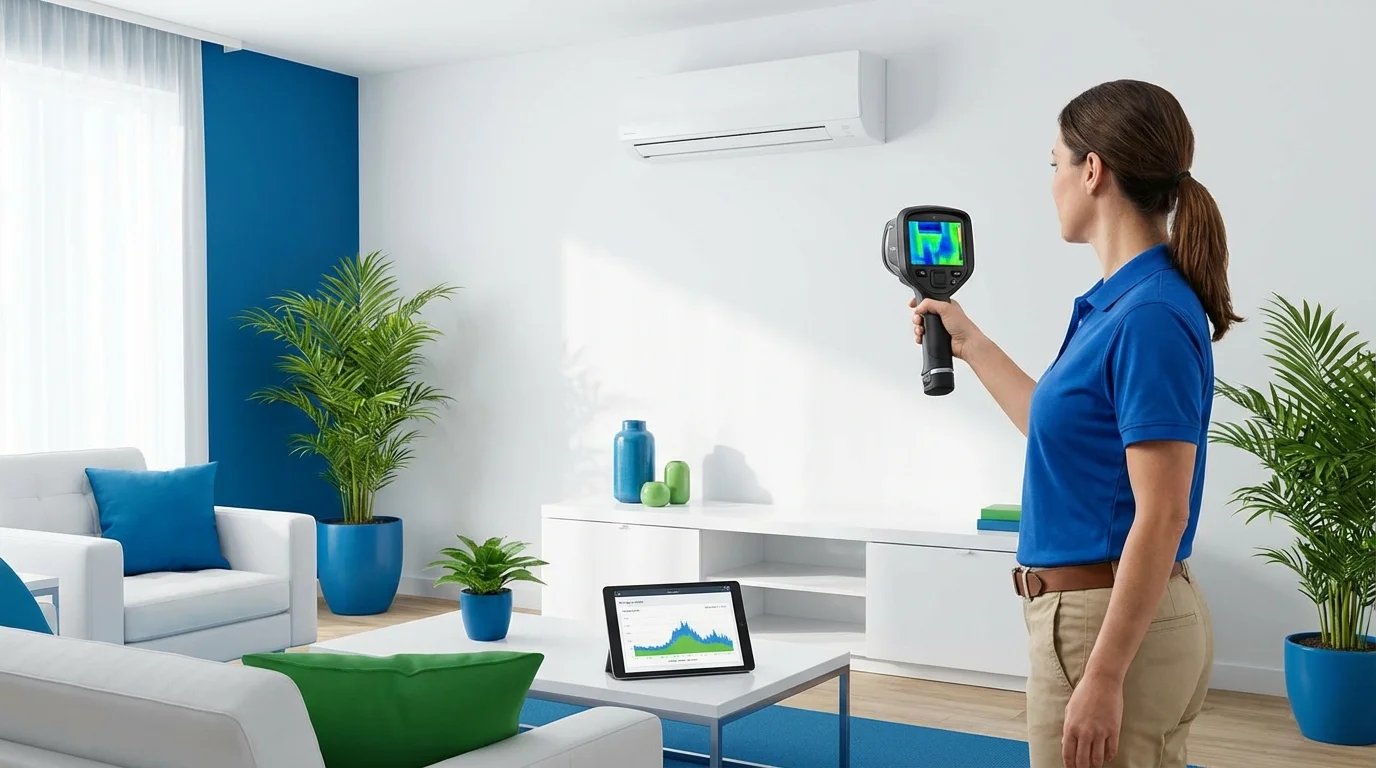
After the assessment, you receive a detailed report, usually within 5-7 business days. This report includes a prioritized list of energy-saving recommendations, blower door test results showing your home's air leakage rate (measured in CFM50), and thermal imaging photos identifying insulation gaps. So it also provides projected cost savings and payback periods for each recommended upgrade.
Are there specific deadlines to complete a mini split energy audit assessment for rebate eligibility?
Yes, deadlines are critical. The audit must typically be completed within 12 months before the installation of the new mini split system to qualify for 2026 equipment rebates. And the audit rebate itself often has a submission deadline, usually 90 days after the audit is performed. Always verify specific program timelines with your state energy office or utility.
Last reviewed: April 14, 2026. Reviewed by DuloCore Energy Specialists. About the team.
Check your California heat pump rebate eligibility — see the programs you qualify for and the dollar amounts on our California heat pump rebate finder.