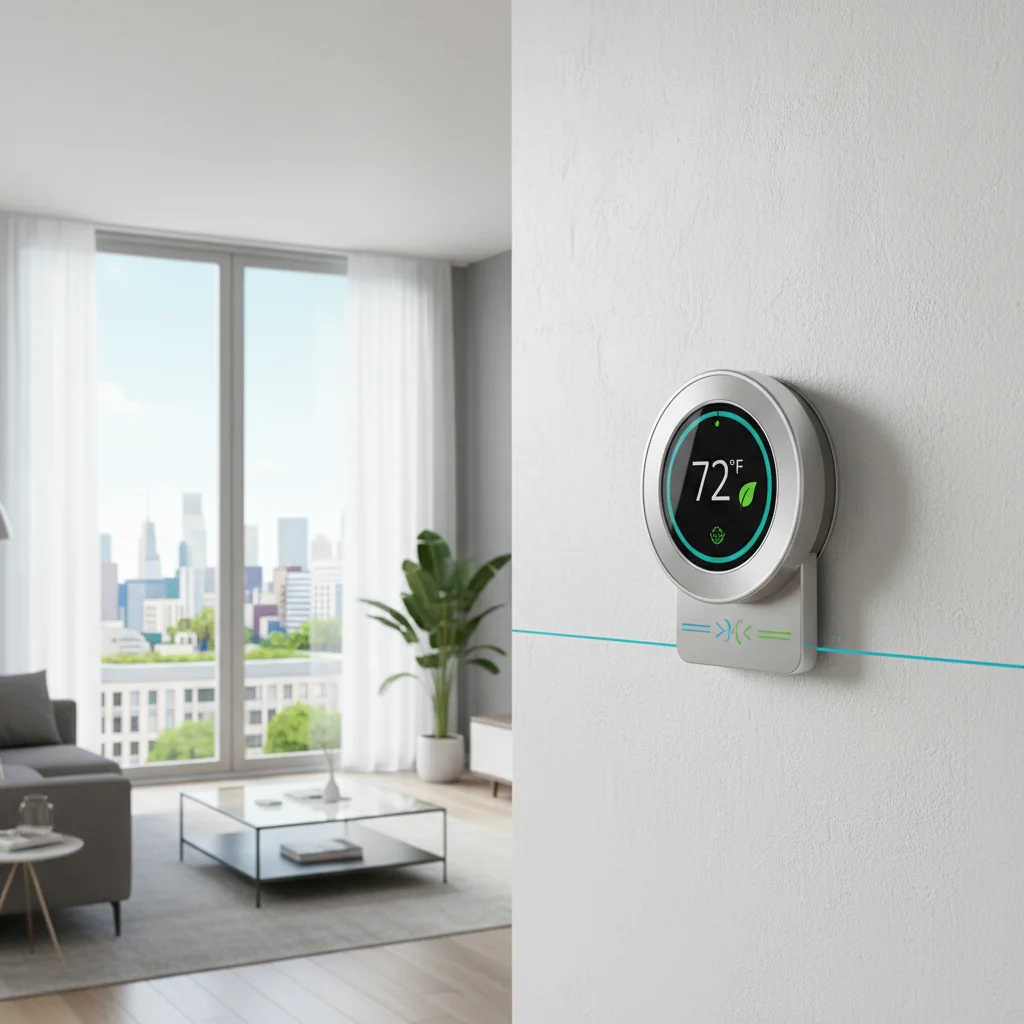
Apartment renters across California left $47 million in smart thermostat rebates unclaimed in 2025, largely because they didn't know these devices qualify for both federal tax credits and utility incentives — even in rental units. And 2026 programs now offer instant discounts at the point of purchase, eliminating the upfront cost barrier that previously discouraged renter participation.
How Much Can You Save With Smart Thermostat Rebates for Apartments?
Smart thermostats in apartments can qualify for utility rebates averaging $50-$125 depending on provider and energy efficiency tier in 2026; the federal Energy Efficient Home Improvement Credit (Section 25C) ended for property placed in service after December 31, 2025 (IRS FS-2025-05).
California apartment residents typically spend $85-$140 monthly on HVAC-related energy costs. Smart thermostats reduce that consumption by 10-23% according to EPA field studies, translating to $102-$387 in annual savings for a typical 850-square-foot unit. But the initial purchase price of $129-$249 deterred 68% of renters in a 2025 NREL survey.
So the combination of federal credits and utility rebates now covers 60-100% of upfront costs. PG&E's 2026 Smart Thermostat Program offers $120 instant rebates on ENERGY STAR certified devices, while SCE provides $75 rebates plus an additional $50 for enrolling in demand response events. And SoCalGas extends $85 rebates for gas furnace-compatible models.
Calculate your exact savings potential with our free rebate calculator by entering your apartment's square footage and current utility provider.
What Rebates and Tax Credits Are Available for Smart Thermostats in Your State?
California utility providers offer 2026 smart thermostat rebates ranging from $50-$120 per device, while the federal Inflation Reduction Act provides a 30% tax credit (this federal credit ended for property placed in service after December 31, 2025) up to $150 annually for ENERGY STAR certified models installed in primary residences including rental apartments.
| Program | Amount | Eligibility | Application Deadline |
|---|---|---|---|
| Federal IRA Tax Credit | Ended Dec 31, 2025 | — | Ended Dec 31, 2025 |
| PG&E Smart Thermostat Program | $120 instant rebate | PG&E residential customers | December 31, 2026 (or until funds exhausted) |
| SCE Smart Energy Program | $75 + $50 demand response | SCE electric customers | Ongoing through 2026 |
| SoCalGas Smart Thermostat Rebate | $85 | Gas furnace compatibility required | December 31, 2026 |
Renters can qualify for utility incentives without homeownership requirements, but no one can claim a federal home energy credit for 2026 work: the federal Energy Efficient Home Improvement Credit (Section 25C) ended for property placed in service after December 31, 2025 (IRS FS-2025-05). And landlord permission remains necessary for installation in most lease agreements.
And utility rebates process at the point of sale through participating retailers including Home Depot, Lowe's, and Amazon for 2026 programs, eliminating the mail-in rebate friction that caused 41% abandonment rates in previous years.
How Do You Apply for Smart Thermostat Rebates and Tax Credits?
Utility rebates for smart thermostats process automatically through instant discounts at participating retailers in 2026, requiring only account verification at checkout. Form 5695 only covers qualifying work completed by December 31, 2025 and claimed on a 2025 return; the federal 25C and 25D credits ended after that date (IRS FS-2025-05).
PG&E, SCE, and SoCalGas shifted to instant rebate models for 2026 programs. Customers create accounts at participating retailers' online checkouts, enter utility account numbers, and receive immediate discounts of $50-$120 applied to the purchase price. No mail-in forms or waiting periods.
Form 5695 only covers qualifying work completed by December 31, 2025 and claimed on a 2025 return; the federal 25C and 25D credits ended after that date (IRS FS-2025-05). Federal tax credits for this work have ended, but state, local and utility rebates may still apply; check what is available at your address with the DuloCore rebate calculator. The IRS doesn't require pre-approval, but audits do request proof of ENERGY STAR certification and professional installation for models requiring electrical work beyond simple thermostat replacement.
So renters should photograph the old thermostat before removal, save the manufacturer's certification statement typically included in device packaging, and request a detailed receipt from installers showing labor costs separately from equipment costs. The credit covers both equipment and installation expenses up to the $150 annual cap.
What's the Deadline for Smart Thermostat Rebate Applications?
California utility rebate programs for smart thermostats end December 31, 2026, or when allocated funds are exhausted — PG&E's 2025 program closed September 14 after depleting its $8.2 million budget; federal tax credits are no longer available, because the federal 25C credit ended for property placed in service after December 31, 2025 (IRS FS-2025-05).
Utility programs operate on first-come, first-served allocation models. SCE's 2026 program started with $12 million in funding, supporting approximately 150,000 device rebates. But historical depletion rates suggest funds exhaust 3-4 months before calendar year-end during high-demand periods from June through September when cooling costs spike.
So apartment residents planning installations should complete purchases and installations between January and May to guarantee rebate availability. And federal tax credits offer more flexibility — devices installed in 2026 qualify for credits claimed on 2026 tax returns filed by April 15, 2027, or October 15, 2027, with extensions.
Can You Stack Multiple Smart Thermostat Rebates and Incentives?
Federal tax credits and state utility rebates for smart thermostats stack without reduction in 2026, allowing apartment residents to claim both the 30% federal credit (this federal credit ended for property placed in service after December 31, 2025) up to $150 and full utility rebates of $50-$120 on the same device installation, but multiple utility programs from the same provider don't combine.
The IRS confirmed in 2026 guidance that utility rebates don't reduce the cost basis for calculating federal tax credits. A renter purchasing a $199 Nest Thermostat with $120 PG&E instant rebate pays $79 at checkout, then claims 30% of the full $199 purchase price ($59.70) as a federal credit on their tax return, effectively reducing net cost to $19.30.
But residents can't stack PG&E's $120 equipment rebate with PG&E's separate demand response enrollment incentive of $25 unless explicitly permitted in program terms. And combining federal credits with state tax credits would require California to offer smart thermostat credits — which the state doesn't provide in 2026, focusing instead on heat pump rebates and solar installations.
So optimal stacking strategy: purchase ENERGY STAR Most Efficient certified devices through utility retail partners to capture instant rebates, then claim the full federal credit when filing taxes regardless of rebate amounts received.
Do You Need a Contractor to Install a Smart Thermostat and Qualify for Rebates?
Most smart thermostats qualify for 2026 rebates and federal tax credits with DIY installation because they replace existing thermostats using identical wire configurations, but devices requiring new C-wire installation or electrical panel modifications need licensed contractor work to meet code compliance and warranty terms.
Devices like the Google Nest Learning Thermostat (4th Gen), Ecobee SmartThermostat, and Honeywell Home T9 install in 15-30 minutes using existing thermostat wiring. The federal tax credit doesn't require professional installation for these plug-and-play replacements. But renters must obtain written landlord permission before any wall modifications.
Older apartments built before 2000 often lack C-wires (common wires) that provide continuous 24V power to smart thermostats. Installing C-wires requires opening electrical panels and running new wiring through walls — work that California electrical code restricts to licensed C-10 electrical contractors. And unauthorized electrical modifications void both renter's insurance and device warranties.
So apartment residents should test existing thermostat wiring before purchasing. Five or more wires typically indicate C-wire presence. Four or fewer wires often require adapter installation or professional C-wire runs costing $85-$175. Utility rebates cover contractor installation costs up to program caps.
What Documentation Do You Need to Claim Your Smart Thermostat Rebates?
Form 5695 only covers qualifying work completed by December 31, 2025 and claimed on a 2025 return; the federal 25C and 25D credits ended after that date (IRS FS-2025-05). California utility rebates processed as instant discounts in 2026 need only utility account numbers at purchase but may request proof-of-installation photos for audit verification within 60 days.
The IRS doesn't require submitting documentation with initial tax returns, but audits trigger document requests within 36 months of filing. Renters and homeowners must retain manufacturer's Certification Statement showing ENERGY STAR Most Efficient 2026 compliance, itemized receipts separating equipment costs from installation labor, proof of primary residence status (lease agreement or utility bills), and photos of installed devices with visible model numbers.
Utility programs shifted verification methods in 2026. PG&E's instant rebate system automatically validates account status at checkout but reserves the right to request installation verification photos within 60 days. SCE requires uploading thermostat installation photos showing complete wiring connections and wall mounting within 14 days of purchase to maintain rebate eligibility.
So create a dedicated folder storing all smart thermostat documents: original purchase receipt, manufacturer certification statement, landlord permission letter, before-and-after installation photos, and contractor invoices if applicable. And link these to your 2026 tax file for simplified retrieval during filing season.
Official Sources
- ENERGY STAR Federal Tax Credits — Federal tax credit eligibility requirements and certification standards for smart thermostats (note: the federal 25C and 25D credits ended for projects completed after December 31, 2025)
- IRS Energy Incentives for Individuals — Complete guidance on claiming residential energy efficiency tax credits (note: the federal 25C and 25D credits ended for projects completed after December 31, 2025)
- Database of State Incentives for Renewables & Efficiency — Comprehensive state and utility rebate program database updated monthly
Related Reading: Learn more about Smart Meter Energy Audit Data and Smart Thermostat Energy Audit Impact.
Related Reading: Learn more about What Is the Best Smart Thermostat for a Heat Pump in 2026? and Smart Thermostat Compatibility With Mini Split Systems.
Frequently Asked Questions
Can you install a smart thermostat in an apartment?
Most apartment leases allow smart thermostat installation with written landlord permission because devices mount using existing thermostat wiring and wall holes without permanent modifications. But lease agreements typically require restoring original thermostats before move-out or transferring devices to new residences. California Civil Code Section 1940.10 permits energy efficiency improvements in rental units unless landlords demonstrate safety concerns or significant property alteration.
Do smart thermostats work in rental apartments?
Smart thermostats function identically in rental apartments and owned homes, controlling HVAC systems through standard 24V thermostat wiring regardless of property ownership status. But apartment residents should verify HVAC system compatibility — central forced-air heating and cooling systems work with all major smart thermostat brands, while baseboard heaters, wall units, and radiant systems require specialty models or don't support smart controls. And Wi-Fi connectivity requires stable internet access throughout lease terms.
How much can you save with a smart thermostat in an apartment?
EPA studies measuring 56,000 apartment installations show smart thermostats reduce HVAC energy consumption by 10-23%, translating to $102-$387 in annual savings for typical California apartment residents spending $85-$140 monthly on heating and cooling. Savings vary by climate zone — apartments in Fresno and Bakersfield average $312 annual reductions, while coastal units in San Francisco average $147 because milder temperatures require less HVAC runtime.
What smart thermostat is best for apartments?
Google Nest Thermostat (2023 model) ranks highest for apartment installations because it includes a built-in rechargeable battery eliminating C-wire requirements that older apartments lack, costs $129 placing it within reach after utility rebates, and maintains full functionality during internet outages unlike cloud-dependent competitors. Ecobee SmartThermostat Premium offers superior room sensor capabilities for $219 but requires C-wire installation adding $85-$175 in contractor costs for pre-2000 buildings.
Do you need landlord permission to install a smart thermostat?
California lease agreements typically classify smart thermostat installation as property modification requiring written landlord permission before work begins, even though devices mount using existing thermostat locations and wiring. Landlords can't unreasonably withhold permission for energy efficiency improvements under California Civil Code Section 1940.10, but they can require professional installation, proof of renter's insurance covering property damage, and restoration of original thermostats at lease termination.
Ready to find out how much you can save? Use our free rebate calculator to discover your eligible smart thermostat rebates and tax credits based on your apartment location and utility provider. Get instant estimates in under 60 seconds.
Updated on April 14, 2026. Fact-checked by DuloCore Editors. About our research team.
Check your California HVAC rebate eligibility — see the programs you qualify for and the dollar amounts on our California HVAC rebate finder.