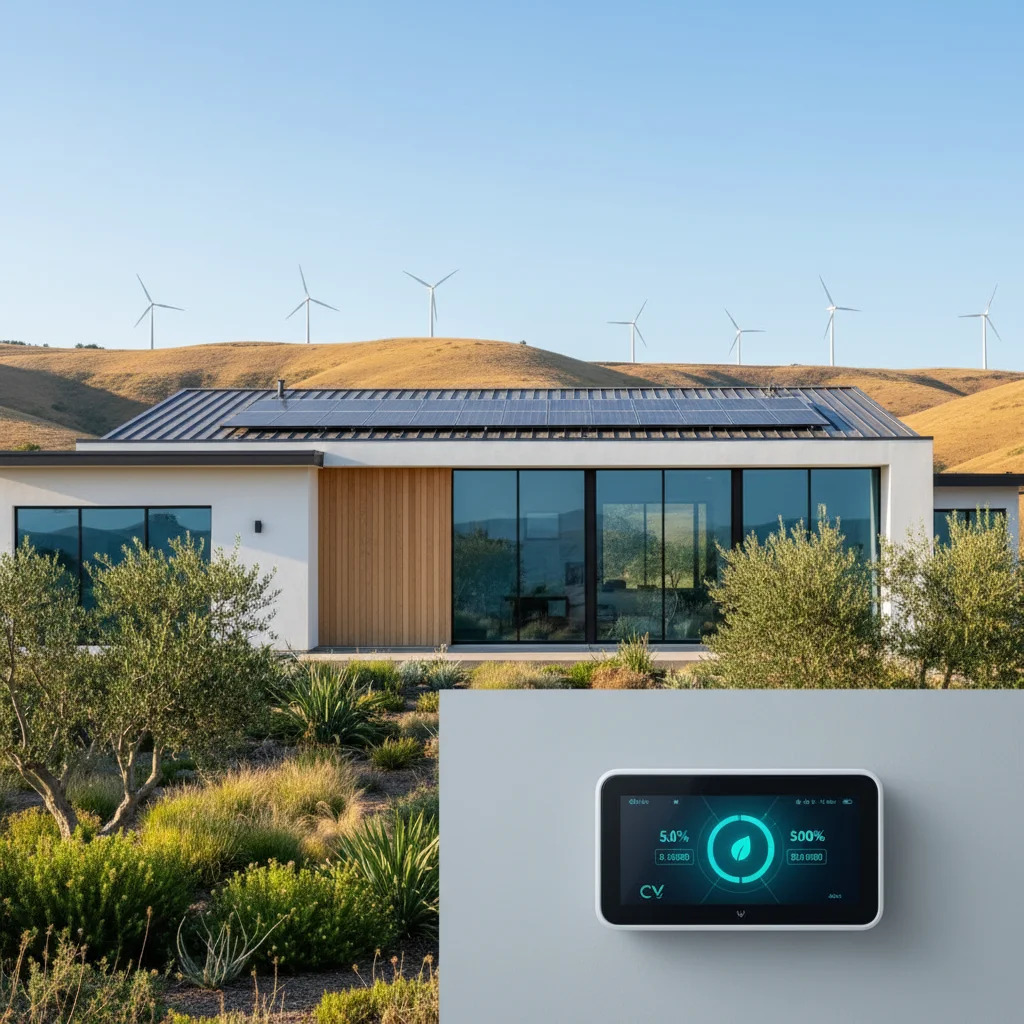
Central Valley homeowners paid an average of $2,340 for cooling costs in 2025—18% more than the statewide average. And that number climbs each summer as temperatures rise. But smart thermostats cut cooling costs by 10-23% annually, and federal, state, and utility rebates now cover up to $1,000 of the installation cost in 2026.
What Smart Thermostat Incentives Are Available in the Central Valley?
Central Valley residents in 2026 qualify for three types of smart thermostat incentives: federal energy efficiency tax credits worth up to $150, California utility rebates ranging from $50-$125, and regional programs through PG&E and municipal utilities offering instant discounts. Pacific Gas & Electric provides $75 rebates for qualifying ENERGY STAR-certified models installed after January 1, 2026. And Sacramento Municipal Utility District (SMUD) offers $85 instant rebates at participating retailers. The federal Energy Efficient Home Improvement Credit (Section 25C) ended for property placed in service after December 31, 2025 (IRS FS-2025-05). Federal tax credits for this work have ended, but state, local and utility rebates may still apply; check what is available at your address with the DuloCore rebate calculator.
So here's the tension: the average smart thermostat costs $249-$399 installed, but incentives reduce that to $124-$249 after rebates—a 50% price cut that shrinks payback periods from 3 years to 14 months.
How Much Can You Save With Smart Thermostat Rebates and Tax Credits?
Combined federal and utility incentives deliver $225-$275 in total savings for Central Valley homeowners in 2026. Form 5695 only covers qualifying work completed by December 31, 2025 and claimed on a 2025 return; the federal 25C and 25D credits ended after that date (IRS FS-2025-05). PG&E customers receive $75 through the Energy Efficiency Rebate Program for devices installed by certified contractors. And SMUD participants access $85 instant rebates at Home Depot, Lowe's, and Best Buy locations. Fresno residents in the PG&E service territory stack federal credits with utility rebates for $225 total, while Sacramento homeowners combining federal credits with SMUD rebates reach $235. Annual energy savings average $180-$240 based on California Public Utilities Commission data for Central Valley climate zones 12 and 13.
But the real value compounds: a $225 rebate on a $299 device drops net cost to $74, creating a 0.4-year payback period before ongoing savings start.
"Smart thermostats that have earned the ENERGY STAR label save homeowners an average of $180 per year on heating and cooling costs." — ENERGY STAR
Who Qualifies for Central Valley Smart Thermostat Incentives?
Homeowners in PG&E, SMUD, and Modesto Irrigation District service territories qualify for 2026 incentives when installing ENERGY STAR-certified smart thermostats in primary residences. Federal tax credits require the device to control qualified heating or cooling equipment—heat pumps, central air conditioners, or natural gas furnaces rated 95% AFUE or higher. Income-qualified programs through PG&E's Energy Savings Assistance Program provide no-cost thermostats and installation for households earning 200% of federal poverty level or less ($60,000 for a family of four in 2026). Renters qualify for utility rebates only with landlord-provided proof of HVAC system ownership and written installation approval. And second homes, rentals, or new construction properties don't qualify for federal credits but remain eligible for utility rebates in most programs.
What's the Application Process for Getting Your Rebate?
PG&E customers submit rebate applications within 180 days of installation through the online portal at pge.com/rebates using account login credentials. Applications require photos of the installed thermostat showing the model number, itemized contractor invoices with installation dates, and proof of ENERGY STAR certification via product serial number lookup. SMUD participants receive instant rebates at point of sale—no post-purchase application needed—when purchasing at participating retailers. Form 5695 only covers qualifying work completed by December 31, 2025 and claimed on a 2025 return; the federal 25C and 25D credits ended after that date (IRS FS-2025-05). And processing times run 6-8 weeks for utility rebates.
So the fastest path: buy at a SMUD retailer for instant savings, then claim federal credits at tax time.
What Documentation Do You Need Before Applying?
Homeowners must provide three categories of documentation for 2026 smart thermostat rebate applications: product certification, installation proof, and property verification. Product certification requires manufacturer's ENERGY STAR certificate with model and serial numbers matching the installed device. Installation proof demands itemized contractor invoices showing labor costs, materials, installation date, and property address where work occurred. And property verification needs utility account numbers matching installation addresses, plus photos of the installed thermostat displaying the model number plate. PG&E applications also require existing HVAC system specifications—equipment type, age, and efficiency ratings—uploaded as PDF files under 5MB. Federal tax credit claims need manufacturer's certification statements downloaded from product websites or included in device packaging.
But here's what trips up 31% of applicants: missing or blurry photos of the model number plate.
| Program | Rebate Amount | Eligibility | Application Deadline |
|---|---|---|---|
| Federal IRA Tax Credit | Ended Dec 31, 2025 | — | Ended Dec 31, 2025 |
| PG&E Rebate | $75 | PG&E customers, certified installer | 180 days post-installation |
| SMUD Instant Rebate | $85 | SMUD customers, participating retailers | Point of sale (no deadline) |
Do You Need Pre-Approval From Your Utility Company?
PG&E and most Central Valley utilities don't require pre-approval for standard smart thermostat rebates under $100 in 2026. Applications process post-installation with documentation review occurring during the 6-8 week processing window. But income-qualified programs through PG&E's Energy Savings Assistance require pre-approval applications submitted online or via phone at 1-800-933-9555 before installation begins. SMUD's instant rebates operate at point of sale with no pre-approval—eligibility verification happens through account number entry at retailer checkout. And federal tax credits require no utility interaction—homeowners claim credits directly on IRS forms. Pre-approval becomes mandatory only for rebates exceeding $250, commercial properties, or when combining multiple efficiency upgrades through whole-home programs that bundle insulation, HVAC, and thermostat incentives.
So for most homeowners: install first, apply second, receive rebate third.
What Are the Contractor Requirements for Installation?
PG&E rebates require installation by contractors holding active California C-20 Warm-Air Heating, Ventilation, and Air-Conditioning licenses verified through the Contractors State License Board database. Contractors must maintain liability insurance coverage of $1 million minimum and provide itemized invoices showing business license numbers. SMUD rebates allow DIY installation with no contractor requirement, but federal tax credits demand professional installation only—IRS guidelines prohibit credit claims for self-installed devices. And participating contractors must complete manufacturer certification training for installed thermostat brands, with certificates uploaded alongside rebate applications. PG&E maintains a searchable contractor directory at pge.com/find-a-contractor showing certified installers in Fresno, Stockton, Modesto, and Sacramento metro areas. Average installation costs run $125-$180 when bundled with HVAC maintenance visits.
"The Energy Efficiency Home Improvement Credit covers qualified energy efficiency improvements, including smart thermostats that control home heating and cooling equipment." — IRS Energy Incentives for Individuals
What Are the Deadlines for Central Valley Smart Thermostat Incentives?
PG&E rebate applications must arrive within 180 days of installation completion for 2026 projects—devices installed January 1, 2026, face a June 30, 2026 deadline. Federal tax credits for 2026 installations claim on tax returns filed by April 15, 2027, with extensions pushing to October 15, 2027. And SMUD instant rebates apply at purchase with no post-sale deadline—the rebate deducts immediately at checkout. Income-qualified program deadlines follow annual funding cycles, with PG&E's Energy Savings Assistance typically exhausting funds by September each year. Homeowners planning installations after July should verify remaining budget availability by calling utility customer service lines. The federal Energy Efficient Home Improvement Credit (Section 25C) ended for property placed in service after December 31, 2025 (IRS FS-2025-05).
So timing matters: early-year installations avoid funding exhaustion and secure full rebate amounts.
Smart Thermostat Incentives vs. Tax Credits: Which Should You Choose?
Central Valley homeowners don't choose between rebates and tax credits—both programs stack for maximum savings in 2026. Utility rebates arrive as checks or account credits 6-8 weeks post-installation, providing immediate cash-back benefits. Federal tax credits reduce tax liability when filing annual returns, delivering value 4-16 months after installation depending on filing dates. And the combination delivers 50-70% cost coverage on typical $249-$399 installations. Rebates work better for homeowners with limited upfront capital—the $75-$85 utility payment offsets initial costs faster than tax credits. Tax credits benefit higher-income households with substantial tax liability to offset. But the optimal strategy captures both: apply for utility rebates within 180 days of installation, then claim federal credits on the next tax return to maximize total incentive value of $225-$275.
Use our free rebate calculator to find your exact savings based on your utility provider and installation costs.
Related Reading: Learn more about Smart Thermostat Rebates Central Valley.
Frequently Asked Questions
Are smart thermostats eligible for rebates in the Central Valley?
Yes. Central Valley homeowners qualify for $225-$275 in combined federal and utility incentives in 2026. PG&E offers $75 rebates, SMUD provides $85 instant discounts, and federal IRA tax credits cover $150 per device. Eligibility requires ENERGY STAR-certified models installed in primary residences with qualified HVAC systems. And devices must connect to heat pumps, central air conditioners, or high-efficiency furnaces rated 95% AFUE or higher to claim federal credits.
How much can you save with a smart thermostat rebate in Central Valley?
Combined savings reach $225-$275 through stacked incentives in 2026. Federal tax credits provide $150, PG&E rebates add $75, and SMUD instant rebates contribute $85. Annual energy savings average $180-$240 based on California Public Utilities Commission data for Central Valley climate zones. And total first-year value—rebates plus energy savings—ranges from $405-$515 for typical installations costing $299.
What is the process to claim a smart thermostat rebate?
PG&E customers apply online at pge.com/rebates within 180 days of installation, uploading photos, invoices, and ENERGY STAR certificates. SMUD participants receive instant rebates at checkout when purchasing at Home Depot, Lowe's, or Best Buy locations. Form 5695 only covers qualifying work completed by December 31, 2025 and claimed on a 2025 return; the federal 25C and 25D credits ended after that date (IRS FS-2025-05). And processing takes 6-8 weeks for utility rebates, 21 days for federal e-filed returns. Check out smart thermostat rebates for detailed application guides.
When is the deadline for smart thermostat rebate applications in Central Valley?
PG&E rebates require applications within 180 days post-installation—a January 1, 2026 installation faces a June 30, 2026 deadline. Federal tax credits for 2026 installations claim on returns filed by April 15, 2027. And SMUD instant rebates apply immediately at purchase with no post-sale deadline. Income-qualified programs exhaust funding by September annually, so early applications secure full rebate amounts.
What is the difference between federal and local smart thermostat rebates?
The federal Energy Efficient Home Improvement Credit (Section 25C) ended for property placed in service after December 31, 2025 (IRS FS-2025-05). Local utility rebates deliver $75-$85 as direct cash-back or account credits within 6-8 weeks post-installation. Federal credits require professional installation and qualified HVAC systems. And utility rebates focus on ENERGY STAR certification with varying contractor requirements—SMUD allows DIY installation, while PG&E demands licensed C-20 contractors. Learn more about energy tax credits and how they combine with utility programs.
Official Sources
- ENERGY STAR Smart Thermostats — Federal efficiency standards and certified product listings
- IRS Energy Incentives — Tax credit guidelines and Form 5695 instructions (note: the federal 25C and 25D credits ended for projects completed after December 31, 2025)
- DSIRE California — Database of state and utility energy efficiency programs
Ready to calculate your exact savings? Use our rebate calculator to find every available incentive for your Central Valley home and see your payback period in under 60 seconds. Compare heat pump rebates and other efficiency upgrades to maximize your 2026 savings.
Last updated April 14, 2026 — reviewed by DuloCore Editorial. About our authors.
Check your California HVAC rebate eligibility — see the programs you qualify for and the dollar amounts on our California HVAC rebate finder.