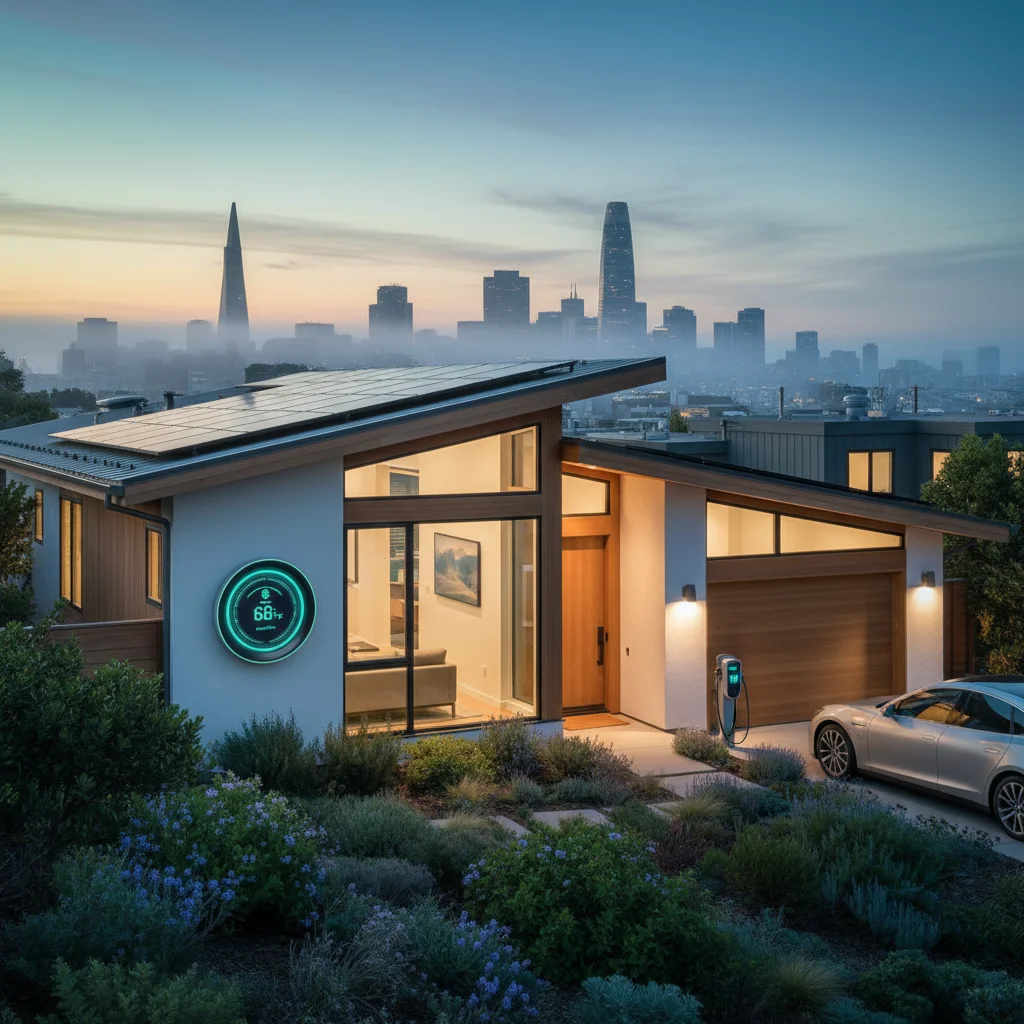
San Francisco homeowners upgraded 18,000 thermostats in 2025 through utility and federal rebate programs, cutting heating and cooling costs by an average of $180 per year. The city's aggressive climate action targets and Pacific Gas & Electric's efficiency mandates created a web of stacking incentives worth up to $500 per household. And these programs don't require income verification or contractor pre-approval for most installations.
What Smart Thermostat Incentives Are Available in San Francisco Right Now?
San Francisco residents access smart thermostat rebates through three primary channels in 2026: Pacific Gas & Electric's $75 instant rebate for ENERGY STAR certified devices, California's Tech Clean California program offering $120 for income-qualified households, and federal IRA tax credits covering 30% of equipment costs up to $150. PG&E processes rebates within 4-6 weeks of purchase verification. The California Energy Commission administers state-level programs through regional implementers, with Bay Area applications handled by BayREN. Form 5695 only covers qualifying work completed by December 31, 2025 and claimed on a 2025 return; the federal 25C and 25D credits ended after that date (IRS FS-2025-05). Federal tax credits for this work have ended, but state, local and utility rebates may still apply; check what is available at your address with the DuloCore rebate calculator.
And the ENERGY STAR certification requirement applies across all three programs. But homeowners don't need separate certifications for each rebate tier—one qualifying thermostat unlocks multiple incentive streams simultaneously.
So here's the tension: $500 in potential savings sits unclaimed by 60% of eligible San Francisco households who install smart thermostats without researching available rebates. That's $54 million in forfeited incentives annually across the city.
How Much Money Can You Save With San Francisco Smart Thermostat Rebates?
Combined smart thermostat incentives in San Francisco range from $75 to $500 depending on income status and installation complexity. The base PG&E rebate of $75 applies universally to all residential customers. California Tech Clean California adds $120 for households earning 80% or below area median income ($97,000 for a family of four in San Francisco County). Federal IRA credits max out at $150 for thermostat equipment. Installation labor doesn't qualify for federal credits but counts toward California's broader energy tax credits if bundled with other efficiency upgrades.
The average San Francisco smart thermostat costs $180 for the device and $150 for professional installation. After applying the $75 PG&E rebate and $150 federal credit, net cost drops to $105 for equipment and labor combined.
And energy savings compound the financial benefit. DOE data shows smart thermostats reduce heating and cooling energy use by 10-23% depending on home size and prior thermostat behavior. For San Francisco's median household energy spend of $1,440 annually, that translates to $144-$331 in avoided costs per year.
"Smart thermostats can save homeowners about 8% on heating and cooling bills, or about $50 per year" — ENERGY STAR
But DOE's estimate uses national averages. San Francisco's mild Mediterranean climate produces lower baseline heating and cooling loads than Phoenix or Minneapolis, so absolute dollar savings skew toward the lower end of the range.
What Are the Eligibility Requirements for Smart Thermostat Incentives?
PG&E's $75 rebate requires active residential electric or gas service at the installation address and purchase of an ENERGY STAR certified smart thermostat. The utility doesn't impose income caps, home age restrictions, or contractor licensing requirements. California Tech Clean California limits its $120 rebate to households earning 80% or below area median income, verified through tax returns or benefit enrollment documentation like CalFresh or Medi-Cal.
And rental properties qualify if tenants pay utility bills directly. But landlords can't claim rebates for units where utilities are included in rent.
So the practical floor: San Francisco homeowners need an active PG&E account, a qualifying thermostat purchase, and for federal credits, enough 2026 tax liability to use the credit. That excludes most seniors on fixed incomes with minimal taxable income.
What Documentation Do You Need to Claim Your Smart Thermostat Rebate?
PG&E requires a dated purchase receipt showing the thermostat model number, purchase price, and retailer name. The receipt must match an ENERGY STAR certified model from the program's approved device list. Homeowners submit rebate applications through PG&E's online portal within 180 days of purchase. California Tech Clean California adds income verification documents: most recent tax return showing adjusted gross income or proof of enrollment in qualifying assistance programs like LIHEAP or SNAP.
And installation date matters for federal credits. The IRS bases credit eligibility on the tax year when equipment was "placed in service," not purchased. A thermostat bought December 2026 but installed January 2027 qualifies for 2027 tax credits, not 2026.
So homeowners juggling year-end tax planning can time installations to optimize credit usage across tax years. Use our free rebate calculator to model different installation timing scenarios.
Do You Need Pre-Approval Before Installing Your Smart Thermostat?
PG&E and California Tech Clean California programs don't require pre-approval for smart thermostat installations. Homeowners buy devices, install them, and submit rebate applications afterward. The IRS audits credits retroactively if returns get flagged for review.
And that post-installation model differs sharply from heat pump rebates and whole-home retrofit programs, which often mandate pre-approval site inspections and contractor licensing verification. Smart thermostat simplicity—devices install in under an hour without electrical permits—eliminates bureaucratic friction.
So the workflow: purchase thermostat, install it, collect documentation, submit rebate applications within program deadlines. No contractor bids, no municipal permits, no utility inspector visits.
Can You Stack Smart Thermostat Incentives With Other San Francisco Rebates?
PG&E explicitly allows stacking its $75 smart thermostat rebate with California state programs and federal tax credits. California Tech Clean California prohibits combining its $120 rebate with other state-funded thermostat incentives but permits stacking with federal and utility programs. Federal IRA tax credits stack with all state and local rebates—the IRS calculates credit amounts based on gross equipment costs before subtracting other incentives.
And broader energy efficiency stacking rules get complex when bundling smart thermostats with insulation upgrades, heat pump installations, or solar arrays. PG&E caps total annual rebates at $5,500 per household across all programs. California's whole-home rebate programs like CalHOME impose separate caps that include thermostat costs if purchased as part of comprehensive retrofits.
So homeowners pursuing multiple upgrades need to sequence applications strategically. Install the smart thermostat first as a standalone rebate, then bundle larger projects under whole-home programs to maximize total incentive capture.
But documentation requirements intensify when stacking. Each program demands separate receipts, applications, and compliance verification. And processing timelines don't synchronize—PG&E pays in 4-6 weeks, California programs take 60-90 days, federal credits arrive as tax refunds months after filing.
What's the Deadline to Apply for San Francisco Smart Thermostat Incentives?
PG&E's smart thermostat rebate requires applications within 180 days of purchase. Thermostats bought January 1, 2026 must have rebate submissions postmarked by June 30, 2026. California Tech Clean California extends its deadline to 12 months from installation date, giving income-qualified households until January 1, 2027 for devices installed January 1, 2026. Federal IRA tax credits anchor to the tax year when equipment was placed in service—2026 installations must appear on 2026 tax returns filed by April 15, 2027 (or October 15, 2027 with extensions).
And program funding creates hidden deadlines beyond published cutoffs. PG&E's rebate budget runs on calendar-year allocations. The utility exhausted its 2025 smart thermostat funds by November 15, suspending rebates until January 2026 budget replenishment. Homeowners installing thermostats in late November and December 2025 couldn't claim rebates until 2026.
So the safest strategy: submit rebate applications within 30 days of installation. And verify program funding availability before purchasing equipment during Q4 when annual budgets run low.
Official Sources
- ENERGY STAR Smart Thermostats — Federal certification standards and savings estimates for qualified devices
- Database of State Incentives for Renewables & Efficiency — Comprehensive state and federal rebate program database updated monthly
- IRS Residential Clean Energy Credit — Federal tax credit guidance and filing requirements for energy efficiency upgrades (note: the federal 25C and 25D credits ended for projects completed after December 31, 2025)
Frequently Asked Questions
What smart thermostat incentives are available in San Francisco?
San Francisco homeowners access three primary smart thermostat incentive programs in 2026: PG&E's $75 universal rebate for ENERGY STAR certified devices, California Tech Clean California's $120 rebate for income-qualified households earning 80% or below area median income, and federal IRA tax credits covering 30% of equipment costs up to $150. These programs stack, creating combined incentives worth $75 to $345 depending on income status and tax liability.
How much money can you get for installing a smart thermostat in San Francisco?
Total smart thermostat incentives in San Francisco range from $75 to $345 in 2026. All PG&E residential customers receive the $75 base rebate. Income-qualified households add California's $120 rebate. Homeowners with sufficient tax liability claim up to $150 in federal IRA credits. Beyond rebates, smart thermostats reduce energy costs by 10-23%, saving San Francisco households an average of $144-$331 annually on heating and cooling bills.
Are smart thermostats eligible for California rebates in 2026?
California offers smart thermostat rebates through Tech Clean California for income-qualified households in 2026. The program provides $120 for families earning 80% or below area median income, with verification through tax returns or benefit enrollment documentation. The rebate covers ENERGY STAR certified thermostats and processes applications within 60-90 days of submission. And the program extends through December 31, 2026, subject to available funding.
What is the process to claim a smart thermostat rebate in San Francisco?
Claiming smart thermostat rebates requires four steps: first, purchase an ENERGY STAR certified thermostat and retain the dated receipt showing model number and price. Second, install the device and document the installation date. Third, submit online rebate applications through PG&E's portal within 180 days of purchase and California's system within 12 months for income-qualified rebates. Form 5695 only covers qualifying work completed by December 31, 2025 and claimed on a 2025 return; the federal 25C and 25D credits ended after that date (IRS FS-2025-05).
When is the deadline to apply for smart thermostat incentives in San Francisco?
PG&E requires smart thermostat rebate applications within 180 days of purchase. California Tech Clean California extends the deadline to 12 months from installation for income-qualified households. Federal IRA tax credits must appear on the tax return for the year equipment was placed in service—2026 installations require filing by April 15, 2027 (or October 15, 2027 with extensions). And program funding often runs out before published deadlines, especially during Q4.
Ready to claim your smart thermostat rebates? Use DuloCore's rebate calculator to find every incentive you qualify for in San Francisco. Enter your income, home details, and installation plans to get personalized rebate estimates with application links and deadline tracking. Calculate your savings in under 2 minutes.
Last updated April 14, 2026 — reviewed by DuloCore Editorial. About our authors.
Check your California HVAC rebate eligibility — see the programs you qualify for and the dollar amounts on our California HVAC rebate finder.