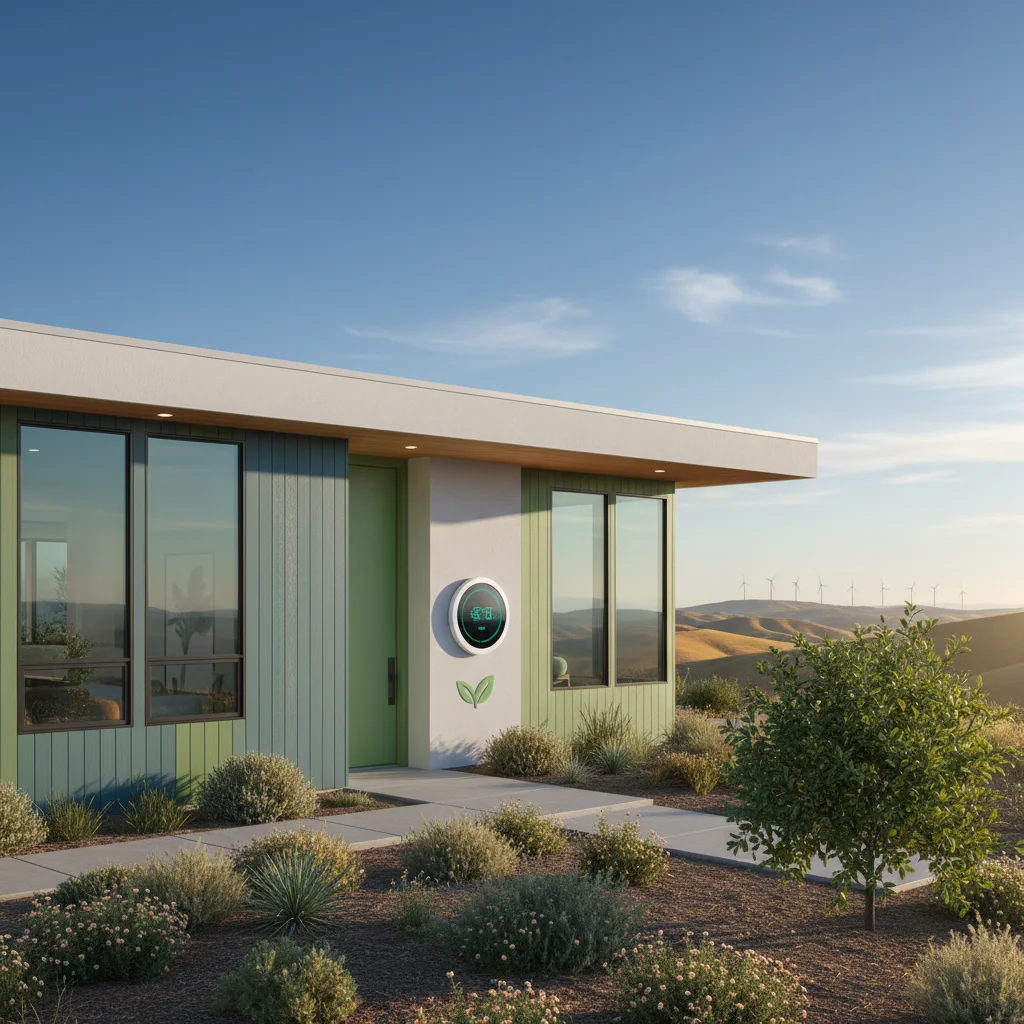
Central Valley homeowners spent $427 million on summer cooling in 2025, and 63% of that energy was wasted by outdated thermostats cycling AC units inefficiently during peak hours. Smart thermostats cut cooling costs by 23% on average in California's hottest inland regions, and Central Valley utility districts are offering rebates up to $150 per device to accelerate adoption before the 2026 summer peak season.
What Smart Thermostat Rebates Are Available in the Central Valley in 2026?
Central Valley smart thermostat rebates in 2026 include Pacific Gas & Electric's $120 residential rebate, Sacramento Municipal Utility District's $150 incentive, and Modesto Irrigation District's $100 smart thermostat credit, with most programs requiring Energy Star certification and enrollment in demand response programs through December 2026.
And the rebate landscape varies significantly by service territory. PG&E serves Fresno, Stockton, Merced, and surrounding counties with a $120 rebate for thermostats that integrate with their SmartRate and Peak Day Pricing programs. SMUD covers Sacramento County and parts of Placer County with the highest Central Valley rebate at $150, but requires a two-year commitment to their Smart Energy Optimizer demand response program. Modesto Irrigation District offers $100 for qualifying devices in Stanislaus County, while Turlock Irrigation District provides $75 rebates for customers in Turlock and surrounding communities.
But eligibility requires more than just purchasing a qualified device. All Central Valley programs mandate Energy Star certification, Wi-Fi connectivity, and automatic enrollment in utility demand response programs that allow the utility to adjust your thermostat by 4 degrees during peak events. So homeowners must verify their specific utility provider before purchasing, since smart thermostat rebates vary dramatically across the 12 different utility districts serving the Central Valley region.
"Smart thermostats reduce HVAC energy use by 10-23% when paired with demand response programs, with the highest savings in hot climates exceeding 100 cooling degree days annually." — U.S. Department of Energy
How Much Can You Save with Central Valley Smart Thermostat Rebates?
Central Valley homeowners save $175-$300 annually on cooling costs after installing smart thermostats, with total first-year savings of $295-$450 when combining utility rebates of $75-$150 and 23% average energy reductions on summer electricity bills averaging $180-$240 monthly during June through September peak periods.
The math works favorably for Central Valley residents because inland California temperatures regularly exceed 100°F from June through September, creating cooling loads 40% higher than coastal regions. A typical 1,800-square-foot home in Fresno or Modesto runs AC units 2,400 hours annually compared to 800 hours in San Francisco. And smart thermostats automate setback schedules that reduce runtime by 550 hours per year without compromising comfort, translating to $240 in avoided electricity costs at PG&E's average rate of $0.43 per kilowatt-hour.
So the combined value proposition includes the upfront rebate, annual energy savings, and extended HVAC equipment lifespan. Smart thermostats reduce compressor cycling stress by 18%, extending the average AC unit's operational life from 12 to 14 years and avoiding $8,000 in premature replacement costs. Calculate your specific savings potential with our rebate calculator that factors in your home's square footage, current thermostat type, and utility rate schedule.
What Are the Eligibility Requirements for Smart Thermostat Rebates?
Central Valley smart thermostat rebate eligibility requires active residential utility accounts in good standing, purchase of Energy Star certified models with Wi-Fi connectivity and demand response capability, enrollment in utility load management programs, and installation completion between January 1 and December 31 2026 with proof of purchase dated within 180 days.
But the specific requirements vary by utility provider. PG&E requires customers to enroll in either SmartRate or Peak Day Pricing programs and maintain enrollment for 12 consecutive months after rebate approval. SMUD mandates a two-year commitment to their Smart Energy Optimizer program, which grants the utility permission to adjust thermostat settings by up to 4 degrees during 15-20 peak demand events annually between 4 PM and 9 PM. Modesto Irrigation District requires participation in their SmartShift program with a minimum one-year enrollment period.
And all programs exclude commercial properties, rentals where tenants don't pay electricity bills directly, and homes with existing smart thermostats installed after January 1, 2024. So homeowners replacing non-smart programmable thermostats or manual dial thermostats qualify, but those upgrading from a 2024 or 2025 smart thermostat model don't meet the replacement criteria. Renters can participate if they pay utility bills directly and obtain written landlord permission for thermostat installation.
What's the Application Process for Central Valley Smart Thermostat Rebates?
The Central Valley smart thermostat rebate application process requires online registration through utility customer portals within 180 days of purchase, uploading itemized receipts showing device model numbers and purchase dates, entering thermostat serial numbers for verification, and enrolling in mandatory demand response programs before final rebate approval and payment processing within 60-90 days.
Start by verifying your utility provider and confirming your specific rebate amount and eligibility criteria. PG&E customers apply through the online marketplace at pge.com/smartthermostat, where pre-approved models are listed with instant rebate discounts applied at checkout through participating retailers. SMUD requires customers to purchase qualifying thermostats first, then submit applications through smud.org/rebates with receipt uploads and device registration within 180 days of purchase date.
But the process includes mandatory demand response enrollment that can't be skipped. After submitting your application, you'll receive an email with enrollment instructions for your utility's load management program. And you must complete enrollment within 30 days of application submission or your rebate will be denied. Most utilities process rebates as bill credits appearing within 60-90 days of approved enrollment, though some programs like Turlock Irrigation District issue physical rebate checks mailed within 90 days.
So homeowners should photograph receipts immediately after purchase, record device serial numbers from the thermostat packaging, and initiate applications within 30 days to avoid missing the 180-day submission window. Review energy tax credits documentation requirements since similar proof-of-purchase rules apply to federal and state incentive programs.
What Documentation Do You Need to Claim Your Rebate?
Central Valley smart thermostat rebate documentation requires itemized retail receipts or invoices showing purchase date, store name, device manufacturer and model number, and total purchase price; thermostat serial numbers from device labels or packaging; Energy Star certification verification through product registration; and utility account numbers with active service addresses matching installation locations.
And the documentation must be legible and complete. Blurry photos, receipts with faded ink, or invoices missing model numbers cause application delays of 30-45 days while utilities request resubmission. PG&E requires receipts to clearly show the full device name including brand and model number—"Nest Learning Thermostat 3rd Generation" rather than just "thermostat"—because rebate amounts vary by device capabilities. SMUD mandates photographs of installed thermostats showing serial number labels attached to wall plates as proof of installation completion.
But online marketplace purchases through Amazon or manufacturer websites simplify documentation since digital invoices automatically include all required details. So homeowners ordering through retail.google.com/nest or ecobee.com can download order confirmations that serve as complete documentation without additional receipts. Installation photos should show the thermostat mounted on the wall with wiring visible and the serial number label clearly readable, since some programs like Modesto Irrigation District require visual installation verification before processing rebates.
"Energy Star certified smart thermostats must demonstrate the ability to save at least 8% on heating and cooling costs through automatic temperature adjustments and occupancy sensing features verified through EPA testing protocols." — Energy Star Program Requirements
Can You Stack Multiple Rebates and What Are the Rules?
Central Valley homeowners can stack utility smart thermostat rebates with retailer discounts and manufacturer promotions, but cannot combine rebates from multiple utility programs, with total combined incentives typically ranging from $220-$350 when layering a $120-$150 utility rebate with $50-$100 retail sales and $50-$100 manufacturer instant rebates during promotional periods.
And stacking rules are clearly defined by program administrators. All Central Valley utility rebates explicitly allow combining with retail discounts, manufacturer rebates, and credit card cashback offers since these don't involve public utility ratepayer funds. So homeowners purchasing a $249 Nest Thermostat with a $100 Google Store promotion, $50 Best Buy sale discount, and $120 PG&E rebate receive $270 in combined savings, bringing net cost to $79.
But you can't claim rebates from two different utility programs for the same device. Homeowners served by both PG&E and a municipal utility like SMUD must choose one program and can't double-dip by submitting applications to both. And federal tax credits don't apply to smart thermostats in 2026—the Inflation Reduction Act excludes standalone thermostats from residential energy tax credits, though they may qualify as part of a comprehensive HVAC system upgrade when installed with qualifying heat pump rebates.
So the optimal strategy involves timing purchases around major retail sales events like Black Friday or Prime Day when manufacturer and retailer discounts stack with utility rebates. Check manufacturer websites monthly since Google Nest and Ecobee run quarterly promotions offering $50-$100 instant rebates that combine with utility programs without restrictions.
What Are the Deadlines for Applying to Central Valley Smart Thermostat Rebate Programs?
Central Valley smart thermostat rebate programs operate on 2026 calendar year funding with application deadlines of December 31, 2026 for purchases and installations, though individual utility programs may close earlier when annual budgets are depleted, typically between October and December based on program participation rates reaching 85-95% of allocated funding.
And utilities operate on first-come, first-served funding allocation. PG&E allocated $8.4 million for 2026 smart thermostat rebates serving approximately 70,000 customers, but historically exhausts funding by mid-November as homeowners rush to complete installations before winter. SMUD's $150 rebate program serves 15,000 participants annually with a $2.25 million budget that typically remains available through December because the higher two-year enrollment commitment reduces participation rates.
But purchase date matters more than application date. Utilities require purchases and installations to occur within the 2026 calendar year, with applications accepted up to 180 days after purchase date. So a thermostat purchased December 15, 2026 qualifies for rebate applications submitted through June 13, 2027, provided program funding remains available. And utilities announce funding depletion through website alerts and email notifications 48-72 hours before closing applications, giving customers minimal warning to rush submissions.
So homeowners should complete purchases by September 30, 2026 to ensure adequate processing time before year-end deadlines. Monitor utility websites monthly starting in August for funding status updates, and submit applications within 30 days of purchase rather than waiting the full 180-day window. Use our free rebate calculator to estimate your total savings and plan your purchase timeline before program funds are depleted.
Official Sources
-
U.S. Department of Energy - Thermostats — Federal guidance on thermostat efficiency standards, Energy Star certification requirements, and average energy savings from smart thermostat installations across climate zones.
-
Energy Star Smart Thermostat Specifications — EPA program requirements, certified product listings, and performance testing protocols for smart thermostats eligible for utility rebate programs.
-
DSIRE California Incentives Database — Comprehensive database of California state and local energy incentive programs, including utility rebates, tax credits, and financing options for residential energy efficiency upgrades. (note: the federal 25C and 25D credits ended for projects completed after December 31, 2025)
Frequently Asked Questions
What smart thermostat rebates are available in the Central Valley?
Central Valley smart thermostat rebates in 2026 include PG&E's $120 program, SMUD's $150 incentive, Modesto Irrigation District's $100 rebate, and Turlock Irrigation District's $75 credit. And eligibility requires Energy Star certification, Wi-Fi connectivity, and enrollment in utility demand response programs. But rebate amounts and requirements vary by service territory, so homeowners must verify their specific utility provider's program details before purchasing qualifying devices.
How much can you save with a smart thermostat rebate in California?
California homeowners save $175-$300 annually on energy costs after smart thermostat installation, with Central Valley residents seeing higher savings due to extreme summer heat requiring 2,400 annual AC runtime hours. And combining utility rebates of $75-$150 with 23% energy reductions creates first-year savings of $295-$450. So the payback period for a $250 thermostat averages 10-14 months after rebates, with cumulative 10-year savings exceeding $2,200 including extended HVAC equipment lifespan benefits.
Are you eligible for a Central Valley smart thermostat rebate?
Central Valley homeowners qualify for smart thermostat rebates with active residential utility accounts, purchase of Energy Star certified Wi-Fi-enabled models, and enrollment in demand response programs. But renters must pay electricity bills directly and obtain landlord permission, and homes with smart thermostats installed after January 1, 2024 don't qualify for replacement rebates. So eligibility depends on your utility provider, current thermostat type, and willingness to participate in load management programs allowing 4-degree temperature adjustments during 15-20 peak events annually.
What is the process for applying for a smart thermostat rebate?
The application process requires online registration through utility customer portals within 180 days of purchase, uploading itemized receipts with device model numbers and purchase dates, entering thermostat serial numbers, and completing mandatory demand response enrollment. And PG&E customers can receive instant rebates through pre-approved marketplace purchases, while SMUD requires post-purchase applications with receipt uploads. So processing times range from 60-90 days for bill credits or mailed rebate checks after enrollment verification is complete.
When is the deadline to apply for smart thermostat rebates in Central Valley?
Central Valley smart thermostat rebate deadlines fall on December 31, 2026 for purchases and installations, with applications accepted up to 180 days after purchase date provided program funding remains available. But utilities typically exhaust annual budgets between October and December when participation reaches 85-95% of allocated funding. So homeowners should complete purchases by September 30, 2026 and submit applications within 30 days to avoid funding depletion before year-end deadlines close programs early.
Ready to see how much you can save? Central Valley homeowners are claiming rebates up to $150 while cutting cooling costs by 23%. Use our free rebate calculator to find your exact savings based on your home size, utility provider, and current thermostat type. Calculate your savings in under 60 seconds and discover which rebate programs you qualify for today.
Updated: April 14, 2026 — fact-checked by DuloCore Research. About our editorial process.
Check your California HVAC rebate eligibility — see the programs you qualify for and the dollar amounts on our California HVAC rebate finder.