Update (2026): The federal Energy Efficient Home Improvement Credit (Section 25C) expired December 31, 2025, following the passage of the OBBBA. Check state and local programs for current incentives.
Over 35% of a typical home's energy is wasted through air leaks and inefficient appliances, a financial drain that installing solar panels alone won't solve. Without first diagnosing where your home is losing power, you risk installing an oversized and overpriced solar system that simply compensates for existing inefficiency. And that means leaving thousands of dollars in potential savings on the table. So addressing these foundational energy losses first is the critical step to maximizing solar ROI.
What Does a Solar Panel Home Energy Audit Involve, and What is its Typical Cost?
A professional solar panel home energy audit is a comprehensive evaluation of a home's energy consumption, identifying inefficiencies before system sizing. It includes a blower door test and thermographic scan, with a typical cost of $300-$600 in 2026, often credited back by installers post-installation.
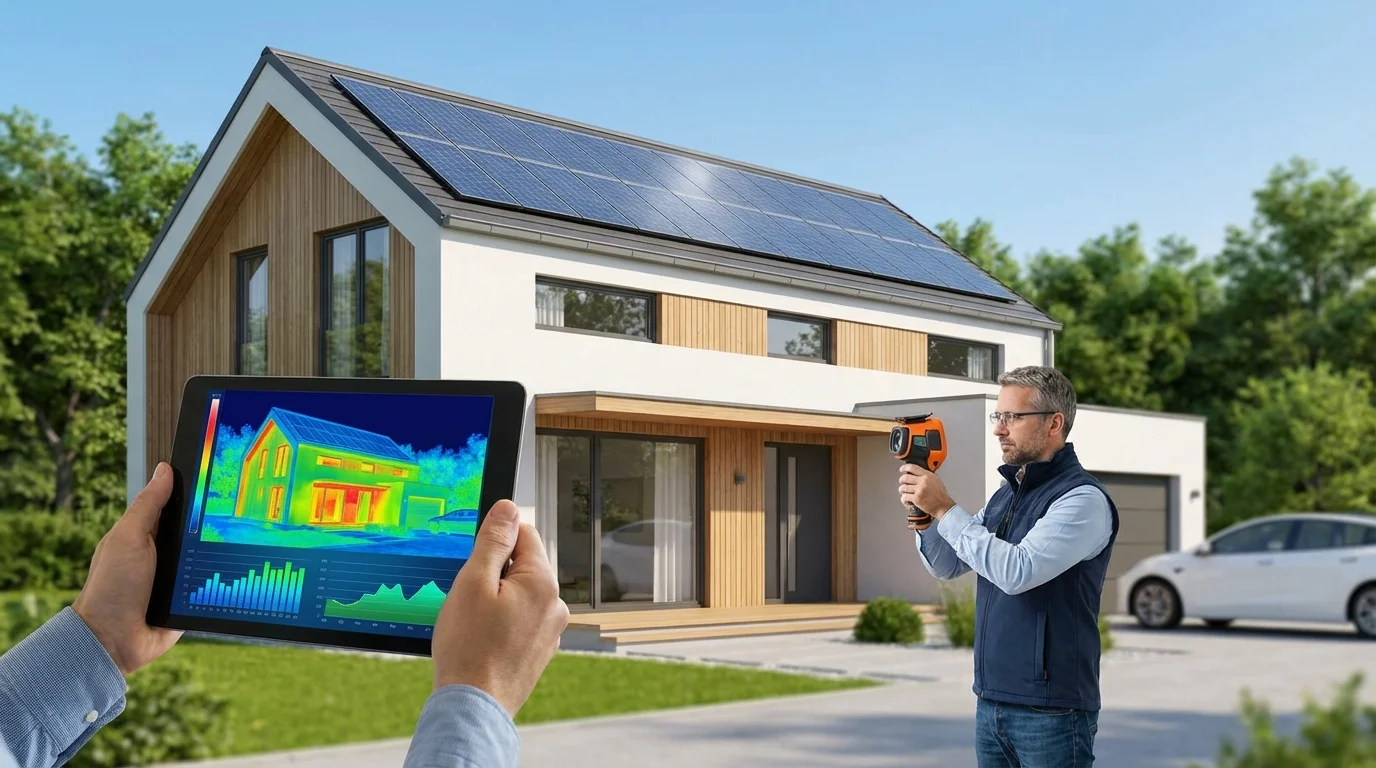
A pre-solar energy audit provides a detailed roadmap of your home's energy performance. So an auditor uses specialized tools, not just a visual walkthrough, to pinpoint exact sources of energy loss. The process starts with a blower door test, which depressurizes the house to reveal the combined size of all air leaks. But then, a thermographic scan with an infrared camera visually identifies cold or hot spots caused by poor insulation in walls and ceilings. The audit also includes an inspection of HVAC systems, water heaters, and appliance efficiency. And the final report quantifies these issues, allowing a solar installer to size a system for your actual, optimized energy needs, not your current wasteful ones. This crucial first step is detailed in a comprehensive home energy audit guide.
How Do I Determine the Right Solar Panel System for My Home's Climate, Efficiency Needs, and Installation Budget?
The right solar panel system is determined by analyzing an energy audit report, local sun-hours, and roof orientation. A 5-8 kW system suits most homes, with installation costs from $15,000 to $25,000 before the 30% federal tax credit available through December 31, 2025.
Determining the correct system size begins with your post-audit electricity usage, measured in kilowatt-hours (kWh). And your geographic location dictates the "peak sun hours" your roof receives, directly impacting how many panels you need to meet that usage. For example, a home in Arizona requires a smaller system than an identical home in Washington to generate the same power. So the installation budget, which averages $2.85 per watt in 2026, is the next factor. High-efficiency monocrystalline panels (19-22% efficiency) cost more but perform better in limited space. The final cost is then reduced by federal energy tax credits, which cover 30% of the total installation price, bringing a $20,000 system down to $14,000.
Which Solar Panel Brands Qualify for Rebates and Incentives, and What Are the Eligibility Requirements and Deadlines?
Solar panel brands like SunPower, LG, and Panasonic with efficiency ratings above 19% typically qualify for 2026 utility rebates. Eligibility for the 30% federal tax credit requires new system installation at a primary residence before the program's expiration on December 31, 2025.
Federal incentives don't specify brands, but state and utility rebates often do. So they typically require panels to meet certain efficiency and durability standards, favoring established brands like Q Cells, REC, and Silfab. The federal Residential Clean Energy Credit (Section 25D) ended for expenditures made after December 31, 2025, and the IRS treats an expenditure as made when installation is completed (IRS FS-2025-05). Federal tax credits for this work have ended, but state, local and utility rebates may still apply; check what is available at your address with the DuloCore rebate calculator.
"The credit is allowable for the tax year that the property is placed in service. You can include the cost of the new, qualified clean energy property and its installation." — Internal Revenue Service (IRS.gov)
And to qualify, the system must be new and installed on a primary or secondary U.S. residence. But state programs have their own rules and annual deadlines, which change frequently. So homeowners must verify current 2026 eligibility with their local utility. Use our free rebate calculator to find your savings.
What is the Expected ROI and Payback Period for Solar Panels, and How Long Do They Last Before Needing Maintenance?
Solar panels deliver an average ROI of 10-20% annually, with a typical payback period of 8 to 12 years. Modern panels have a lifespan of 25-30 years, retaining over 80% efficiency and requiring minimal maintenance beyond occasional cleaning and inverter checks every 5-10 years.
The return on investment for solar panels is driven by your local electricity rates and available incentives. So states with high energy costs, like California and Massachusetts, see payback periods as short as 5-7 years. The primary financial benefit comes from eliminating or drastically reducing your monthly utility bill. Most manufacturers offer a 25-year performance warranty guaranteeing the panels will still produce at least 80-85% of their original output. And maintenance is remarkably low; panels have no moving parts and only need to be cleaned of debris 1-2 times per year. The system's inverter, which converts DC power to AC, is the component most likely to need replacement, typically after 10-15 years at a cost of $1,000-$2,000.
How Do Solar Panels Compare to Alternative Home Energy Solutions, and What Are Their Lifespan and Maintenance Differences?
Solar panels (25-30 year lifespan) offer a lower upfront cost ($15k-$25k) than geothermal systems ($20k-$40k, 50+ year lifespan). Unlike wind turbines, which require 1 acre of land and frequent maintenance, solar panels are silent, low-maintenance, and suitable for most residential properties.
When comparing energy solutions, solar panels offer a balanced profile. But geothermal heat pumps, while more expensive to install, provide both heating and cooling and have an extremely long underground loop lifespan of 50+ years. So their indoor components last 20-25 years, similar to a solar panel's lifespan. Residential wind turbines are less common because they require at least one acre of property and consistent average wind speeds of 10 mph. And they also have mechanical parts that demand more frequent maintenance than static solar panels. Solar remains the most accessible and widely applicable renewable energy solution for homeowners, with a faster installation time and broader rebate availability, including programs for related upgrades like heat pump rebates.
2026 Solar Incentive Comparison
| Incentive Name | Amount/Credit | Key Eligibility | 2026 Deadline |
|---|---|---|---|
| Federal Residential Clean Energy Credit | Ended Dec 31, 2025 | — | Ended Dec 31, 2025 |
| State SRECs (Solar Renewable Energy Credits) | Varies by state ($50-$450 per MWh) | System registered with state authority | Varies, often annual programs |
| Utility Rebate (e.g., Austin Energy) | $2,500 one-time rebate | Customer of participating utility, <10 kW system | Program funds are limited, check annually |
Official Sources
- ENERGY STAR — A U.S. Environmental Protection Agency (EPA) program that provides credible, objective information on energy-efficient products and practices.
- Database of State Incentives for Renewables & Efficiency (DSIRE) — The most comprehensive source of information on incentives and policies that support renewables and energy efficiency in the United States.
- Department of Energy (DOE) — Federal resource for homeowners on tax credits, rebates, and clean energy equipment. (note: the federal 25C and 25D credits ended for projects completed after December 31, 2025)
"A home energy assessment (sometimes called an energy audit) can help you understand the whole picture of your home’s energy use, comfort, and safety. An assessment can help you determine where your home is losing energy and money..." — U.S. Department of Energy
Frequently Asked Questions
What does a solar panel home energy audit involve?
A solar panel home energy audit involves a certified technician using tools like a blower door and an infrared camera to find air leaks and insulation gaps. The audit also assesses the efficiency of your HVAC system, water heater, and major appliances. The goal is to create a complete energy profile of the home to reduce waste before sizing a solar array, a process which takes 2-4 hours to complete.
How much does a home energy audit cost before installing solar panels?
A professional home energy audit typically costs between $300 and $600 in 2026. This price depends on the size of your home and the depth of the assessment. Many solar installation companies or utility programs will either offer a discounted audit or credit the full cost of the audit back to you upon the installation of a new solar panel system.
Do I need a home energy audit to qualify for solar panel rebates?
While the 30% federal Residential Clean Energy Credit does not require a home energy audit, many state and local utility rebates do. For example, some utility programs
Last reviewed: April 14, 2026. Reviewed by DuloCore Energy Specialists. About the team.
Check your California solar rebate eligibility — see the programs you qualify for and the dollar amounts on our California solar rebate finder.