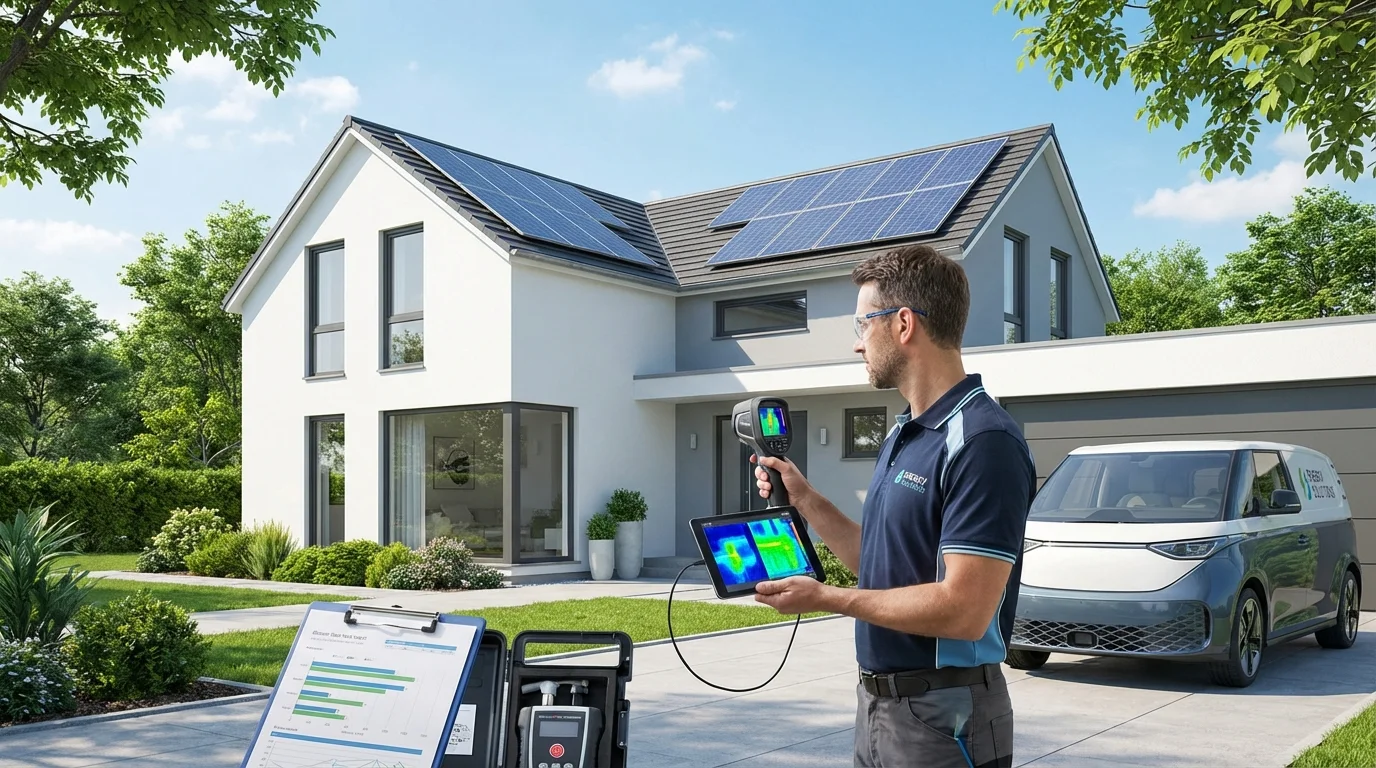
Air conditioning accounts for over 50% of the average U.S. household's electricity consumption during peak summer months. As temperatures continue to set records, that cooling load translates directly into utility bills that are 20-40% higher than any other season. A targeted summer energy audit identifies precisely where that expensive, conditioned air is escaping and which equipment upgrades will deliver the fastest return on investment.
What cooling upgrade rebates are available in my state and through my utility?
State and utility cooling rebates for 2026 include direct cash-back offers for high-efficiency central air conditioners, ductless mini-splits, and air-source heat pumps. These programs, funded by state energy offices and local utilities, provide between $250 and $2,000 for qualifying equipment installations that reduce summer grid strain.
Most states offer multiple rebate programs targeting specific cooling technologies. And these programs often work in tandem with utility providers, who add their own incentives. For instance, a state energy program offers $1,000 for a qualifying heat pump, while the local electric utility adds another $500 for the same upgrade. So identifying all available programs is critical for maximizing savings. But these funds are limited and operate on an annual cycle, meaning 2026 program details differ from previous years. Homeowners find these rebates by checking their utility’s website or using a centralized database. The specific equipment must meet stringent efficiency standards, such as a SEER2 rating of 16 or higher, to qualify for these heat pump rebates.
The core tension for homeowners is the high upfront cost of energy-efficient cooling systems, which can exceed $10,000, versus the persistent pain of summer utility bills that average over $400 per month in warmer climates. A targeted energy audit bridges this gap by pinpointing the exact upgrades that qualify for rebates, effectively reducing the initial investment by 15-30% and accelerating the payback period.
How much can I save on cooling upgrades, and am I eligible based on income limits?
Homeowners save between $500 and $8,000 on cooling upgrades in 2026 by combining rebates and tax credits. Eligibility for enhanced, income-based rebates often requires a household income below 80% or 150% of the Area Median Income (AMI), unlocking thousands in additional funding.
The total savings depend on location, income, and chosen equipment. For example, a standard rebate for a high-efficiency central air conditioner is $500. But an income-qualified household installing the same unit receives up to $4,000 from a state-administered program. So verifying eligibility is the first step. These programs are designed to make efficiency upgrades accessible to everyone. And the Inflation Reduction Act's federal energy tax credits provide a credit of 30%, up to $2,000, for qualifying heat pumps, which stacks on top of state and utility rebates. Use our free rebate calculator to find exact savings based on your zip code and income.
What specific cooling equipment qualifies, and do I need a special contractor for rebates?
Qualifying cooling equipment for 2026 rebates typically includes central air conditioners with a SEER2 (Seasonal Energy Efficiency Ratio 2) rating of 16.0 or higher and ENERGY STAR certified heat pumps. And nearly all rebate programs require installation by a licensed, and often program-approved, contractor.
Utilities and state programs maintain lists of eligible products, often called a Qualified Products List (QPL). So checking this list before purchasing equipment is essential. Using a non-certified contractor or installing a non-listed model results in an automatic denial of the rebate application. And the contractor is responsible for providing the necessary documentation, including a dated invoice with the exact model and serial numbers of the installed unit. This requirement ensures the installation meets quality standards and delivers the projected energy savings. A comprehensive home energy audit will specify which equipment models meet your home's needs and local rebate criteria.
"ENERGY STAR certified central air conditioners are, on average, 15% more efficient than standard models." — ENERGY STAR
What is the application process for cooling efficiency rebates, what are the deadlines, and is funding still available?
The 2026 cooling rebate application process involves getting pre-approval, having a certified contractor complete the installation, and submitting a final application with invoices before the program deadline. Most program deadlines are December 31, 2026, but funding is finite and often exhausted months earlier.
The process begins by confirming eligibility and reserving funds if the program allows. So, after the work is completed, homeowners or their contractors submit the final application, which includes the paid invoice and equipment specification sheets. But programs are first-come, first-served. When the allocated budget for the year is spent, the program closes to new applicants, regardless of the official deadline. Therefore, completing projects early in the summer is the best strategy. Applicants can typically check the funding status on the utility or state program's website to see how much of the allocated $10-$50 million budget remains.
How can I stack state and utility rebates for maximum summer cooling savings?
Stacking involves combining a state rebate, a separate utility incentive, and a federal tax credit for the same cooling upgrade, often totaling over $3,500 in 2026 savings. And most programs are designed to be stacked, but homeowners must verify that no "double-dipping" exclusion clauses apply.
For example, a homeowner installs a $9,000 high-efficiency heat pump. The state offers a $1,500 rebate. Their municipal utility provides an additional $500 incentive. So, the upfront cost is reduced to $7,000. The federal Energy Efficient Home Improvement Credit (Section 25C) ended for property placed in service after December 31, 2025 (IRS FS-2025-05). Federal tax credits for this work have ended, but state, local and utility rebates may still apply; check what is available at your address with the DuloCore rebate calculator. The final out-of-pocket cost becomes $5,000—a 44% reduction. But it is critical to read the terms for each program. Some programs reduce their payout if another rebate is received, so confirming the rules for stacking is a necessary step to accurately calculate the final project cost.
| Program Example (2026) | Max Rebate Amount | Key Eligibility Requirement | Application Deadline |
|---|---|---|---|
| State Clean Energy Fund | $2,000 | SEER2 17+ Heat Pump | Dec 31, 2026 (or when funds deplete) |
| City Electric Utility | $750 | ENERGY STAR Certified Mini-Split | Nov 30, 2026 |
| LMI Weatherization Grant | $8,000 (covers 100%) | Household income <80% AMI | Rolling, funds limited |
Official Sources
- DSIRE (Database of State Incentives for Renewables & Efficiency) — The most comprehensive national database of state, local, and utility clean energy incentive programs.
- ENERGY STAR Rebate Finder — A federal tool from the EPA to find rebates on certified energy-efficient products.
- Department of Energy (DOE) Energy Saver — Federal guidance on home energy efficiency, including information on IRA tax credits and savings. (note: the federal 25C and 25D credits ended for projects completed after December 31, 2025)
Frequently Asked Questions
What are the eligibility requirements for a cooling-focused summer energy audit?
Eligibility for a subsidized or free cooling-focused audit often depends on your utility provider or state energy program. Many utilities offer audits to all residential customers for a fee of $50-$150. And some programs offer free audits to income-qualified households, typically defined as those earning below 80% of the Area Median Income for their county in 2026.
What kind of rebates or savings can I expect from a cooling-focused energy audit?
An audit identifies specific upgrades that qualify for rebates, which range from $250 for a smart thermostat to over $2,000 for a high-efficiency heat pump. The audit report itself often unlocks access to exclusive rebates. So completing the audit can make you eligible for an additional 10-20% in savings on top of standard equipment rebates offered in 2026.
How does a cooling-focused energy audit differ from a general home energy audit?
A cooling-focused audit prioritizes the building envelope and HVAC system's performance during hot weather. It uses tools like thermal cameras to find insulation gaps causing heat gain and performs a duct blaster test to measure air leakage in the cooling ducts. A general audit assesses year-round energy use, including heating and hot water, while a summer-focused audit specifically targets improvements with the fastest payback from AC savings, often 3-5 years.
Ready to Stop Overpaying for Cooling?
A summer energy audit is the first step to a more comfortable home and lower utility bills. Find out exactly how much you can save on a new AC or heat pump with 2026 rebates and tax credits.
Calculate Your Personalized Rebates Now
Last updated: April 14, 2026. Reviewed by the DuloCore Editorial Team. About our authors.