The average U.S. household spends $2,200 annually on energy bills, with up to 30% of that energy lost through drafts, air leaks around windows, and inefficient HVAC systems. As utility rates continue to climb in 2026, homeowners are actively seeking ways to reduce this waste. Utility rebate energy audit programs offer a direct, subsidized path to identifying these energy drains and unlocking thousands in savings on efficiency upgrades.
What Are Utility Rebate Energy Audit Programs and How Do They Work?
Utility rebate energy audit programs are state- or utility-funded initiatives providing homeowners with a professional energy assessment for a reduced cost, often between $50 and $150. These 2026 programs pinpoint specific energy-saving opportunities, like insulation or air sealing, to qualify for further equipment upgrade rebates.
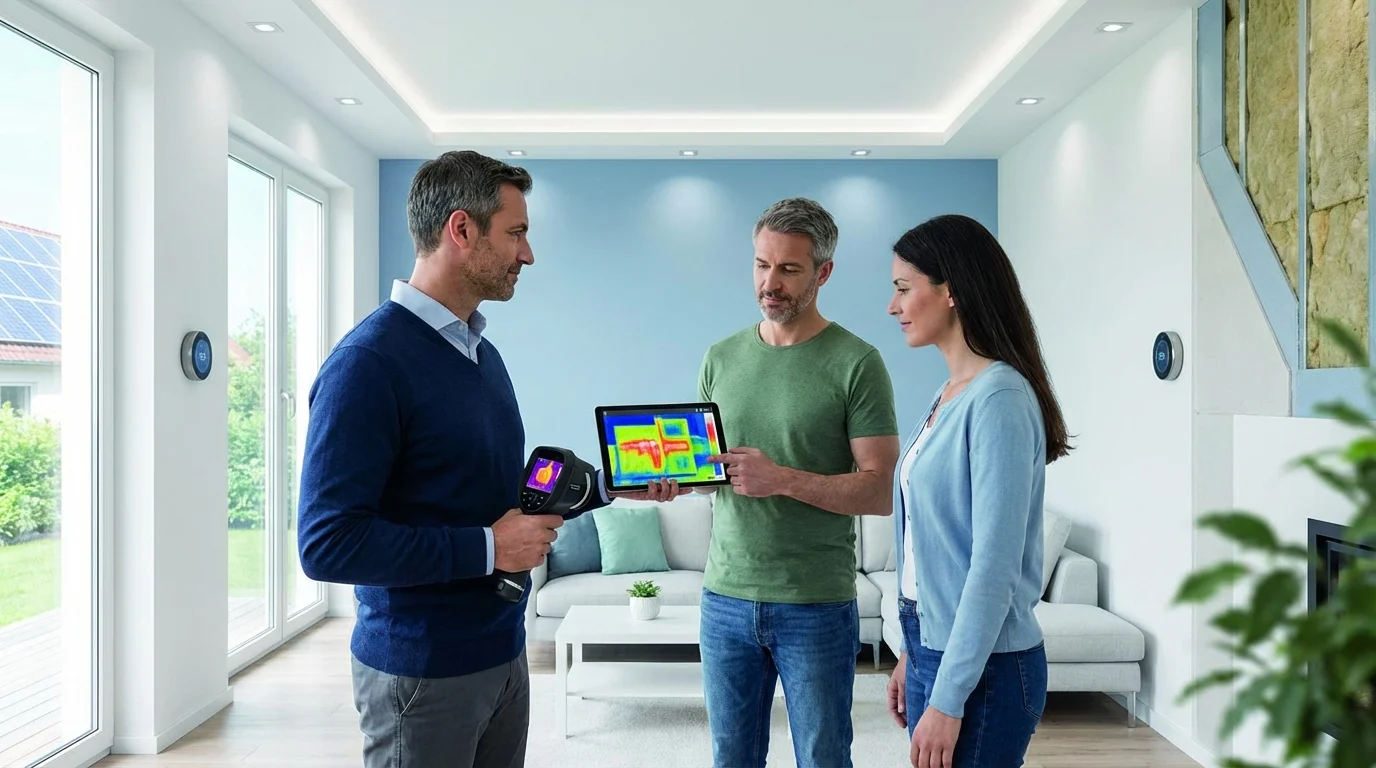
These programs function by subsidizing the cost of a comprehensive home energy audit. A certified auditor inspects the home, performs diagnostic tests like a blower door test to measure air leakage, and uses infrared thermography to find insulation gaps. So the homeowner receives a detailed report outlining prioritized improvements, their estimated costs, and the potential energy savings, which often reach 15-25% annually. And this report serves as a roadmap for accessing other rebates. But the primary goal is to provide data-driven recommendations, ensuring homeowners invest in upgrades that deliver the highest return. The audit itself is the gateway to unlocking thousands in additional incentives for making the recommended improvements.
What Financial Rebates Are Available and Do I Qualify Based on Income or Equipment?
Financial rebates for energy audits typically range from $100 to $500, often covering 75-90% of the audit's cost. Qualification for these 2026 programs depends on being a customer of the sponsoring utility, with some programs offering enhanced rebates for households with incomes below 80% of the Area Median Income (AMI).
The audit rebate is just the first step. And the audit report unlocks eligibility for subsequent equipment rebates, which offer much larger financial incentives. For example, installing a new heat pump based on an audit recommendation qualifies for rebates of $1,000 to $8,000. So eligibility for these equipment rebates is tied to purchasing specific ENERGY STAR certified models. But income status also plays a role; low-to-moderate income (LMI) households often qualify for 100% of the equipment cost to be covered through stacked state and federal programs. Details on specific heat pump rebates are available through utility portals.
"Many states and utilities offer rebates or other incentives for certain energy-saving products and projects." — DSIRE
What is the Step-by-Step Application Process and When Do I Need to Apply?
The application process for a utility energy audit rebate involves finding an approved contractor, scheduling the audit, and submitting the completed report and invoice to the utility. Deadlines for 2026 programs are typically December 31, 2026, but funding is limited and often allocated on a first-come, first-served basis.
The process begins on your utility's website, where you find a list of certified energy auditors. And after scheduling and completing the audit, the contractor provides the necessary paperwork. So you submit this documentation online through the utility's rebate portal. But you must apply within a specific window, usually 30 to 90 days after the audit is completed. Approval and rebate check issuance takes between 4 and 8 weeks. For subsequent equipment rebates, a similar process applies, requiring proof of purchase and installation by a licensed contractor. Use our free rebate calculator to see what you qualify for before starting the process.
Are There Specific Contractor Requirements, Funding Status Updates, or Stacking Rules to Consider?
Yes, utilities require audits and installations to be performed by pre-approved, certified contractors, often those with Building Performance Institute (BPI) credentials. Program funding is finite for 2026 and can run out before the year-end deadline, so checking the program's funding status online is critical before committing.
Stacking rules define how you combine different incentives. And most utility rebates are designed to be stacked with federal IRA energy tax credits, which cover 30% of project costs up to $3,200 annually. So a homeowner can receive a $2,000 utility rebate for a heat pump and also claim a federal tax credit on the remaining out-of-pocket expense. But some state and local grants cannot be combined. It is essential to verify these rules on the utility program's website, as they directly impact the total project savings. Contractor lists and funding statuses are updated in real-time on most utility rebate portals.
"Saving energy is a great way to reduce your carbon footprint and your energy bills." — ENERGY STAR
Energy Audit Rebate Program Comparison (2026 Examples)
| Program Name | Rebate Amount | Eligibility Highlights | 2026 Application Deadline |
|---|---|---|---|
| State Power Co. Audit | Up to $400 (or 75%) | Must be a residential electric customer | December 15, 2026 |
| City Gas Utility Audit | $150 flat rebate | Must be a residential natural gas customer | October 31, 2026 |
| Regional Co-op Program | $250 + bonus for LMI | Income below 80% AMI qualifies for $500 | Funds available until depleted |
How Do I Find and Compare Programs Offered by My State or Local Utility?
Homeowners find and compare utility rebate energy audit programs by visiting their specific electric or gas utility's website and searching for "rebates" or "energy efficiency." State energy office websites and databases like DSIRE also aggregate these 2026 programs, allowing for side-by-side comparisons of offerings.
The most direct method is to check your monthly utility bill for the provider's name and web address. And their website will have a dedicated section detailing available rebates, eligibility rules, and application forms. So you can compare offers if you receive service from separate electric and gas companies. But a more comprehensive approach is using a centralized database. The DSIRE (Database of State Incentives for Renewables & Efficiency) website, funded by the U.S. Department of Energy, provides a searchable map of all local, state, and federal incentives. This allows you to view all programs, including any insulation rebates, in one place.
Official Sources
- Database of State Incentives for Renewables & Efficiency (DSIRE) — A comprehensive source of information on state, local, utility, and federal incentives that promote renewable energy and energy efficiency.
- ENERGY STAR Rebate Finder — An EPA-managed tool to find local rebates and special offers for ENERGY STAR certified products.
- U.S. Department of Energy (DOE) Energy Saver — Federal guidance on home energy audits, weatherization, and accessing clean energy tax credits. (note: the federal 25C and 25D credits ended for projects completed after December 31, 2025)
Related Reading: Learn more about State Energy Audit Incentive Programs.
Related Reading: Learn more about Sce Rebate Programs.
Related Reading: Learn more about Energy Rebate Eligibility Requirements California.
Frequently Asked Questions
What are the eligibility requirements for utility energy audit rebate programs?
Eligibility for 2026 programs primarily requires you to be a residential customer of the sponsoring utility. Some programs have additional requirements, such as owning the home (not renting) and not having received an audit rebate within the last 3-5 years. Enhanced rebates often require meeting income qualifications, typically defined as having a household income at or below 80% of the Area Median Income (AMI).
How much can I expect to receive from a utility energy audit rebate?
Homeowners typically receive a rebate covering 75-90% of the audit's cost, which translates to a direct payment of $100 to $500. The audit itself generally costs between $300 and $600. The rebate effectively reduces the out-of-pocket expense for this valuable diagnostic service to a much more manageable $50 to $150, making it an accessible first step toward home energy improvements.
How do utility energy audit programs compare to private home energy audits?
Utility-sponsored audits are identical in scope to private audits but cost significantly less due to the rebate. Both use certified professionals and diagnostic tools like blower doors. The key difference is that the utility audit is a prerequisite for accessing thousands of dollars in further equipment rebates, like those for heat pumps or insulation. A private audit, while providing the same information, won't unlock these exclusive utility incentives.
Ready to Stop Wasting Energy?
Find out exactly how much you can save on energy audits, new heat pumps, insulation, and more. Our tool provides instant, accurate rebate estimates based on your ZIP code.
Calculate Your Savings NowUpdated: April 14, 2026 — fact-checked by DuloCore Research. About our editorial process.