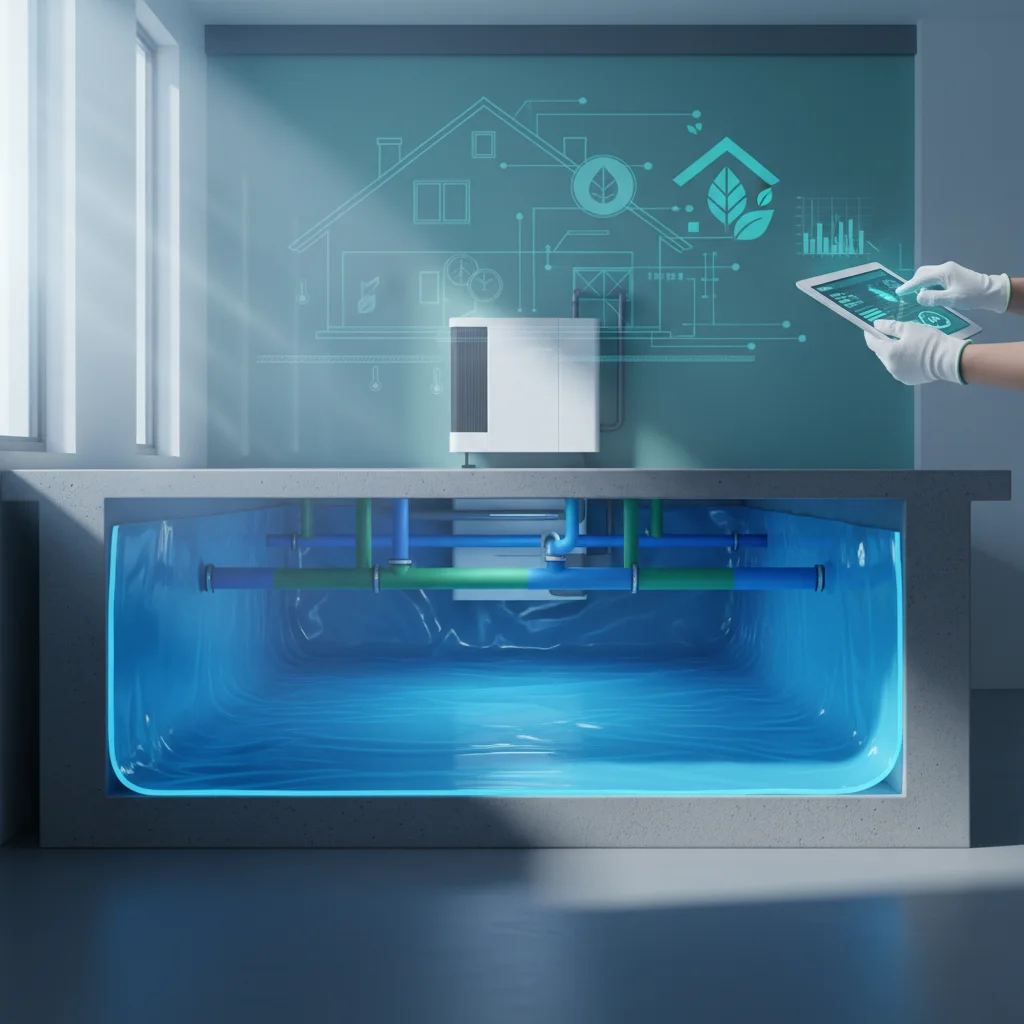
Moisture trapped inside wall cavities costs California homeowners an average of $340 per year in wasted heating and cooling energy. And most don't realize the problem exists until mold appears or insulation fails. A vapor barrier energy audit identifies these hidden moisture pathways before they destroy home efficiency and indoor air quality.
What Is a Vapor Barrier Energy Audit and How Does It Save Money?
A vapor barrier energy audit is a professional assessment that identifies moisture infiltration points in walls, ceilings, and crawlspaces using thermal imaging and blower door tests. The audit measures air leakage rates in cubic feet per minute and pinpoints where water vapor penetrates building envelopes, causing insulation to lose 30-50% of its R-value when saturated.
Auditors use infrared cameras to detect temperature differentials of 5-10°F that indicate missing or damaged vapor barriers. Blower door testing measures whole-house air changes per hour, with readings above 7 ACH50 indicating critical moisture control failures. The audit produces a detailed report ranking moisture control upgrades by cost-effectiveness, typically showing payback periods of 3-7 years through reduced HVAC runtime and lower utility bills.
"Homes with properly installed vapor barriers use 15-25% less energy for heating and cooling compared to homes with compromised moisture barriers" — U.S. Department of Energy
California's 2026 Energy Upgrade California program covers up to $150 of audit costs for income-qualified households. And the findings qualify homeowners for installation rebates of $500-$2,000 when coupled with insulation or air sealing work through the same program.
How Much Can You Save? Understanding Rebate Amounts and Incentives
California's 2026 Energy Upgrade California program offers tiered rebates based on household income and project scope. Income-qualified households earning below 80% of area median income receive $2,000 for comprehensive vapor barrier installation with air sealing and insulation upgrades. Moderate-income households at 80-120% AMI qualify for $1,200 rebates, while standard-income applicants receive $500-$800 depending on square footage treated.
The audit itself costs $300-$500 but earns a $150 rebate credit for households below 120% AMI. And pairing vapor barrier work with attic insulation unlocks an additional $600-$1,000 through Pacific Gas & Electric's Home Upgrade program in Northern California. Southern California Edison offers similar stacking opportunities with their Energy Savings Assistance program providing up to $3,500 in combined weatherization rebates.
Federal IRA Home Efficiency Rebates launched in California in late 2025 and continue through 2032, covering 50-100% of vapor barrier installation costs for households below 150% federal poverty level. Use our free rebate calculator to estimate your total savings based on income tier and project scope.
But timing matters—California's 2026 allocation of $185 million in federal HOMES funds operates on a first-come basis until depleted. So applications submitted after August 2026 face likely funding exhaustion based on 2025 demand patterns.
| Program | Max Rebate | Income Limit | Application Deadline |
|---|---|---|---|
| CA Energy Upgrade (Low Income) | $2,000 | 80% AMI | Dec 31, 2026 (funding dependent) |
| CA Energy Upgrade (Moderate) | $1,200 | 120% AMI | Dec 31, 2026 (funding dependent) |
| IRA Home Efficiency Rebates | $8,000 | 150% FPL | Dec 31, 2031 |
| PG&E Home Upgrade | $1,000 | None | Ongoing |
Are You Eligible? Income Limits, Equipment Requirements, and Contractor Qualifications
Eligibility for vapor barrier rebates depends on three factors: household income verification, minimum performance standards, and contractor certification. California's 2026 programs use area median income thresholds that vary by county—Los Angeles County sets 80% AMI at $83,200 for a family of four, while San Francisco County uses $104,400 for the same household size.
Equipment requirements mandate vapor retarders with permeance ratings below 1.0 perms for climate zones 1-3 (coastal California) and below 0.1 perms for zones 4-5 (Central Valley and mountain regions). And installation meets Title 24 standards requiring continuous coverage with sealed seams and 6-inch overlaps at joints.
Contractors performing rebate-eligible work carry BPI Building Analyst certification or equivalent HERS rater credentials. The California Contractors State License Board requires active C-2 (insulation) or C-61/D-64 (weatherization) licenses. And projects above $500 trigger lien release documentation and permit verification through local building departments.
Income verification accepts prior-year tax returns, three consecutive pay stubs, or enrollment in qualifying assistance programs like CalFresh or Medi-Cal. Read more about energy tax credits that complement state rebate programs.
What's the Application Process for Vapor Barrier Rebates in California?
The application process starts with scheduling a qualifying energy audit through an approved Home Upgrade program assessor. Homeowners receive a detailed audit report within 10 business days identifying moisture control deficiencies and estimated rebate amounts. The report remains valid for 180 days from issue date.
Next, homeowners select a contractor from the Energy Upgrade California contractor directory and obtain written bids that reference specific audit recommendations. Pre-approval applications submit online through the program portal with required documentation: income verification, contractor license verification, and signed scope of work. And processing takes 15-30 business days during peak season (October-March).
Once approved, installation proceeds within the 180-day audit validity window. Post-installation requires field verification by a third-party HERS rater confirming air sealing achieved minimum 15% leakage reduction and vapor barrier meets permeance specifications. The rater submits test results electronically, triggering final rebate payment within 45-60 days via check or direct deposit.
Failed verification requires corrective work at contractor expense before rebate release. So choosing experienced heat pump rebates contractors familiar with program requirements prevents payment delays.
Key Deadlines and Funding Status: When to Apply Before Programs End
California's 2026 Energy Upgrade California program operates on a calendar-year funding cycle with $185 million allocated through December 31, 2026. But historical demand patterns show moderate and low-income tiers typically exhaust funds by September in high-population counties like Los Angeles, Orange, and Santa Clara. And 2025 data revealed funding depletion 73 days earlier than 2024 due to increased IRA awareness.
Applications submitted after county-level funding exhaustion move to a waitlist with no guaranteed funding. The statewide reserve pool of $22 million activates when individual counties deplete allocations, but operates strictly first-in-first-out with no priority processing.
Federal IRA Home Efficiency Rebates run through December 31, 2031, with California receiving $291 million in total allocation. But annual funding caps of approximately $48 million per year create de facto yearly deadlines when demand exceeds supply. The federal Energy Efficient Home Improvement Credit (Section 25C) ended for property placed in service after December 31, 2025 (IRS FS-2025-05). Federal tax credits for this work have ended, but state, local and utility rebates may still apply; check what is available at your address with the DuloCore rebate calculator.
Utility programs like PG&E Home Upgrade and SoCalGas Energy Savings Assistance operate on fiscal years (July 1-June 30) with quarterly funding reviews. So applications submitted in Q4 (April-June) face higher rejection rates due to budget constraints.
Can You Stack Vapor Barrier Rebates With Other State and Utility Incentives?
California explicitly allows stacking vapor barrier rebates with complementary efficiency programs when no double-payment occurs for identical work. Energy Upgrade California vapor barrier rebates combine with utility insulation rebates because they fund separate components—moisture control versus thermal resistance. And the IRA Home Efficiency Rebates stack with both state and utility programs up to 100% project cost for households below 80% AMI.
But restrictions prevent combining Energy Upgrade California rebates with the separate California Solar Initiative thermal envelope programs. And claiming federal energy tax credits for the same vapor barrier installation reduces IRA rebate eligibility dollar-for-dollar to prevent taxpayers from receiving more than actual project costs.
PG&E's Home Upgrade program allows stacking with Energy Upgrade California for combined savings of $2,200-$3,000 on comprehensive weatherization projects. Southern California Edison's Energy Savings Assistance program operates similarly, with income-qualified households accessing up to $3,500 in combined rebates when vapor barrier work accompanies attic insulation and air sealing.
Stacking rules require separate invoices for each rebated component and independent third-party verification of installed measures. Read about the complete home energy audit process to understand how multiple upgrades qualify for combined incentives.
Official Sources
- U.S. Department of Energy - Energy Saver — Federal guidance on home weatherization and moisture control standards
- DSIRE - Database of State Incentives for Renewables & Efficiency — Comprehensive California rebate program tracking and eligibility tools
Frequently Asked Questions
What is a vapor barrier and why is it important for energy efficiency?
A vapor barrier is a material layer with permeance below 1.0 perms that prevents water vapor from penetrating wall and ceiling cavities. It protects insulation from moisture saturation that reduces thermal resistance by 30-50%. And proper vapor barrier installation prevents the $2,400-$4,800 in mold remediation costs that occur when moisture accumulates inside building envelopes. California's climate zones 4-5 require Class I vapor retarders (below 0.1 perms) due to greater temperature differentials between indoor and outdoor air.
How much can a vapor barrier installation reduce my energy bills?
Homes with properly installed vapor barriers and complementary air sealing see annual energy cost reductions of 15-25%, averaging $340-$680 per year for typical California single-family homes. Coastal climate zones (1-3) experience lower savings of $220-$420 annually, while Central Valley homes (zones 4-5) save $450-$780 due to greater heating and cooling loads. And the 5-7 year payback period assumes utility rates remain constant at 2026 levels of $0.32/kWh for electricity and $2.18/therm for natural gas.
Do I qualify for rebates on vapor barrier energy audits in my area?
Income-qualified households below 120% area median income qualify for $150 audit rebates through California's Energy Upgrade program in all 58 counties. Los Angeles County sets 80% AMI at $83,200 for a family of four, while the Bay Area uses $104,400 for the same household. And enrollment in CalFresh, Medi-Cal, or LIHEAP automatically qualifies households without additional income documentation. Check your rebate calculator eligibility using your county's specific AMI thresholds.
What is the difference between a vapor barrier and vapor retarder?
Building codes define vapor barriers as materials with permeance ratings below 0.1 perms (Class I), while vapor retarders include materials up to 1.0 perms (Class II) or 10 perms (Class III). California Title 24 requires Class I barriers in climate zones 4-5 and permits Class II retarders in coastal zones 1-3 where humidity differentials stay below 20%. And using the wrong permeance rating for your climate zone voids both manufacturer warranties and rebate eligibility under state programs.
How long does a vapor barrier energy audit typically take to complete?
Professional audits require 2-4 hours for homes under 2,500 square feet and 4-6 hours for larger properties or complex layouts. Auditors spend 45-90 minutes on blower door testing, 60-120 minutes on thermal imaging, and 30-45 minutes documenting findings and generating reports. And homes with crawlspaces or multiple HVAC zones add 60-90 minutes to total audit time. You receive the detailed report within 10 business days showing specific moisture infiltration points and recommended repairs.
Ready to find out how much you can save? Use our free rebate calculator to get personalized estimates for vapor barrier rebates, income qualification, and total project costs based on your California county and household size. Get your custom savings report in under 2 minutes.
Last updated: April 14, 2026. Reviewed by the DuloCore Editorial Team. About our authors.