Home Energy Audits

Water Heater Insulation Blanket Savings

person Ivo Dachev
calendar_today
Updated Apr 16, 2026

Water Heater Insulation Blanket Savings

Quick Answer: Water Heater Insulation Blanket Savings
Water Heater Insulation Blanket Savings

Up to 15% of your home's water heating energy is wasted through standby heat loss, constantly reheating water that sits unused in the tank. This silent drain on your utility budget happens 24 hours a day, regardless of how much hot water your family actually uses. And with energy costs projected to rise 3-5% in 2026, stopping this passive energy loss presents a direct and immediate opportunity for savings. This isn't about changing habits; it's about making your existing equipment more efficient.

How Much Can a Water Heater Insulation Blanket Really Save You Annually?

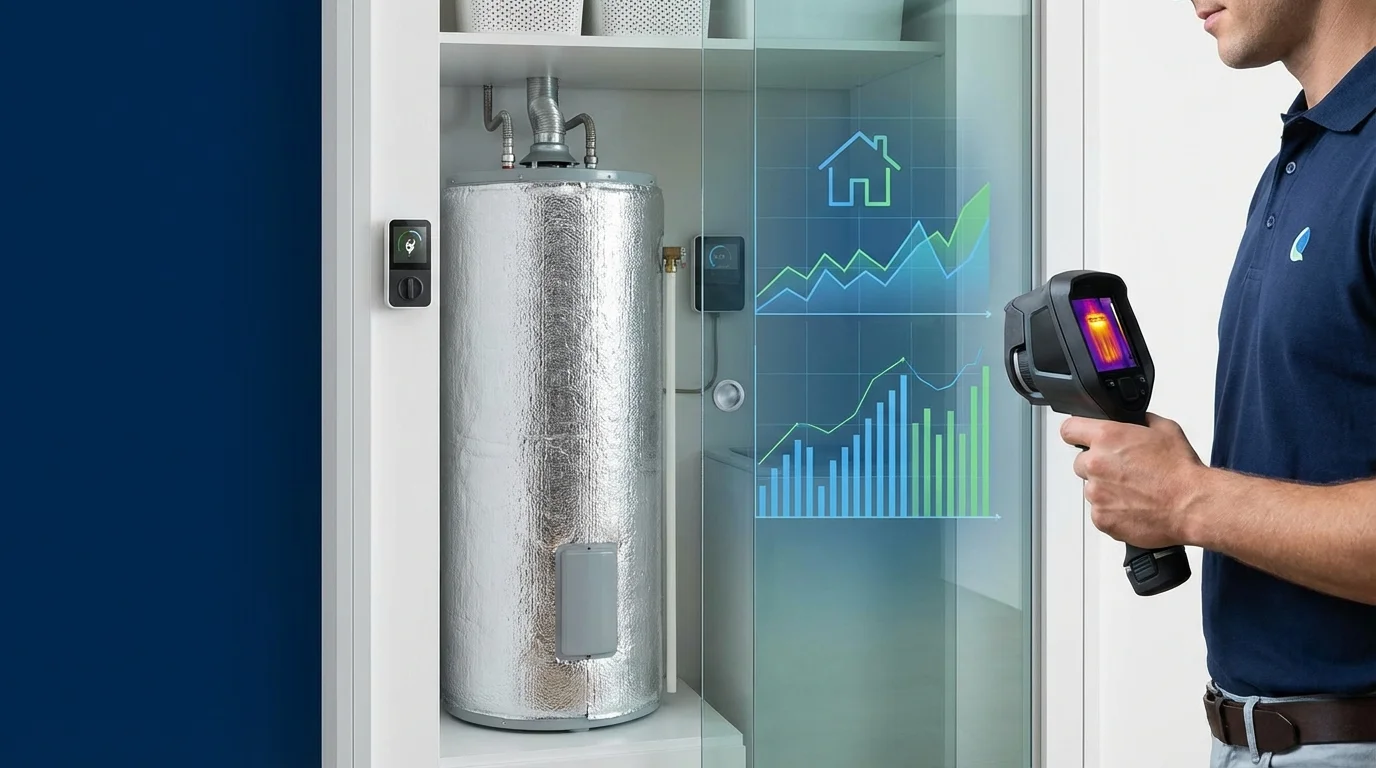
A water heater insulation blanket is a thermal barrier that reduces standby heat loss by 25-45%, saving homeowners between $50 and $120 annually on their 2026 utility bills. So it directly lowers energy consumption for both electric and gas storage-tank water heaters, offering a rapid return on investment.

An uninsulated water heater constantly radiates heat into the surrounding air, forcing the system to cycle on more frequently to maintain the set temperature. But adding an insulation blanket with an R-value of at least R-8 traps that heat inside the tank. The U.S. Department of Energy states this simple upgrade reduces standby heat loss by 25% to 45%. For a typical electric water heater, this translates to a 7% to 16% reduction in total water heating costs. So a family spending $600 per year on water heating saves between $42 and $96. And for homes with older tanks located in cold basements or garages, the annual savings often exceed $100. This makes it one of the most effective low-cost energy improvements available.

What is the Typical Cost of a Water Heater Insulation Blanket and Its Installation, and What's the ROI?

The typical cost for a water heater insulation blanket is $30 to $60 for materials in 2026. And with professional installation costing between $75 and $150, the total investment remains under $200. So the simple payback period is often less than 24 months, making the ROI exceptionally fast.

The core tension for homeowners is balancing upfront cost with long-term savings. So what does this mean in practice? A DIY installation of a $40 blanket that saves $60 per year achieves a payback period of just 8 months. Even with professional installation costing a total of $175, the payback period is under three years. This ROI outpaces many other home energy projects.

"By insulating your hot water tank, you can reduce standby heat losses by 25%–45% and save about 7%–16% in water heating costs." — U.S. Department of Energy

And unlike more complex upgrades, this project requires no permits and minimal downtime. So the financial barrier is low, and the savings begin immediately.

How Do I Qualify for Rebates and Incentives on Water Heater Insulation Blankets?

Homeowners qualify for 2026 water heater insulation blanket rebates primarily through local utility programs, which often offer $25 to $50 incentives. So these programs typically require proof of purchase and installation, and some mandate a pre-installation home energy audit to confirm eligibility.

While a water heater blanket by itself doesn't qualify for federal energy tax credits, it's often bundled into broader weatherization or home efficiency rebate packages from state and local utility providers. For example, a utility may offer a tiered rebate for completing three or more qualifying upgrades, such as air sealing, duct sealing, and water heater insulation. So to find these programs, homeowners must check their specific electric or gas provider's website for 2026 offerings. Eligibility usually requires the blanket to have a minimum R-value (typically R-8 or higher) and be installed on an existing electric or fossil fuel water heater. Use our free rebate calculator to find incentives available in your area.

Rebate Program Type Typical 2026 Amount Common Eligibility Requirement Application Deadline
Local Utility Rebate $25 - $50 Must be a customer; minimum R-8 value Varies; often Dec. 31, 2026
State Weatherization Varies (often part of a package) Income-based or home energy audit Program-specific
Manufacturer Rebate $5 - $15 Purchase of specific qualifying brand Varies by manufacturer

Is a Water Heater Insulation Blanket Right for My Climate Zone, or Are There Better Alternatives?

A water heater insulation blanket is most effective for tanks in unconditioned spaces like basements or garages, especially in climate zones 3-8 where ambient temperatures are consistently lower than the tank's temperature. But for new installations, a high-efficiency tankless unit or a heat pump water heater offers superior savings of 50-70%.

The effectiveness of an insulation blanket depends heavily on the temperature difference between the water in the tank and the surrounding air. In a cold northern basement (Climate Zone 6), the heat loss is constant, and a blanket provides a 45% reduction in standby loss. But in a hot Florida garage (Climate Zone 1), the ambient temperature is closer to the tank's temperature, reducing the potential savings. For homeowners with newer water heaters (post-2015) that already have factory-installed foam insulation with an R-value of 16 or higher, an external blanket adds minimal benefit. In these cases, investing in pipe insulation or upgrading to a new system with available heat pump rebates delivers a better financial return.

What is the Expected Lifespan of a Water Heater Insulation Blanket, and What Maintenance Does It Require?

A properly installed water heater insulation blanket has an expected lifespan of 10 to 15 years, matching the life of the water heater itself. And it requires virtually no maintenance beyond an annual visual inspection for tears, moisture, or pests, ensuring continued thermal performance and safety.

The longevity of a blanket depends on its material—typically fiberglass with a vinyl or foil backing. And these materials are durable and resistant to degradation unless physically damaged or exposed to moisture. The most critical maintenance step is an annual check. Homeowners inspect the blanket's surface for rips or compression, which reduces its R-value. So they must also check for any signs of water leaks from the tank, as a wet blanket loses all insulating properties and can promote corrosion. It's also vital to ensure the blanket doesn't block combustion air vents, pressure relief valves, or control panels, a key safety check during the annual inspection. A well-maintained blanket will deliver consistent savings throughout its service life. This is a crucial step in preparing for a geothermal tax credit in the future.

Official Sources

  • ENERGY STAR — Provides guidance on high-efficiency water heaters and related energy-saving measures.
  • DSIRE — A comprehensive database of state, local, utility, and federal incentives and policies that promote renewable energy and energy efficiency.

Frequently Asked Questions

What types of water heaters are suitable for an insulation blanket to maximize energy savings?

Insulation blankets are most effective on older (pre-2015) electric and gas storage-tank water heaters with factory insulation of less than R-16. So installing one on a tank in an unconditioned space like a garage or basement yields the highest savings, often between 25-45% on standby heat loss. And they are not designed for or needed on modern high-efficiency units or any tankless water heaters.

How much money can I realistically save on my utility bills with a water heater insulation blanket?

Homeowners realistically save between $50 and $120 per year with a water heater insulation blanket in 2026. Savings are on the higher end for electric water heaters in colder climates, where the blanket reduces standby heat loss by up to 45%. So this translates to a 7-16% reduction in total annual water heating costs.

What are the key steps for correctly installing a water heater insulation blanket for optimal savings?

First, turn off the power or gas supply for safety. Next, wrap the blanket around the tank, marking cutouts for the pressure relief valve, drain valve, and control panels. So after cutting the openings, secure the blanket snugly using the provided foil tape. And ensure you don't cover the top of a gas water heater or block any air vents.

Are there specific deadlines or eligibility requirements for water heater insulation blanket rebates?

Yes, rebate eligibility is determined by local utility providers for 2026 programs. Requirements often include purchasing a blanket with a minimum R-value (e.g., R-8) and being a customer in good standing. So most utility rebate programs run on a calendar-year basis, with application deadlines typically falling on December 31, 2026, but homeowners must verify with their specific provider.

How does insulating my water heater compare in cost-effectiveness to other minor home energy improvements?

Insulating a water heater is one of the most cost-effective upgrades. With a cost of $30-$60 and savings of $50-$120 per year, the payback period is often just 6-12 months. This ROI is


Updated: April 14, 2026 — fact-checked by DuloCore Research. About our editorial process.

energy-audit home-efficiency insulation hvac weatherization savings

Find Your Rebates

Use our calculator to see how much you can save on your home improvement project.

Calculate My Savings