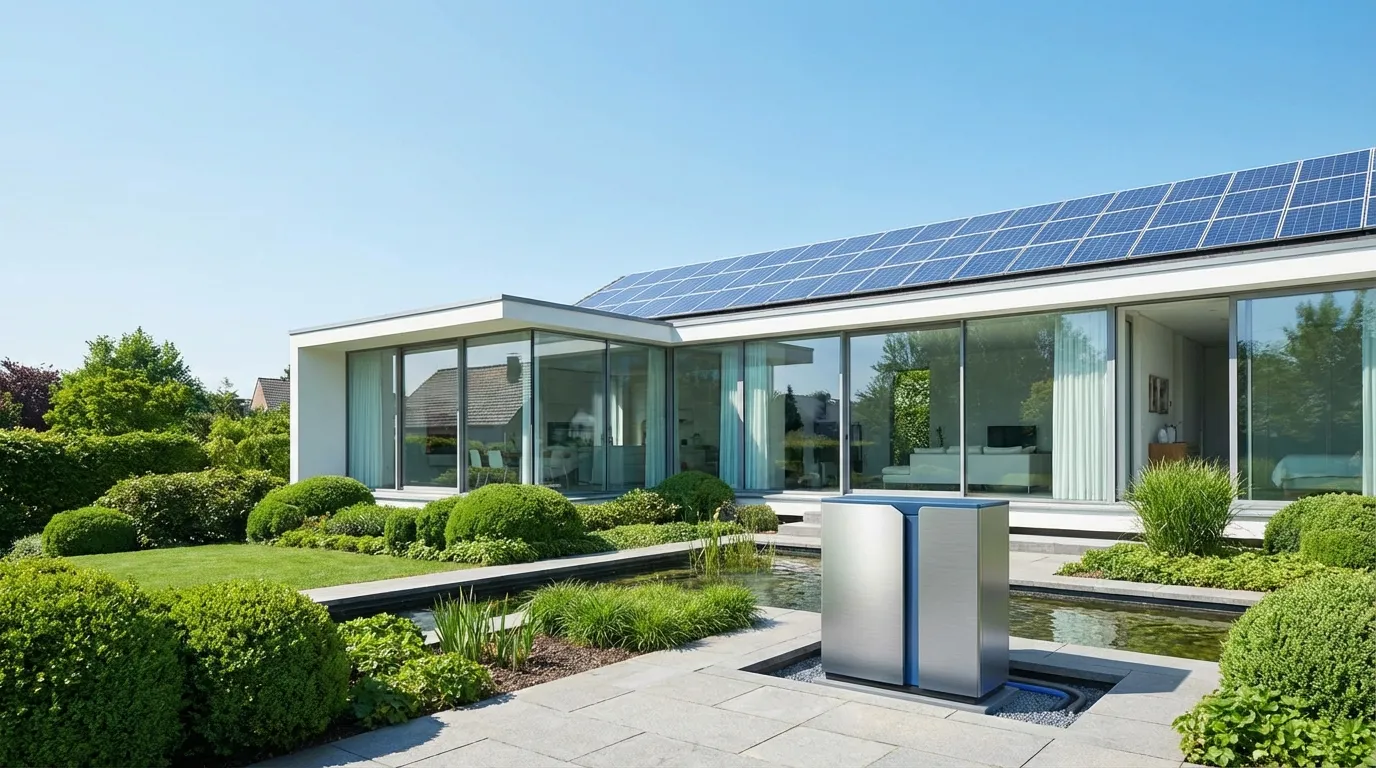
Geothermal heat pumps deliver the highest efficiency ratings of any residential HVAC system—but fewer than 50,000 units were installed across the U.S. in 2025, representing less than 1% of total heat pump sales. The federal Residential Clean Energy Credit (Section 25D) ended for expenditures made after December 31, 2025, and the IRS treats an expenditure as made when installation is completed (IRS FS-2025-05). Federal tax credits for this work have ended, but state, local and utility rebates may still apply; check what is available at your address with the DuloCore rebate calculator.
Which geothermal heat pump brands offer the best ROI and payback period?
ClimateMaster, WaterFurnace, and Trane deliver the shortest payback periods among geothermal manufacturers, with systems reaching cost neutrality in 5-8 years in cold-climate states like Minnesota and Wisconsin. ClimateMaster's Tranquility 27 series achieves 41 EER cooling efficiency and 5.0 COP heating efficiency, translating to annual energy savings of $1,200-$2,400 compared to conventional HVAC systems in homes with $300+ monthly utility bills.
WaterFurnace 7 Series units consistently achieve 30+ EER ratings with variable-speed compressors that reduce electricity consumption by 40-60% versus air-source heat pumps. But these efficiency gains require proper loop sizing—undersized ground loops reduce efficiency by 15-25% and extend payback periods to 10-12 years.
Trane's Axiom geothermal line pairs with the company's ComfortLink II controls to optimize runtime and minimize peak-demand charges. So homeowners in time-of-use rate zones save an additional $300-$600 annually by shifting heating and cooling cycles to off-peak hours. Use our free rebate calculator to estimate your specific payback timeline based on local utility rates and installation costs.
How do geothermal heat pumps compare to traditional HVAC alternatives?
Geothermal systems consume 25-50% less electricity than air-source heat pumps and 30-60% less than furnace-and-AC combinations. A 5-ton geothermal unit draws 3-5 kilowatts during peak heating, while a comparable air-source heat pump draws 6-8 kilowatts at the same outdoor temperature. And furnace systems burn 800-1,200 therms of natural gas annually, costing $1,000-$2,000 in many California markets where gas rates exceed $1.50 per therm.
But geothermal installations require 300-600 feet of horizontal trenching or 150-400 feet of vertical drilling, adding $8,000-$18,000 to project costs that don't apply to air-source or furnace replacements. So homeowners with small lots or urban properties face permitting restrictions that make geothermal installation impractical or impossible.
ClimateMaster and WaterFurnace systems maintain 100% heating capacity at outdoor temperatures down to -20°F, while air-source heat pumps lose 30-50% capacity below 20°F and require auxiliary electric resistance heating. This capacity retention saves $400-$900 per winter in cold-climate zones where backup heating would otherwise run 500-1,000 hours per season.
What is the typical lifespan of geothermal heat pump systems from top brands?
Ground loops from ClimateMaster, WaterFurnace, and Trane carry 50-year warranties on HDPE piping, with documented installations operating 40+ years in Michigan and New York. But indoor heat pump units require replacement after 20-25 years, with compressors rated for 60,000-100,000 operating hours depending on run-time management and maintenance quality.
WaterFurnace IntelliZone2 systems with dual-capacity compressors extend equipment life by 3-5 years compared to single-stage units, running at partial load 60-70% of the time instead of cycling on and off at full capacity. And variable-speed ECM blower motors last 18-22 years versus 12-15 years for standard PSC motors used in budget-tier systems.
So total cost of ownership over 25 years averages $28,000-$42,000 for geothermal systems (including one equipment replacement), compared to $35,000-$55,000 for air-source heat pumps requiring two replacements and $40,000-$65,000 for furnace-and-AC combinations with three equipment cycles. But these projections assume annual maintenance costs of $150-$250 for geothermal versus $100-$175 for conventional HVAC.
How much can you save annually with geothermal heat pumps from leading manufacturers?
Annual savings range from $800 to $2,400 depending on climate zone, replaced system type, and local electricity rates. Homeowners replacing natural gas furnaces in Northern California save $1,400-$2,100 per year at current PG&E rates of $0.38-$0.52 per kWh, while those replacing electric resistance heating in the Northeast save $1,800-$2,600 at winter rates exceeding $0.40 per kWh.
ClimateMaster Trilogy Q-Mode systems with desuperheaters generate free domestic hot water during cooling season, cutting water heating costs by $180-$320 annually in households using 50-80 gallons per day. WaterFurnace 7 Series units with hot water assist options deliver similar savings, with heat recovery efficiency reaching 65-75% of cooling-mode energy consumption.
But savings drop 40-60% when replacing high-efficiency air-source heat pumps (16+ SEER2) in mild climates like coastal California where heating demand stays below 1,000 degree days per winter. And properties with existing solar arrays see diminished returns, since geothermal's efficiency advantage delivers smaller dollar savings when grid electricity is already offset by net metering credits. Check the latest heat pump rebates to maximize your total incentives.
What federal tax credits and rebates are available for geothermal installations in 2026?
The federal Residential Clean Energy Credit (Section 25D) ended for expenditures made after December 31, 2025, and the IRS treats an expenditure as made when installation is completed (IRS FS-2025-05). So a $25,000 installation generates a $7,500 federal tax credit, reducing net cost to $17,500 before state and utility incentives.
California's TECH Clean California initiative offers $3,000-$5,000 point-of-sale rebates for ground-source heat pumps in participating contractor networks, with additional $1,000-$2,000 income-qualified bonuses for households below 80% area median income. But these funds operate on a first-come allocation, with many utility territories exhausting annual budgets by Q3 each year.
The federal Residential Clean Energy Credit (Section 25D) ended for expenditures made after December 31, 2025, and the IRS treats an expenditure as made when installation is completed (IRS FS-2025-05).
Some municipal utility districts in Northern California add $1,500-$3,000 electrification rebates when geothermal systems replace gas furnaces, bringing total incentives to $12,000-$15,500 on a $25,000 installation. And property tax exclusions in states like California prevent geothermal improvements from increasing assessed home values for 3-5 years post-installation. Learn more about all available energy tax credits for home efficiency upgrades.
How do installation costs and long-term value compare across geothermal brands?
| Brand | System Cost | Installation Cost | Total Investment | 10-Year Savings | Net Position |
|---|---|---|---|---|---|
| ClimateMaster Tranquility 27 | $8,500-$12,000 | $12,000-$20,000 | $20,500-$32,000 | $15,000-$24,000 | -$5,500 to -$8,000 |
| WaterFurnace 7 Series | $9,000-$13,500 | $12,000-$20,000 | $21,000-$33,500 | $16,000-$26,000 | -$5,000 to -$7,500 |
| Trane Axiom | $8,000-$11,500 | $12,000-$20,000 | $20,000-$31,500 | $14,000-$22,000 | -$6,000 to -$9,500 |
WaterFurnace commands 5-10% price premiums over ClimateMaster but delivers 3-7% higher seasonal efficiency ratings, translating to $120-$280 in additional annual savings that justify the upfront cost differential over 10-year ownership periods. But ClimateMaster's broader contractor network reduces installation labor costs by $1,000-$2,500 in markets with limited geothermal specialists.
Trane's geothermal line integrates with existing Trane zoning and control systems, cutting upgrade costs by $1,500-$3,000 for homeowners already invested in the Trane ecosystem. And Carrier's GT-PX series undercuts premium brands by 15-20% while maintaining 25+ EER ratings, making it the value leader for budget-conscious installations where maximum efficiency isn't required.
But equipment cost represents just 25-35% of total investment—drilling or trenching accounts for 50-65% of project expense. So installation bids vary by $8,000-$15,000 depending on soil type, lot accessibility, and regional labor rates, making contractor selection more impactful than brand choice for total project cost control.
Official Sources
- DOE Geothermal Heat Pumps — Federal guidance on system types, efficiency ratings, and installation requirements
- ENERGY STAR Heat Pump Specifications — Current efficiency criteria and qualified product listings
- DSIRE Database — State-by-state incentive tracking for renewable energy systems
Frequently Asked Questions
What are the most reliable geothermal heat pump brands?
WaterFurnace, ClimateMaster, and Trane dominate reliability rankings with 15-20 year compressor survival rates exceeding 85% based on contractor warranty claim data. WaterFurnace 7 Series units feature stainless steel cabinet construction and sealed scroll compressors that resist corrosion in coastal and high-humidity environments. But smaller manufacturers like Enertech and GeoComfort offer comparable equipment reliability at 10-15% lower costs in markets where independent contractors prefer non-corporate brands.
How much does a geothermal heat pump system cost?
Total installed costs range from $18,000 to $38,000 depending on system capacity, loop configuration, and site conditions. A typical 4-ton vertical loop installation averages $24,000-$28,000 before incentives, while horizontal loop systems on larger lots run $20,000-$24,000. After applying the 30% federal tax credit and $3,000-$5,000 state rebates, net costs drop to $13,000-$20,000 for most California installations completed in 2026.
Are geothermal heat pumps eligible for tax credits in 2026?
Yes. The federal Residential Clean Energy Credit (Section 25D) ended for expenditures made after December 31, 2025, and the IRS treats an expenditure as made when installation is completed (IRS FS-2025-05). Systems must meet ENERGY STAR Most Efficient specifications and be placed in service at the taxpayer's primary or secondary residence. The credit covers equipment, labor, ground loop installation, and related electrical upgrades, but excludes permit fees and optional accessories like advanced thermostats not required for system operation.
How long does it take to install a geothermal heat pump?
Installation timelines run 3-7 days for vertical loop systems and 2-5 days for horizontal configurations on open lots. Drilling operations consume 1-3 days depending on depth requirements and bedrock conditions, while indoor equipment placement and connection take 1-2 days. But permitting adds 2-8 weeks to project timelines in jurisdictions requiring geological surveys, and contractor scheduling backlogs extend wait times to 4-12 weeks during peak spring and fall installation seasons.
What is the difference between geothermal heat pumps and air source heat pumps?
Geothermal heat pumps exchange heat with ground or water sources at stable 45-75°F temperatures year-round, while air-source heat pumps use outdoor air at fluctuating temperatures from -20°F to 115°F. This temperature stability allows geothermal systems to maintain 300-500% efficiency ratios across all operating conditions, versus 200-400% for air-source units that lose significant capacity during temperature extremes. But air-source installations cost $8,000-$12,000 less and don't require excavation or drilling.
Ready to calculate your geothermal savings? Use our rebate calculator to see how much you can save with federal tax credits, state rebates, and long-term energy cost reductions based on your specific home and location.
Updated on April 14, 2026. Fact-checked by DuloCore Editors. About our research team.
Check your California heat pump rebate eligibility — see the programs you qualify for and the dollar amounts on our California heat pump rebate finder.