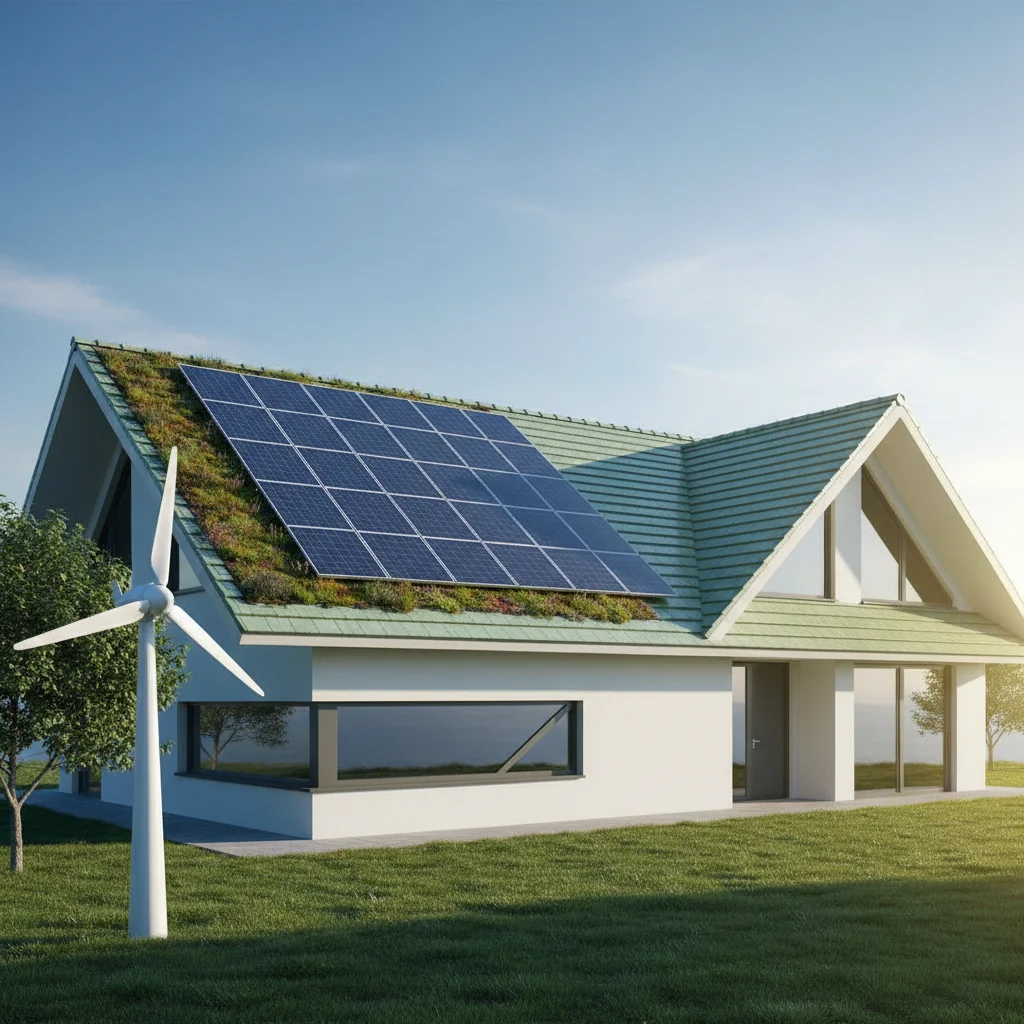
Roofing accounts for 40% of a home's total heat gain in summer and 20% of winter heat loss, yet most California homeowners still install standard asphalt shingles that absorb heat instead of reflecting it. And the cost isn't just comfort—inefficient roofing can add $400-$800 per year to cooling bills in hot climates.
What Are the Best Energy Efficient Roofing Materials and How Much Can You Save?
Cool roofs with solar reflectance ratings above 0.65 reduce surface temperatures by 50-60°F compared to standard roofing materials. Metal roofing reflects 60-70% of solar radiation, clay and concrete tiles reflect 30-50%, and cool asphalt shingles with reflective granules reflect 25-40% of sunlight. Homeowners installing cool roofing materials save $0.50-$1.00 per square foot annually on cooling costs in California's climate zones 10-15.
But savings vary by material. Metal roofing lasts 40-70 years and reduces cooling costs by 10-25%, while cool asphalt shingles last 20-30 years and reduce costs by 7-15%. So a 2,000 square foot home switching from standard to cool roofing saves $200-$600 annually on energy bills.
California's Title 24 building codes require cool roofing materials with aged solar reflectance of 0.63 or higher for low-slope roofs and 0.20 for steep-slope roofs. And Energy Star certified roofing products meet EPA standards for solar reflectance and thermal emittance, typically reflecting 25% more solar energy than standard materials.
The Lawrence Berkeley National Laboratory found cool roofs reduce peak cooling demand by 10-15% in hot climates. But the California Energy Commission reports that cool roofing installations save California homeowners $120 million annually in combined energy costs.
"Cool roofs can reduce air conditioning needs by 10-15% and peak cooling demand by 10-15%." — Lawrence Berkeley National Laboratory
Which Energy Efficient Roofing Materials Qualify for Rebates and Tax Credits in California?
The federal home energy tax credits (Sections 25C and 25D) ended for projects completed after December 31, 2025 (IRS FS-2025-05). Federal tax credits for this work have ended, but state, local and utility rebates may still apply; check what is available at your address with the DuloCore rebate calculator. Qualifying materials include metal roofing with pigmented coatings, clay or concrete tiles with cool-colored glazes, asphalt shingles with reflective granules rated Energy Star, and single-ply membranes with solar reflectance ≥0.65 for low-slope applications.
California utility companies including PG&E, SCE, and SDG&E offer cool roof rebates ranging from $0.10-$0.30 per square foot for residential installations. And the California TECH Clean California Initiative provides additional incentives of $500-$2,000 for energy-efficient home upgrades including cool roofing when combined with other improvements.
But materials must meet specific standards. Energy Star cool roofs require initial solar reflectance of 0.65+ for low-slope roofs and 0.25+ for steep-slope roofs, with aged reflectance remaining above 0.50 and 0.15 respectively after three years. So homeowners should verify certification before purchasing materials to ensure rebate eligibility.
The Database of State Incentives for Renewables & Efficiency (DSIRE) lists current California programs. And the home energy audit requirement applies to most utility rebate programs, costing $200-$400 but identifying additional savings opportunities worth $800-$2,000 annually.
How Much Rebate Money Can You Get for Installing Energy Efficient Roofing?
The federal home energy tax credits (Sections 25C and 25D) ended for projects completed after December 31, 2025 (IRS FS-2025-05). California utility rebates add $200-$600 for typical residential installations of 2,000-3,000 square feet. And total combined incentives reach $1,400-$1,800 for qualifying cool roof projects in 2026.
| Program | Rebate Amount | Eligible Materials | Application Deadline |
|---|---|---|---|
| IRA Energy Efficiency Credit | Ended Dec 31, 2025 | — | Ended Dec 31, 2025 |
| PG&E Cool Roof Rebate | $0.20/sq ft ($400-$600) | Reflectance ≥0.65 low-slope, ≥0.25 steep | Rolling, funds permitting |
| SCE/SDG&E Energy Efficiency | $300-$500 per project | Title 24 compliant cool roofing | Annual allocation |
But rebate amounts vary by utility territory and income level. Low-to-moderate income households earning below 80% of area median income qualify for enhanced rebates of $0.30-$0.50 per square foot through California's TECH Initiative, increasing total available funding to $2,000-$3,500 for qualifying installations.
Metal roofing installations costing $15,000-$25,000 receive $4,500-$7,500 in federal credits plus $400-$600 in utility rebates. And cool asphalt shingle projects costing $8,000-$12,000 receive $2,400-$3,600 federal plus $200-$400 utility incentives, reducing net costs by 25-35%.
Use our free rebate calculator to estimate your specific incentives based on location, income, and project scope.
What Are the Income Limits and Eligibility Requirements for Roofing Rebates?
Standard federal tax credits have no income limits—all homeowners claiming the IRA energy efficiency credit receive 30% back up to $1,200 annually regardless of household income. But California utility programs and the TECH Initiative reserve enhanced rebates for households earning below 80% of area median income (AMI), which ranges from $68,000-$98,000 depending on county and household size in 2026.
Households earning below 80% AMI qualify for utility rebates of $0.30-$0.50 per square foot versus $0.10-$0.20 for higher earners. And the California TECH Initiative provides additional funding of $500-$2,000 for low-to-moderate income households combining cool roofing with other efficiency upgrades like insulation or air sealing.
Eligibility requirements include principal residence ownership, Title 24 code compliance for new installations, Energy Star certification for materials, and licensed contractor installation with proper permits. So DIY installations don't qualify for most rebate programs, though federal tax credits apply to both contractor and self-installed projects meeting code requirements.
The energy tax credits guide explains income documentation requirements and AMI thresholds by California county. And homeowners must retain receipts, Manufacturer's Certification Statements, and contractor invoices for IRS filing.
What's the Application Process and Deadline for Energy Efficient Roofing Incentives?
Form 5695 only covers qualifying work completed by December 31, 2025 and claimed on a 2025 return; the federal 25C and 25D credits ended after that date (IRS FS-2025-05). Homeowners must retain Manufacturer's Certification Statements showing Energy Star ratings, contractor invoices with material specifications, and proof of payment. The federal home energy tax credits (Sections 25C and 25D) ended for projects completed after December 31, 2025 (IRS FS-2025-05).
California utility rebates require pre-approval before installation in most programs. PG&E's Home Upgrade Program requires online application submission 5-10 business days before project start, while SCE and SDG&E accept post-installation applications within 90 days of completion. But funding operates on first-come-first-served basis, so early application increases approval likelihood.
The typical utility rebate process includes: submit online application with property details and proposed materials, receive approval letter within 7-14 days, complete installation with licensed contractor, submit final inspection photos and paid invoice, receive rebate payment within 30-60 days by check or bill credit.
TECH Initiative applications require coordination through participating contractors who submit projects directly to program administrators. And the heat pump rebates follow similar pre-approval processes when combining roofing with HVAC upgrades for maximum incentives.
Do Energy Efficient Roofing Rebates Stack With Other Federal and Utility Programs?
Yes—federal IRA tax credits stack with California utility rebates and local incentives without reduction. Homeowners claim the full 30% federal credit (these federal credits ended for projects completed after December 31, 2025) up to $1,200 annually while also receiving utility rebates of $200-$600 and TECH Initiative funding of $500-$2,000 for qualifying projects. And total combined incentives reach $1,900-$3,800 for comprehensive cool roofing installations in 2026.
But stacking rules vary by program. Federal credits don't reduce when combined with state or utility incentives, while some California programs prohibit combining multiple utility rebates for the same improvement. So homeowners receiving PG&E cool roof rebates can't also claim SCE rebates, but can combine PG&E rebates with federal credits and TECH funding.
The IRA energy efficiency credit has annual caps—$1,200 maximum per year for building envelope improvements including roofing, insulation, windows, and doors combined. And homeowners installing both cool roofing ($800 credit) and insulation ($400 credit) in the same year stay within the $1,200 annual limit.
Additional stacking opportunities include local municipal rebates (Los Angeles offers $250-$500 for cool roofs), HOA or community solar programs, and contractor promotions or manufacturer rebates that don't affect government incentive eligibility. But homeowners should verify current stacking rules through DSIRE before assuming all programs combine.
Official Sources
- DOE Energy Saver — Federal energy efficiency guidance including cool roofing standards and savings calculations
- DSIRE California — Comprehensive database of state and utility energy efficiency rebates and incentives
- Energy Star Cool Roof Products — EPA certified roofing materials list with reflectance ratings and manufacturer details
Related Reading: Learn more about Energy Audit Townhouse and Energy Efficient Garage Door.
Frequently Asked Questions
What are the best energy efficient roofing materials?
Metal roofing with reflective coatings ranks highest with 40-70 year lifespan and 60-70% solar reflectance, followed by clay or concrete tiles (30-50% reflectance, 50+ years), and cool asphalt shingles with reflective granules (25-40% reflectance, 20-30 years). Energy Star certification ensures minimum aged solar reflectance of 0.50 for low-slope and 0.15 for steep-slope applications. And white or light-colored materials outperform dark colors by 15-25% in cooling cost reduction.
How much can energy efficient roofing materials reduce my energy bills?
Cool roofing materials reduce cooling costs by 10-25% annually, saving $200-$800 per year for typical California homes depending on climate zone and existing insulation. Homes in hot inland areas (zones 12-15) save $400-$800 annually, while coastal regions (zones 6-9) save $200-$400. And the California Energy Commission reports cool roofs reduce peak electricity demand by 10-15%, lowering both energy costs and grid strain during summer months.
Are energy efficient roofing materials eligible for tax credits?
The federal home energy tax credits (Sections 25C and 25D) ended for projects completed after December 31, 2025 (IRS FS-2025-05). Materials must meet EPA solar reflectance standards: ≥0.65 initial reflectance for low-slope roofs or ≥0.25 for steep-slope roofs. Form 5695 only covers qualifying work completed by December 31, 2025 and claimed on a 2025 return; the federal 25C and 25D credits ended after that date (IRS FS-2025-05).
How long do energy efficient roofing materials last?
Metal cool roofing lasts 40-70 years with minimal maintenance, clay and concrete tiles last 50-100 years, and cool asphalt shingles last 20-30 years. Energy Star certification requires three-year aged reflectance testing ensuring materials maintain cooling performance over time. And proper installation with adequate ventilation extends lifespan by 15-20% compared to improper installations that trap heat and moisture.
What is the cost difference between energy efficient and standard roofing materials?
Cool roofing materials cost $1.00-$3.00 per square foot more than standard materials initially—metal roofing runs $7-$12/sq ft versus $3-$5/sq ft for standard asphalt, and cool asphalt shingles cost $4-$6/sq ft versus $3-$4/sq ft for standard. But energy savings of $200-$800 annually produce payback periods of 3-7 years. And federal tax credits covering 30% of costs plus utility rebates of $200-$600 reduce net premium to $0.50-$2.00 per square foot.
Ready to save on cool roofing installation? Use our free rebate calculator to find exactly how much you qualify for based on your location, income, and project details. Get personalized estimates for federal tax credits, California utility rebates, and local incentives in under 2 minutes.
Last reviewed: April 14, 2026. Reviewed by DuloCore Energy Specialists. About the team.