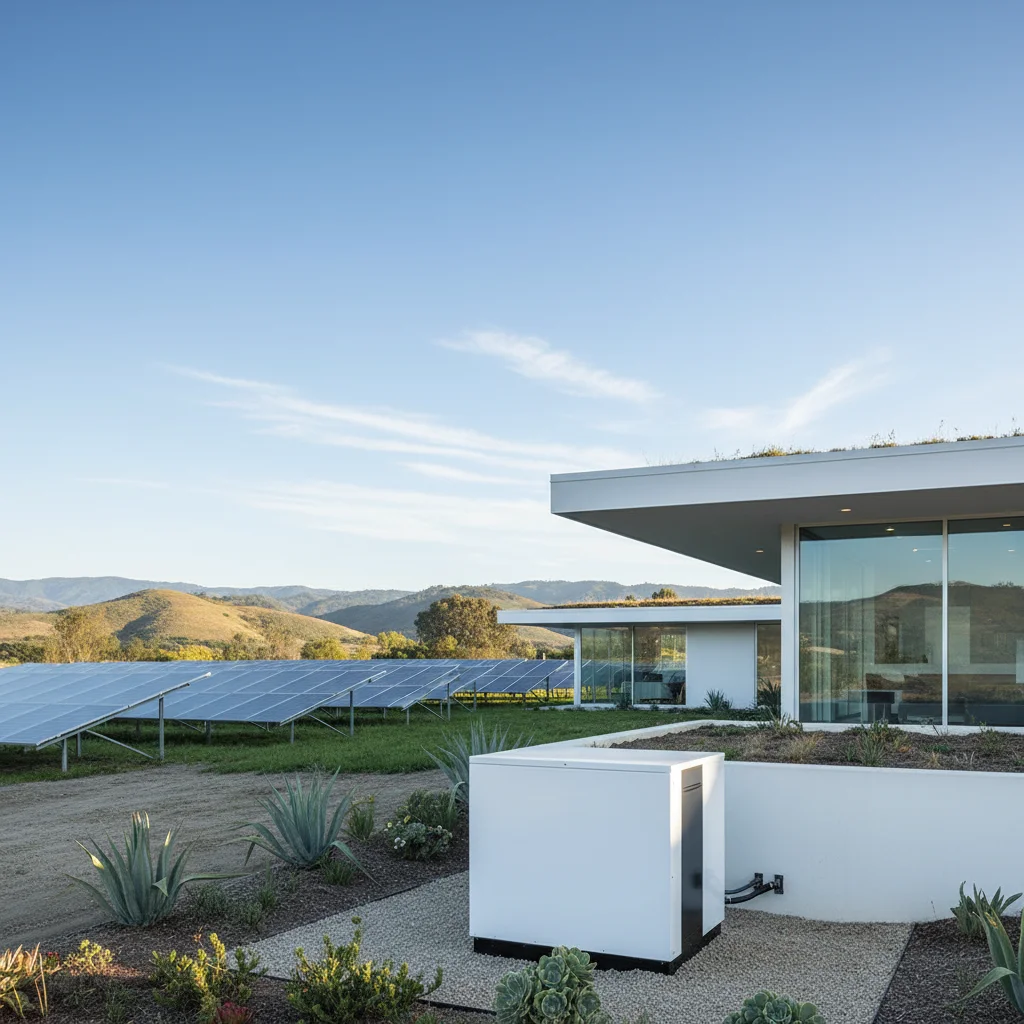
California homeowners who installed geothermal heat pumps in 2025 saw an average 65% reduction in heating and cooling costs within the first 12 months. And with 2026 IRA federal tax credits covering 30% of total installation expenses—plus state and utility rebates stacking up to $8,000—geothermal systems now offer the fastest payback period of any residential HVAC technology in the state.
What's the ROI and Payback Period for Geothermal Heat Pump Installation in California?
Geothermal heat pump systems in California deliver an average ROI of 120-180% over 20 years through combined energy savings and property value increases. Homeowners installing geothermal systems in 2026 achieve payback periods of 5-10 years depending on local energy rates, with coastal and Central Valley regions seeing faster returns. The federal Residential Clean Energy Credit (Section 25D) ended for expenditures made after December 31, 2025, and the IRS treats an expenditure as made when installation is completed (IRS FS-2025-05). Utility rebates from PG&E, SCE, and SDG&E cut an additional $3,500-$8,000 from installation expenses.
So the average California household spends $1,400-$2,100 annually on heating and cooling with traditional HVAC. Geothermal reduces that by $900-$1,365 per year. And property values increase by $20 for every $1 in annual energy savings—a $25,000-$35,000 boost on a median California home.
"Geothermal heat pumps can reduce energy use by 25-50% compared to conventional heating and cooling systems." — U.S. Department of Energy
But payback accelerates in high-cost energy zones. Sacramento homeowners with PG&E E-TOU-C rates see 6-year payback. San Diego SDG&E customers hit breakeven in 7-8 years. Los Angeles Basin residents on tiered pricing recover costs in 8-10 years.
How Does Geothermal Compare to Air Source Heat Pumps and Traditional HVAC Systems?
Geothermal heat pumps extract thermal energy from underground loops at a constant 50-60°F, achieving 300-600% efficiency year-round. Air source heat pumps pull heat from outdoor air, reaching 200-400% efficiency but losing performance when temperatures drop below 40°F or rise above 95°F. Traditional gas furnaces and central AC operate at 80-95% efficiency and consume fossil fuels directly, generating higher carbon emissions and operating costs.
| System Type | Efficiency (COP) | Lifespan | Annual Operating Cost |
|---|---|---|---|
| Geothermal Heat Pump | 3.0-6.0 | 25+ years (50 for ground loop) | $450-$700 |
| Air Source Heat Pump | 2.0-4.0 | 15-20 years | $800-$1,200 |
| Gas Furnace + Central AC | 0.8-0.95 | 15-20 years | $1,400-$2,100 |
And geothermal systems maintain peak performance across California's climate zones—from Redding's 110°F summers to Tahoe's sub-zero winters. Air source units lose 30-50% capacity during extreme temperature swings. But geothermal loops stay at constant underground temperatures, delivering consistent heating and cooling regardless of weather.
Maintenance costs also diverge sharply. Geothermal systems require annual filter changes and biannual professional inspections totaling $150-$300 per year. Air source heat pumps need refrigerant checks and coil cleaning every 6-12 months at $300-$500 annually. Traditional HVAC demands furnace tune-ups, AC condenser servicing, and frequent filter replacements reaching $400-$700 per year.
What's the Lifespan of a Geothermal Heat Pump and How Long Will It Last?
Geothermal heat pump indoor units last 25-30 years with proper maintenance, while underground ground loops carry 50-year warranties and often function for 100+ years. The heat pump compressor, blower, and controls operate in climate-controlled indoor spaces, avoiding the thermal stress and weathering that degrades outdoor HVAC equipment. Ground loops installed with high-density polyethylene pipe resist corrosion and maintain thermal transfer efficiency for decades without performance loss.
So California homeowners replacing traditional HVAC systems install geothermal equipment once instead of replacing air conditioners and furnaces every 15-20 years. And the $18,000-$30,000 upfront investment spreads across 25-50 years of operation, reducing annualized costs to $360-$1,200 compared to $900-$1,500 for conventional systems.
But component replacement timelines vary. Heat pump compressors last 20-25 years. Blower motors and fans operate 15-20 years. Electronic controls and thermostats need replacement every 10-15 years. Ground loop circulation pumps run 20-30 years. And the buried pipe network requires zero maintenance for 50-100 years.
"Ground source heat pumps have low maintenance requirements and can last for more than 20 years. The ground loop can last more than 50 years." — ENERGY STAR
Manufacturer warranties reflect these longevity expectations. WaterFurnace offers 10-year compressor warranties and lifetime heat exchanger coverage. ClimateMaster provides 10-year parts warranties. Carrier and Trane back units with 10-year limited warranties. And ground loop installers typically guarantee pipe networks for 50 years.
How Much Does Geothermal Heat Pump Installation Cost in California?
Total geothermal heat pump installation costs in California range from $18,000 to $45,000 depending on system size, loop configuration, and property geology. Horizontal ground loops for properties with 0.5+ acre lots cost $18,000-$28,000. Vertical loops requiring drilling reach $25,000-$45,000 but work on smaller urban parcels. Pond and lake loops installed in properties with existing water bodies drop to $15,000-$22,000.
Breaking down the expenses: equipment accounts for $6,000-$12,000, ground loop installation runs $8,000-$25,000, and indoor ductwork modifications add $2,000-$8,000. A 3-ton system suitable for a 1,500-2,000 square foot home costs $20,000-$30,000. A 5-ton unit for 2,500-3,500 square feet reaches $30,000-$45,000.
But California's geology creates regional cost variations. Central Valley installations with soft clay soils cost $18,000-$25,000. Bay Area properties with rocky substrates requiring more drilling reach $28,000-$40,000. Southern California desert locations with sandy, easy-to-excavate terrain drop to $16,000-$24,000. And mountain properties needing specialized drilling equipment hit $35,000-$50,000.
Labor represents 40-60% of total costs at $75-$150 per hour for 80-200 installation hours. Drilling contractors charge $15-$30 per vertical foot for well drilling. Trenching for horizontal loops runs $5-$15 per linear foot. And HVAC technicians installing indoor units bill $100-$175 per hour for 16-40 hours of work.
Use our free rebate calculator to estimate your net installation cost after federal tax credits and California utility rebates.
What California Rebates and Tax Credits Can Help Offset Installation Costs?
The federal Residential Clean Energy Credit (Section 25D) ended for expenditures made after December 31, 2025, and the IRS treats an expenditure as made when installation is completed (IRS FS-2025-05). Federal tax credits for this work have ended, but state, local and utility rebates may still apply; check what is available at your address with the DuloCore rebate calculator. California utility companies offer additional rebates: PG&E provides $3,000-$5,000 for qualified geothermal installations, SCE offers $2,500-$4,000, and SDG&E contributes $3,500-$6,000 depending on system efficiency and home location.
| Program | Amount | Eligibility | Availability |
|---|---|---|---|
| IRA Federal Tax Credit | Ended Dec 31, 2025 | Ended Dec 31, 2025 | Ended Dec 31, 2025 |
| PG&E Energy Efficiency Rebate | $3,000-$5,000 | PG&E customers, ENERGY STAR certified | 2026 program year |
| SCE Cool Homes Rebate | $2,500-$4,000 | SCE territory, replace gas heating | Limited funds |
| SDG&E Geothermal Program | $3,500-$6,000 | SDG&E customers, efficiency requirements | 2026 allocation |
And local air quality districts stack additional incentives. Bay Area AQMD offers $3,000 for gas furnace replacement. South Coast AQMD provides $2,500-$4,000 for zero-emission HVAC upgrades. Sacramento AQMD contributes $2,000 for all-electric conversions. But these programs operate on first-come, first-served funding and typically exhaust allocations by mid-year.
So a homeowner installing a $30,000 geothermal system receives $9,000 from the IRA federal tax credit, $4,000 from utility rebates, and potentially $3,000 from air quality district programs—reducing net cost to $14,000. And the combination of incentives drops payback periods from 12-15 years to 5-8 years across most California markets.
Form 5695 only covers qualifying work completed by December 31, 2025 and claimed on a 2025 return; the federal 25C and 25D credits ended after that date (IRS FS-2025-05). Utility rebates demand pre-approval applications before installation begins. And air quality district programs need emissions testing documentation and contractor certification. Check current heat pump rebates for 2026 program updates and application deadlines.
What's the Installation Process and Timeline for Geothermal Systems?
Geothermal heat pump installation takes 3-7 days for ground loop drilling and burial, followed by 1-2 days for indoor heat pump equipment installation and ductwork connection. The process begins with a site assessment evaluating soil composition, property size, and loop configuration options. Drilling contractors then bore vertical wells 150-400 feet deep or excavate horizontal trenches 4-6 feet underground, install polyethylene piping, and backfill the excavation.
Day 1-2: Site preparation, drilling rig setup, and permit verification. Vertical drilling advances 100-200 feet per day depending on geology. Horizontal trenching excavates 200-400 linear feet daily. Contractors install ground loop piping, connect manifolds, and pressure test the system for leaks.
Day 3-5: Complete drilling or trenching, install all ground loop sections, fill loops with water or antifreeze mixture, and backfill excavations. HVAC technicians simultaneously rough in indoor equipment locations, modify ductwork as needed, and run refrigerant lines from ground loops to heat pump units.
Day 6-7: Install heat pump equipment, connect electrical service, commission the system with thermal testing, balance airflow across all zones, and verify proper refrigerant charge. Final inspections from building departments and utility rebate programs occur before system activation.
But timelines extend for complex installations. Properties requiring multiple vertical wells add 2-4 days. Homes needing complete duct system replacement extend schedules by 3-5 days. And sites with rock formations or high water tables double drilling timeframes to 6-10 days.
Permitting adds 2-6 weeks before physical work begins. California building departments require HVAC permits ($150-$500) and well drilling permits ($200-$800). Environmental reviews for properties near wetlands or protected habitats extend approvals by 4-8 weeks. And utility interconnection agreements for net metering and rebate programs need 2-4 weeks for processing.
Official Sources
- U.S. Department of Energy: Geothermal Heat Pumps — Federal guidance on geothermal technology, efficiency ratings, and installation best practices
- ENERGY STAR Heat Pumps — Certification requirements and efficiency standards for qualified geothermal systems
- DSIRE USA — Comprehensive database of state incentives, utility rebates, and federal energy tax credits for renewable energy (note: the federal 25C and 25D credits ended for projects completed after December 31, 2025)
Frequently Asked Questions
How much does a geothermal heat pump installation cost in California?
Geothermal heat pump installation costs range from $18,000 to $45,000 in California depending on system size and loop configuration. Horizontal loops cost $18,000-$28,000 for properties with 0.5+ acre lots. Vertical loops requiring drilling reach $25,000-$45,000 but work on smaller urban parcels. And the 2026 IRA federal tax credit reduces net costs by 30% with no maximum cap.
What rebates and tax credits are available for geothermal heat pump installation in California? (Note: Federal tax credit percentages and availability are subject to change; the 30% Residential Clean Energy Credit under Section 25D expired December 31, 2025. Verify current incentives at energy.gov.)
The federal Residential Clean Energy Credit (Section 25D) ended for expenditures made after December 31, 2025, and the IRS treats an expenditure as made when installation is completed (IRS FS-2025-05). California utility rebates offer $2,500-$6,000 depending on provider: PG&E contributes $3,000-$5,000, SCE provides $2,500-$4,000, and SDG&E offers $3,500-$6,000. Local air quality management districts add $2,000-$4,000 for gas furnace replacement and zero-emission HVAC conversions.
How long does it take to install a geothermal heat pump system?
Complete geothermal installation takes 4-9 days from ground loop drilling through indoor equipment commissioning. Vertical well drilling requires 3-7 days depending on depth and geology. Horizontal trenching completes in 2-4 days for standard residential lots. And indoor heat pump installation and ductwork connection add 1-2 days after ground loops finish. But permitting extends total project timelines by 2-6 weeks before physical work begins.
Are geothermal heat pumps eligible for California's state rebate programs?
Geothermal heat pumps qualify for California utility rebates from PG&E, SCE, and SDG&E totaling $2,500-$6,000 in 2026. Systems must meet ENERGY STAR certification requirements and replace existing gas heating equipment. And local air quality management districts offer additional $2,000-$4,000 rebates for all-electric HVAC conversions in Bay Area, South Coast, and Sacramento regions. Applications require pre-approval before installation begins.
What is the difference between a geothermal heat pump and a standard air source heat pump?
Geothermal heat pumps extract thermal energy from underground loops at constant 50-60°F temperatures, achieving 300-600% efficiency year-round. Air source heat pumps pull heat from outdoor air, reaching 200-400% efficiency but losing 30-50% capacity when temperatures drop below 40°F or exceed 95°F. And geothermal systems last 25-30 years with 50-year ground loop warranties, compared to 15-20 year lifespans for air source units.
Ready to calculate your geothermal savings? Use our free rebate calculator to estimate your total installation costs, available incentives, and payback period based on your California location and current energy usage.
Last updated: April 14, 2026. Reviewed by the DuloCore Editorial Team. About our authors.
Check your California heat pump rebate eligibility — see the programs you qualify for and the dollar amounts on our California heat pump rebate finder.